

Quick Answer
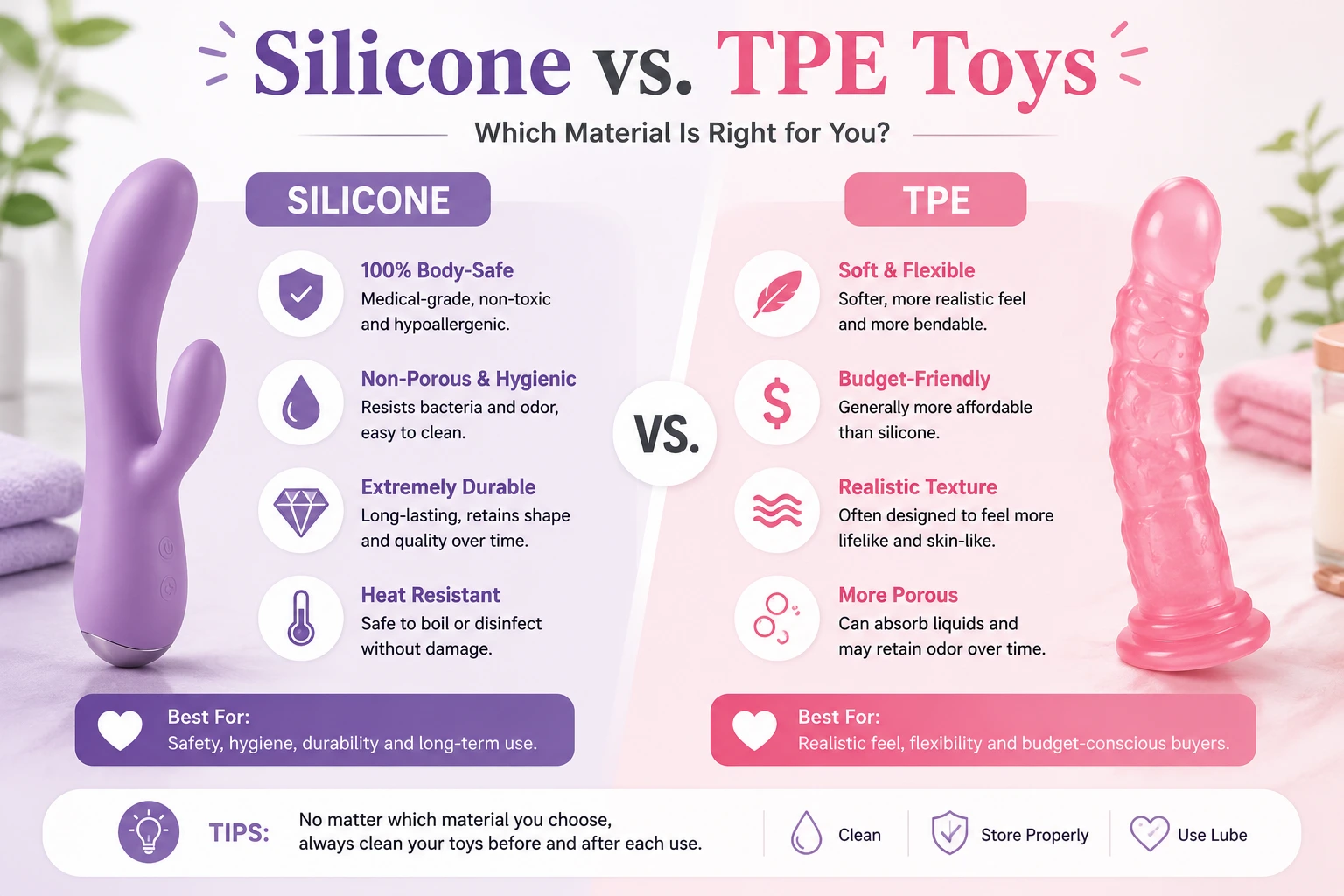
If you’re deciding between a silicone and a TPE dildo, medical-grade silicone is the better choice for most people. Silicone is non-porous, body-safe, durable, and easier to clean, making it ideal for long-term use. TPE dildos are usually softer and less expensive, making them attractive to budget-conscious buyers, but they require more careful cleaning and maintenance due to their porous nature.
The right material depends on your priorities. If you value hygiene, longevity, and easy maintenance, silicone is the clear winner. If you’re looking for a softer feel at a lower price point, TPE may still be a good option.
Why Material Matters
When shopping for a dildo, size and appearance often receive the most attention. However, the material you choose has a greater impact on comfort, durability, maintenance, and overall ownership experience than almost any other feature.
The material determines:
- How realistic the toy feels
- How easy it is to clean
- Which lubricants are compatible
- How long the toy is likely to last
- How much maintenance it requires
Choosing the right material from the beginning can save both money and frustration over time.
What Is Silicone?
Medical-grade silicone has become the premium standard within the adult toy industry.
Unlike many softer materials, silicone is non-porous, meaning it doesn’t readily absorb moisture or residue. This makes routine cleaning simpler while also helping the material maintain its appearance over years of regular use.
Silicone is available in a wide range of firmness levels, allowing manufacturers to produce toys that range from soft and flexible to firm and supportive.
Many premium realistic dildos also use dual-density silicone, combining a firm inner core with a softer outer layer to create a more lifelike feel.
Advantages of Silicone
Silicone offers several significant benefits:
- Body-safe
- Non-porous
- Easy to clean
- Highly durable
- Resistant to staining
- Available in different firmness levels
- Excellent for long-term use
Because of these qualities, silicone remains the material we recommend for most buyers, particularly those purchasing their first high-quality dildo.
What Is TPE?
TPE (Thermoplastic Elastomer) is another material commonly used in adult toys.
It is known for its soft, flexible texture and lower manufacturing cost. Many realistic dildos use TPE because it allows for highly detailed sculpting and a skin-like feel while remaining relatively affordable.
However, TPE is generally considered a porous material, meaning it requires more careful cleaning and storage than silicone.
Advantages of TPE
Despite its limitations, TPE offers several appealing characteristics.
Many buyers appreciate it because it is:
- Soft to the touch
- Highly flexible
- Comfortable for many users
- Usually more affordable
- Capable of very realistic sculpting
For buyers working within a limited budget, TPE often provides an accessible introduction to realistic dildos.
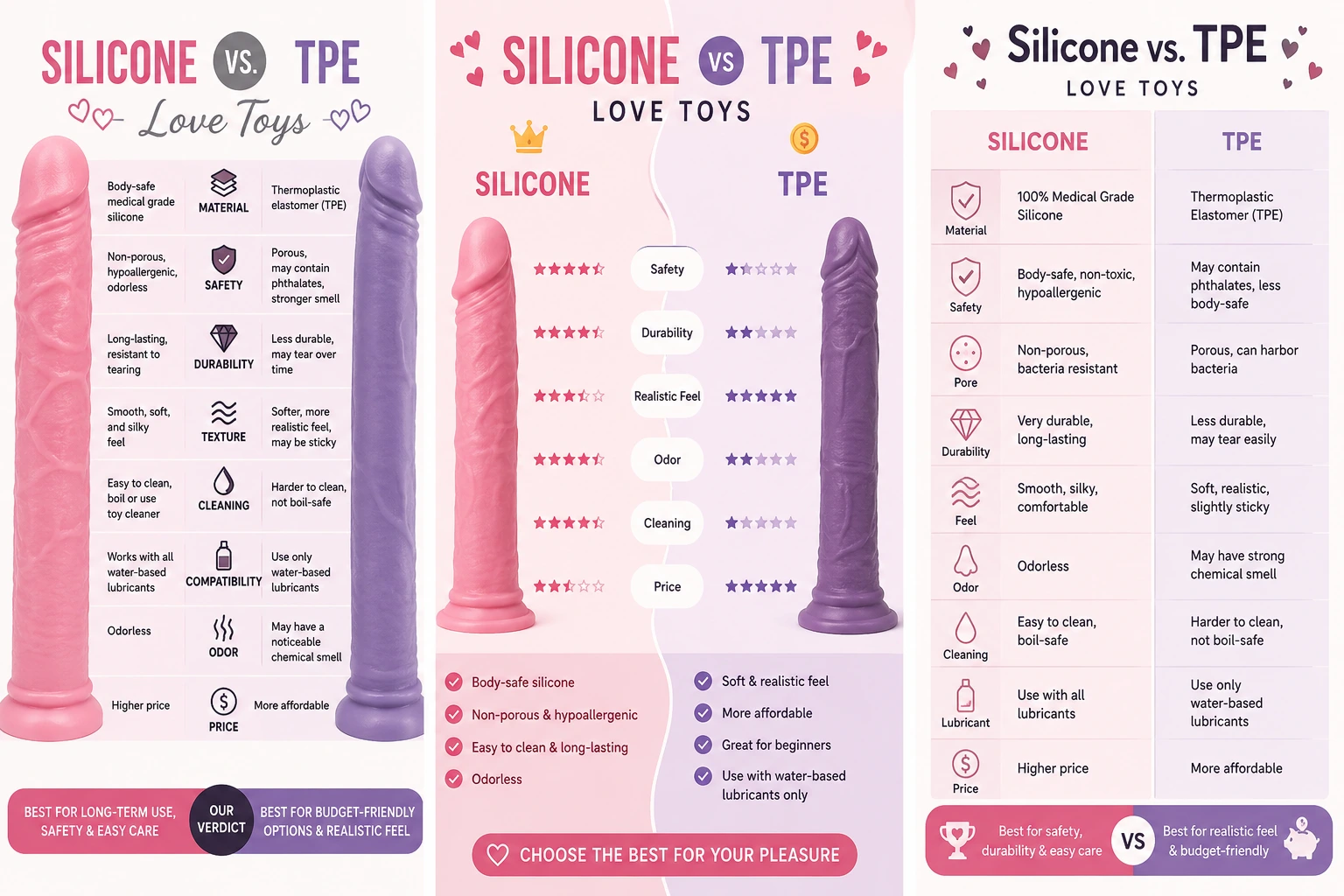
Silicone vs. TPE: Side-by-Side Comparison
| Feature | Silicone | TPE |
|---|---|---|
| Body-safe | Excellent | Good (quality varies by manufacturer) |
| Porosity | Non-porous | Porous |
| Cleaning | Very easy | Requires extra care |
| Durability | Excellent | Moderate |
| Texture | Smooth and supportive | Softer and skin-like |
| Maintenance | Low | Higher |
| Typical Price | Higher | Lower |
Rather than asking which material is universally “better,” it’s more helpful to ask which material better matches your priorities.
For buyers who want a toy that’s easy to maintain and built to last, silicone is usually the stronger investment. For those who prioritize affordability and softness, TPE may be an appealing alternative.
Which Material Feels More Realistic?
Realism is one of the biggest reasons people compare silicone and TPE dildos. While both materials can produce lifelike toys, they achieve that realism in different ways.
Silicone
High-quality silicone offers a smooth, refined feel with excellent structural support. Premium manufacturers can adjust the firmness of silicone to create everything from soft beginner-friendly toys to firmer models designed for more precise control.
The biggest advancement in recent years has been dual-density silicone. By combining a firm inner core with a softer outer layer, manufacturers create toys that compress naturally while maintaining enough rigidity for comfortable use. For many users, this delivers one of the closest experiences to natural anatomy.
Silicone also maintains its shape exceptionally well, making it a popular choice for suction cup dildos, harness-compatible toys, and products intended for frequent use.
TPE
TPE is naturally softer and more flexible than many silicone formulations.
When you first touch a quality TPE dildo, the surface often feels extremely supple, which is one reason realistic models commonly use this material.
However, softness isn’t the same as realism.
Although TPE can provide a convincing skin-like texture, it generally doesn’t offer the same balance of flexibility and internal support found in premium dual-density silicone products.
For some buyers, TPE feels softer.
For others, silicone feels more natural during actual use because it combines softness with consistent structural support.
Cleaning and Maintenance
The biggest practical difference between these materials isn’t how they feel—it’s how they’re maintained.
Silicone Requires Less Maintenance
Medical-grade silicone has a non-porous surface that makes routine cleaning straightforward.
After use, simply:
- Wash with warm water.
- Use mild fragrance-free soap or a toy cleaner.
- Rinse thoroughly.
- Dry completely before storage.
Because silicone doesn’t readily absorb moisture, it’s generally considered the easiest material to keep clean.
TPE Requires Extra Care
TPE needs more attention after every use.
Since it’s a porous material, proper cleaning becomes especially important.
Routine care should include:
- Immediate washing after use
- Complete drying
- Proper storage in a clean environment
- Regular inspection of the surface
Many manufacturers also recommend storing TPE toys separately to help preserve the material over time.
While none of these steps are difficult, they do require a little more consistency than silicone.
Lubricant Compatibility
Choosing the correct lubricant is just as important as choosing the right material.
Silicone Dildos
For most silicone toys, manufacturers recommend water-based lubricants.
Water-based formulas are widely compatible, easy to clean, and unlikely to affect the material.
Unless a manufacturer specifically confirms compatibility, avoid using silicone-based lubricants with silicone toys.
TPE Dildos
Water-based lubricants are also an excellent choice for TPE.
They’re gentle on the material, easy to remove during cleaning, and suitable for most situations.
Regardless of material, checking the manufacturer’s care instructions is always the safest approach.
Price vs. Long-Term Value
At first glance, TPE often appears to offer better value because the purchase price is usually lower.
However, long-term ownership tells a slightly different story.
Silicone
Higher initial cost often provides:
- Longer lifespan
- Easier maintenance
- Better durability
- Lower replacement frequency
Many buyers find that purchasing one high-quality silicone dildo ultimately costs less than replacing several inexpensive toys over time.
TPE
Lower purchase prices make TPE attractive for:
- First-time buyers
- Occasional users
- Budget-conscious shoppers
If properly maintained, a quality TPE dildo can still provide excellent value. However, buyers should understand that additional care is part of the trade-off for the lower price.
Which Material Should You Choose?
Rather than declaring one material universally superior, it helps to match the material to your priorities.
Choose Silicone If You Want:
- The easiest cleaning routine
- Long-term durability
- Body-safe, non-porous construction
- Low maintenance
- Premium quality
- Frequent use
Silicone is the material we recommend for the majority of buyers because it performs consistently well across almost every category.
Choose TPE If You Want:
- A lower purchase price
- A softer surface
- Highly detailed realistic sculpting
- An affordable first toy
TPE can be an excellent choice for buyers who understand its maintenance requirements and are comfortable providing the additional care it needs.
Expert Recommendation
After comparing hundreds of products across different materials, our recommendation remains consistent.
If your budget allows, invest in a high-quality medical-grade silicone dildo.
Although the initial price is usually higher, the combination of durability, easy maintenance, body-safe construction, and long-term reliability makes silicone the strongest overall investment for most users.
TPE remains a worthwhile option for buyers seeking affordability or a softer feel, but understanding its cleaning and storage requirements is essential before making your decision.
Common Buying Mistakes
Choosing between silicone and TPE is easier once you understand how each material performs in everyday use. However, many buyers still make a few common mistakes that can lead to disappointment after their purchase.
Assuming Softer Always Means Better
A softer surface can feel appealing at first, but softness alone doesn’t determine comfort or realism.
Many buyers purchase TPE because it initially feels more skin-like. However, premium dual-density silicone often provides a better balance of softness and structural support, making it feel more natural during actual use while remaining easier to maintain.
Instead of focusing on softness alone, consider the overall experience, including durability, flexibility, and ease of care.
Choosing Based Only on Price
Budget is important, but the cheapest option isn’t always the best value.
A lower-priced TPE dildo may seem like a bargain initially, but if you plan to use your toy regularly, a high-quality silicone model can provide better long-term value thanks to its durability and lower maintenance requirements.
Rather than asking, “Which one costs less today?” ask, “Which one will still perform well a few years from now?”
Ignoring Cleaning Requirements
Material affects how much maintenance your toy will require.
Silicone generally needs only routine washing with warm water and mild soap, while TPE requires more careful cleaning, complete drying, and proper storage to keep the material in good condition.
If you prefer a simple, low-maintenance routine, silicone is usually the better fit.
Forgetting About Intended Use
The best material also depends on how you plan to use your dildo.
For example:
- Frequent use: Silicone is typically the better choice because of its durability and easy maintenance.
- Occasional use: TPE may offer good value if you’re comfortable following the recommended cleaning routine.
- Hands-free or harness play: Silicone’s structural support often makes it a more dependable option.
- Budget-conscious shopping: TPE can be an excellent entry point if purchased from a reputable manufacturer.
Thinking about your intended use before purchasing often leads to a more satisfying decision than comparing specifications alone.
Frequently Asked Questions
Is silicone safer than TPE?
Medical-grade silicone is widely regarded as the premium material because it is non-porous, body-safe, and easy to sanitize. High-quality TPE products can also be enjoyable to use, but they require more careful cleaning and maintenance because the material is generally porous.
Which material lasts longer?
Under normal use and with proper care, silicone typically has a longer service life. It resists wear, maintains its shape well, and is less likely to show signs of aging over time.
Which material feels more realistic?
The answer depends on what you mean by “realistic.”
TPE often feels softer to the touch, while premium dual-density silicone combines softness with internal support, creating a more natural sensation during use. Many experienced users prefer dual-density silicone for this reason.
Which material is easier to clean?
Silicone is generally much easier to maintain because it has a non-porous surface.
TPE requires more attention during cleaning, drying, and storage to help preserve the material over time.
Can beginners start with TPE?
Absolutely.
A quality TPE dildo can be an excellent first purchase, particularly for buyers working within a budget. The key is understanding the additional maintenance that comes with the material and following the manufacturer’s care recommendations.
Is silicone worth the higher price?
For many buyers, yes.
Although silicone products usually cost more initially, their durability, easier maintenance, and long-term reliability often make them the better overall investment.
Editor’s Recommendation
If someone asked us to recommend just one material for the majority of buyers, our answer would be medical-grade silicone.
Silicone offers the strongest combination of safety, durability, versatility, and ease of maintenance. Whether you’re buying your first dildo or upgrading from an older toy, it’s the material that consistently performs well across almost every category.
That said, TPE still has an important place in the market. For buyers looking for a softer feel or a lower purchase price, a well-made TPE dildo can provide an enjoyable experience—as long as you’re willing to invest a little extra time in cleaning and storage.
Rather than viewing one material as “good” and the other as “bad,” it’s more accurate to think of them as different solutions for different priorities.
Final Verdict
Silicone and TPE are both widely used in modern dildos, but they serve different types of buyers.
If your priorities are body-safe materials, simple maintenance, durability, and long-term value, silicone is the material we recommend most strongly. It requires less upkeep, stands up well to regular use, and is available in everything from beginner-friendly models to premium dual-density designs.
If your priorities are affordability, softness, and realistic surface texture, TPE remains a practical alternative. While it demands a little more attention when it comes to cleaning and storage, it offers an accessible way to explore realistic toys without a large upfront investment.
Ultimately, the best choice isn’t about which material is universally superior—it’s about selecting the one that best matches your budget, experience level, maintenance preferences, and how you plan to use your toy. By understanding the strengths and trade-offs of each material, you’ll be able to choose with confidence and enjoy a better long-term experience.