

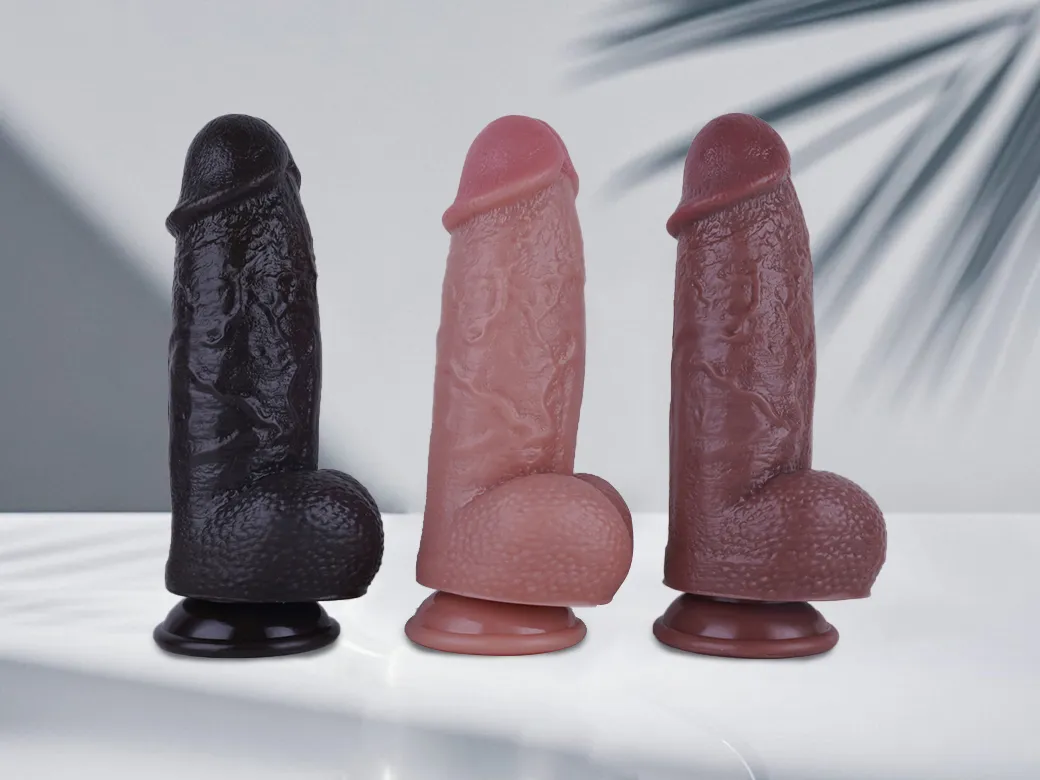
Online product photos can tell you a great deal about a dildo—but only when you know what to examine.
A polished main image may communicate the overall design, color and style, yet it can also make a dildo appear larger, smoother or more dramatically curved than it looks in person. Camera distance, lens choice, lighting, cropping and digital editing all affect how the finished image appears.
The safest approach is to treat product photos as visual evidence rather than exact measurements. Use them to understand shape and construction, then verify size, material and other specifications through the written product information.
This guide explains how to interpret dildo product photos, compare different image types and recognize details that may require further confirmation before you order.
The Visual Evidence Ladder
Not every product image provides the same amount of useful information. When evaluating a dildo online, consider the following image types in order of reliability.
1. The Main Catalog Image
The first image is usually designed to attract attention and present the dildo from its most flattering angle. It is useful for identifying:
- The general design
- The approximate color
- Whether the dildo is realistic or non-realistic
- The overall shape of the head and shaft
- Visible surface textures
However, the main catalog image is rarely a reliable indicator of actual size. Large and small dildos are often photographed to occupy approximately the same amount of space inside the image frame.
Treat the main image as an introduction—not as complete evidence.
2. Multiple-Angle Images
Front, side, rear and underside images provide much more information than a single hero shot. Shopify’s official product-photography guidance recommends photographing products from multiple angles so customers can understand what they are buying more clearly. Shopify Help Center
For dildos, multiple views are especially important because a shape that appears straight from the front may have a noticeable curve from the side. An attractive base may also look less practical once its thickness and underside are visible.
3. Scale and Measurement Images
A photo showing the dildo beside a ruler or measurement grid is more useful than an isolated image. It can help you visualize the overall length, insertable length and width.
A hand-held photo may also provide some sense of scale, but hands differ considerably in size. It should never replace exact measurements.
For the final decision, compare the images with the specifications and our Dildo Size Guide rather than estimating dimensions from the photograph alone.
4. Customer Photos
Customer-submitted photos can show how the dildo looks outside a professional studio. They may reveal differences in:
- Color under ordinary lighting
- Surface finish
- Packaging
- Actual scale
- Base thickness
- Flexibility or softness
These photos are valuable, but they also require context. The customer may own a different size, color, firmness or earlier version of the dildo. Always confirm that the review photo matches the exact variation you plan to purchase.
Shopify also notes that customer photos can help buyers see a product in a more realistic setting and increase trust. Shopify
5. Product Videos
Video can reveal details that still images cannot, particularly flexibility, movement and how the material responds when handled.
However, a short video may still use flattering lighting, selective camera angles or editing. It can demonstrate visible movement, but it cannot independently prove material composition, durability or long-term quality.
Check 1: Confirm That Every Photo Shows the Same Variant
Before examining the dildo itself, check the selected options on the product page.
One listing may contain several versions that differ in:
- Length
- Girth
- Color
- Material
- Firmness
- Base design
- Surface texture
The main image may show the largest or most visually striking version, even when another option is currently selected. Thumbnail images may also combine photos of multiple sizes.
Look for variation labels such as “Small,” “Large,” “Soft,” “Firm” or individual color names. When switching between options, check whether the main image and specifications change.
If the page does not clearly identify which variation appears in each photo, give more weight to the written measurements than to visual comparisons.
Check 2: Never Estimate Size From How Much of the Frame It Fills
A dildo that fills the entire image is not necessarily large. Product photographers normally crop images so the subject occupies most of the available frame.
Camera position can create additional distortion. Canon explains that wide-angle photography can exaggerate perspective, making nearby parts of a subject appear disproportionately large. Canon Adobe also notes that lenses and camera tilt can introduce barrel, pincushion and perspective distortion. Adobe
This matters when a dildo is photographed from close to the head or base. The nearest section may look wider and more prominent than it really is.
Use this order when judging size:
- Exact written measurements
- A measurement diagram
- A ruler or grid photo
- A photo beside familiar objects
- A hand-held photo
- An isolated catalog image
Also check whether the listed length is total length or insertable length. A thick base, suction cup or decorative section may account for part of the total measurement.
Check 3: Compare the Front and Side Views
A single angle can conceal important design features. The front and side photos should be read together.
The front view is useful for checking:
- Overall width
- Symmetry
- Vein or texture placement
- Shaft taper
- Relative width of the head
- Whether the base extends evenly on both sides
The side view is better for checking:
- Direction and degree of curvature
- Head projection
- Shaft profile
- Base thickness
- Changes in width along the shaft
- Whether the dildo can stand upright
Pay particular attention to the curve. A slight curve may appear dramatic when photographed diagonally, while a stronger curve may look almost straight from the front.
If only one angle is available, the product page is giving you an incomplete picture of the shape.
Check 4: Look for a Clear Base and Underside Photo
The underside is one of the most informative—and most frequently omitted—parts of a dildo listing.
A clear underside photo may show:
- Whether the base is completely flat
- The depth and width of a suction cup
- Charging ports or control buttons
- Material or brand markings
- Seams around the base
- Attachment points
- The actual base shape
Do not assume that every wide base functions as a suction cup. Some bases are intended primarily for stability or harness compatibility and may not create suction.
If base design matters to your intended use, compare the images with our Dildo Base Types Compared guide. The written description should clearly state whether the dildo is suction-cup compatible, harness compatible, freestanding or designed for another attachment system.
A listing that repeatedly shows the front while hiding the underside deserves closer examination.
Check 5: Use Close-Ups to Examine Surface Details
Close-up images can reveal whether a dildo has a smooth finish, pronounced veins, raised textures or visible manufacturing seams.
When reviewing detailed photos, examine:
- The transition between the head and shaft
- Raised veins, ridges or bumps
- The edge of the base
- Areas where two materials or components meet
- The surface around charging ports or buttons
- Any visible lines running along the shaft
A visible seam does not automatically mean that a dildo is poorly made. Some manufacturing processes naturally leave a faint mold line. The more important question is whether the seam appears smooth and properly finished rather than raised, irregular or sharp.
Close-ups can also help you estimate how pronounced a texture might be. Directional lighting creates shadows around veins and ridges, making them appear deeper than they are. Compare close-up images with wider photos taken under softer lighting before reaching a conclusion.
For a more complete evaluation, use the images together with our guide on How to Tell if a Dildo Is Good Quality.
Check 6: Expect Some Color Difference
The color shown on your screen may not perfectly match the dildo you receive.
Differences can result from:
- Studio lighting
- Camera settings
- Photo editing
- Screen brightness
- Monitor color calibration
- The surrounding background
- Small variations between production batches
Bright studio lighting can make colors appear lighter and more saturated, while dark backgrounds can make the same color look deeper. Glossy surfaces may produce strong highlights that make the material appear wet or metallic even when its normal finish is more subtle.
Shopify’s product-photography guidance emphasizes the importance of consistent lighting because changing light conditions can affect how products and colors appear. Shopify
To form a more realistic expectation, compare the same color across:
- The main catalog image
- Additional-angle images
- Packaging photos
- Product videos
- Verified customer photos
If the color name is highly specific—such as mocha, caramel, bronze or warm beige—do not rely on the name alone. Look for several images taken under different lighting conditions.
Color variation normally affects appearance rather than function. However, if an exact shade is important to your purchase, ask the seller for a current unedited photo of the available inventory.
Check 7: Distinguish Photographs From Renders
Some product pages use computer-generated renders instead of photographs. Renders can clearly display shape and design, especially before a new dildo is released, but they may not accurately represent the final surface finish, color or manufacturing details.
Possible signs of a rendered image include:
- Perfectly uniform reflections
- Extremely clean edges
- No small surface variation
- Identical highlights across every color
- A floating appearance with no natural contact shadow
- Several variations using exactly the same shape and lighting
- A surface that looks smoother than the customer photos
A highly polished image is not necessarily misleading. Professional photographs are routinely cleaned, color-corrected and placed on white backgrounds. The concern arises when renders are the only images available and the page does not show the physical dildo, packaging or real-world details.
Do not try to determine quality from image style alone. Instead, look for supporting evidence such as specifications, customer photos, verified reviews and clear material information.
This is where our How to Read Dildo Reviews guide can help you separate useful ownership details from comments based mainly on appearance.
Check 8: Know What Product Photos Cannot Prove
Even excellent photography has limits. Images can show visible design features, but they cannot confirm every product claim.
Photos generally cannot prove:
- The exact material composition
- Whether a material is body-safe
- The actual firmness
- How the surface feels
- The product’s weight
- Odor when first opened
- Long-term durability
- Suction strength
- Motor power or noise level
- Battery life
- Whether measurements are accurate
- Warranty coverage
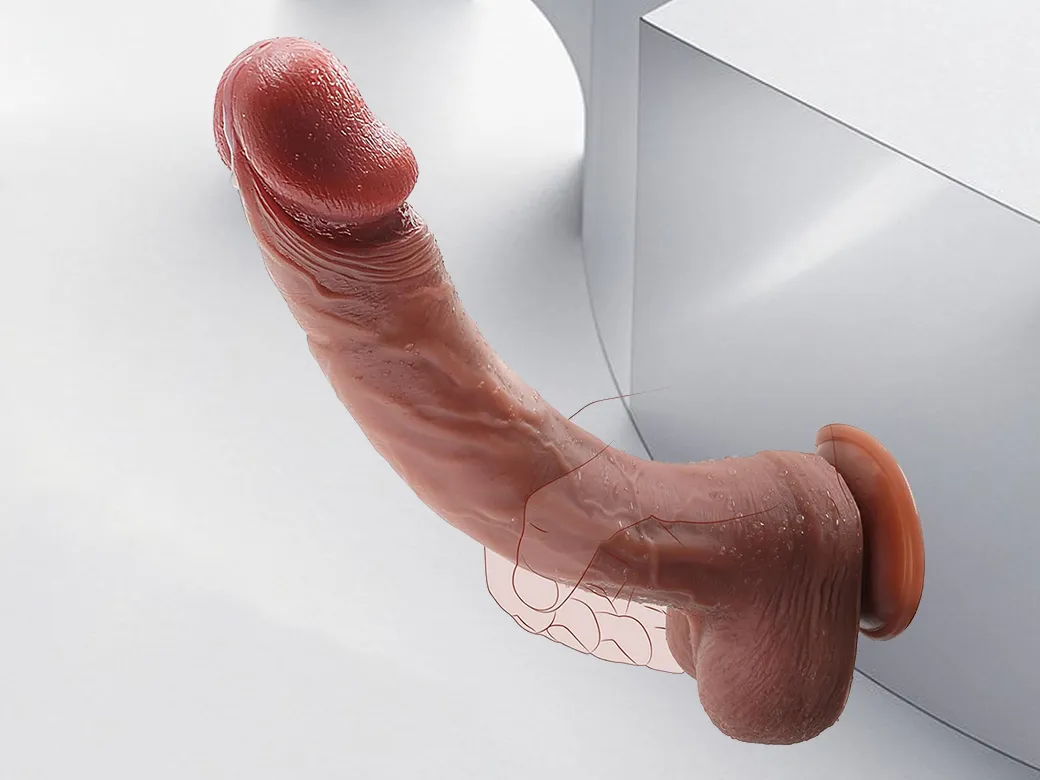
A photo of a dildo bending can demonstrate that it has some flexibility, but it does not tell you exactly how soft it feels. Hand pressure, camera angle and editing can all affect the appearance of a flexibility demonstration.
Likewise, a photograph showing a dildo attached to a wall does not guarantee that the suction cup will perform equally well on every surface. Suction depends on the base design, surface smoothness, cleanliness and other conditions.
Use photographs to evaluate visible characteristics. Use specifications, material disclosures, testing information, warranty terms and verified reviews to evaluate claims that cannot be seen.
Warning Signs in a Dildo Image Gallery
A limited image gallery does not automatically indicate a bad dildo, but it increases uncertainty. Examine the listing more carefully when you notice several of these issues:
- Only one image is provided
- Every photo shows the same angle
- No underside or base photo is available
- The images show different-looking versions without labels
- The selected variation does not match the displayed image
- Product photos and measurements appear inconsistent
- The listing uses only renders
- Close-ups are blurry or heavily filtered
- The packaging shows a different brand or model
- Customer photos repeatedly show details missing from the catalog images
The purpose is not to reject every listing with imperfect photography. Instead, identify what information is missing and decide whether the written description provides sufficient clarification.
What to Do When Photos and Specifications Disagree
Written specifications should normally be more dependable than visual estimates, but product-page errors can occur.
For example, the photograph may show a noticeably thick base while the listed total and insertable lengths are identical. Alternatively, an image may show a strong curve while the description calls the dildo straight.
If the difference could affect your purchase:
- Check whether multiple sizes or versions share one listing.
- Read the full specifications rather than the short description.
- Look for a measurement diagram.
- Compare recent customer photos and reviews.
- Contact the seller with the exact product name, SKU and variation.
- Save a copy of the answer before placing the order.
For custom colors or made-to-order designs, visual variation may be more likely. Our Custom vs Ready-Made Dildos comparison explains why product images may represent an example rather than the exact item you will receive.
Quick Product Photo Checklist
Before adding a dildo to your cart, confirm that you can answer these questions:
- Am I viewing the correct size and color variation?
- Have I checked the written measurements?
- Is there both a front and side view?
- Can I clearly see the base and underside?
- Are surface details visible in at least one close-up?
- Does the color look reasonably consistent across several images?
- Are the images photographs, renders or a mixture of both?
- Do recent customer photos match the catalog images?
- Are any important claims supported only by a photograph?
- Do the specifications and images describe the same design?
You do not need a perfect answer to every question. The checklist simply helps you recognize uncertainty before ordering rather than after delivery.
Frequently Asked Questions
Can I accurately judge dildo size from a product photo?
Not from an isolated photo. Cropping, camera distance and perspective can change how large the dildo appears. Always use the listed length, insertable length and circumference or diameter.
Are customer photos more reliable than professional photos?
Customer photos can provide a more realistic view of scale, color and finish, but they may show a different variation or an older model. Use them alongside official images and specifications.
Why does the dildo color look different in customer photos?
Lighting, camera settings, screen calibration and production variation can all affect color. Compare several images instead of relying on one photograph.
Does a visible seam mean the dildo is low quality?
Not necessarily. A faint, smooth mold line can occur during manufacturing. Raised, rough or irregular seams deserve more attention, particularly when mentioned repeatedly in verified reviews.
Can photos show whether a dildo is soft or firm?
They can provide clues, especially when the dildo is shown bending, but they cannot communicate the exact feel. Look for firmness descriptions, material information and comparisons with other models.
Should I buy a dildo if the listing has only one photo?
That depends on the information available elsewhere. If the specifications, material, base design and selected variation are clearly documented, one image may be sufficient. If important details remain uncertain, ask the seller before ordering.
Final Thoughts
Good dildo product photos should help you understand the design—not force you to guess.
Start with the exact variation, verify the written measurements, compare front and side views, inspect the base and study real-world photos when available. Most importantly, separate details that can be seen from claims that require written evidence.
When product images, specifications and recent customer feedback all support one another, you can shop with much greater confidence.
Ready to compare your options? Explore our dildo collections and use the filters to shop by size, shape, material and base style.