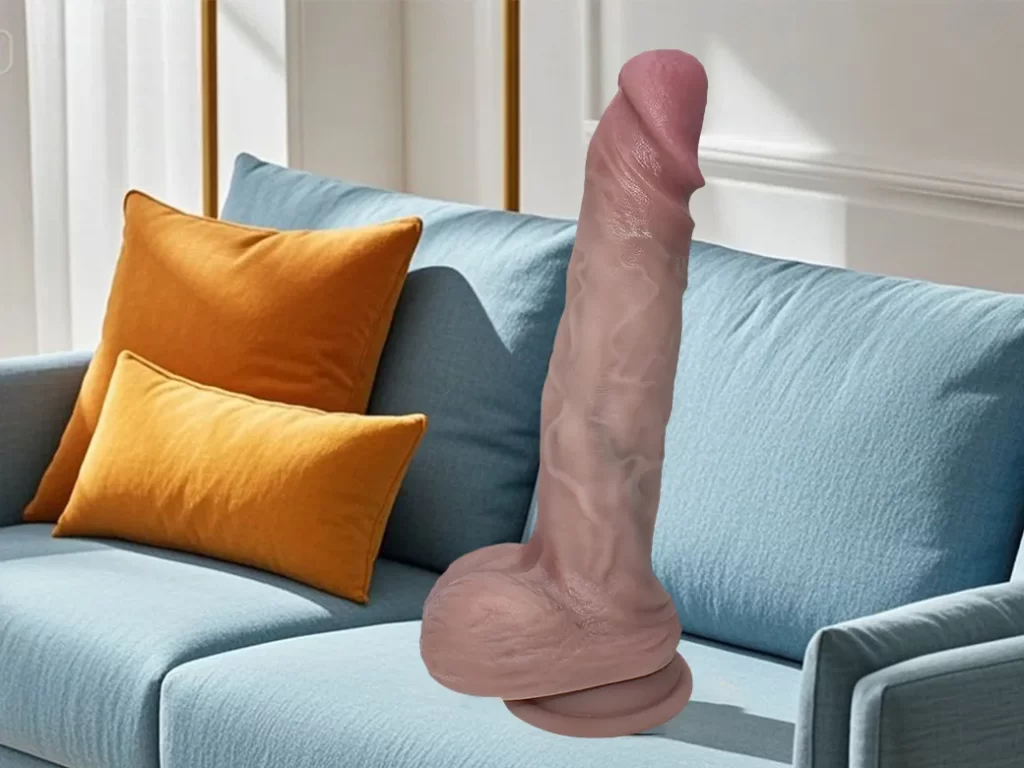

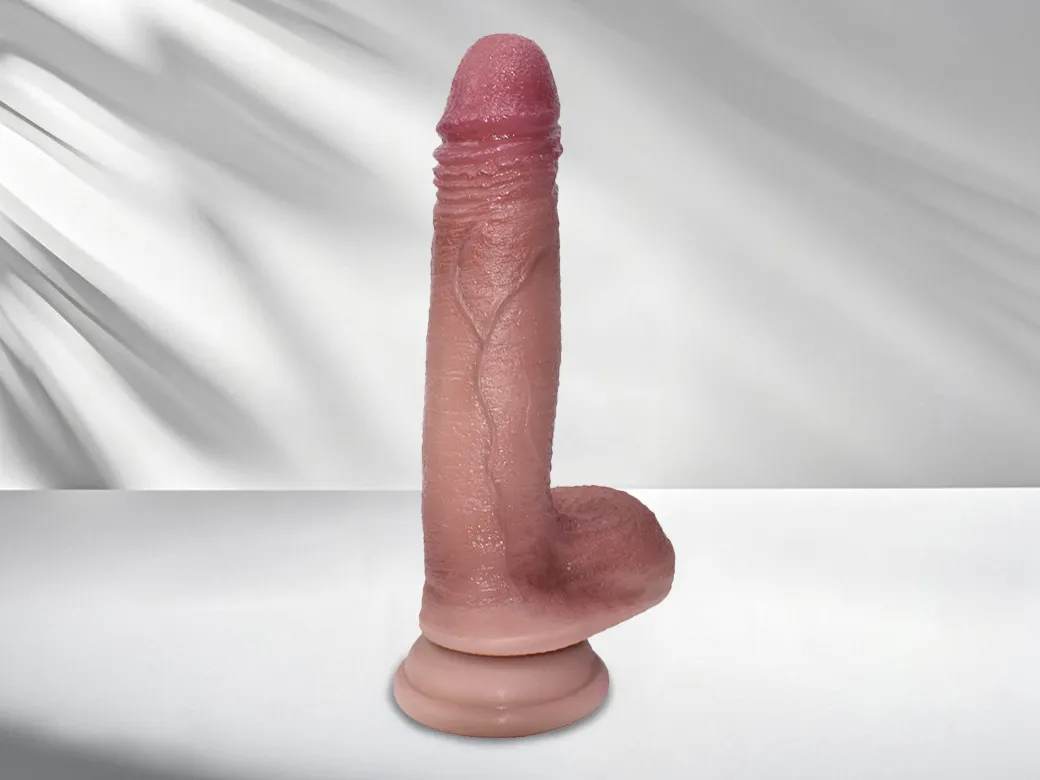
You find the same dildo on two websites, but the dimensions do not match.
One store says the product is eight inches long. Another lists it as 7.5 inches. The manufacturer may describe a six-inch insertable length, while a marketplace seller claims that seven inches are usable.
These differences do not always mean that one store is selling a counterfeit product. Retailers may be measuring different parts, converting units differently or using specifications from different product versions.
However, incorrect copying, variant mix-ups and outdated supplier data can also produce inaccurate listings.
Before ordering, compare the SKU, variant, measurement labels and original manufacturer information—not only the product name and photograph.
Quick Answer
The same dildo may have different listed dimensions because of:
- Total length being confused with insertable length
- Measuring along a curve instead of in a straight line
- Including or excluding the base
- Measuring different parts of the shaft
- Diameter being confused with circumference
- Centimeter-to-inch conversion and rounding
- Compression of soft material
- Natural manufacturing variation
- Different product generations
- Small, medium and large variants being mixed together
- Retailers copying outdated or incorrect specifications
- Packaging measurements being confused with product dimensions
A difference of a few hundredths of an inch may come from rounding. A difference of half an inch or more deserves closer investigation.
First Confirm It Is Actually the Same Product
Similar names and photographs do not guarantee that two listings describe the same item.
Check:
- Brand
- Model name
- SKU or item number
- UPC or barcode
- Color
- Firmness
- Material
- Size variant
- Product generation
- Base type
- Packaging version
- Included accessories
A brand may sell several versions with nearly identical names. One can be soft while another is firm, or one may include a suction base while another uses a harness base.
Retailers sometimes combine multiple variants on one page. The dimensions shown in the description may belong to the default variant rather than the color or size currently selected.
If the SKU or UPC differs, treat the products as potentially different until the manufacturer confirms otherwise.
Cause 1: Total Length vs Insertable Length
This is the most common explanation.
Total length measures the complete product from the highest point of the tip to the lowest point of the base.
Insertable length measures only the portion designed to enter the body.
A dildo with a large suction cup or realistic testicle base can have a significant difference between these measurements.
For example:
- Total length: 8.25 inches
- Insertable length: 6.75 inches
- Base height: 1.50 inches
One retailer may publish the total length as “product length.” Another may highlight the insertable length without labeling it clearly.
Both numbers can be technically correct while appearing contradictory.
Product pages should always use separate fields:
- Total length
- Insertable length
- Base height
Link this section to your total length vs insertable length guide.
Cause 2: Measuring Along a Curve vs Straight-Line Length
Curved dildos can be measured in two ways.
Straight-Line Length
A ruler measures directly from the tip to the base without following the curve.
Contoured Length
A flexible tape follows the surface along the outside or centerline of the curve.
The contoured measurement will usually be longer because it follows a curved path.
Two retailers may therefore publish different lengths for the same product even when both measured it carefully.
The problem is often the missing method label.
A clearer listing would state:
- Straight-line insertable length: 6.3 inches
- Length measured along outer curve: 6.8 inches
Neither should be labeled simply as “length” when the difference is meaningful.
For highly curved dildos, include a diagram showing the measuring path.
Cause 3: Including or Excluding the Head
A pronounced head can create uncertainty about where the shaft begins.
Some retailers measure:
- From the tip to the base
- From below the head to the base
- Only the straight central shaft
- Only the portion before the lower flare
- The full insertable contour
This can affect both length and girth.
A listing that says “shaft length” may exclude the head, while another store’s “insertable length” includes it.
Compare the photographs and ask where each measurement starts and ends.
Cause 4: Measuring Different Shaft Positions
A dildo rarely has one width from top to bottom.
The head, upper shaft, middle and lower shaft may all have different dimensions. A tapered dildo can become progressively wider, while a realistic dildo may have a pronounced head and narrower body.
One retailer may list:
- Mid-shaft diameter
Another may list:
- Maximum insertable diameter
A third may list:
- Diameter at the base
These are not equivalent.
For example:
| Measurement Point | Diameter |
|---|---|
| Head | 1.70 in |
| Upper shaft | 1.45 in |
| Mid-shaft | 1.55 in |
| Lower shaft | 1.75 in |
Depending on the chosen point, the same dildo could be described as 1.45, 1.55, 1.70 or 1.75 inches wide.
Every width should identify its location.
Link this section to tapered vs uniform-width dildos.
Cause 5: Diameter vs Circumference Confusion
Diameter measures straight across a roughly circular shaft. Circumference measures around it.
For a circular shaft:
Circumference ≈ Diameter × 3.14
A 1.50-inch diameter corresponds to a circumference of approximately 4.71 inches.
Listing errors can occur when:
- Circumference is labeled as diameter.
- Diameter is labeled as girth.
- A supplier provides centimeters without the unit.
- A retailer copies a circumference value into a width field.
- An oval shaft is treated as circular.
A five-inch “diameter” on a normal-size product may actually be its circumference.
For non-round shafts, even a correct diameter-to-circumference calculation can be misleading. Refer readers to how to measure an oval dildo and the diameter vs circumference guide.
Cause 6: Centimeter-to-Inch Conversion
International manufacturers often publish dimensions in centimeters, while U.S. retailers convert them to inches.
One inch equals exactly 2.54 centimeters, according to NIST’s current conversion tables. NIST also recommends retaining digits during calculation and rounding only at the final step. (NIST Handbook 44, 2026)
Suppose a dildo measures 19 centimeters:
19 ÷ 2.54 = 7.4803 inches
A retailer might list it as:
- 7.48 inches
- 7.5 inches
- 7 inches
- Approximately 7.4 inches
The first two are reasonable rounding choices. Listing it as seven inches removes nearly half an inch and may imply greater measurement precision than the original data supports.
Repeated conversion can also create errors. If one store converts 7.5 inches back into centimeters, it gets 19.05 centimeters rather than the original 19.
Cause 7: Different Rounding Rules
Even when retailers begin with the same measurement, they may display different precision.
Example source measurement:
20.4 centimeters = 8.0315 inches
Possible listings include:
- 8.03 inches
- 8.0 inches
- 8 inches
- Approximately 8.1 inches due to upward rounding
A one-decimal product page and a two-decimal manufacturer sheet may look inconsistent while describing essentially the same object.
Problems arise when a retailer always rounds upward for marketing. A product measuring 7.52 inches should not be described as eight inches without clearly stating that the figure is approximate.
Useful retailer policy:
- Record centimeters to one decimal place.
- Record inches to one or two decimal places.
- Use the same rounding method across the site.
- Add “approximately” for soft or handmade products.
- Never round one product up and a competitor down.
Cause 8: Soft Material Compression
Soft silicone, TPE and similar materials can change shape during measurement.
A caliper may compress the shaft and produce a smaller diameter. A measuring tape pulled tightly may reduce circumference. A flexible dildo laid flat may bend or shorten slightly under its own weight.
Different people may apply different pressure.
For soft products, measurements should state:
- Uncompressed
- Measured at room temperature
- Resting in a neutral position
- Approximate
- Taken without stretching the material
A very soft product may naturally vary by several millimeters between measurements without any manufacturing defect.
Cause 9: Flexible Products Measured in Different Positions
A bendable or poseable dildo may not have one fixed overall length.
One retailer might measure it:
- Fully straightened
- In its natural curve
- Along the outside edge
- Along the centerline
- While standing on the base
- While lying flat
A long flexible shaft may also sag, changing the tip-to-base distance.
Product pages should publish the natural resting measurement and identify any maximum straightened length separately.
Cause 10: Natural Manufacturing Variation
Molded products can have small dimensional differences between units or batches.
Variation may come from:
- Material shrinkage during curing
- Differences in cooling
- Trimming around the base
- Firmness formulation
- Multi-density construction
- Handmade finishing
- Mold replacement
- Normal measurement tolerance
Small variation does not automatically indicate poor quality. Retailers should describe measurements as approximate when the manufacturing process cannot guarantee an exact dimension.
However, a major difference may indicate the wrong variant, revised mold or inaccurate listing rather than normal tolerance.
Cause 11: The Product Was Redesigned
Brands sometimes update products without changing the main name.
A revised version may have:
- A shorter base
- Greater insertable length
- Different firmness
- Modified head proportions
- A stronger suction cup
- A changed internal core
- New packaging
- A revised SKU suffix
One store may still have the original version while another carries the updated model.
Look for terms such as:
- New generation
- Version 2
- Updated design
- Revised mold
- New formula
- Improved suction base
- Soft or firm edition
If the listing does not identify the version, ask which production model will be shipped.
Cause 12: Retailer Copying or Data-Entry Errors
Some stores measure products themselves. Others receive specifications from a distributor or copy information from an older catalog.
Errors can spread when:
- One retailer copies another retailer.
- A supplier spreadsheet assigns data to the wrong SKU.
- Metric units are pasted into an inch field.
- A product title is updated but old specifications remain.
- Dimensions from the package are used for the dildo.
- AI-generated descriptions introduce unsupported numbers.
- Small and large variants share one description.
- A decimal point is entered incorrectly.
A polished product page is not proof that every measurement is accurate. Dimensions should be traceable to the manufacturer or a documented in-house measurement.
Cause 13: Package Dimensions vs Product Dimensions
Marketplace feeds often contain both item and package measurements.
A dildo may be seven inches long but arrive in a box measuring ten inches. Automated imports can place the package length into the product specification area.
Warning signs include:
- Width that looks much larger than the product
- Height matching the retail box
- Three-dimensional values that resemble packaging
- Measurements accompanied by shipping weight
- Identical dimensions across several unrelated products
Confirm that the listed values describe the actual dildo, not its carton.
Cause 14: Variant Information Was Mixed Together
A product page may contain several:
- Sizes
- Colors
- Firmness levels
- Materials
- Base designs
- Limited editions
If the retailer uses one general description, the displayed dimensions may not change when the shopper selects another variant.
Check whether the URL, SKU and specification table update after choosing a size. If they do not, ask the retailer which variant the measurements belong to.
Which Dildo Measurement Source Should You Trust?
No source is guaranteed to be correct in every situation. Use a hierarchy while confirming that every source refers to the same SKU and product version.
A practical order is:
- Current manufacturer specification sheet for the exact SKU
- Current product packaging or official manual
- Retailer measurements taken from the physical product
- Authorized distributor catalog
- Other retailer listings
- Marketplace descriptions
- Customer reviews and informal measurements
Manufacturer information is usually the best starting point, but it can still be outdated or incomplete. A retailer that physically measures the current product may have more accurate information than an old brand catalog.
The strongest listing explains where its data came from:
- Manufacturer supplied
- Distributor supplied
- Measured by retailer
- Converted from centimeters
- Approximate due to soft material
- Updated after a product redesign
Do not trust a number simply because it appears on more websites. Several sellers may have copied the same original error.
How to Resolve Conflicting Dildo Dimensions
When two stores disagree, use this process.
Step 1: Compare Product Identifiers
Confirm:
- Brand
- Product name
- SKU
- UPC
- Size
- Firmness
- Color
- Base style
- Product generation
If the identifiers differ, the listings may not describe the same version.
Step 2: Put Every Measurement in the Same Unit
Convert all dimensions into either inches or centimeters.
Use:
Inches = Centimeters ÷ 2.54
Centimeters = Inches × 2.54
Keep the complete result until the final comparison, then round once.
Example:
- Store A: 19 cm
- Store B: 7.5 in
- Store C: 7.48 in
These figures describe essentially the same length.
Step 3: Match the Measurement Labels
Create a table:
| Store | Total Length | Insertable Length | Diameter | Circumference |
|---|---|---|---|---|
| Store A | 8.0 in | 6.5 in | 1.6 in | Not listed |
| Store B | Not listed | 6.4 in | Not listed | 5.0 in |
| Store C | 8.1 in | Not listed | 1.6 in | 5.1 in |
Once the fields are aligned, the apparent disagreement may disappear.
Do not compare one store’s total length with another store’s insertable length.
Step 4: Check Where Width Was Measured
Determine whether “diameter” refers to:
- Head
- Upper shaft
- Mid-shaft
- Maximum insertable point
- Lower shaft
- Suction cup
- Complete base
If the location is not stated, the number cannot be interpreted confidently.
Step 5: Look for Product-Version Clues
Check publication dates, packaging photographs, SKU suffixes and phrases such as “new design.”
An older retailer photograph may show the first-generation product even when the title matches a current listing.
Step 6: Ask for Clarification
Contact the retailer with a specific question:
Could you confirm the total length, insertable length and maximum shaft diameter for SKU [number]? Please also let me know whether these measurements came from the manufacturer or were taken from the physical product.
This is easier for support staff to answer than a general question such as “What size is it?”
Step 7: Do Not Average Conflicting Numbers
If one listing says 1.5 inches and another says two inches, averaging them to 1.75 inches does not create reliable data.
The difference may come from:
- Two measurement locations
- Diameter vs circumference
- Different variants
- A listing error
- Product redesign
Find the cause rather than calculating a middle value.
What If the Exact Size Is Important?
When a buyer has a strict maximum-size preference, uncertain measurements should be treated cautiously.
Before ordering:
- Ask for the maximum insertable width.
- Ask where it was measured.
- Request circumference if the shaft is not round.
- Confirm the material’s firmness.
- Check whether the product is returnable while sealed.
- Compare original manufacturer information.
- Avoid relying on photographs alone.
If two credible sources disagree and the retailer cannot verify the size, consider a product with clearer specifications.
A well-documented product is usually a better buying choice than one that requires guessing.
How to Measure the Dildo After Delivery
Check the return policy before opening intimate-product packaging. Some stores accept returns only while the seal remains intact.
If the product can be inspected and you plan to keep it, measure it at room temperature in a neutral position.
Measure Total Length
Measure from the highest point of the tip to the lowest point of the base.
For a curved dildo, record whether you used:
- A straight ruler
- A tape following the curve
Measure Insertable Length
Measure from the tip to the point where the shaft meets the non-insertable base.
Do not include:
- Suction cup
- Testicles intended to remain outside
- Handle
- Harness plate
- Machine connector
Measure Diameter
For a roughly circular shaft, measure straight across the selected point without compressing the material.
Record the location:
- Mid-shaft diameter
- Maximum insertable diameter
- Diameter immediately above the base
Measure Circumference
Wrap a flexible tape around the shaft without pulling it tight. If the shaft is oval, also record side-to-side width and front-to-back depth.
Photograph the Method
Take a photograph showing:
- The measuring tool
- Start and end points
- Product orientation
- Selected shaft position
A photograph helps the retailer determine why your measurement differs from the listing.
How Much Difference Is Normal?
There is no universal tolerance for every material and manufacturing method.
As a practical editorial approach:
- A few millimeters may result from rounding or measuring pressure.
- A small length difference may come from a flexible tip or curved shaft.
- A major difference requires checking the variant and measurement method.
- A different unit or dimension label may explain an apparently extreme error.
Do not publish a fixed “acceptable tolerance” unless the manufacturer supplies one.
Retailers can instead write:
Measurements are approximate. Small variations may occur because of material softness, manufacturing tolerances and measurement method.
This statement should not be used to excuse a clearly incorrect specification.
How Retailers Can Prevent Measurement Conflicts
Stores can improve accuracy by establishing one measurement standard.
Use One Definition for Every Field
Define:
- Total length
- Insertable length
- Maximum insertable diameter
- Mid-shaft diameter
- Circumference
- Base width
- Product weight
Apply the definitions consistently across all products.
Record the Data Source
Add an internal or public label:
- Manufacturer data
- Distributor data
- In-house measurement
- Customer-submitted information
- Estimated from available specifications
In-house measurements should be given priority when supplier data is clearly inconsistent.
Measure One Physical Sample
For important products, have staff measure an actual unit and compare it with the supplier sheet.
Record:
- Date measured
- SKU
- Batch if known
- Measuring method
- Staff initials
- Photographs
Separate Every Variant
Each size and firmness option should have its own specifications. Do not use the large model’s dimensions for the small version.
Preserve Original Metric Data
If the manufacturer provides centimeters, store that original value. Generate the inch value from it rather than repeatedly converting between units.
Avoid False Precision
A soft handmade dildo should not be presented as exactly 8.137 inches long. Excess decimal places make approximate data look more precise than it is.
Review Specifications After Restocking
A new shipment may contain revised packaging or an updated mold. Compare the new batch with the existing listing.
A Better BestDildo Measurement Standard
For BestDildo.com, consider displaying two labels when possible:
Manufacturer-Listed Dimensions
The measurements supplied by the brand or authorized distributor.
BestDildo Verified Dimensions
Measurements taken from a physical sample using your published method.
Example:
Manufacturer-listed total length: 8.0 inches
BestDildo measured total length: approximately 7.8 inches
Difference likely reflects the flexible tip and measuring position.
This approach increases transparency without accusing the manufacturer of providing false information.
A short “How We Measure” page can define your process and become a sitewide internal link.
Common Mistakes When Comparing Listings
Comparing Product Names Without Checking SKU
Similar names may refer to different sizes or generations.
Treating Every Length as Insertable
A large base may account for a significant part of total length.
Assuming the Largest Width Is Mid-Shaft Diameter
The largest point may be the head, ridge, knot or base.
Converting Rounded Values Repeatedly
Convert from the original source measurement and round only once.
Believing More Decimal Places Mean Greater Accuracy
Precision in formatting does not guarantee accurate physical measurement.
Trusting the Majority of Retailers
Several websites may have copied the same supplier feed.
Ignoring Softness and Flexibility
Pressure and product position can change dimensions.
Using Customer Photographs as Exact Scale
Camera angles and perspective can distort apparent size.
Comparing Package and Product Measurements
Marketplace systems may place box dimensions in the wrong field.
Assuming Every Color Is Identical in Size
Some colors may belong to different production runs, molds or material formulations.
Frequently Asked Questions
Why does the manufacturer list a different size from the retailer?
The retailer may have measured the product physically, used an old supplier sheet, converted units differently or listed another version.
Is total length the same as insertable length?
No. Total length includes the base, while insertable length excludes the portion intended to remain outside the body.
Can rounding cause a half-inch difference?
Normal rounding usually creates a much smaller difference. Half an inch may indicate aggressive rounding, a different measuring method or incorrect data.
Why is a soft dildo shorter when I measure it?
Its flexible tip or shaft may bend, sag or compress. Measure it in a neutral position without stretching.
Which measurement matters most when buying?
That depends on your priority, but insertable length and maximum insertable girth are generally more useful than total length and base width.
Should I trust inches or centimeters?
Trust the original measurement. International products are often measured in centimeters first, making the metric value the better source.
Why do reviews give another size?
Customers may use different start points, measuring pressure or definitions. Treat review measurements as supporting evidence rather than official specifications.
Can two units from the same model have different dimensions?
Small differences can occur due to material and manufacturing tolerances. Large differences may indicate another variant or product revision.
What should I do if the delivered dildo is much larger than listed?
Photograph the product beside a measuring tool, keep the packaging and contact the retailer. Review its returns and product-description policies.
Can I compare circumference with diameter?
Only after converting correctly, and only when the shaft is approximately circular. Oval and irregular shafts require direct circumference measurements.
Final Verdict
Different stores may list different sizes for the same dildo because they are not always measuring the same feature in the same way.
Before assuming that a listing is wrong, compare the SKU, product version, total length, insertable length, measurement location and units.
Minor differences may come from rounding or soft materials. Large conflicts are more likely to involve mixed variants, old data or data-entry errors.
The most trustworthy product pages disclose the source, method and location of every important measurement.
CTA
Compare dildos using verified total length, insertable length, diameter and circumference information in our product guides.
For more help, read our dildo size guide, how to measure a dildo, diameter vs circumference guide, tapered vs uniform-width dildos and how to measure an oval dildo.