
Quick Answer
You usually cannot confirm at home whether a silicone dildo is fully cured. “Cured” describes a manufacturing process, and a surface check cannot verify the material’s chemistry. A slightly different feel, faint odor, or lint attraction alone is not proof of a cure problem.
Pay closer attention to changes that persist after the dildo is cleaned and fully dried: a localized gummy or wet-feeling patch, residue that transfers to a clean cloth, peeling, cracking, an oily film that returns, or a strong unusual odor. These signs can have different causes, so they do not diagnose undercuring by themselves. Stop using a dildo with persistent or worsening surface changes and contact the seller or manufacturer.
What “Fully Cured” Means
Silicone begins as a material system that is processed during manufacturing. Curing is the chemical process that turns it into an elastic solid. Different silicone formulations and manufacturing methods have their own cure conditions. A finished dildo’s exact formulation, process, and quality checks are generally not visible to the buyer.
That distinction matters because a consumer cannot verify cure status just by pressing the surface, smelling the dildo, or leaving it out for a few days. Silicone mold-making guidance describes cure inhibition as a possible result of contaminants interfering with a particular silicone system; it can appear as a tacky or uncured area. That example explains why manufacturers take curing seriously, but mold-making materials are not the same as a finished body-contact dildo, and the example is not a home diagnostic test. See Smooth-On’s explanation of cure inhibition for that limited manufacturing context.
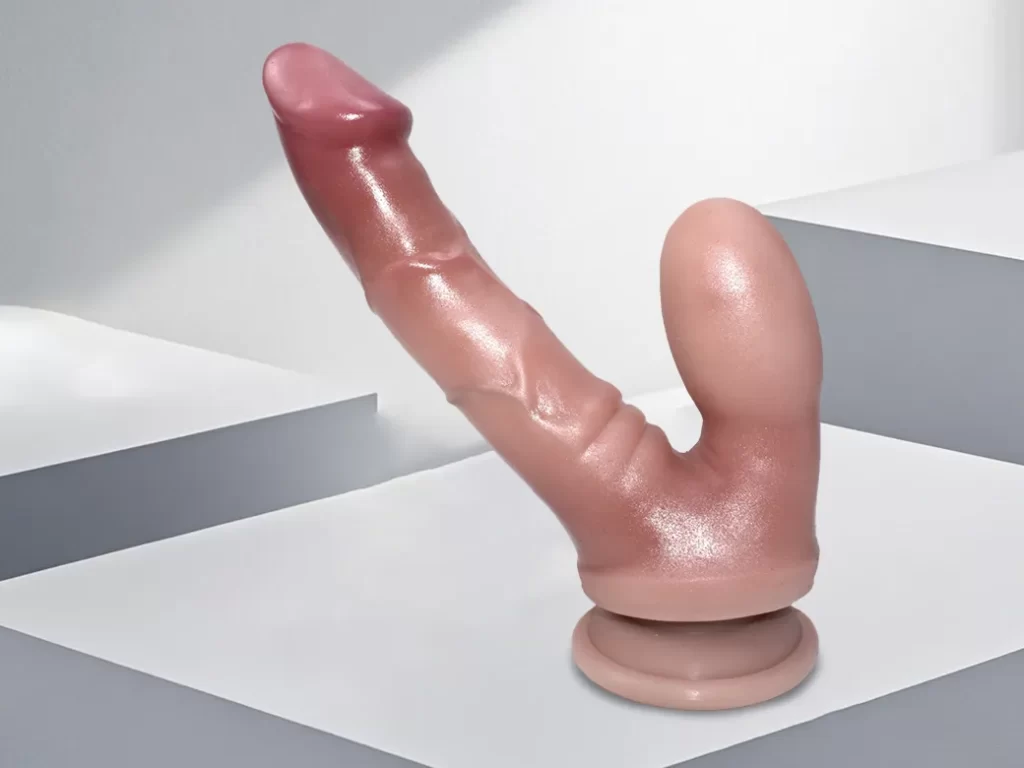
“Fully cured” also does not mean every silicone dildo must feel identical. Design, surface finish, firmness, texture, construction, and any manufacturer-applied treatment can affect how a silicone dildo feels. A dual-density dildo, for example, is meant to have different firmness across layers. Compare what you notice with the dildo’s description and care information before drawing conclusions.
Possible Warning Signs to Check
These observations can justify contacting the seller or maker. None of them, taken alone, proves that the dildo was undercured.
- A persistent gummy patch: One area stays wet, gummy, or unusually tacky after it has been gently washed, rinsed, and completely air-dried.
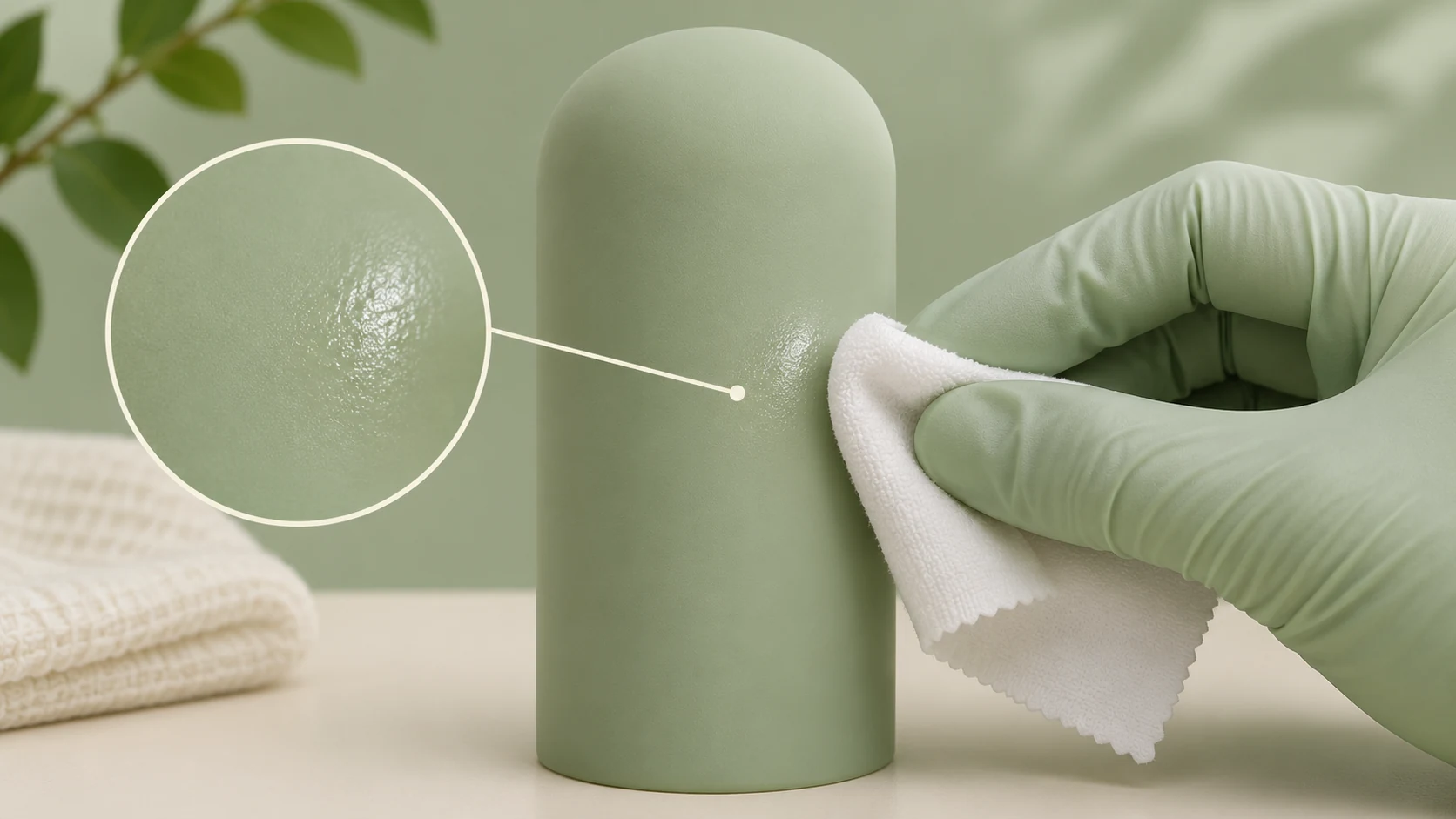
- Material transfers to a cloth: After routine cleaning, a clean white cloth picks up visible residue or color from the surface. Make sure the cloth itself is not shedding fibers.
- A film that returns: A slick or oily-feeling coating reappears after cleaning and drying, rather than rinsing away as soap, lubricant, or packaging residue.
- Peeling, cracking, or separation: The outer surface flakes, splits, or separates from another layer. This may indicate material or construction damage, even if the cause is not cure inhibition.
- A strong, persistent unusual odor: Odor is not a cure test, but an intense smell that remains after the care instructions are followed is a reasonable reason to ask the manufacturer.
- Uneven softness or shape change that is new: A section has become unexpectedly gummy, swollen, misshapen, or different from the dildo’s intended design.
Pay attention to whether the change is localized or covers the whole surface, whether it is new or present from the beginning, and whether it remains after cleaning. Notes and clear photos can help the seller assess the concern.
Things That Can Feel Like a Cure Problem
Lubricant or cleaner residue
Lubricant, soap, or cleaner left on a dildo can make the surface feel slick or sticky. Wash the dildo with the method recommended by its maker, rinse thoroughly, and allow it to dry completely. Our dildo cleaning guide explains why cleaning methods should match the material and construction.
Lint and dust on a soft surface
Some surfaces pick up lint more readily than others. Fibers sitting on the surface are different from a gummy patch that persists after washing. Read why a silicone dildo may attract lint and dust if the main issue is removable particles.
Designed texture or multiple firmness levels
Ridges, seams, molded details, a softer outer layer, or a firmer core may be intentional. Check the dildo description and photos. Do not treat every change in firmness as a cure defect, especially if the dildo is designed with more than one material density.
Packaging, storage, or temperature effects
A dildo can feel different after being compressed in packaging or stored in an unsuitable place. Follow the maker’s instructions and let the dildo return to room temperature before assessing its shape. Avoid trying to “finish curing” it with heat, direct sunlight, boiling water, an oven, or a hair dryer. Those methods can damage some dildos and do not verify or correct the manufacturing process.
A Careful At-Home Check
- Read the dildo’s material and care information. Confirm what material the maker claims and whether the dildo is single-material, layered, or coated.
- Inspect it before use. Look under good light for cracks, peeling, exposed inner layers, unusual patches, or a loose joint.
- Clean it as directed. Use the manufacturer’s recommended cleaning method. Avoid solvents, abrasive pads, and unapproved disinfectants.
- Rinse and dry fully. Soap or cleaner left on the surface may affect how it feels. Let the dildo air-dry completely before reassessing.
- Compare the surface. Check whether the sticky or gummy area is still present, whether anything transfers to a clean cloth, and whether the smell or shape has changed.
- Stop if the concern remains. Do not insert the dildo while a persistent unexplained surface change is present. Photograph the area and contact the maker or retailer.
This process can help identify a concern; it cannot certify the dildo as fully cured. Do not cut, scrape, sand, heat, coat, or chemically treat it to test or repair the surface.
What to Do if the Surface Stays Sticky
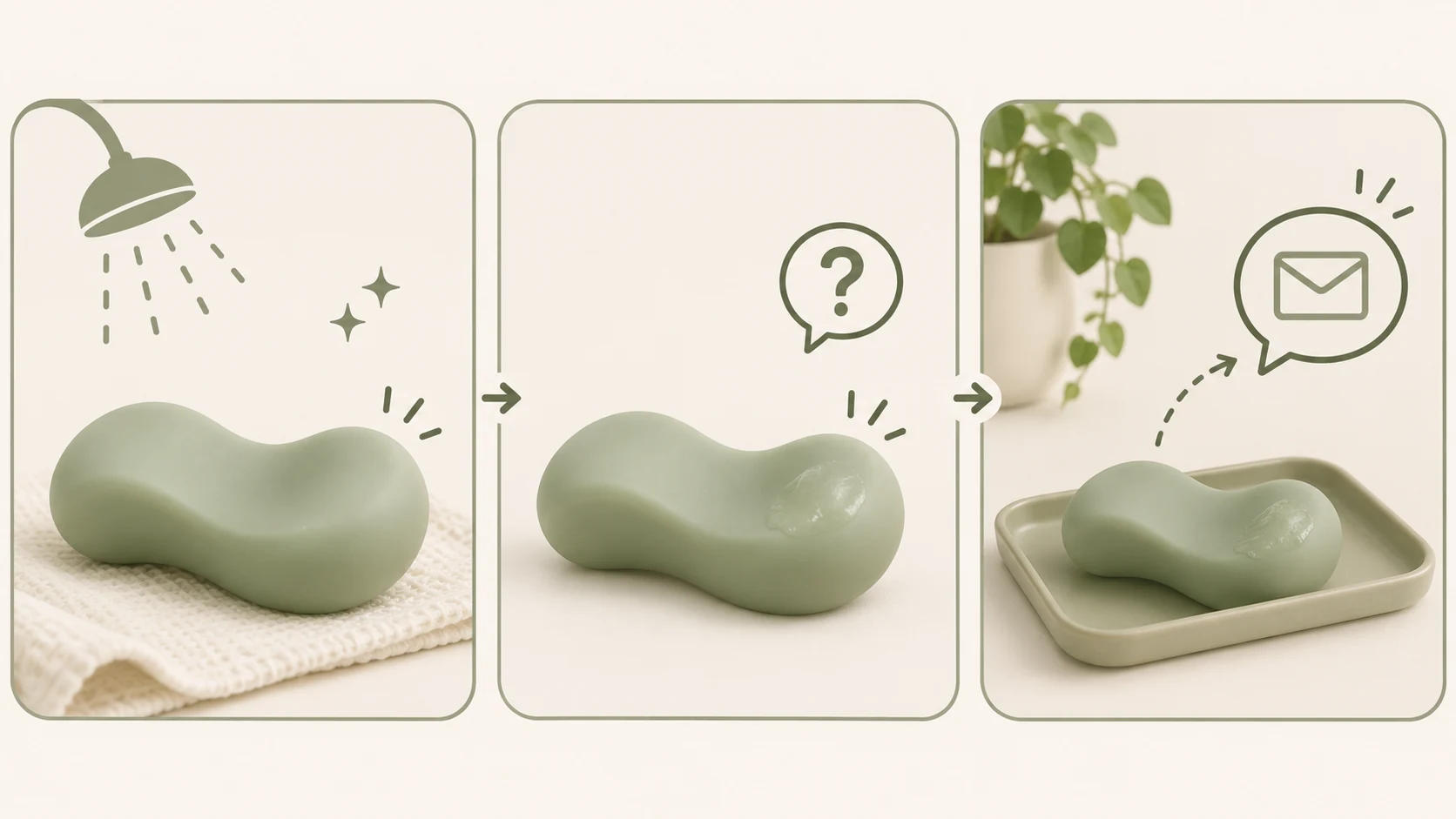
If the tackiness disappears after a proper wash and rinse, residue may have been the cause. If it returns, remains in one area, or appears alongside peeling, color transfer, cracking, or a new strong odor, stop using the dildo and ask the seller or manufacturer for guidance. Provide the order details, dildo model or name, photos, when the change appeared, and the cleaning method you used.
Do not rely on a condom to extend the life of a dildo with a deteriorating or unexplained surface. A condom may tear or shift, and it cannot tell you what is happening to the material underneath. The related guide Do Dildos Have a Break-In Period? discusses why a dildo should not need a “break-in” period to become usable and why persistent stickiness deserves a closer look.
If the manufacturer cannot explain the change or confirm that the dildo remains suitable for its intended use, replacing it is the cautious option. For a new dildo that arrived with an unusual bend or shape, document it before trying to reshape it; see what to do when a dildo arrives bent or deformed.
Warning Signs and Next Steps
| What you notice | What it may mean | Next step |
|---|---|---|
| Removable lint or dust | Particles resting on the surface | Clean and dry as directed |
| Temporary slick feel after washing | Possible soap, cleaner, or lubricant residue | Rinse thoroughly and reassess when dry |
| Persistent gummy patch or residue transfer | Possible material or manufacturing issue | Stop use; photograph and contact the maker |
| Peeling, cracking, or layer separation | Surface or structural damage | Do not insert it; ask about replacement |
| Strong odor by itself | Not enough to identify a cure problem | Follow care instructions; ask the maker if it persists |
Frequently Asked Questions
Can I tell if silicone is fully cured by smell?
No. Odor alone cannot confirm cure status. If a strong or unusual smell remains after following the care instructions, do not use smell as a pass/fail test; contact the seller or manufacturer and ask for dildo-specific guidance.
Is a sticky silicone dildo always undercured?
No. Lubricant, soap, cleaner, surface treatments, design, or material changes can affect how a dildo feels. Clean and fully dry it first. Persistent gummy tackiness or residue transfer deserves follow-up, but it does not prove a specific cause.
Can I leave a dildo out longer to finish curing?
Do not assume that extra airing will complete or correct the manufacturing cure. Follow the dildo maker’s instructions. If it remains gummy or has another unexplained surface change, contact the manufacturer instead of trying to cure it yourself.
Can I boil or bake a silicone dildo to cure it?
No. Do not boil, bake, microwave, or heat a dildo to try to cure it. Heat tolerance varies by dildo design and construction, and heating is not a reliable way to verify cure status. Use only care methods approved for that exact model.
Is “100% silicone” proof that the dildo is fully cured?
No. A material claim and the manufacturing quality of a finished dildo are different questions. Dildo labeling alone cannot confirm the exact cure process or verify a particular unit. If you have a specific defect concern, contact the manufacturer.
Should I stop using a dildo if only one small area feels gummy?
Yes, pause use until you have cleaned and fully dried the area and the issue has been resolved or assessed by the maker. A localized patch may have more than one cause, but inserting the dildo while the surface is unexplained is not a useful test.
Use the Manufacturer as the Final Check
A surface inspection can catch changes worth investigating, but it cannot prove that a silicone dildo is fully cured. A mild smell, soft feel, or lint on the surface is not conclusive. Persistent gummy areas, material transfer, peeling, cracking, or new deformation are stronger reasons to stop using it and ask the maker.
Clean the dildo according to its instructions, let it dry fully, and document any issue before contacting support. Avoid home curing attempts or surface repairs. When the dildo’s condition cannot be confirmed, choose a replacement made for body contact and follow its care guidance. For a broader overview of material claims, see our guide to body-safe dildo materials.