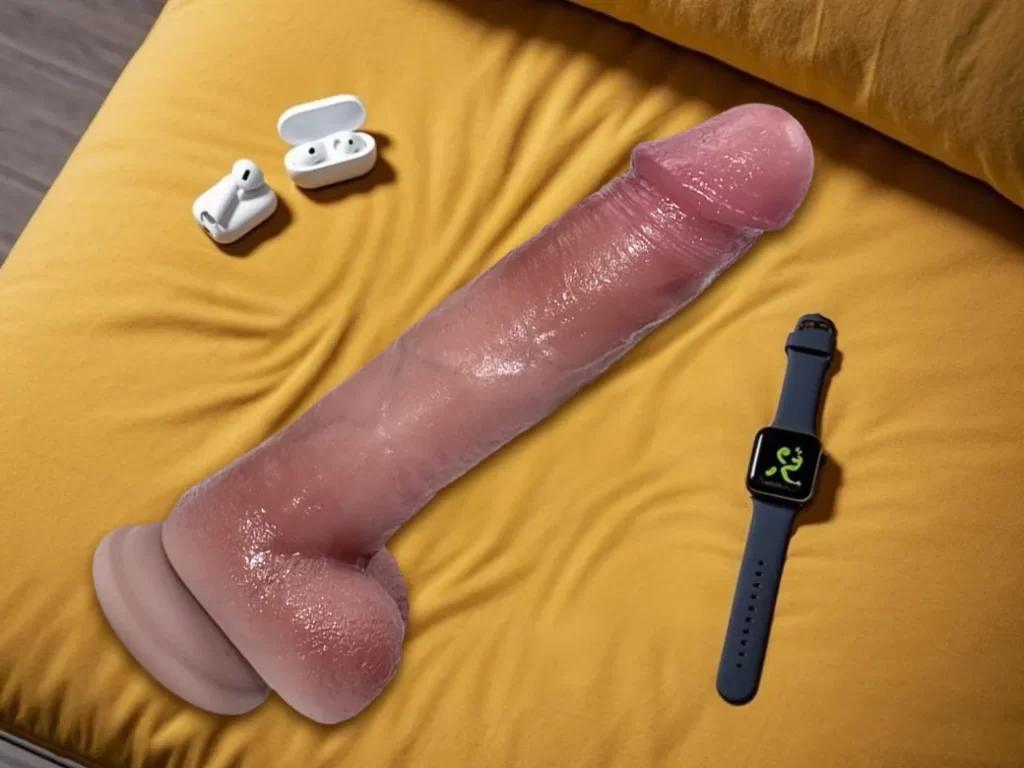


When you shop for a dildo, a polished product photo and a premium-sounding description can make almost any listing look convincing. Better quality is easier to judge when a seller gives you evidence you can check: a clearly named material, useful measurements, photos that match the selected model, practical care instructions, and support terms that make sense for that exact item.
Price alone cannot confirm quality, and no single feature proves that a product is safe or well made. Treat the listing as a set of clues. The strongest signal is consistency: the product page, photos, packaging details, care information, and seller answers should describe the same product.
This guide focuses on what you can verify before checkout. For additional background, see our guides to evaluating a dildo brand, reading packaging labels and claims, and checking a new dildo before first use.
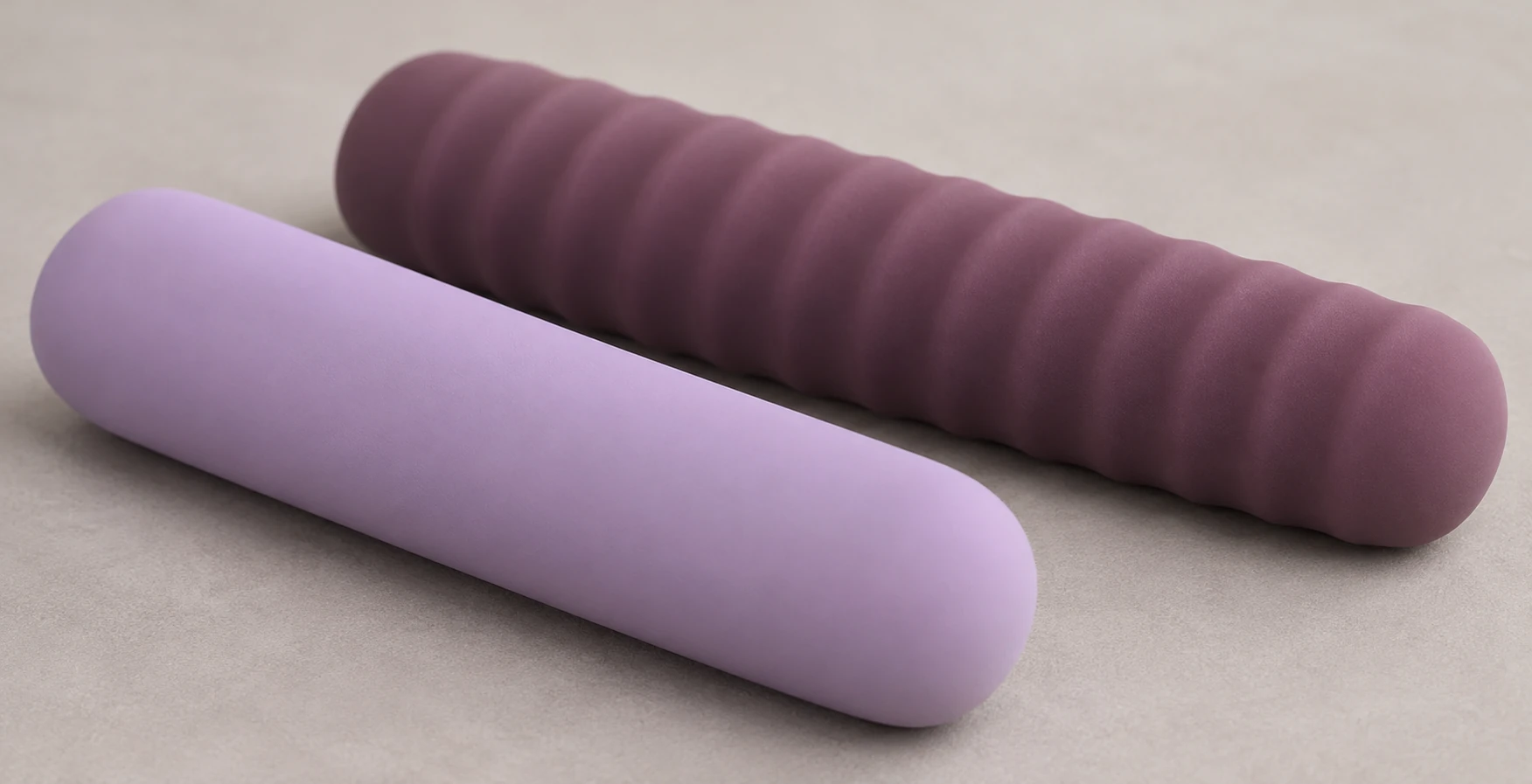
10 signs of a well-documented, thoughtfully made dildo
These checks do not require specialized equipment. They help you tell the difference between a listing that gives you enough information to make a considered choice and one that leaves important questions unanswered.
1. The body-contact material is named precisely
Look for a specific material description for every part that may contact the body. “Silicone,” “ABS,” or “glass” is more informative than “soft-touch,” “skin-like,” or simply “body-safe.” If the product combines materials, the listing should explain which parts are made from each one, including any coating or outer layer.
Be cautious when a seller uses a material name as a vague marketing label but will not confirm the actual composition. A photo, texture description, or premium price cannot verify what a product is made from. For a closer look at material differences and care, read our silicone vs. TPE dildo guide and body-safe sex toy overview.
2. Measurements explain what was measured
A useful listing gives more than an overall length. Check for insertable length, circumference or diameter at relevant points, and a clear indication of where measurements begin and end. For a curved, tapered, or textured design, a diagram or labeled product photo can make dimensions easier to interpret.
Measurements should help you picture the actual item, not just fill a specification box. If circumference is listed, see whether it refers to the widest point or a specific section. If a size chart compares several variants, confirm that the selected option changes the dimensions shown. Browse our dildo selection with the measurements that matter most to you in mind.
3. Photos show the exact model and variant
Look for several angles of the product, including the base, tip, surface, and any seams or controls. A scale reference can help communicate size. Most importantly, the photos should correspond to the selected color, size, material, and model. If the listing switches between variants but keeps showing one generic image, you may not know exactly what will arrive.
Highly polished studio images can be useful for shape and color, but they are not evidence of material composition or internal construction. Customer photos and short videos may help with scale and finish, provided they clearly identify the same model. Ask the seller for a model-specific photo if the options are difficult to distinguish.
4. The construction is described clearly
A solid product page explains whether the toy is one piece or assembled from multiple parts. If it has a core, coating, bonded joint, internal mechanism, or removable component, the description should explain that in plain language. Seams, joints, openings, and edges deserve clear photos because they can affect cleaning and long-term wear.
There is no universal construction that suits every preference. The useful sign is that the seller describes what is present and how to care for it. A vague claim such as “seamless quality” is less helpful than a view of the relevant area and guidance on cleaning it. For manufacturing context, see how dildos are made.
5. The base and intended use match the design
Check whether the base is designed for a particular purpose, such as standing, suction mounting, or harness use. A listing should describe the base shape and any compatibility limits rather than imply that every product works in every setup. For a suction design, look for base width, surface requirements, and instructions for attaching it. For harness use, check whether the base fits common O-ring styles or whether a compatible ring is specified.
Product categories can help narrow the search, but the page still needs to explain the individual model. Compare the relevant suction cup designs or realistic styles by their stated function, measurements, and base details instead of appearance alone.
6. Care and compatibility instructions are practical
Good documentation tells you how to clean and dry the product, whether it can be submerged, and how to store it. It should also identify compatible lubricant types where relevant. If different materials are combined, care instructions should account for the whole item, not only its outer surface.
“Easy to clean” is not a care routine. Look for specific, realistic directions that fit the construction. If the product has a charging port, battery compartment, controls, or removable parts, the instructions should address those details. Missing guidance does not prove the product is defective, but it leaves you with an avoidable question to resolve before buying.
7. Powered features come with usable specifications
For a vibrating or otherwise powered product, check what the controls do, how it charges, and what is included in the box. A credible listing should identify the charging connection or battery type, basic operation, water-resistance limits if claimed, and how to get help with a malfunction. Images of the actual port or control layout can be more useful than a long list of vague feature words.
Compare the claims with the manual or FAQ when available. If a listing says “waterproof” but the instructions limit immersion or require a port cover, the terms should be clarified. The same principle applies to charging time, runtime, and accessories: exact details make it easier to judge whether the product fits your needs.
8. Testing or certification claims include their scope
Words such as “tested,” “certified,” and “medical grade” are not self-explanatory. Look for who performed the test, what material or feature was assessed, and whether the statement applies to the exact model being sold. A logo without a named standard or a broad claim without supporting details tells you little about the finished product.
Do not assume that a certificate for one component covers every component or every production batch. If a seller makes a safety or compliance claim that matters to your purchase, ask for the standard, test scope, and model reference. A straightforward answer is a better sign of transparency than an impressive badge with no explanation.
9. Seller, returns, and warranty details are easy to find
Before checkout, identify who is selling the item, how to contact them, and what happens if it arrives damaged or fails. Read the return window, hygiene-related exclusions, warranty duration, and any requirement to register the product. Terms should be available before purchase and should make clear whether they apply to the exact product or only to selected categories.
A warranty does not prove a product is high quality, but clear support terms show that the seller has explained what recourse you have. If the listing and policy pages disagree, save a screenshot and ask for clarification before ordering. For a broader look at brand support and warranty clarity, see the warranty section in our dildo brand evaluation guide.
10. Reviews identify the same item and describe patterns
Useful reviews mention details you can compare with the listing: the exact model or size, firmness, finish, dimensions, cleaning experience, or how the base performs. Look for repeated patterns across multiple reviews rather than treating one very positive or negative comment as decisive. Reviews that appear to combine several different variants may be less relevant to the option you are considering.
Photos and dates can add context, but reviews still represent individual experiences and cannot confirm material composition or laboratory results. If reviews repeatedly mention the same issue, such as a loose component, a strong odor that persists after washing, or unclear sizing, treat that as a reason to investigate. Read them alongside the seller’s specifications, not in place of them.
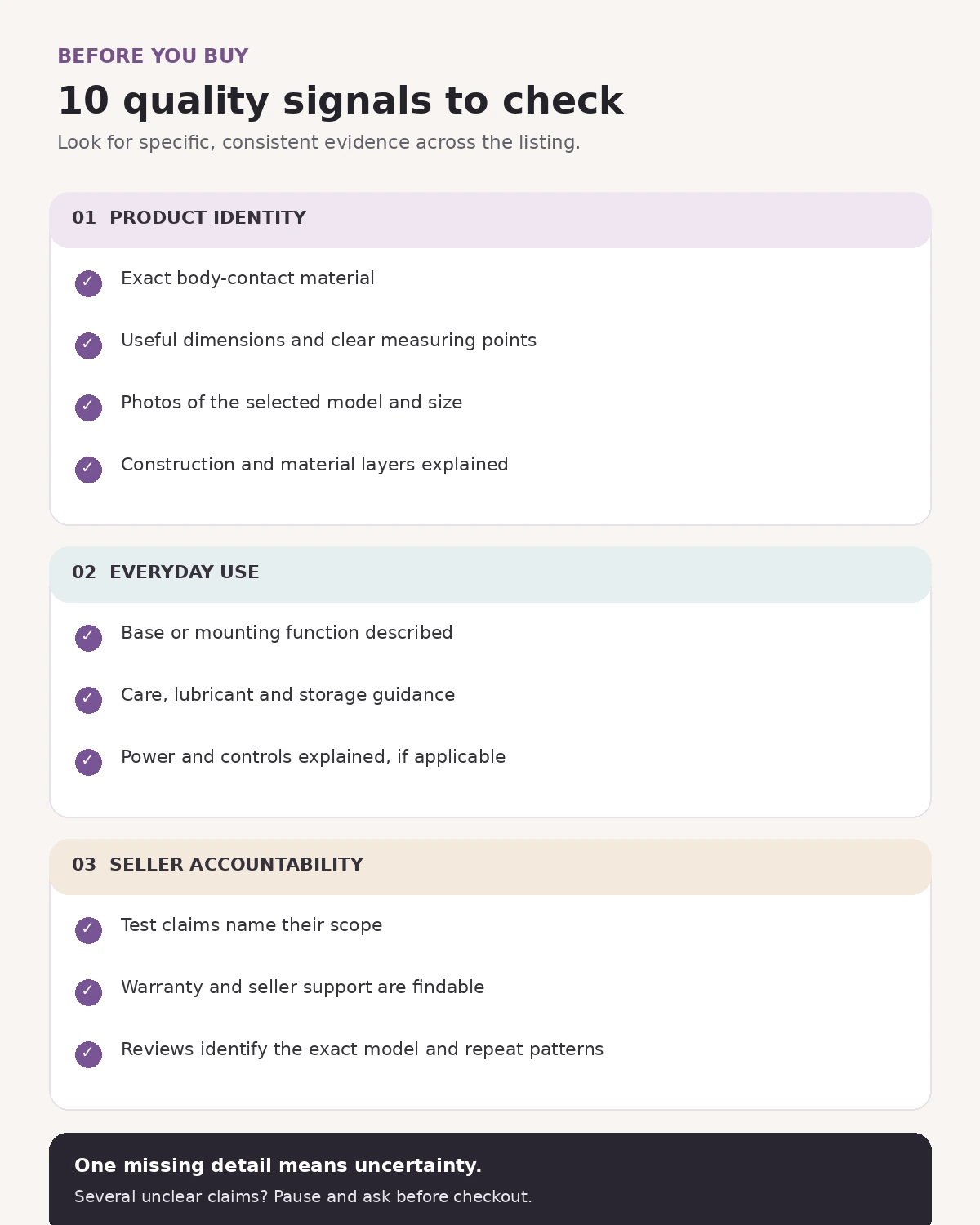
A quick way to interpret what you find
Use the table as a decision aid, not a pass-or-fail safety rating. One missing detail may simply mean you need to ask the seller. Several important gaps or conflicting claims make it harder to know what you are buying.
| Signal | What it looks like | What to do |
|---|---|---|
| Clear | Material, dimensions, photos, care, and policies agree across the listing. | Compare the product with your needs and keep the order details. |
| Needs a question | One useful detail is missing, such as a measurement point or charging method. | Ask the seller for a specific answer before checkout. |
| Pause | Material claims are evasive, photos show another variant, or major claims conflict. | Wait until the seller clarifies the issue or choose a better-documented listing. |
Before checkout: a five-minute comparison
- Open the product page and note the exact model, size, and material option you selected.
- Compare the measurements and selected variant with every product photo.
- Find the care instructions, intended use, and any compatibility limits.
- Read the returns and warranty terms, including exclusions that apply to intimate products.
- Search reviews for the exact model and look for recurring, specific comments.
If you are choosing between firmness levels, surface styles, or shapes, compare products within the relevant category. For example, browse soft dildos or G-spot designs, then use the same checks on each listing. A comparison is more meaningful when the products are intended for similar use.
Frequently asked questions
Does a higher price mean a dildo is better quality?
No. Price may reflect size, design, material, brand, or retail costs, but it does not verify construction or material claims. Compare the product details, care guidance, testing information, and seller support instead.
Can I tell if a dildo is body-safe from a photo?
No. Photos can show shape, visible finish, and sometimes seams, but they cannot confirm material composition or testing. Look for precise material information and ask the seller for documentation when a claim is important to your decision.
Is a strong smell a sign of poor quality?
A smell alone does not identify the material or prove a manufacturing problem. Check the care instructions and material description. If the product has a persistent unusual odor, tacky surface, or visible defect after following the seller’s directions, stop using it and contact the seller.
What should I do if the listing leaves out key details?
Ask a concise, specific question, such as “What material is the body-contacting surface?” or “What is the insertable length for this exact size?” If the reply is vague or conflicts with the page, choose a listing with clearer documentation.
Do certifications guarantee that a product is safe?
A certification or test claim only tells you something when its scope, standard, and applicability to the exact product are clear. It should be one piece of evidence, considered alongside the materials, construction details, instructions, and seller accountability.
Choose the listing that answers the important questions
A well-documented dildo gives you enough information to understand what it is made from, how large it is, how it is intended to be used and cleaned, and what support is available if something goes wrong. Look for consistency across photos, specifications, care directions, and policies. When a detail affects fit, hygiene, compatibility, or safety, ask before buying; a clear answer helps you make a more confident choice.