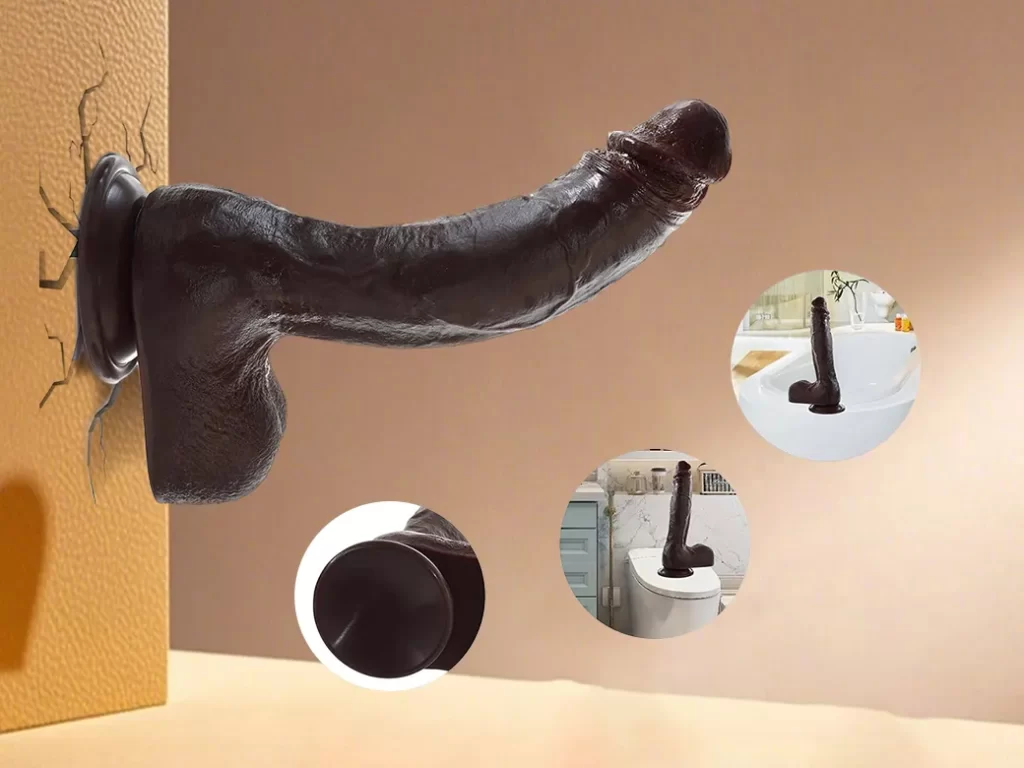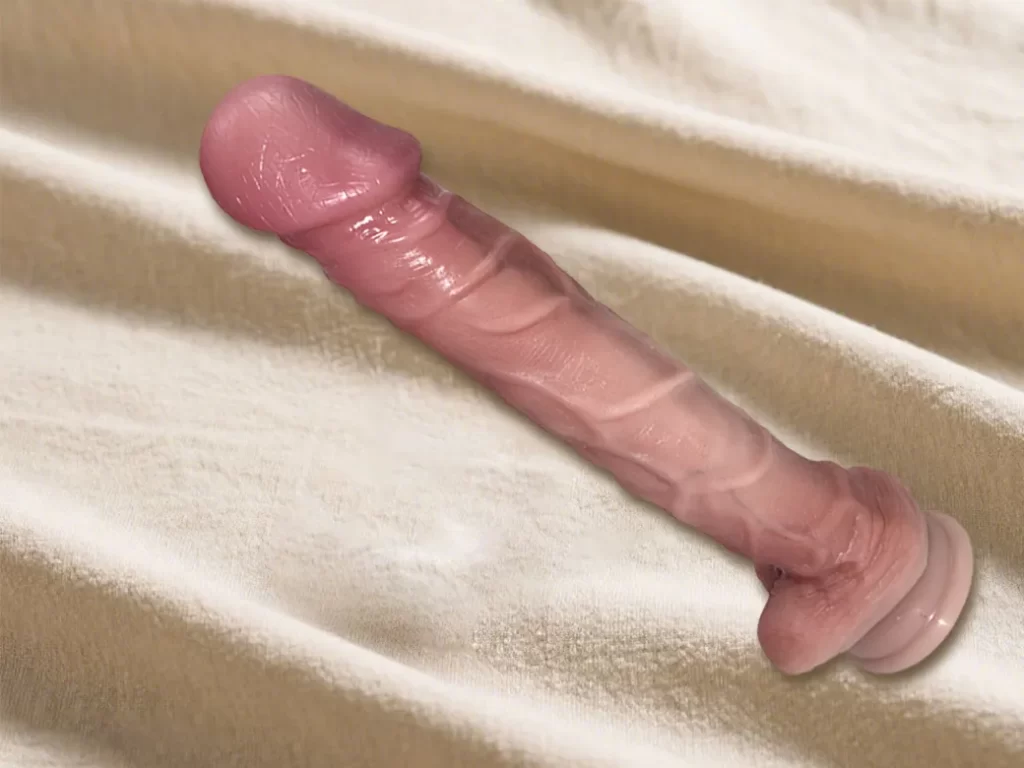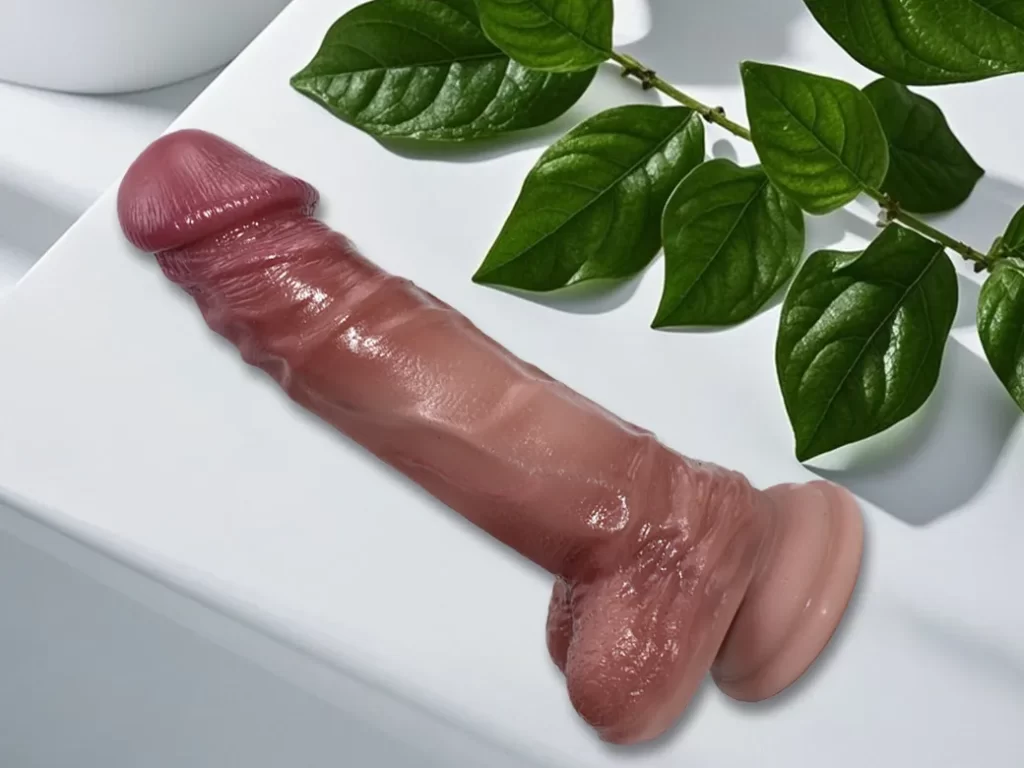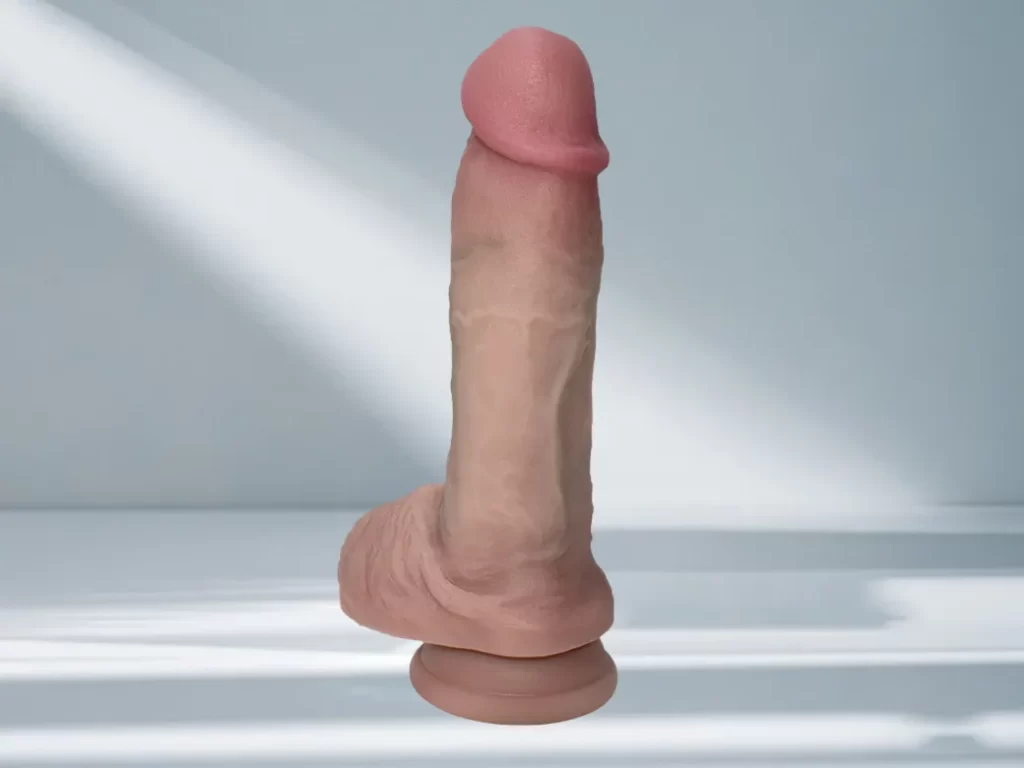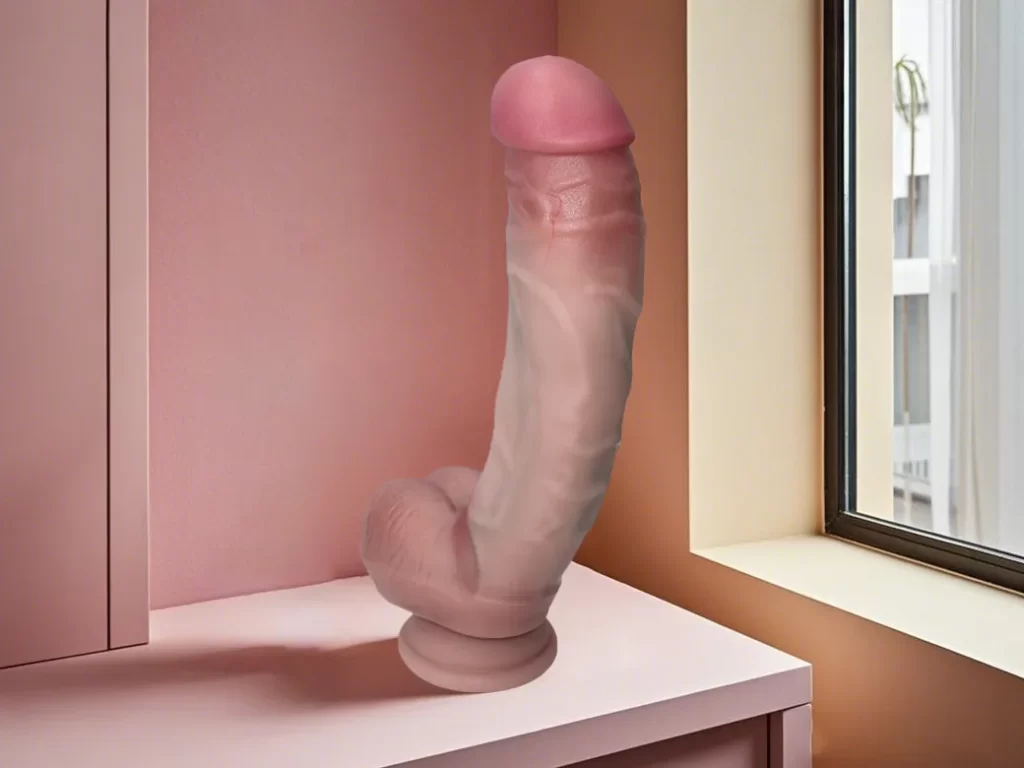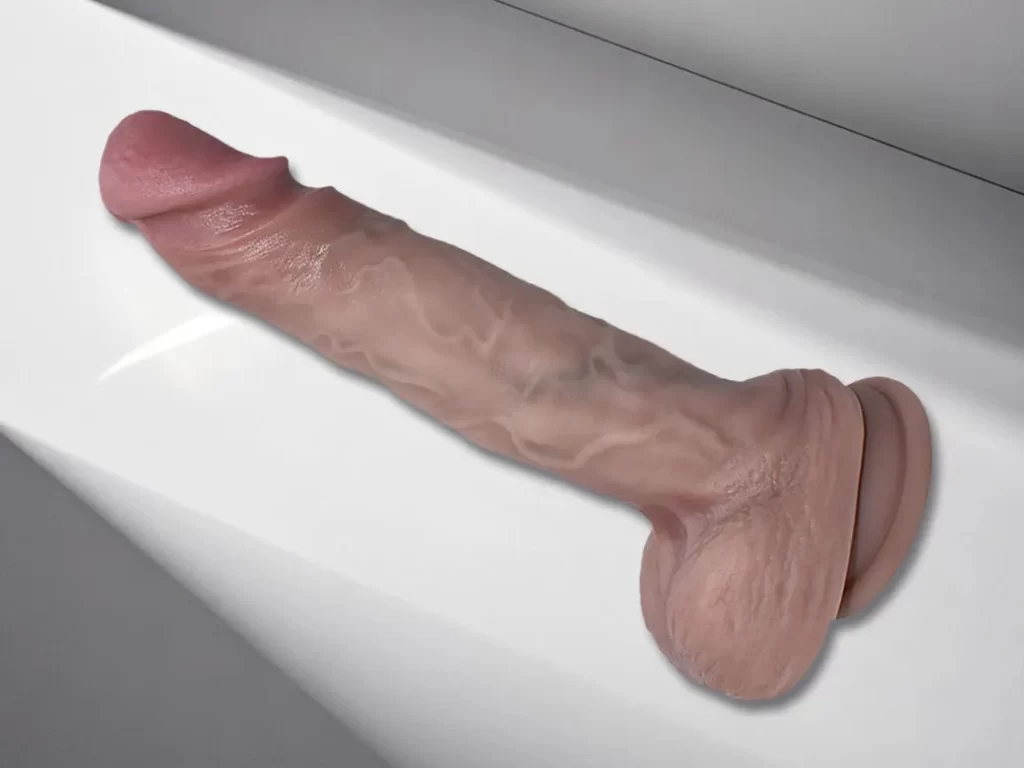

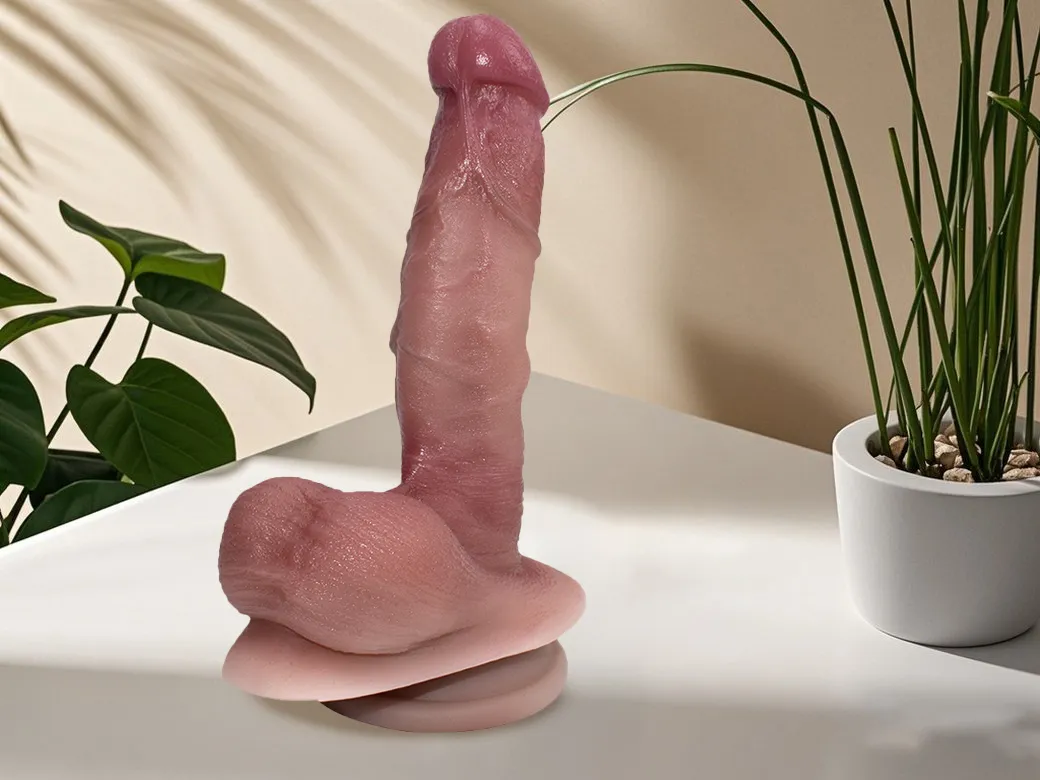
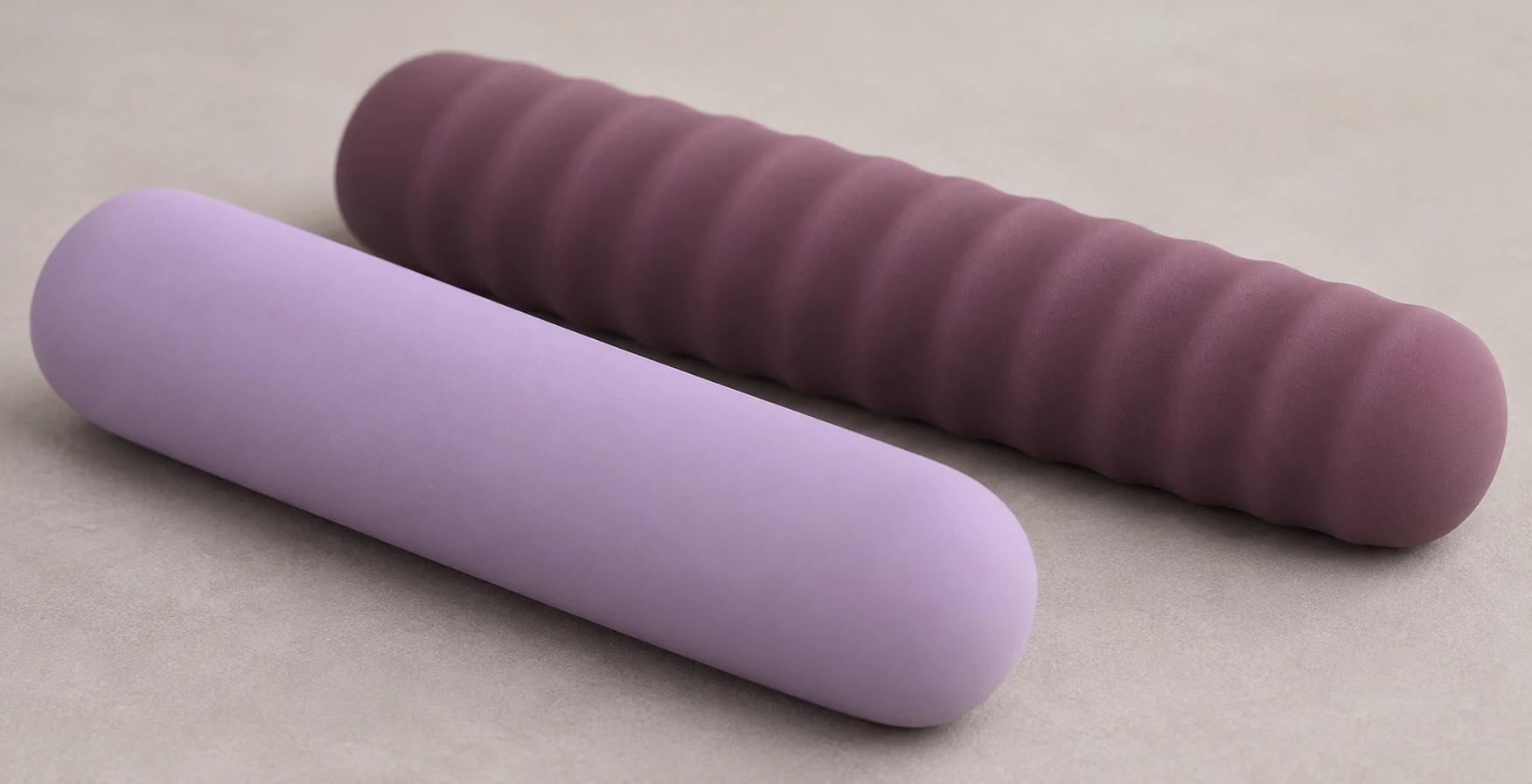
Start with the kind of sensation you want
Think of surface texture as a dial for variation, not a simple “mild versus intense” scale. A smooth shaft tends to keep contact more uniform as it moves. Raised details interrupt that evenness, so sensation can change as a ridge or contour passes across the body. The size, spacing and softness of those details matter as much as their presence.
Useful shopping question: Do you want the surface to mostly disappear into the overall motion, or do you want to notice distinct contours? Your answer is a better guide than labels such as “realistic,” “ribbed” or “intense.”
What different surfaces tend to feel like
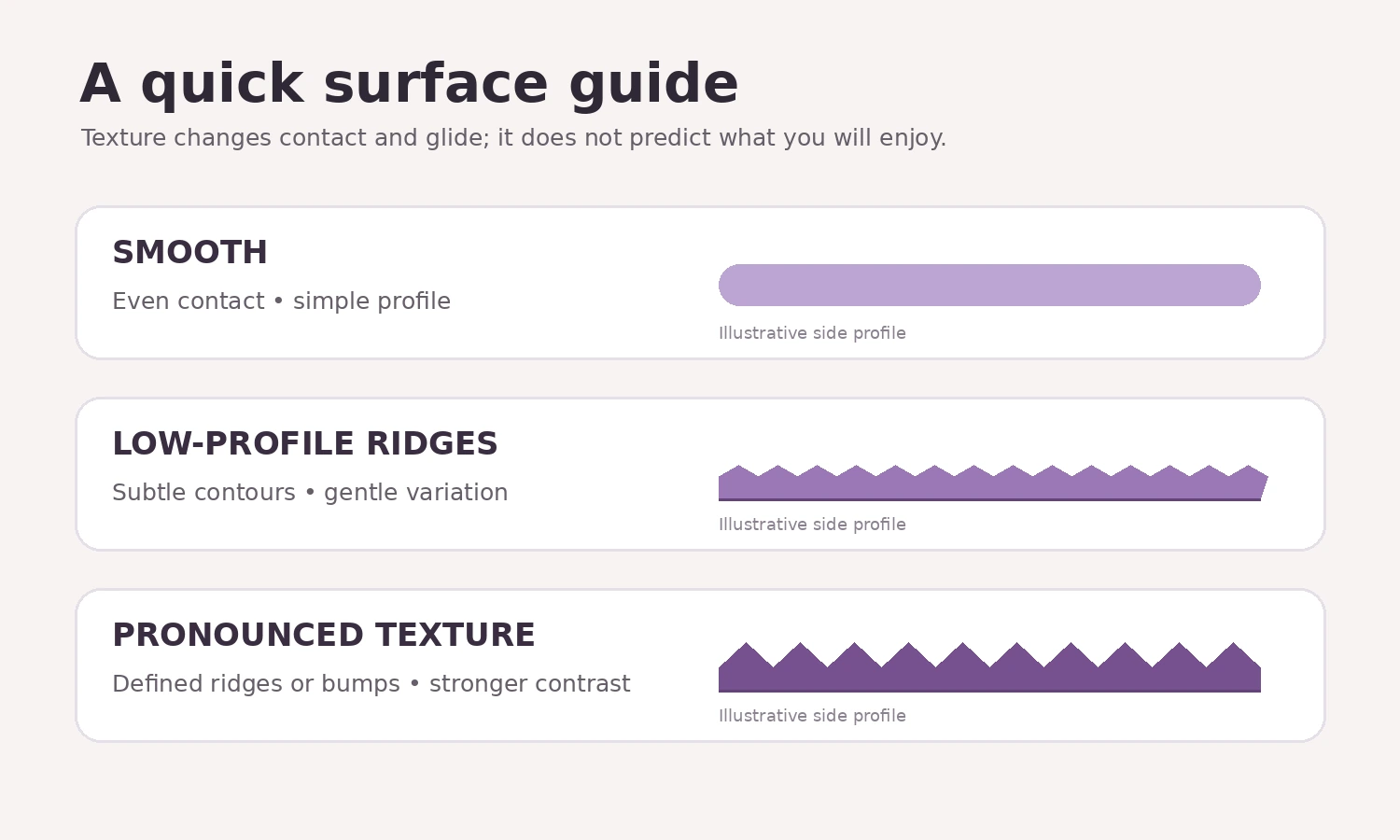
1. Smooth: steady contact
A smooth shaft has no raised pattern along the area you touch. It can suit people who prefer a simple glide, want less surface variation, or are still learning what pressure and diameter feel comfortable. “Smooth” describes the finish, not the toy’s firmness or shape.
2. Light texture: small changes
Shallow ridges, softly molded veins or a gentle spiral add some definition without making the whole shaft a series of large bumps. This can be a middle ground if a fully smooth surface sounds plain but pronounced ribs sound like too much.
3. Pronounced texture: distinct contours
Deeper ribs, large bumps or sculpted fantasy details are easier to notice by sight and touch. They may appeal if you specifically enjoy changing pressure or defined contact points. They can also feel distracting or uncomfortable for someone who prefers a more even surface.
Choose by preference, not by the word “ribbed”
Product descriptions often group very different designs under “textured.” Before choosing, zoom in on product photos and check the description for the pattern’s height, spacing, location and firmness. A few low ridges near the tip are not the same as deep rings along the full shaft.
- You value predictable glide: start with a smooth design or very shallow texture.
- You want a little more detail: look for low-profile veins or widely spaced, rounded ridges.
- You enjoy defined contours: compare ribbed or sculpted options, paying attention to how deep and closely spaced the features are.
- You are unsure: a smooth or lightly textured option is usually easier to evaluate than a heavily sculpted design; size and firmness still matter.
Browse the full dildo collection to compare different shapes, or look at soft and flexible dildos if you want to consider how surface and give work together. Texture and firmness are separate features: a soft toy can have defined ridges, while a firm toy can have a smooth shaft.
Texture is only one part of the feel
Two dildos with similar-looking ridges can feel quite different. Keep these factors in view while comparing:
- Ridge profile: rounded, shallow contours usually feel different from sharp-looking or tall edges.
- Spacing: closely packed details create a more continuous pattern; widely spaced features create more distinct transitions.
- Material and firmness: a yielding surface may compress more than a rigid one, softening the feel of its raised details.
- Overall size and shape: diameter, taper and head shape can affect comfort more than small surface details.
- Lubrication: enough compatible lubricant can help reduce drag; follow the toy maker’s material and lubricant guidance.
If you want a side-by-side look at firmer and softer constructions, see our guide to soft vs. firm dildos. For a closer look at defined shaft ridges and specific models, read our ribbed dildo guide. If you are drawn to imaginative molded details, you can also explore fantasy dildos; designs vary, so check each product’s close-up photos and measurements.
A low-pressure way to try a new surface
- Inspect it first. Look for an even finish and check ridges, seams and the base for defects.
- Read the material and care instructions. Confirm the toy’s material and use a compatible lubricant recommended by the maker.
- Begin gently and use plenty of lubricant. Let your comfort guide pace and pressure; there is no need to “push through” an unpleasant sensation.
- Pause if it pinches, scratches or causes pain. A different texture, size or firmness may be a better match.
- Clean the full surface afterward. Pay attention to grooves and molded details, then dry completely before storage.
For product-specific cleaning steps, see how to clean a dildo properly. Textured details can take a little more attention during cleaning because residue may sit in grooves; follow the manufacturer’s directions for the toy’s material.
Bottom line
Choose smooth if you prefer a continuous surface and straightforward glide. Choose light texture if you want subtle variation. Choose pronounced ridges or bumps when you already know you enjoy clearly defined contours. Check close-up photos, product dimensions and firmness, and let comfort—not the intensity implied by a product label—make the final call.
FAQ: smooth and textured dildos
Are smooth dildos better for beginners?
They can be a straightforward starting point because the surface is simple, but size, firmness and shape matter too. Choose dimensions that feel manageable for you.
Do textured dildos always feel more intense?
No. Texture varies in height, spacing and softness, and people have different preferences. A small, soft contour may feel subtle; a larger ridge may be much more noticeable.
Are smooth dildos easier to clean?
A smooth surface has fewer grooves to inspect, while textured designs may need extra attention around raised details. Always follow care instructions for the specific material.
Can I use a textured dildo if I have sensitive skin?
You can choose a low-profile surface and start gently, but stop if you notice irritation or pain. Consider a smooth design if raised details do not feel comfortable.