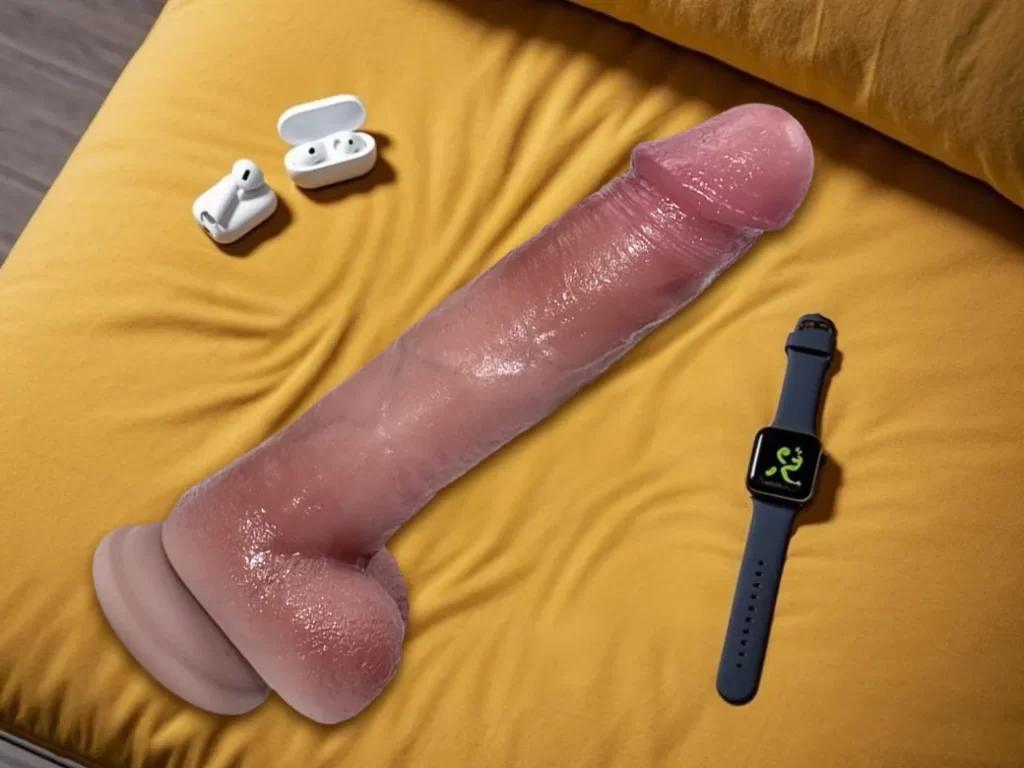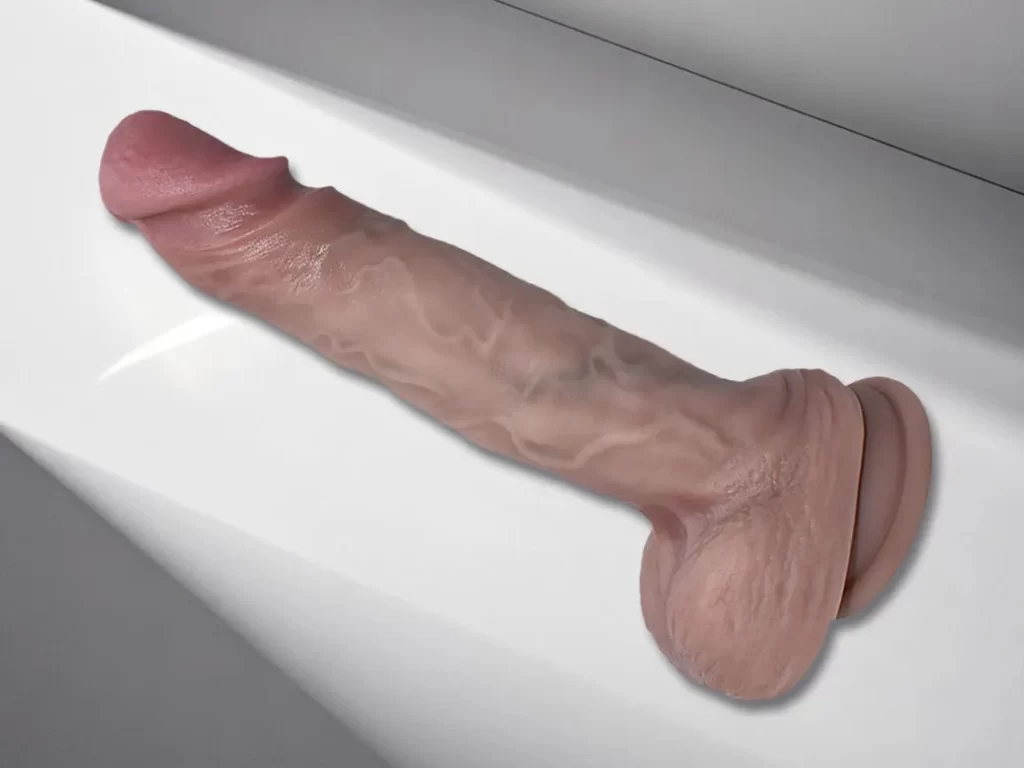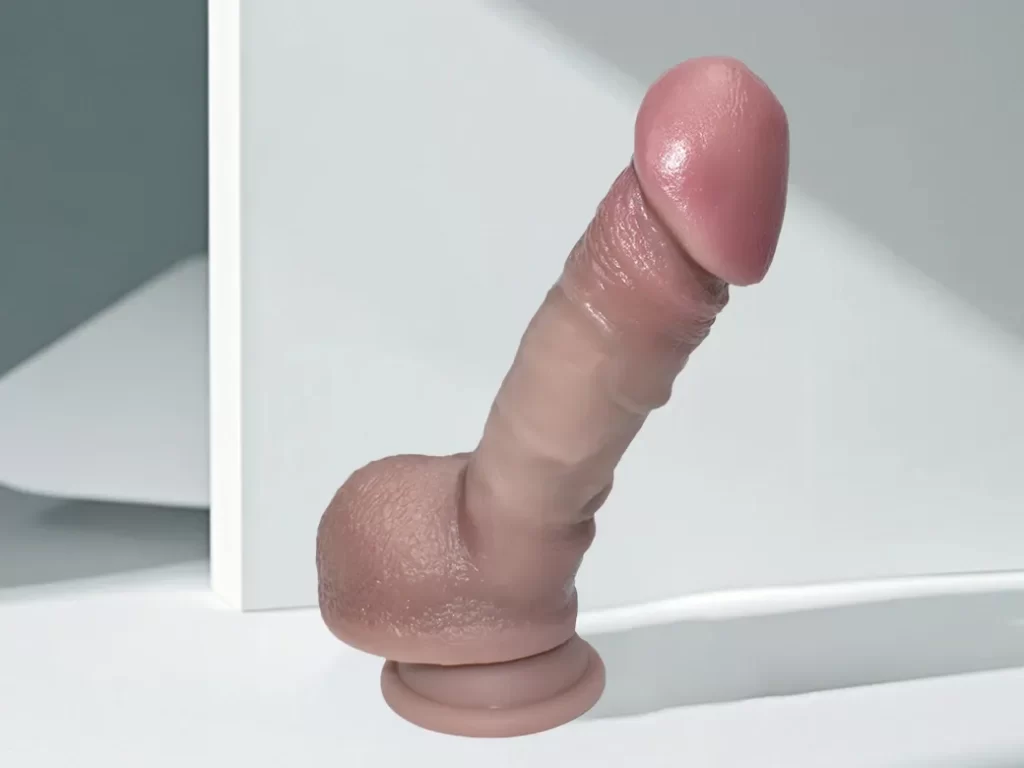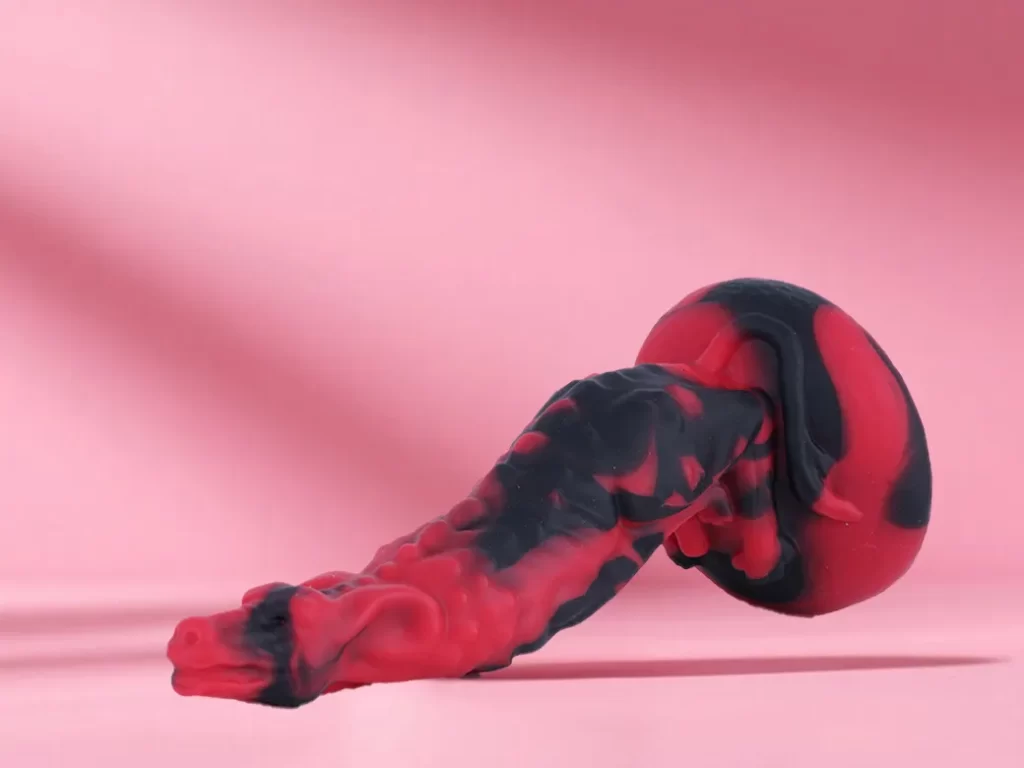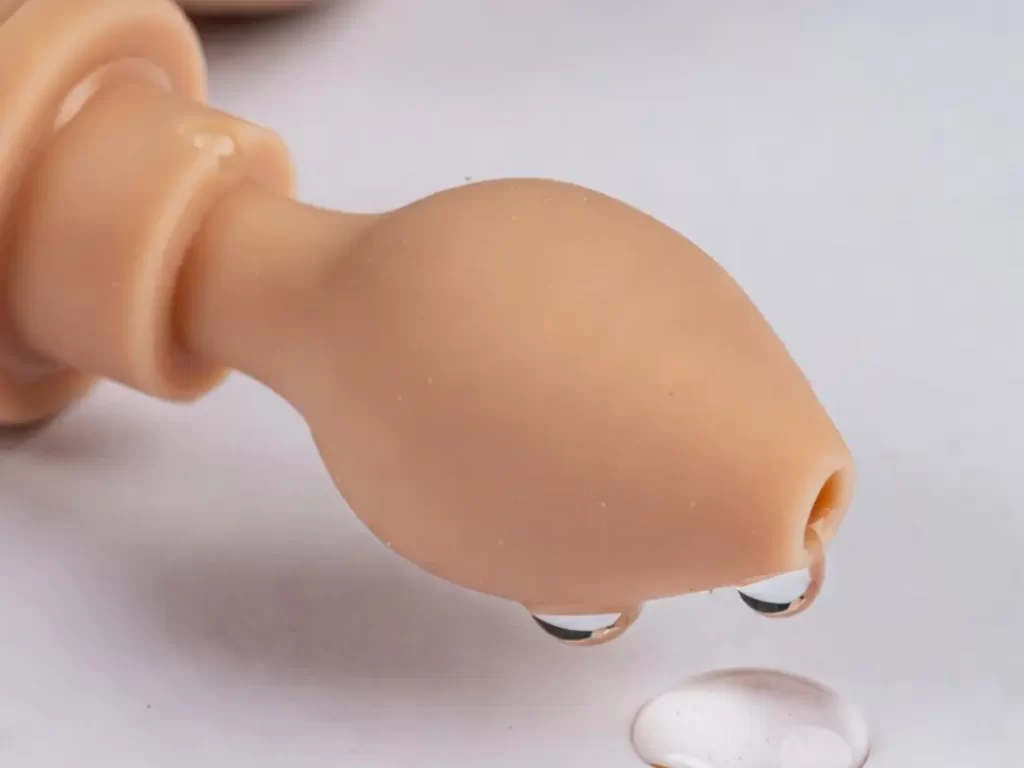

A dildo can develop mold or mildew when moisture and residue remain on or inside it for an extended period. The risk is greater when the product is stored before it has dried completely, especially in a closed container with little airflow.
However, not every black, white, green or brown spot is mold.
Pigment variation, dye transfer, dried lubricant, soap residue, lint and normal material discoloration can all resemble biological growth. The appearance of a spot alone is not enough to identify its cause.
The first step is not to scrub the product aggressively or cover the mark with a stronger cleaner. Instead, determine what the spot looks like, where it is located and whether it has changed over time.
Quick Answer
Mold is more likely when a dildo has been:
- Stored while damp
- Left with lubricant or organic residue on it
- Kept in a humid bathroom
- Sealed inside an unventilated container
- Stored in a dirty or damp pouch
- Damaged by cracks, open seams or surface deterioration
An intact nonporous surface is generally easier to clean than a porous, cracked or internally contaminated product. If suspected mold is located inside pores, splits, motor compartments or unreachable hollow sections, replacement is usually the more dependable option.
Do not use the dildo while investigating an unexplained spot.
The Mold Risk Equation
Mold growth is not caused by age alone. It usually involves a combination of four conditions:
Moisture + residue + time + limited airflow
The U.S. Environmental Protection Agency identifies moisture control as the central part of mold prevention and recommends drying wet items promptly. Its mold and moisture guide notes that damp materials should be dried within approximately 24–48 hours to reduce the opportunity for mold growth.
That guidance addresses household mold rather than dildos specifically. Applied to dildo care, the practical inference is that a freshly washed product should be dried completely before it is placed in a bag, drawer or sealed container.
Even a material that does not readily absorb water may hold moisture in surface details, seams, charging covers or hollow areas.
Five Things Commonly Mistaken for Mold
Before deciding that a dildo is moldy, compare the mark with these common alternatives.
1. Dried Lubricant or Soap
Water-based lubricant may dry into a clear, white or slightly cloudy film. Soap can leave streaks or a chalky coating, especially when the product is rinsed with hard water.
Residue is more likely to appear:
- Around textured details
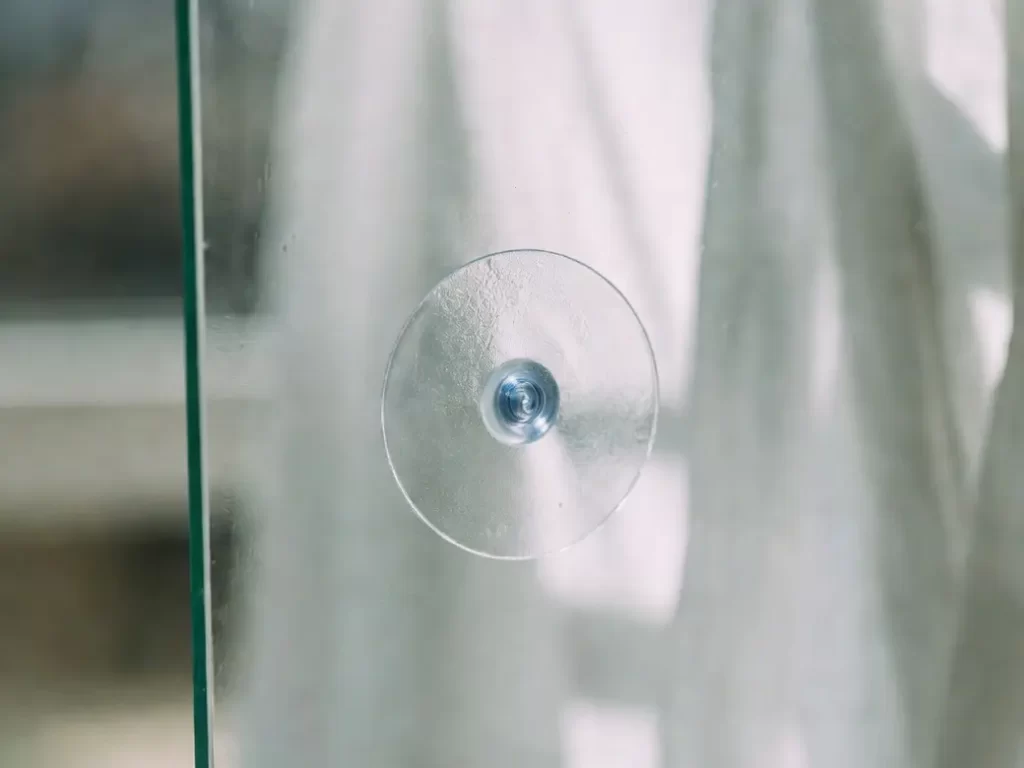
- Beneath the rim of a suction cup
- In shallow grooves
- Near seams or buttons
- Across a large area as a thin film
It may soften or rinse away when cleaned according to the manufacturer’s instructions. A related guide about white residue on a dildo can help distinguish dried products from changes in the material itself.
2. Lint and Dust
Soft or slightly tacky materials can attract fibers from towels, bedding and storage pouches. Dark lint on a light-colored dildo may resemble scattered mold spots.
Lint normally sits on top of the surface and may follow the direction in which the product was wiped. Mold growth is more likely to be irregular, clustered or associated with prolonged damp storage.
Avoid using a fuzzy towel to test the area because it may add more fibers and make identification harder.
3. Pigment Variation
Hand-poured, marbled and dual-color dildos may contain natural differences in color distribution. These marks are usually inside the material rather than sitting on top of it.
Pigment variation often has:
- Smooth or blended edges
- No raised texture
- No musty odor
- No change after cleaning
- A similar appearance in older product photographs
A stable internal color variation is different from a new spot that spreads across the outer surface.
4. Dye Transfer or Staining
A dildo may pick up color from dark fabric, printed packaging, another product or incompatible storage materials. The mark is generally flat and may match the color of the item that contacted it.
Staining is not the same as mold, but it can still be difficult to reverse. See can dildos stain sheets or skin for a more detailed explanation of pigment and dye transfer.
5. Material Deterioration
A changing surface may come from material breakdown rather than mold. Softening, oiliness, stickiness, peeling and color bleeding indicate a different type of problem.
If the affected area smears, stretches unusually or feels different from the surrounding material, consult why dildos become sticky rather than assuming that the product only needs stronger cleaning.
What Mold May Look Like
Mold can appear in different colors, so a black spot is not automatically more serious—or more likely to be mold—than a white or green one. The CDC notes that mold may look like spots of various colors and can produce a musty odor. Color alone does not identify the species or level of risk. CDC mold guidance
Suspicious characteristics may include:
- Irregular dots or patches
- A fuzzy, powdery or raised appearance
- Spots that reappear after cleaning
- Growth concentrated in damp grooves
- A persistent musty smell
- Gradual spreading between inspections
- Similar growth inside the storage pouch or container
Do not bring the product close to your nose to test the odor. Check the surrounding storage area instead.
Photographs taken under the same lighting can help determine whether the mark is changing.
How Material Changes the Decision
The product’s material affects whether contamination is likely to remain only on the surface or extend into areas that are difficult to reach.
Silicone
Properly cured silicone is generally treated as a nonporous dildo material. On an intact, continuous surface, suspected contamination is more likely to be sitting on residue or the exterior rather than growing deep inside the silicone.
That distinction becomes less reliable when the dildo has:
- Open pinholes
- Cracks or tears
- Separating layers
- Hollow internal areas
- Damaged seams
- Attached components made from another material
“Silicone” on the product page also does not guarantee that every component uses the same material. Check the complete specification through a dildo materials guide.
Glass and Stainless Steel
Intact glass and stainless-steel surfaces are hard and nonporous. General EPA guidance says mold can usually be removed from nonporous hard surfaces with detergent and water followed by complete drying. EPA mold-cleanup guidance
For an intimate product, the manufacturer’s care instructions still take priority. A chipped glass dildo, corroded component or product with inaccessible attachments should not be evaluated as an intact hard surface.
ABS Plastic
Hard ABS components are generally easier to inspect than soft porous materials. Pay particular attention to joins, buttons, battery covers and places where ABS connects to silicone or another elastomer.
Visible cleanliness on the shell does not prove that moisture has not entered an electronic enclosure.
TPE, TPR and Soft PVC
These labels cover many different formulations. Some products can retain residue or develop surface changes that are difficult to evaluate at home.
If suspected mold has entered pores, cracks or permanently textured soft material, surface cleaning may not remove everything from the affected structure. Replacement is the more conservative choice when the mark or odor persists.
Mixed-Material and Electronic Dildos
A waterproof exterior does not necessarily make every internal cavity accessible for inspection. Motors, charging ports, removable bullets and control panels introduce additional edges and openings.
If growth appears beneath a transparent cover or inside a sealed compartment, do not disassemble the dildo unless the manufacturer specifically designed it to be opened. Contact the seller or replace it.
Location Can Be More Important Than Color
Where the spot appears often provides more useful information than its shade.
Smooth Outer Surface
A flat spot on a smooth surface is easier to inspect and compare. It may be residue, staining or external growth.
Deep Texture
Ridges, veins and detailed surfaces can trap water and residue. Use bright side lighting to inspect recessed areas after cleaning.
Suction Cup
The underside of a suction cup can remain damp when it is placed directly on a shelf or storage surface. Inspect both the center and the outer rim.
Cracks and Open Seams
Contamination inside a split cannot be evaluated as easily as contamination on an intact surface. A crack also indicates that the product may already need replacement.
Hollow Sections
Some dildos have hollow bases, removable components or internal openings. Moisture trapped inside these areas may not be visible from the exterior.
Storage Bag or Container
Sometimes the product is not the original source of the problem. A damp fabric pouch, cardboard box or dirty drawer liner can transfer spots, odors and residue back onto a freshly cleaned dildo.
Inspect the dildo and its storage environment separately before deciding what caused the mark.
The next step is determining whether the product can be cleaned conservatively or should be discarded.
Can a Moldy Dildo Be Cleaned?
The answer depends on three questions:
- Is the material known and nonporous?
- Is the affected surface completely intact and accessible?
- Does the mark disappear without leaving an odor, cavity or damaged area?
If any answer is uncertain, replacement is generally the more sensible choice. A dildo is replaceable, while hidden contamination inside a porous or damaged material cannot be evaluated reliably at home.
The Clean-or-Discard Decision Table
| Product condition | Recommended decision |
|---|---|
| Superficial spot on intact glass or stainless steel | Clean according to the manufacturer’s instructions and reinspect |
| Superficial mark on intact, fully cured silicone | Clean and reinspect before deciding |
| Mark disappears completely and does not return | Continue monitoring the product |
| Persistent spot on TPE, TPR, soft PVC or an unknown material | Replace the dildo |
| Mold or residue inside a crack, tear or open pinhole | Replace the dildo |
| Growth inside a hollow section that cannot be reached | Replace the dildo |
| Mark beneath a sealed electronic component | Stop use and contact the manufacturer |
| Persistent musty odor after cleaning and drying | Replace the dildo |
| Sticky, peeling, swollen or deteriorating material | Replace the dildo |
| Spots repeatedly return during dry storage | Replace the dildo and inspect the storage area |
This table is intentionally conservative because a dildo contacts sensitive body tissue. A cleaning method that is acceptable for a household surface is not automatically appropriate for an intimate product.
How to Clean an Intact Nonporous Dildo
Only attempt cleaning when the product has a known nonporous material, an undamaged surface and manufacturer instructions that permit washing.
1. Separate It From Other Products
Remove the affected dildo from its storage bag and keep it away from other toys until the cause of the spot has been identified.
Inspect nearby products and the storage container. If several items have similar spots, the source may be moisture or contamination inside the shared storage space.
2. Follow the Product Instructions
Check whether the dildo is:
- Fully waterproof
- Water-resistant only
- Non-electronic
- Made from one material
- Constructed with glued or removable components
- Approved for boiling or another sanitation method
Do not assume that a silicone exterior makes an electronic dildo safe to submerge. Review waterproof vs water-resistant dildos before exposing motors or charging ports to running water.
3. Wash the Accessible Surface
If permitted by the manufacturer, wash the exterior with warm water and a mild, unscented soap. Pay attention to grooves, the underside of the base and other areas where residue may remain.
The EPA’s general mold guidance recommends removing mold from hard, nonporous surfaces with detergent and water and then drying them completely. It also notes that simply killing mold is not enough; the material must be physically removed. EPA guidance on cleaning mold
Because that guidance is not written specifically for intimate products, the dildo manufacturer’s material instructions must still take priority.
4. Rinse and Dry Completely
Remove all soap residue and place the dildo on a clean, lint-free surface. Allow every side, groove and opening to dry before returning it to storage.
Do not seal it inside a bag while the suction cup, texture or charging cover remains damp.
5. Inspect It Again
After drying, check whether:
- The mark disappeared completely
- The surface remains smooth
- Any discoloration is still spreading
- The affected area has an opening
- A musty odor remains
- The material feels different from the surrounding area
If the mark returns, the dildo should not remain in use merely because it can be cleaned temporarily.
Cleaning Methods to Avoid
Do not respond to a suspicious spot by applying the strongest chemical available.
Avoid:
- Mixing bleach with soap, ammonia or other cleaners
- Using undiluted household disinfectants
- Applying alcohol to a material unless the manufacturer permits it
- Boiling electronic or mixed-material dildos
- Placing a dildo in a dishwasher without explicit approval
- Scraping the spot with a blade or abrasive pad
- Covering the mark with glue or sealant
- Adding fragrance to hide a musty odor
Strong chemicals can discolor, dry, swell or weaken certain elastomers. They may also leave residue on a surface intended for intimate contact.
The EPA does not recommend bleach as a routine solution for every mold-cleanup situation, and it warns never to mix bleach with ammonia-containing products. For a dildo, do not use bleach unless the manufacturer provides material-specific instructions that expressly allow it.
When Replacement Is the Better Choice
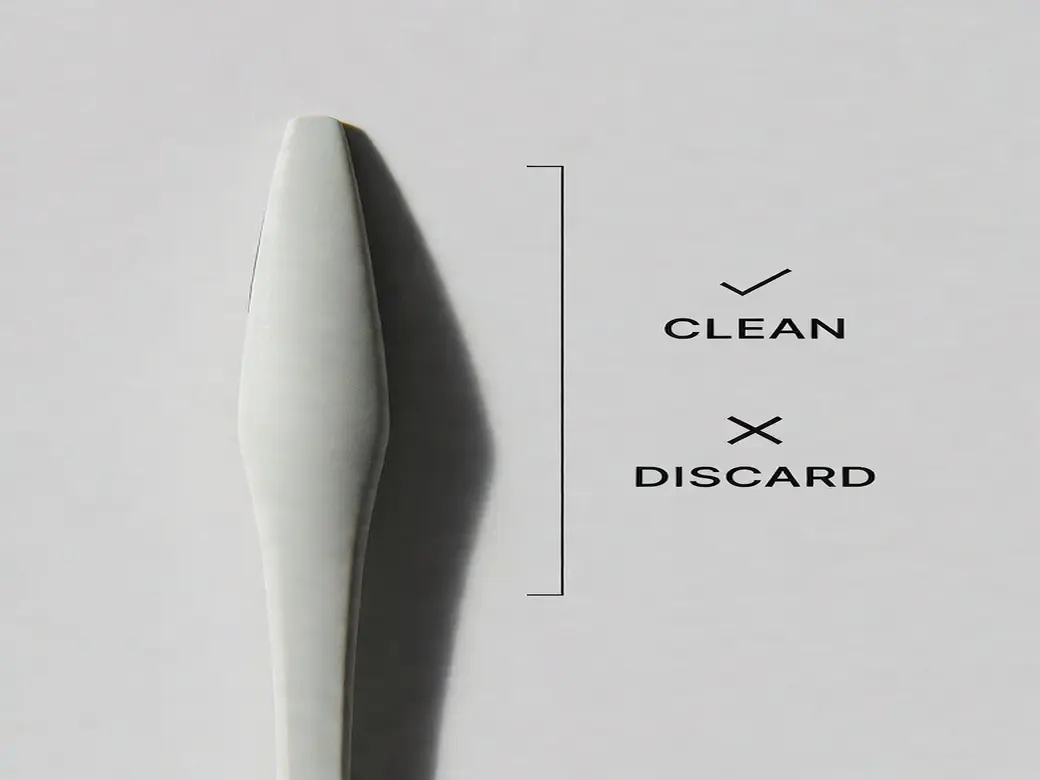
Cleaning is not the right goal when the structure itself is uncertain.
Discard or replace the dildo when:
- The material is unknown
- Mold appears to be below the surface
- The spot is located inside a pore or cavity
- The dildo has cracks, tears or separating layers
- The affected area cannot be reached and inspected
- The odor or visible growth returns
- The material remains stained and you cannot identify the cause
- An electronic compartment appears contaminated
- The product has become sticky, swollen or unusually soft
Do not cut the dildo open to investigate internal contamination. This destroys the product and may expose components that were not designed to be handled.
Use the criteria in when to replace a dildo to evaluate the product’s remaining condition. If replacement is necessary, follow a how to dispose of a dildo guide, especially when rechargeable batteries are present.
Why Mold or Spots May Return
Recurring spots usually indicate that the original cause has not been corrected.
Possible reasons include:
The Dildo Was Not Fully Dry
Water may remain under the base, inside a hollow section or around a charging cover even when the shaft feels dry.
The Storage Bag Is Contaminated
Washing the dildo and returning it to the same damp pouch can reintroduce the problem. Clean a washable pouch according to its care label or replace it.
The Storage Area Is Humid
Bathrooms, window ledges and enclosed cabinets near plumbing can hold more moisture than expected. Move the product to a cool, dry storage location.
The Material Is Porous or Damaged
Contamination inside pores, cracks or deteriorated surfaces may remain beyond the reach of ordinary surface cleaning.
Products Are Touching Each Other
Direct contact can transfer oil, pigment, residue and surface contamination between materials. Store dildos separately when their material compatibility is unknown.
How to Prevent Mold on Dildos
A simple prevention routine is more dependable than trying to restore a questionable product later.
Clean It Promptly
Do not leave lubricant and residue on the product for an extended period. Use the cleaning method recommended for its specific material and construction.
Let It Air-Dry
Dry the exterior with a clean lint-free cloth, then allow remaining moisture to evaporate before storage. Rotate the dildo if its base prevents air from reaching one side.
Inspect Hidden Areas
Check:
- The underside of suction cups
- Deep texture and grooves
- Openings for removable components
- Charging-port covers
- Hollow bases
- Storage pouches
Store Products Separately
Individual bags or compartments reduce contact between incompatible materials and make it easier to identify where a new mark originated.
Keep the Storage Area Clean
A product cannot remain clean in a damp or dirty container. Periodically inspect and clean the drawer, pouch or box—not only the dildo.
For a complete storage routine, link readers to how to store a dildo properly.
Frequently Asked Questions
Can silicone dildos grow mold?
Mold may grow on residue left on an intact silicone surface or inside damaged, damp or difficult-to-clean areas. Properly cured silicone is generally nonporous, so growth on the exterior does not necessarily mean the organism has entered the silicone itself.
Are black dots always mold?
No. Black dots may be lint, transferred dye, pigment variation or staining. Mold cannot be identified by color alone.
Can I use a dildo after removing mold?
Only consider reuse when the material is known and nonporous, the surface is undamaged, the mark was completely removable and the manufacturer-approved cleaning process leaves no spot or odor. Replace the product if there is any uncertainty.
Does boiling remove mold from a dildo?
Boiling is not suitable for every dildo. Electronics, glued parts and some materials can be damaged by heat. Do not boil a product unless the manufacturer specifically approves that method.
Why does my dildo smell musty but have no visible spots?
Moisture or contamination may be present in its storage bag, a hollow area or an inaccessible component. Stop use, inspect the complete product and replace it if the odor persists after approved cleaning and thorough drying.
Can mold spread from one dildo to another?
Moisture, residue and spores can be transferred through shared storage surfaces. Separate the affected product and inspect every item stored with it.
Should I use a condom over a moldy dildo?
No. A condom does not restore a moldy, cracked or deteriorating product. Replace the dildo instead of using a barrier to conceal the problem.
Final Thoughts
Dildos can develop mold when moisture and residue remain in the right environment, but discoloration alone does not confirm biological growth.
First rule out lint, dried lubricant, pigment variation, staining and material breakdown. Then evaluate the product’s material, surface condition and affected location.
A superficial mark on an intact nonporous dildo may be removable through manufacturer-approved cleaning. Persistent growth, musty odor, porous material, cracks or inaccessible contamination are strong reasons to replace the product.
If you are choosing a replacement, compare dildos with clearly disclosed materials, continuous surfaces and care instructions that match the way you plan to clean and store them.