

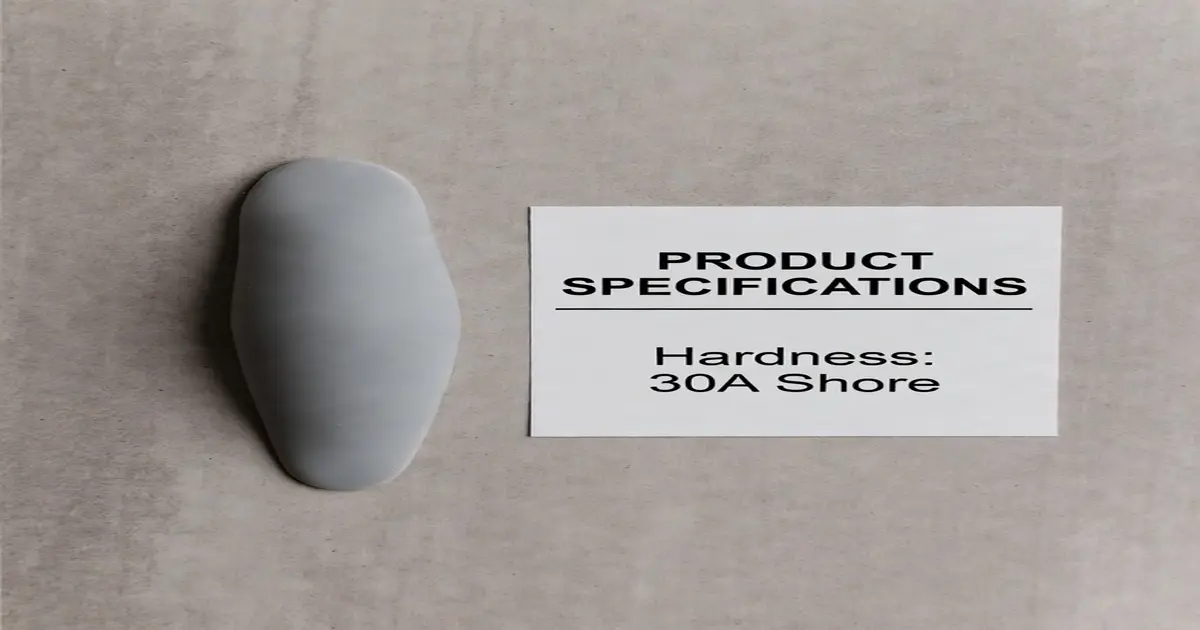
Some silicone dildo listings include specifications such as “Shore 00-30,” “10A silicone” or “Shore A 20.” These numbers may appear precise, but they are easy to misunderstand.
Shore hardness measures how strongly a material resists indentation under defined test conditions. It does not directly measure how much an entire dildo bends, how realistic it feels, how strong it is or whether it is made from a body-safe formulation.
The scale name is just as important as the number. A rating of 30 on one Shore scale cannot be treated as equal to 30 on another.
To use durometer ratings effectively, shoppers need to read three pieces of information:
- The Shore scale
- The numerical value
- Which part of the dildo was measured
Without all three, a hardness number provides limited value.
Quick Answer
Shore hardness is an indentation-resistance measurement commonly used for rubber, elastomers and plastics.
- A higher number on the same scale indicates a harder material.
- A lower number on the same scale indicates a softer material.
- Shore 00 or OO is used for very soft and gel-like materials.
- Shore A is commonly used for soft-to-firmer elastomers.
- Shore D is used for harder rubber and plastics.
- Values from different scales should not be compared as if they were interchangeable.
- Durometer does not describe the complete flexibility of a finished dildo.
A thick dildo and a thin dildo made from the same Shore A silicone can bend very differently.
What Is Shore Hardness?
Shore hardness is measured with an instrument called a durometer. The device presses a standardized indenter into the material using a defined force.
A material that allows deeper indentation receives a lower hardness reading. A material that resists indentation receives a higher reading.
ASTM D2240 covers multiple durometer types for elastomers, rubber-like materials, gels and some plastics. ASTM explains that the indenter geometry and applied force differ between durometer types, and that there is no simple relationship between values obtained from different scales. ASTM D2240 standard overview
This is why “Shore 20” is incomplete. The reader needs to know whether the manufacturer means:
- Shore OO 20
- Shore A 20
- Shore D 20
- Another durometer type
The test is primarily a material-control measurement. It is not a universal rating of the complete product experience.
Shore 00, Shore A and Shore D Explained
Shore 00 or Shore OO
This scale is intended for very soft materials, including gel-like elastomers. Product listings frequently write it as “Shore 00,” using two zeros, while technical documents may display it as Type OO, using two capital letter O characters.
A Shore 00 value should not be compared directly with the same number on the Shore A scale.
For example, “30 on Shore 00” and “30 on Shore A” do not describe equal hardness. The instruments use different indenters and forces.
Shore A
Shore A is widely used for flexible rubber and elastomeric materials. Many silicone specifications are reported on this scale.
Smooth-On, for example, lists one Dragon Skin silicone formulation as Shore 10A, while its much softer Ecoflex range includes materials reported on softer scales. These examples demonstrate that even products broadly described as silicone can have very different durometer ratings. Dragon Skin 10 technical data and Ecoflex silicone range
These products are industrial silicone examples, not consumer dildo recommendations. Their specifications are useful for understanding how manufacturers report silicone hardness.
Shore D
Shore D is used for harder rubber and plastics. It is less relevant to the soft outer shafts of most silicone dildos but may appear in technical information for rigid components.
A Shore D value should not be placed beside a Shore A value in a simple numerical ranking. The scales test different hardness ranges.
How to Read a Dildo Hardness Specification
Use the following format:
Scale + Value + Measured Component
For example:
Shore A 10, measured on the cured outer silicone
This is more informative than:
Soft silicone: 10
Here is how several sample listings should be interpreted:
| Listing | What it communicates | What remains unknown |
|---|---|---|
| Shore 00-30 | A value on a very-soft-material scale | Product geometry and internal structure |
| Shore A 10 | Relatively soft within the Shore A scale | Which component was tested |
| Shore A 30 | Harder than Shore A 10 on the same scale | Overall bending resistance |
| Shore D 30 | A different scale for harder materials | Cannot be compared numerically with A30 |
| “Durometer 20” | An incomplete claim | The scale is missing |
| “Soft silicone” | A descriptive label | No standardized hardness value |
The order may also be reversed. “10A,” “A10” and “Shore A 10” are commonly intended to communicate the same scale and value, although the complete written format is clearer.
Why the Same Shore Hardness Can Feel Different
Durometer measures resistance at the point where the indenter presses into a material. A shopper handles the entire dildo, so construction changes the result.
Shaft Thickness
A thick shaft made from Shore A 10 silicone generally resists whole-product bending more than a thin shaft made from the same material.
The durometer rating can remain identical because the silicone formulation is the same. The difference comes from geometry.
Total Length
A longer dildo provides more leverage and may bend more visibly than a short dildo of similar diameter and hardness.
This does not mean the longer product uses softer silicone.
Curves and Narrow Sections
A narrow neck, pronounced curve or tapered tip may flex more than the main shaft. One dildo can therefore contain areas that behave differently even when molded from a single material.
Hollow Construction
A hollow shaft can compress and fold more easily than a solid shaft made from silicone with the same durometer rating.
The product page must explain construction before the hardness number can be translated into expected flexibility.
Internal Core
Dual-density dildos use different structures to create a soft outer layer and a more supportive interior. A hardness rating may describe:
- The outer skin
- The inner core
- An average or general product description
- Only the silicone selected for one component
If the listing provides one number without identifying the layer, ask the manufacturer which component was tested. A dual-density vs solid silicone dildo guide can explain how internal construction changes support.
Base and Attachments
A suction cup, handle or harness-compatible base may use a different thickness or material from the shaft. The base can feel firmer even when the complete dildo is described under one Shore rating.
Shore Hardness Is Not the Same as Flexibility
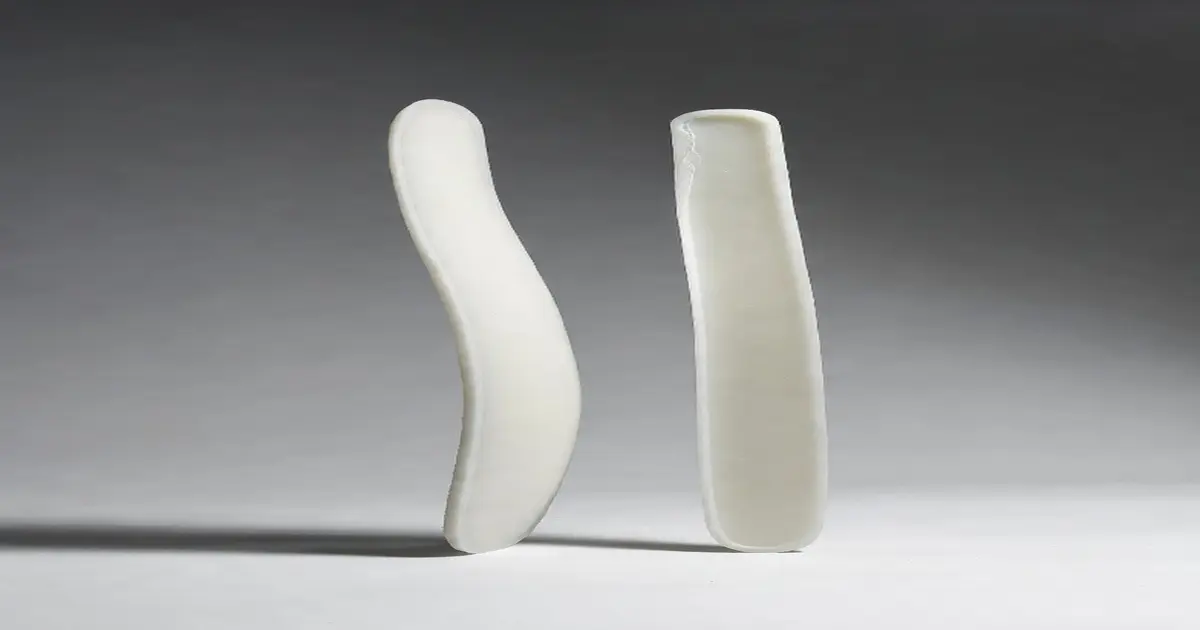
Hardness and flexibility are related, but they are not interchangeable.
Shore hardness asks:
How resistant is this material to a standardized indentation?
Flexibility asks:
How easily does this complete shape bend under a particular load?
A product may have a soft surface but a supportive core. Another may resist fingertip indentation yet bend easily because it is long and narrow.
This distinction is explored further in flexible vs bendable dildos, which should focus on whole-product movement rather than indentation hardness.
What a Shore Rating Does Not Tell You
A durometer number does not independently reveal:
- Tear strength
- Tensile strength
- Elongation before breaking
- Surface friction
- Porosity
- Material composition
- Cure quality
- Resistance to chemicals
- Compatibility with lubricant
- Product safety
- Manufacturing quality
- Expected lifespan
A higher Shore rating does not automatically mean higher quality or greater durability. A firm material can still be poorly cured, badly molded or used in a weak design.
Likewise, a very soft silicone can be intentionally engineered and mechanically strong. Hardness is only one property.
Use a complete dildo materials guide when evaluating composition and care rather than treating Shore hardness as a body-safety certification.
Why Product-to-Product Comparisons Often Fail
Two listings may both show “Shore A 10” while describing products that feel noticeably different. The likely reasons include:
- Different shaft diameters
- Different lengths
- Solid versus hollow construction
- Single-density versus dual-density construction
- Different outer-skin thicknesses
- Different testing temperatures
- Rounded or approximate ratings
- Hardness measured on a sample slab rather than the finished product
- Incomplete or incorrectly copied specifications
Professional Shore testing controls variables such as the instrument, contact force, sample condition and measurement procedure. ZwickRoell’s technical overview notes that standardized Shore tests require defined contact, conditioning and repeated measurements. ZwickRoell Shore hardness guide
Pressing two finished dildos with a thumb is not an equivalent laboratory comparison.
The second part will explain how shoppers can use Shore numbers without over-relying on them.
The Five-Question Shore Rating Check
Before using a hardness number to compare dildos, answer these five questions.
1. Is the Scale Included?
A number without a scale is incomplete.
“Durometer 20” does not tell you whether the product is rated on Shore OO, Shore A or another scale. Do not guess based on the product photograph.
2. Which Component Was Measured?
A dual-density dildo may have a soft outer skin and firmer core. A vibrating dildo may combine silicone with an internal ABS structure.
The rating should identify whether it refers to:
- The outer silicone
- The internal core
- The suction cup
- A motor housing
- A laboratory sample of the material
- The finished product
If this information is missing, treat the number as a general clue rather than a complete product specification.
3. Is the Dildo Solid, Hollow or Dual-Density?
Construction can change overall bending more than a small difference in durometer.
A solid shaft, hollow shaft and core-supported shaft made with similarly rated outer silicone may behave very differently.
4. Are the Dimensions Similar?
Hardness comparisons are most useful when the products have comparable length, diameter and shape.
A long, narrow Shore A 20 dildo may bend more easily than a short, thick Shore A 10 dildo. Geometry can outweigh the numerical difference.
5. Do the Ratings Come From Comparable Sources?
Comparing two models from the same manufacturer is often more useful than comparing numbers copied across unrelated stores.
One brand may publish tested material specifications, while another retailer may repeat an approximate figure supplied by a distributor. Check whether the rating appears consistently on the manufacturer’s website, packaging and product page.
When Shore Numbers Are Useful
A durometer rating is most useful when comparing products that share several characteristics.
| Comparison situation | Usefulness of Shore rating |
|---|---|
| Same manufacturer, scale and product family | High |
| Same scale and similar shaft dimensions | Moderate to high |
| Same silicone but different thickness | Limited without construction details |
| Different Shore scales | Low without technical conversion data |
| One listing omits the scale | Very low |
| Solid dildo compared with a hollow dildo | Limited |
| Single-density compared with dual-density | Limited without separate layer ratings |
| Different brands using vague copied specifications | Uncertain |
Shore hardness should narrow a comparison, not make the entire decision.
Why Conversion Charts Can Be Misleading
Some online charts attempt to convert Shore OO values into Shore A or Shore D values. These charts may provide approximate overlap ranges, but they do not create exact equivalence.
ASTM D2240 specifically notes that there is no simple relationship between readings produced by different durometer types. Different scales use different indenter geometry and force.
For shopping purposes, the safest comparison is:
- Shore A with Shore A
- Shore OO with Shore OO
- Similar construction with similar construction
- Values from clearly identified sources
Do not convert a soft-material rating into another scale and then rank two dildos as though both were tested identically.
What If the Product Has No Shore Rating?
Most dildo listings do not include a laboratory hardness value. This does not automatically mean the product is low quality.
Instead, look for evidence describing whole-product behavior.
Bend Photographs
A useful image may show the shaft bending under light, moderate and stronger pressure. The product should remain fully visible so shoppers can see where it flexes.
A photograph of only the tip being squeezed does not reveal how the shaft or base behaves.
Demonstration Video
A short video can show:
- Whether the dildo stands under its own weight
- Where the shaft begins to bend
- How quickly it returns to shape
- Whether the base folds with the shaft
- How the outer layer compresses
- Whether the core remains supportive
Video is often more informative than words such as “soft” or “flexible.”
Construction Description
Look for terms such as:
- Solid silicone
- Hollow shaft
- Dual-density
- Firm internal core
- Soft outer skin
- Flexible neck
- Bendable internal rod
These descriptions should explain physical construction rather than rely only on promotional language.
Consistent Firmness Categories
A retailer may create its own Soft, Medium and Firm categories if the system is applied consistently across products.
These are not standardized Shore values, but they can still be useful when the store explains how the categories are assigned.
Readers who want experience-based selection advice can visit how to choose the right dildo firmness. The current article should remain focused on interpreting technical specifications.
Why “Real Feel” Is Not a Hardness Rating
Terms such as “real feel,” “ultra-realistic,” “lifelike” and “soft touch” are marketing descriptions. They do not identify a Shore scale or tested value.
A realistic-feeling dildo may achieve its construction through:
- A soft external layer
- A firmer internal core
- A movable or flexible center
- Skin-like surface texture
- Shape and anatomical detail
- Material thickness
Two products labeled “real feel” may therefore have different firmness and support.
Use how realistic dildos are constructed to explain these design features without treating “real feel” as a measurable material specification.
Can You Measure Dildo Hardness at Home?
A consumer durometer may produce a number, but measuring a finished dildo accurately is more difficult than pressing the instrument against the shaft.
Standardized testing depends on factors such as:
- Correct durometer type
- Sample thickness
- Flat, stable support
- Surface curvature
- Temperature
- Contact force
- Reading time
- Distance from edges
- Multiple measurement points
A curved shaft may not provide the flat surface required for consistent contact. A thin outer layer over a firm core can also cause the reading to represent both structures.
Stacking, folding or compressing the dildo to create a thicker test area changes the conditions and may damage the product.
For shoppers, a home durometer reading should not be presented as equivalent to a manufacturer’s controlled test unless the method and sample meet the relevant standard.
Common Shore Hardness Mistakes
Mistake 1: Comparing Numbers Without the Scale
Shore OO 30 and Shore A 30 are not the same hardness.
Mistake 2: Assuming Higher Means Better
A higher number indicates greater indentation resistance on the same scale. It does not prove better silicone, longer life or safer construction.
Mistake 3: Treating Hardness as Body-Safety Evidence
Durometer testing does not identify contaminants, porosity, cure quality or suitability for intimate use.
Mistake 4: Ignoring Product Geometry
Length, diameter, curves and hollow areas affect bending even when the material rating is unchanged.
Mistake 5: Assuming One Rating Describes Every Layer
Dual-density products may need separate values for the skin and core.
Mistake 6: Treating “Soft” as a Technical Specification
Without a consistent store system or durometer value, “soft” remains subjective.
How Retailers Should Display Dildo Hardness
A well-structured product page can separate verified measurements from descriptive guidance.
Recommended format:
Firmness: Soft
Durometer: Shore A 10
Measured component: Outer silicone layer
Construction: Dual-density with supportive inner core
Flex profile: Shaft bends easily while the core helps it return to shape
Source: Manufacturer specification
For a single-density product:
Firmness: Medium-firm
Durometer: Shore A 25
Measured component: Cured shaft material
Construction: Solid silicone
Source: Manufacturer specification
If the Shore rating has not been verified, omit it. Do not invent a number from touch, product appearance or an unrelated silicone with the same marketing name.
A store can still provide a useful firmness description through consistent hands-on comparisons, clear photographs and construction details.
Frequently Asked Questions
Is Shore 00 softer than Shore A?
Shore OO is designed for softer and gel-like materials, while Shore A covers a firmer elastomer range. However, the numbers do not have a direct one-to-one conversion.
Is Shore A 10 softer than Shore A 30?
Yes. When the same Shore A scale and comparable test conditions are used, A10 indicates less indentation resistance than A30.
Does a lower Shore number mean a dildo bends more?
Not necessarily. It indicates a softer material on that scale, but shaft thickness, length, internal cores and hollow construction determine how the finished dildo bends.
What Shore hardness feels most realistic?
There is no universal number. Realistic compression may result from a soft outer layer combined with a supportive core rather than one uniform hardness value.
Does dual-density silicone have two Shore ratings?
It can. Ideally, the manufacturer should report the outer-layer and core values separately. Some listings provide only one number or a general firmness category.
Can Shore hardness prove that silicone is medical-grade?
No. Hardness measures indentation resistance. It does not certify material grade, composition or body safety.
Can two Shore A 10 dildos feel different?
Yes. Different dimensions, shapes, skin thicknesses, cores and manufacturing methods can make the finished products feel and bend differently.
Final Thoughts
Shore hardness is useful only when the full specification is available.
Read the scale, value and measured component together. Compare numbers within the same scale and account for product geometry, construction and source reliability.
A durometer rating tells you how a material resists indentation under controlled conditions. It does not independently tell you how the complete dildo bends, how realistic it feels or whether it is high quality.
When comparing dildos, combine verified hardness data with shaft dimensions, internal construction, bend demonstrations and clearly disclosed materials.