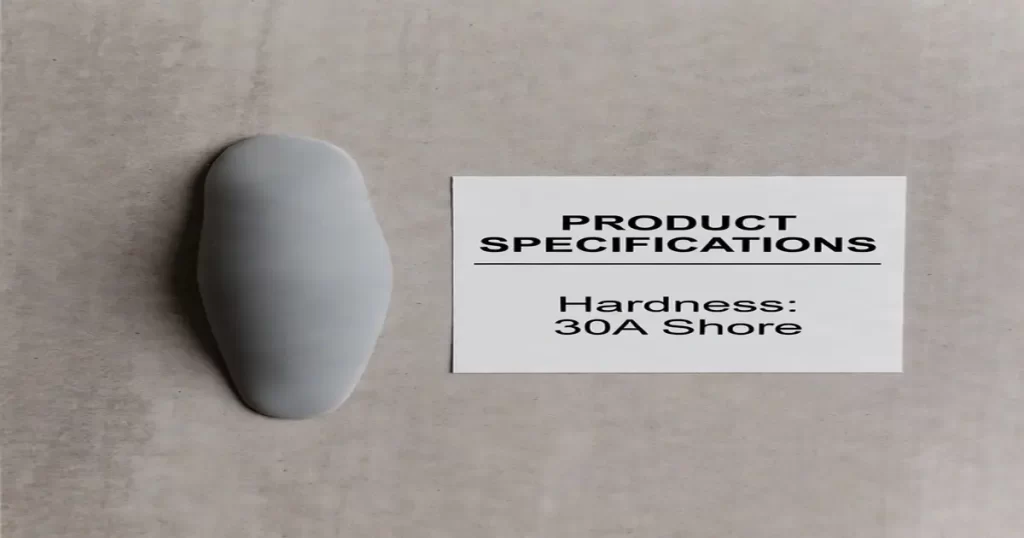

A soft, matte and flexible dildo may look like silicone without actually providing enough evidence to confirm its material.
TPE, TPR, PVC and other elastomers can be manufactured with similar colors, textures and softness. Surface coatings can further change how a product feels. Even materials professionals acknowledge that TPE, silicone and rubber may be difficult to distinguish by appearance and touch alone. Avient’s technical introduction to TPE
This means there is no reliable five-second home test that proves a dildo is made from a specific silicone formulation.
The most dependable verification comes from the product’s supply chain:
- A clearly identified manufacturer
- A precise material declaration
- Consistent specifications
- Traceable testing or technical documentation
- A retailer willing to answer material questions
Touch, smell, stretch and color changes may provide clues, but they are not chemical identification methods.
Quick Answer
You usually cannot prove that a dildo is silicone through a pinch, twist, flame, smell or stretch test.
A product is more credible when:
- The exact material is stated consistently
- “Silicone” is not contradicted by “TPE,” “TPR,” “PVC” or “jelly” elsewhere
- The manufacturer and model can be identified
- The seller explains whether the complete shaft or only an outer layer is silicone
- Care and lubricant instructions match the declared material
- Any safety or testing claim identifies the test and product it covers
A vague phrase such as “silicone feel” does not mean the product is made from silicone.
The Five-Level Silicone Evidence Ladder
Not all evidence carries equal weight. Use this hierarchy when reviewing a product.
Level 1: Identifiable Manufacturer and Exact Product
The strongest starting point is a manufacturer that can be traced to an official website, product catalog or authorized distributor.
The model name, dimensions, images and material should match across sources.
An unbranded product is not automatically unsafe or incorrectly labeled, but it provides fewer ways to verify the claim.
Level 2: Specific Material Declaration
Look for precise wording such as:
Material: Platinum-cured silicone outer layer with ABS internal housing
or:
Material: Single-density silicone shaft and base
This is more useful than:
Material: Soft
or:
Material: Silicone-like
A mixed-material electronic dildo should identify its external and internal components separately.
Level 3: Product-Specific Documentation
Useful documentation may include:
- A technical specification
- Test report
- Supplier declaration
- Batch or model reference
- Care instructions
- Lubricant compatibility
- Warranty information
A laboratory report should identify the tested product or material. A generic certificate uploaded to a store does not automatically apply to every dildo sold there.
Level 4: Consistent Retailer Information
Compare the product title, specification table, packaging and care page.
If the title says silicone but the detailed specification says TPE, ask for clarification before purchase. Contradictory material information is a stronger warning sign than any pinch test.
Level 5: Physical Clues
Appearance, smell, stretch and surface texture belong at the bottom of the evidence ladder. They can help identify a reason to ask questions, but they cannot confirm the polymer formulation.
What “Silicone” Can Mean on a Product Page
Silicone is not one single recipe. Silicone elastomers are a family of materials formulated with different hardness, strength, color, processing and performance characteristics.
Wacker’s technical information describes silicone elastomers as crosslinked materials that can retain mechanical properties over broad temperature ranges. However, individual formulations still differ significantly. Wacker silicone elastomer overview
Product listings may use several related expressions.
Silicone Rubber
This is a normal technical term for a cured elastomeric silicone. The word “rubber” does not necessarily mean natural rubber or latex.
Liquid Silicone Rubber
Liquid silicone rubber describes a material and manufacturing process before curing. The finished dildo should not remain liquid.
The word “liquid” does not mean that oil should leak from the finished product.
Platinum-Cured Silicone
This describes an addition-cure system that uses a platinum catalyst. It does not independently prove that the complete dildo has passed a particular biocompatibility test.
Some industrial platinum-cure silicones are separately tested for particular applications, while others are intended for molds, special effects or engineering uses.
Silicone Blend
“Silicone blend” is an incomplete description unless the manufacturer identifies what is blended and which components are silicone.
Do not automatically treat a blend as equivalent to a fully disclosed silicone construction.
Silicone Feel or Silicone-Like
These terms describe texture or appearance, not composition. A TPE product can be designed to feel smooth, soft or rubbery.
Medical-Grade Silicone
A “medical-grade” claim should be supported by product-specific documentation and an explanation of the applicable standard or testing.
Material name alone is not enough. FDA biocompatibility guidance for medical devices considers formulation, processing, physical form and the nature and duration of tissue contact—not merely the word silicone. FDA biocompatibility guidance
A consumer dildo is not automatically a medical device, and medical terminology on its listing should not be accepted without evidence.
Why the Pinch or Twist Test Is Unreliable
A popular online test suggests pinching or sharply twisting a dildo and watching whether the stressed area turns white.
The claim is that whitening proves the presence of fillers or another material. This conclusion is too simple.
Visible color changes can be affected by:
- Pigment concentration
- Product thickness
- Surface texture
- Internal layers
- Light direction
- How far the material is stretched
- Microscopic stress within the elastomer
Different silicone formulations may behave differently, while non-silicone materials may show little visible change.
The pinch test may reveal how a particular product responds to deformation. It does not identify its chemistry.
Repeated aggressive twisting can also damage thin sections or create tears. Do not perform it as a destructive authenticity test.
Why Smell Cannot Prove the Material
A strong, persistent chemical odor deserves investigation, but smell alone cannot classify a dildo.
Odor may come from:
- Packaging
- Ink or adhesive
- Surface treatment
- Manufacturing residue
- A storage pouch
- Another material stored nearby
- Material deterioration
Many cured silicone formulations have little odor, but an odorless dildo is not automatically silicone. Manufacturers can formulate other elastomers with low odor as well.
Likewise, a new silicone product may temporarily pick up packaging smells without its shaft being made from a different polymer.
Use a new dildo smell guide to evaluate odor separately from material verification.
Why Stretch and Softness Are Not Proof
Silicone can be formulated across a wide hardness range. Smooth-On, for example, sells very soft Ecoflex silicone and firmer Dragon Skin formulations, both within the broader silicone family.
TPE manufacturers also create products with many different hardness levels and surface textures. A soft, stretchy dildo could therefore belong to either broad category.
The following observations are not conclusive:
- “It stretches far, so it must be silicone.”
- “It feels firm, so it cannot be silicone.”
- “It attracts lint, so it is definitely silicone.”
- “It feels silky, so it must be premium silicone.”
- “It looks translucent, so it cannot be TPE.”
Refer to what Shore hardness means for dildos when comparing softness. Firmness is a mechanical property, not an authenticity certificate.
Do Not Use a Flame or Burn Test
Burning a dildo is unsafe, destructive and unreliable.
A flame test can:
- Produce smoke or irritating fumes
- Ignite surrounding materials
- Damage the product beyond use
- Create melted or charred residue
- Give an ambiguous result
- Reveal nothing about additives or suitability for intimate contact
Silicone formulations can also be engineered for different levels of flame resistance. Smooth-On, for example, offers specific flame-rated silicone products, demonstrating that burning behavior depends on formulation and certification—not simply the word silicone. Smooth-On flame-rated materials
Never use an open flame to authenticate a dildo.
Other Home Tests That Do Not Prove Silicone
Float Test
Whether a dildo floats depends on density, hollow sections, trapped air, internal cores and electronic components. Floating or sinking does not identify the outer material.
Dust Test
Surface finish, static, storage conditions and residual oil can affect how much lint a dildo collects.
Freezer Test
Cold temperature can temporarily alter firmness, but it does not provide reliable chemical identification. Freezing may also affect electronics or bonded parts.
Boiling Test
Heat resistance varies by material and construction. Boiling can damage motors, adhesives, coatings or unknown elastomers and should never be used as an authenticity experiment.
Lubricant Spot Test
Applying silicone lubricant to an uncertain product may alter its surface. A reaction does not provide a controlled identification, while no immediate reaction does not prove compatibility.
Follow manufacturer instructions instead of using lubricant to test composition.
Physical Warning Signs Worth Investigating
Although physical clues cannot prove that a dildo is fake silicone, contact the seller if you notice:
- Persistent oily leakage
- A permanently tacky surface
- Material transferring to other products
- Melting or fusing during storage
- Peeling layers
- Strong odor that does not fade
- Contradictory material labels
- No identifiable manufacturer
- No usable care instructions
- A product described differently across listings
These signs may indicate material deterioration, poor storage compatibility or inaccurate disclosure.
The second part will show how to verify a seller’s silicone claim before and after purchase.
How to Verify a Silicone Claim Before Buying
The best time to investigate a material claim is before the dildo has been opened or used. Product returns may be restricted after intimate contact.
Use the following verification sequence.
1. Identify the Manufacturer and Model
A product page should provide enough information to distinguish the dildo from similar unbranded models.
Record:
- Brand or manufacturer
- Exact model name
- Product number or SKU
- Color and size variation
- Packaging shown
- Seller or authorized distributor
Search for the same model on the manufacturer’s official website. Dimensions, materials, images and care instructions should be reasonably consistent.
Different retailers may shorten descriptions, but the basic material should not change from silicone to TPE or PVC between listings.
2. Read the Complete Specification
Do not stop at the product title. Check the specification table, description, packaging image, FAQ and care section.
Look for answers to these questions:
- Is the entire insertable surface silicone?
- Is silicone only used as an exterior coating?
- Does the product contain an ABS core or motor housing?
- Is the base made from the same material as the shaft?
- Is it single-density or dual-density?
- Is the cure system stated?
- Are the lubricant instructions consistent with the material?
A title such as “Silicone Realistic Dildo” may describe the external shaft while omitting internal structures. That does not make the title false, but the complete construction should be disclosed.
3. Ask the Seller a Precise Question
Instead of asking, “Is this good silicone?” use a question the seller can answer factually:
Is the complete body-contact surface of this model made from silicone? Please confirm whether it contains any TPE, TPR, PVC, rubber or gel outer layers and whether the silicone claim comes directly from the manufacturer.
For a dual-density product:
Does the listed silicone material apply to both the outer layer and internal core? If the layers use different materials, please identify each one.
Save the response with your order record.
4. Check Care and Lubricant Instructions
Care information should make sense for the declared construction.
Warning signs include:
- One page says the dildo can be boiled while another identifies electronics
- The material is listed as silicone but the instructions repeatedly call it TPE
- The seller cannot say whether the product is waterproof
- Lubricant guidance conflicts across the packaging and website
- The cleaning method appears copied from an unrelated product
Care instructions do not prove composition, but contradictions reduce confidence in the listing.
How to Evaluate a Test Report or Certificate
A store may display a report as evidence of material quality. Before relying on it, check whether it actually applies to the dildo being sold.
A useful report should identify:
- Laboratory name
- Report or certificate number
- Applicant or manufacturer
- Test date
- Sample name or model
- Material or product photograph
- Testing method
- Scope of substances or properties tested
- Results and conclusion
- Page count and complete document
A cropped screenshot showing only “PASS” is weak evidence if the sample cannot be connected to the product.
Also distinguish between different claims. A report that checks for selected restricted substances does not necessarily prove that the sample is silicone. A hardness test confirms indentation resistance, not polymer identity. A general factory certificate does not automatically cover every product made there.
Testing evidence must match the claim being made.
Can a Laboratory Identify Silicone?
A qualified materials laboratory can use analytical methods to help identify a polymer family. For example, infrared spectroscopy may distinguish silicone from many other elastomers by examining its characteristic chemical absorption pattern.
However, a basic polymer-identification test may not reveal:
- Every additive
- Pigment composition
- Manufacturing contamination
- Cure quality
- Biological response
- Long-term durability
- Whether all production batches are identical
Testing may require cutting or otherwise damaging the sample. For most individual shoppers, returning an unverifiable product is more practical than commissioning laboratory analysis.
Retailers and manufacturers, however, can use product-specific testing to support large-volume or long-term material claims.
What to Do When the Dildo Arrives
Keep the Packaging
Do not immediately discard labels, instructions, batch information or barcodes. Photograph the packaging and product together.
Compare the Product With the Listing
Check:
- Color and shape
- Dimensions
- Brand marks
- Model number
- Material wording
- Care instructions
- Included accessories
A different shade or small manufacturing variation does not prove that the material changed. A completely different label or material statement deserves clarification.
Inspect the Surface
Before use, look for:
- Open holes
- Cracks
- Peeling coatings
- Uncured or wet areas
- Excessive oil
- Separating layers
- Unexpected seams
- Persistent tackiness
These conditions do not chemically identify the material, but they may justify a quality claim regardless of whether the dildo is silicone.
Follow a new dildo inspection checklist before removing return labels or using the product.
Contact the Seller Before Performing Tests
If anything is unclear, send photographs and ask the seller to confirm the model and material.
Do not burn, boil, freeze, cut or aggressively stretch the dildo. Destructive testing may eliminate the option of a return without producing a reliable answer.
What If the Material Cannot Be Verified?
If neither the retailer nor manufacturer can identify the material, treat it as an unknown elastomer.
That means:
- Do not assume it can be boiled
- Do not assume it is compatible with silicone lubricant
- Do not store it touching other soft dildos
- Do not use strong cleaners without instructions
- Do not treat “body-safe” as proven
- Replace it if the surface becomes oily, sticky, cracked or unstable
A correctly fitted condom may reduce direct surface contact during some uses, but it does not verify the material or repair a deteriorating product. It also does not make a damaged, melting or structurally unsafe dildo suitable for continued use.
For long-term ownership, a clearly disclosed replacement is usually easier to maintain than an unidentified product.

Product-Page Material Template for Retailers
Retailers can improve trust by separating verified facts from descriptive language.
Recommended format:
Body-Contact Material: Silicone
Internal Construction: Firm silicone core with softer silicone outer layer
Other Components: ABS motor housing
Firmness: Soft outer layer with supportive core
Durometer: Shore A [value], outer layer — only include if verified
Cure Type: [Type] — only include if supplied by the manufacturer
Lubricant Compatibility: Follow manufacturer guidance
Cleaning Method: [Exact approved method]
Water Protection: [Rating or manufacturer wording]
Material Source: Manufacturer specification
Testing: [Report name and scope, if available]
If a field cannot be verified, omit it or clearly state that the information was not provided. Do not fill gaps with assumptions based on touch or appearance.
Material-Claim Red Flags
Pause before buying when a listing:
- Uses “silicone-like” in one place and “100% silicone” in another
- Lists several conflicting materials
- Shows reports for a different product
- Claims “certified” without naming the certification
- Has no manufacturer or model information
- Uses “medical-grade” without supporting evidence
- Provides no care instructions
- Reuses identical specifications across unrelated dildos
- Describes visible oil leakage as normal silicone behavior
- Changes the material after checkout or delivery
One red flag may be a listing error. Several together suggest that the seller does not have reliable product information.
A how to evaluate a dildo brand guide can help readers review the wider company rather than one claim in isolation.
Frequently Asked Questions
Can real silicone feel sticky?
Some silicone surfaces can attract lint or develop temporary residue. Persistent wetness, oil leakage, melting or increasing tackiness should be investigated. Stickiness alone cannot confirm or disprove silicone.
Does real silicone have a smell?
Many cured silicone formulations have little inherent odor, but packaging and manufacturing residue may create a temporary smell. An odorless product is not automatically silicone.
Does silicone always turn white when pinched?
No. Whitening can vary with pigment, thickness, stretching and formulation. The pinch test does not reliably prove material composition.
Can a cheap dildo still be silicone?
Price is not a chemical test. Manufacturing scale, design, brand and retail margin all affect cost. A low price may justify closer verification, but it does not prove that the material is fake.
Is platinum-cured silicone always body-safe?
The cure system is only one part of the material description. The complete formulation, processing, finished product and relevant testing still matter.
Is silicone blend the same as pure silicone?
Not necessarily. “Silicone blend” is too vague to evaluate without knowing the other material and which part of the dildo uses the blend.
Can I identify silicone by how much lint it attracts?
No. Surface finish, static, cleaning residue and storage conditions affect lint collection.
Can two silicone dildos feel completely different?
Yes. Silicone can be formulated at different hardness levels and used in solid, hollow or dual-density constructions.
Final Thoughts
The most reliable way to identify a silicone dildo is not a pinch, flame or smell test. It is a traceable material claim supported by consistent product information.
Start with the manufacturer, exact model and complete construction. Check whether documentation applies to that product, and distinguish polymer identification from unrelated tests.
Physical clues may help you notice a problem, but they cannot prove composition. If the material remains unknown or the product shows deterioration, returning or replacing it is more dependable than destructive home testing.
Choose dildos with clearly disclosed body-contact materials, model-specific care instructions and sellers willing to explain exactly what each component is made from.