


“I want to try a dildo” can mean several different things: talking about an idea, shopping together, using one during partnered sex, or exploring it solo while your partner is nearby. A good conversation makes room to find out what both people mean before anyone buys something or makes a plan.
Quick answer: Bring it up at a calm, private moment, speak from your own curiosity, and ask an open question. Make it clear that your partner can say yes, no, or “I need time.” If both of you want to keep talking, agree on boundaries and what trying a dildo would actually involve before choosing a design.

Make the first conversation an invitation
It is easier to answer a genuine question than a decision that has already been made. Instead of ordering a dildo as a surprise or bringing one into the middle of sex, start by saying what interests you and ask how the idea lands with your partner.
Planned Parenthood’s communication guidance recommends talking about likes, dislikes, and boundaries, and its consent guidance emphasizes respecting a partner’s answer. You can read its guide to talking with a partner about sex and its guide to discussing consent.
A simple three-part opener:
Share your interest: “I’ve been curious about trying a dildo together.”
Ask, don’t assume: “How do you feel about talking through the idea?”
Leave space: “There’s no pressure to decide now, and it’s okay if it’s not for you.”
Choose a moment when neither of you has to answer quickly
Pick a time when you can both focus and end the conversation without having to continue into sex. A quiet walk, a relaxed evening, or a check-in about things you enjoy can feel more natural than raising the subject during an argument, while one person is getting undressed, or just before you expect to use the dildo.
Keep the first conversation small. You do not have to settle the size, style, budget, or date of use in one sitting. If one of you feels surprised, say so and pause. Planned Parenthood notes that people can change their minds, so a conversation or earlier agreement should not be treated as permanent permission.
Read the response without trying to negotiate it
A first answer may be clear, uncertain, or emotional. The goal is to understand what your partner is saying—not to turn hesitation into a sales objection.
| Response | What you can say | Useful next step |
|---|---|---|
| “Yes, I’m interested.” | “Great. What part sounds interesting to you?” | Talk through what each of you would and would not want to try. |
| “Maybe, but I have questions.” | “That makes sense. What would help you think it through?” | Answer what you can, then give them time; no purchase is needed yet. |
| “I’m not sure.” | “We can leave it there for now.” | Let the idea rest unless your partner brings it up again. |
| “No, I don’t want to.” | “Thanks for telling me. I won’t push it.” | Accept the answer and do not make affection or sex conditional on changing it. |
| Your partner looks upset or goes quiet | “Would you rather pause or talk about what felt uncomfortable?” | Stop the discussion and listen; do not demand an explanation. |
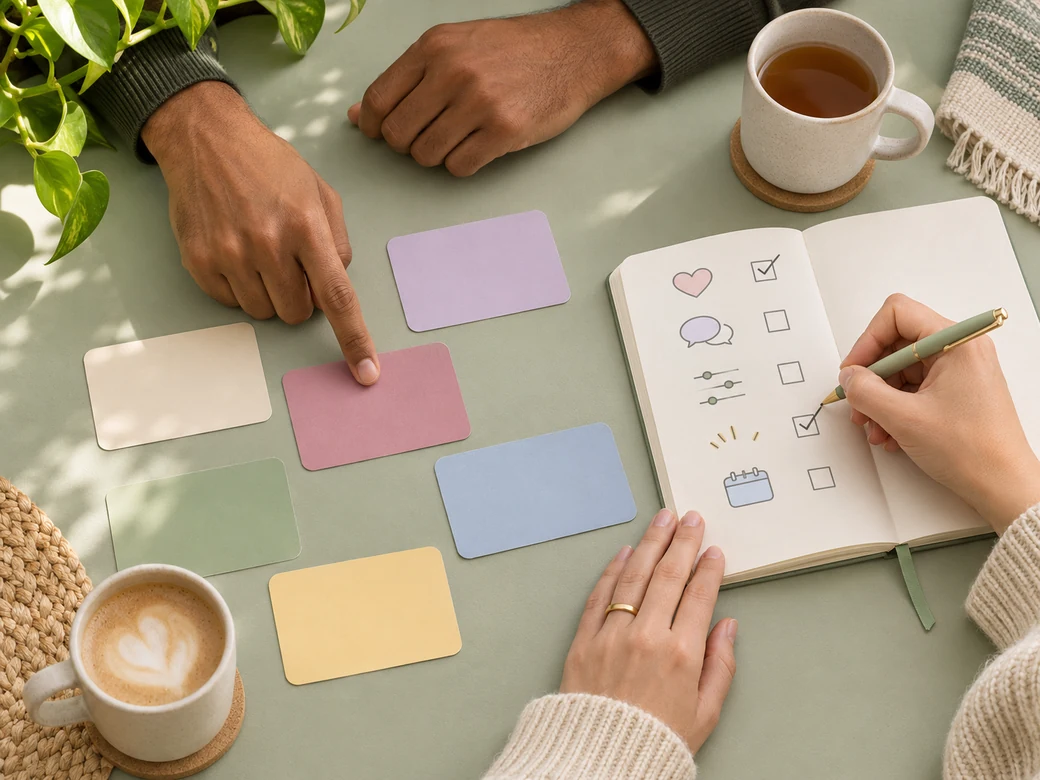
A “no” does not need to be followed by persuasion, repeated requests, or a promise that the dildo will fix something. If your partner wants to explain, listen. If they do not, respect that too. If you need time to process disappointment, do so without making them responsible for changing their answer.
Clarify what “trying a dildo” means to each of you
People can agree with the general idea and still picture different experiences. One person may imagine using the dildo on a partner; the other may be thinking about solo use, watching, holding it together, or using it externally. Ask about the activity before you discuss a particular model.
- Would you both want to use the dildo, or would one person use it while the other participates in another way?
- Is insertion part of the idea, or would external contact feel more comfortable to start?
- Would you rather choose a dildo together online, visit a store, or wait?
- Are there specific sizes, shapes, materials, or situations either of you does not want?
- What words or signals should mean “slow down,” “pause,” or “stop”?
- Would either of you prefer to try it alone first, or not try it at all?
There is no requirement that a dildo be used internally or by both partners. If you want to discuss external contact as one option, our guide to using a dildo externally explains how shape and surface can matter without assuming insertion.
Choose the dildo only after you agree on the experience
Once you both want to explore the idea, turn the conversation into a few practical preferences. This prevents one person from buying a design based only on their own assumptions.
Compare dimensions in plain terms
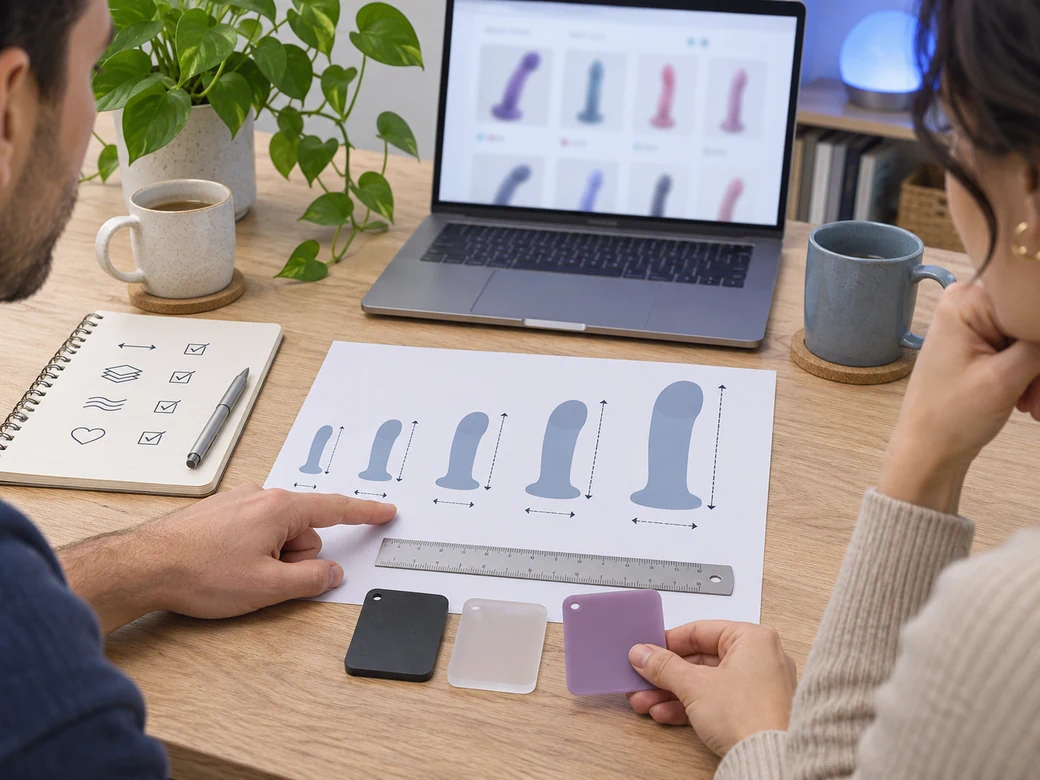
Look at insertable length, diameter, and circumference rather than relying on a dramatic product photo or a vague label like “small.” A useful starting point is the size both people feel comfortable discussing, not the largest size either person thinks they are expected to choose. Our dildo size guide explains how to read those measurements.
Talk about firmness and surface
Some people prefer a softer, more yielding feel; others prefer a firmer shape that is easier to guide. Firmness does not tell you everything about comfort, and neither partner has to agree on one universal “best” feel. Compare the differences between soft and firm dildos together. If you both want to browse by feel, see the soft dildos collection.
Decide who chooses and who pays
Agree whether you will choose together, take turns narrowing options, or let the person who will receive the most direct stimulation make the final call. Set a budget before browsing if cost matters to either of you. A joint conversation does not require joint ownership or equal enthusiasm about every feature.
Agree on a small first-time plan
If both of you decide to try a dildo, keep the first plan simple enough to change. Before starting, decide who will hold or guide it, whether you want external contact or insertion, how you will check in, and what signal means stop. Either person can pause or change their mind at any point.
It can also help to agree on practical details in advance:
- Use a clean dildo and read the care instructions before the first use.
- Choose lubricant that is compatible with the dildo’s material and any condom.
- If sharing an insertable dildo, decide whether to use a fresh condom and when to change it.
- Keep cleaning supplies nearby and decide who will handle cleanup.
- Choose a position that lets both partners communicate and stop easily.
For practical preparation, see our guides to using a condom on a dildo and cleaning a dildo by material. If you are comparing the overall differences between solo and partnered use, our solo vs. partnered dildo guide focuses on design and setup; this article focuses on how to have the conversation.
Afterward, talk about the experience without grading it
A short check-in can help you decide what you would change next time—or whether you want to repeat the experience at all. Try asking questions that leave room for mixed feelings:
- “What felt comfortable or interesting?”
- “Was there anything you would rather skip next time?”
- “Did you feel able to pause or redirect me?”
- “Would you want to try a different setup, or leave it here?”
A first attempt does not need to be a success story. It may simply show that one position was awkward, one feature was not appealing, or the timing was not right. Treat that information as a shared preference—not as a reason to blame either person.
Conversation starters for different situations
If you feel shy: “This is a little awkward to bring up, but I’d like to ask what you think about trying a dildo together sometime.”
If you want to reassure them: “I’m bringing this up because I’m curious, not because I think anything is missing between us. How does it sound to you?”
If you want to explore together: “Would you be open to looking at a few options with me? We can stop browsing if it doesn’t feel right.”
If they seem unsure: “You don’t have to decide now. Would you rather ask questions, think about it, or leave the topic for now?”
If you need to set your own boundary: “I’m interested in discussing it, but I’m not ready for [specific activity]. Could we talk about other ways to try it?”
Frequently asked questions
How do I bring up using a dildo without making it awkward?
You do not have to make it sound perfectly polished. A direct, low-pressure opener is enough: say what you are curious about, ask how your partner feels, and make room for a no or a later conversation.
Should I buy a dildo before talking to my partner?
If you are hoping to use it together, talk first. A surprise purchase can make your partner feel that a decision has already been made. You can share a product link as part of the discussion, but ask before ordering or presenting the dildo as a plan.
What if my partner says no?
Accept the answer without bargaining or making it a test of attraction. You can decide privately whether you want to use a dildo on your own, but do not pressure your partner to participate or watch. If they want to revisit the topic, let them bring it up or agree on a later check-in.
What if my partner worries that a dildo will replace them?
Ask what specifically worries them, then share your own reason for being interested. Reassurance can help, but do not dismiss their concern or promise that the dildo will mean the same thing to both of you. Decide together whether you want to continue the conversation.
Does agreeing to talk mean agreeing to use a dildo?
No. Agreeing to discuss an idea is only agreement to discuss it. Choosing a dildo, buying it, and using it are separate decisions, and either person can change their mind.
What if one person wants insertion and the other does not?
Do not treat insertion as the required outcome. You can consider external contact, a different role for the dildo, or no shared use. If the preferences do not overlap, pause rather than pushing one person past their boundary.
Let the answer stay honest
The best result of this conversation is not necessarily buying a dildo. It is learning what each of you is comfortable discussing, what you might want to explore, and where the limits are. If you both choose to continue, make the first step small, choose the dildo together, and keep the option to pause open throughout.