

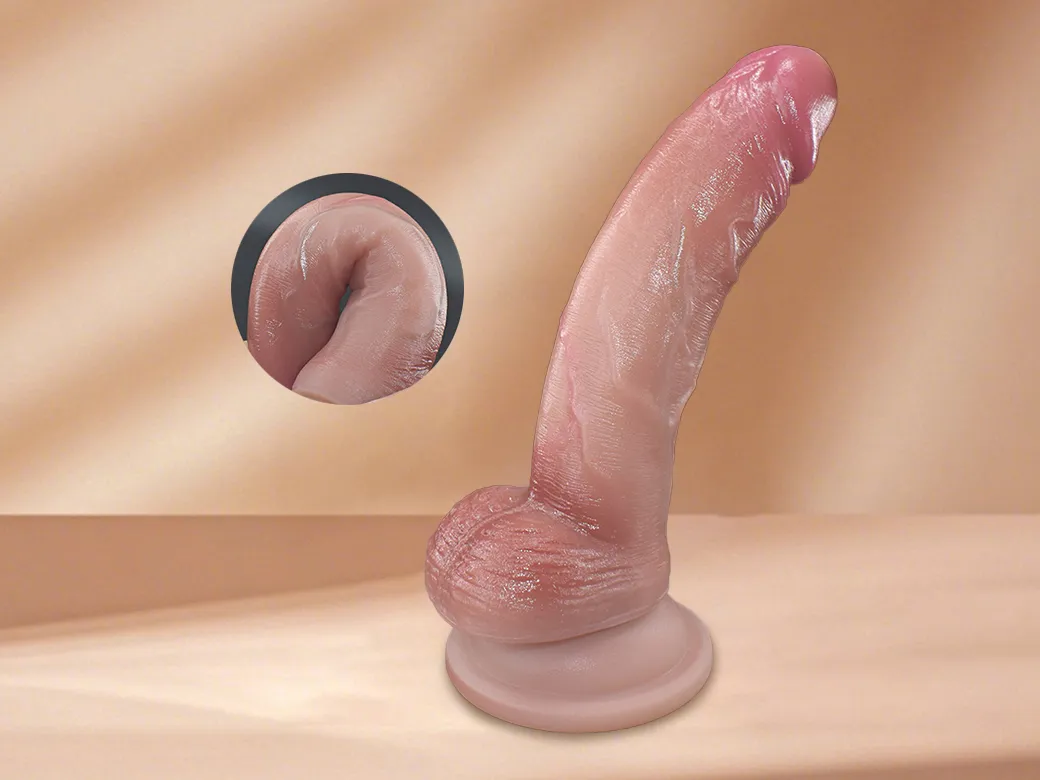
Quick Answer
In most cases, no—you should not cut or trim a dildo base yourself. The base may be part of the dildo’s structural support, a suction seal, a harness attachment, or a flared stop that helps keep an anal dildo from slipping inside. Cutting can expose inner layers, leave a rough edge, weaken a bonded joint, or make the base unreliable. Only modify a dildo if its manufacturer provides written instructions for that exact model.
If the base is too large, uncomfortable, warped, or difficult to store, use a safer alternative: ask the manufacturer, choose a design made for your intended use, or replace a damaged dildo. A condom, adhesive, sanding, or a cleaner-looking cut does not restore the original structure.
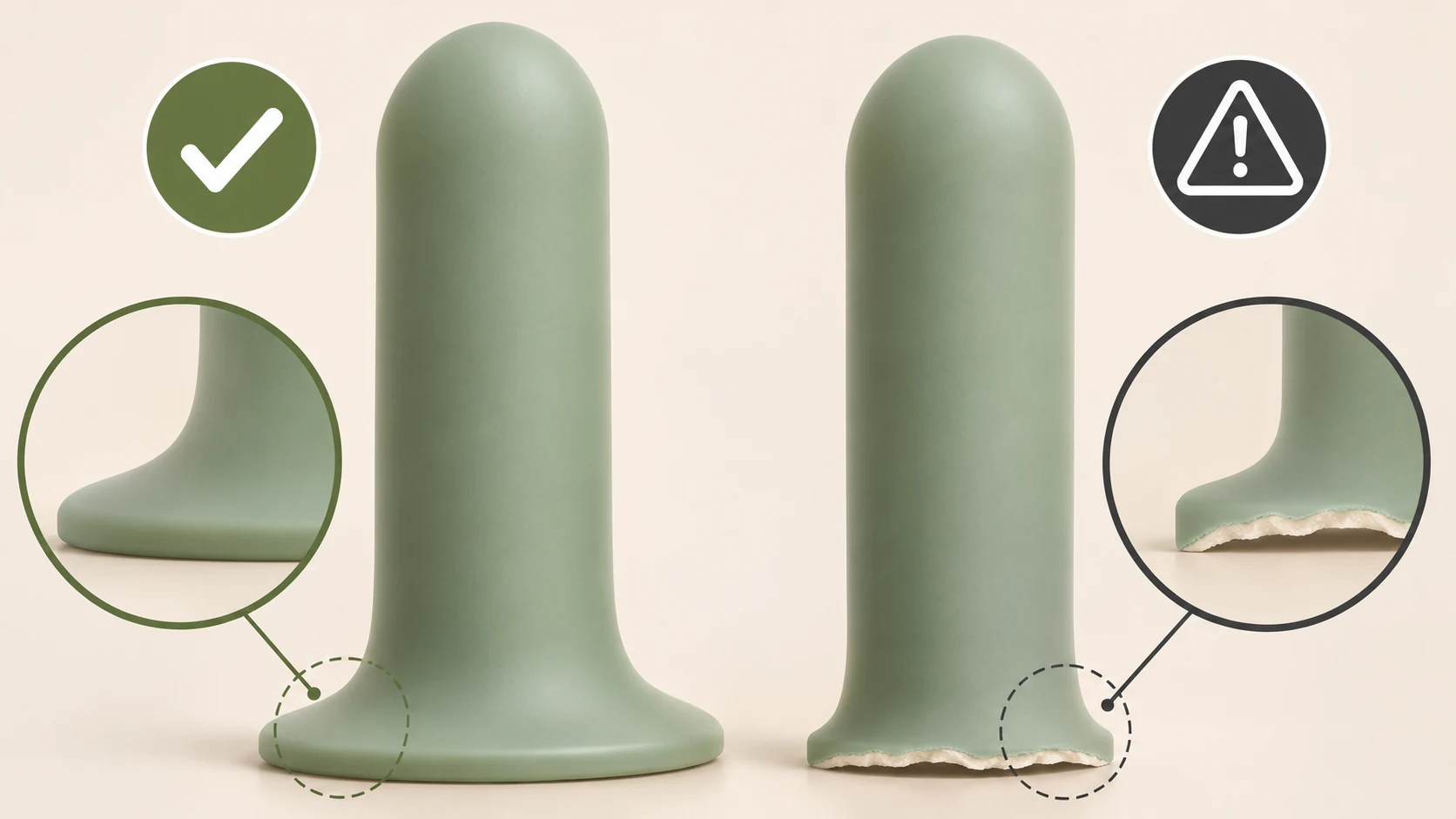
Why a Dildo Base Is More Than Extra Material
A base can look like a thick or decorative extension, but its role depends on the design. Before considering any change, identify what the base is meant to do.
- Flared anal base: A wide base or stop helps keep the dildo from moving fully inside the anus and becoming difficult to retrieve.
- Suction-cup base: The rim and underside create the contact surface that holds the dildo to a smooth surface. Trimming even a small section can interrupt the seal.
- Harness-compatible base: The base may sit against a harness or help retain the dildo. Changing its width or shape can make the fit less secure.
- Structural base: The base may distribute force across the lower shaft or cover an internal core, joint, or material transition.
- Grip or positioning base: A broad end may give the user a place to hold, stabilize, or angle the dildo.
One dildo can have more than one of these functions. A base that seems bulky may be essential to how the dildo is held, mounted, or removed. If you are not sure what a particular base does, assume it is functional and contact the maker before attempting any alteration.
What Can Go Wrong If You Cut or Trim It?
You may expose a different material inside
Some dildos have more than one layer, a firmer inner core, or a connection point between the shaft and base. A cut can expose materials that were not designed to contact the body, create a weak boundary, or allow layers to separate. A surface that looks uniform from the outside does not prove that the inside is made from the same material.
The new edge may be rough or difficult to clean
Hand-cut silicone, rubber, or flexible plastic may not form a smooth, sealed finish. Small ridges, tears, or channels can irritate skin and make residue harder to remove. Sanding or filing can leave additional particles or damage the surrounding surface. Covering the edge with a condom does not reliably remove the risk of tearing, shifting, or trapped residue.
The base may split or detach under pressure
The base-to-shaft area can carry pulling, bending, or twisting forces. Removing material may weaken that junction or change how those forces are distributed. The problem may not appear while the dildo is sitting still; a weakened base can fail later during movement.
A suction cup may stop holding
A suction base depends on a continuous, even rim. Cutting, notching, sanding, or reshaping the edge can let air enter beneath the cup. If your suction-cup base is already curled or uneven, follow the steps in our guide to a dildo base that is curling or warping; do not trim the rim to make it look flat.
You could remove a safety stop
For anal use, a wide base or another effective stop is important because it helps prevent a dildo from slipping beyond reach. Cutting down a flared base to make it narrower can remove that safeguard. Planned Parenthood advises choosing an anal toy with a flared base or another way to keep it from going too far inside. See its sex-toy safety guidance.
You may affect a warranty or return option
Altering a dildo can make it harder for the manufacturer or seller to assess a defect, and it may affect return or warranty eligibility. Policies vary, so check the seller’s terms before doing anything irreversible. If a new dildo arrived misshapen, document it and contact the seller first. Our guide to a dildo that arrived bent or deformed covers safer first steps.
Which Bases Should Never Be Trimmed?
| Base design | Why trimming is risky | Safer response |
|---|---|---|
| Flared anal base | It may remove the stop that helps prevent the dildo from slipping inside | Keep the base intact; choose a different anal-safe design if it does not suit you |
| Suction-cup base | Changing the rim can break the seal or make the cup unstable | Inspect and clean it as directed; replace it if damaged |
| Harness-compatible base | The dildo may no longer fit or stay secured in the harness | Choose a dildo designed for that harness opening |
| Layered or dual-density base | Cutting may expose inner layers or weaken their bond | Ask the manufacturer about an approved alternative or replacement |
| Base with an internal core or connector | A cut may damage the internal support or create a weak point | Do not cut; contact the maker if the design seems defective |
Safer Options Instead of Cutting
If the base feels too wide or bulky
Look for a dildo made with a different base profile, shaft-to-base proportion, or intended use. If you use a harness, check the harness opening and the dildo’s compatibility information before buying. For anal use, keep the flared base or stop intact even if a narrower shape looks more convenient.
If the suction base is not sitting flat
Clean and inspect the base according to the manufacturer’s instructions. Let it return to room temperature if it was stored compressed, then check it on a clean, level surface. Do not use heat, glue, clamps, knives, or heavy weights to reshape it unless the manufacturer provides instructions for that exact dildo. See how to assess a curling or warped base.
If the dildo arrived bent, compressed, or defective
Keep the packaging and take clear photos before changing the product. Contact the seller or manufacturer and ask whether the shape is expected, whether the material needs time to recover, or whether a replacement is appropriate. Avoid cutting or heating it while you wait for a response.
If the base is uncomfortable during use
Stop and reassess the fit, angle, position, or dildo design. A base that presses painfully may be a sign that the design or position is not working for you. Do not remove material from the base to solve discomfort; select a different shape or size instead.
If storage is the only problem
Try a storage pouch or case with enough room, or store the dildo in a position that does not compress the base. Keep it clean and dry and follow the maker’s storage instructions. Our dildo storage guide has more care tips.
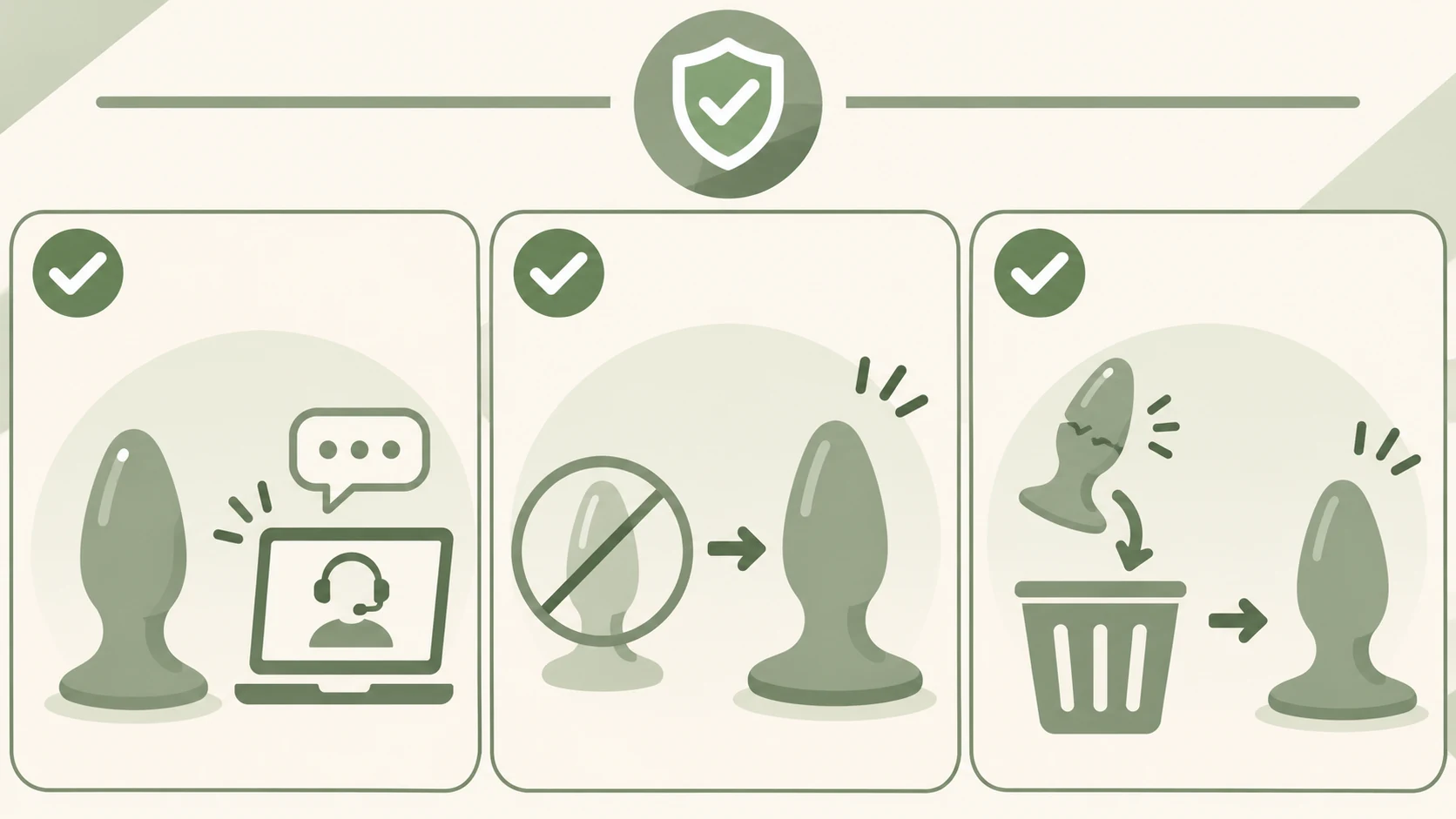
If You Have Already Cut the Base
Pause use and inspect the entire modified area in good light. Look for a rough or sharp edge, exposed inner material, cracks, a loose layer, a gap at the shaft junction, or a change in how the dildo holds or attaches. If any of these are present, do not insert it or rely on it for suction or harness retention.
Do not try to make the modification safe with household glue, tape, nail polish, sealant, or a condom. These do not restore the original structure, and the added material may not be suitable for body contact or cleaning. Contact the manufacturer with photos and the model details. If the maker cannot confirm that the altered dildo is safe for its intended use, replace it.
Quick Decision Guide
- You want a narrower anal base: Do not cut it. Choose a different dildo that retains an effective flared base or stop.
- You want to change a suction-cup rim: Do not trim, sand, or notch it. Follow the manufacturer’s care instructions or replace the dildo if the seal is damaged.
- The dildo is too large for your harness: Find a harness-compatible design instead of reshaping the base.
- The base arrived misshapen: Photograph it and contact the seller before trying to repair it.
- You already cut it: Stop using it until the manufacturer confirms the modified design is suitable. Replace it if the edge or structure is compromised.
Frequently Asked Questions
Can I trim a silicone dildo base with scissors?
Do not assume scissors can make a safe, smooth modification. The base may contain layers, a core, a suction rim, or a safety stop. Unless the manufacturer gives model-specific instructions, leave it intact.
Can I sand a cut dildo base until it feels smooth?
Sanding can further damage the surface, create particles, or leave an edge that is still difficult to clean. It also cannot restore structural strength or a suction seal. Do not sand a modified base as a repair.
Can I cut only the decorative part?
It may be difficult to tell which part is decorative and which part supports the shaft, suction cup, or harness fit. Ask the manufacturer to identify the base’s function before making any change.
Can a condom make a cut base safe to use?
No. A condom may tear on a rough edge and does not restore a damaged base, cover an unstable joint reliably, or replace an anal safety stop. Do not use a condom as a workaround for structural damage.
What if the base is uncomfortable but otherwise intact?
Stop using that position or design and choose a better-fitting dildo. Persistent pain or irritation is a reason to stop; seek medical advice if symptoms continue.
Keep the Base Intact
A dildo base can support much more than appearance. It may provide a suction seal, harness fit, grip, or a safety stop. Cutting it can change how the dildo behaves in ways that are difficult to judge by appearance alone.
When a base does not fit your needs, the safer fix is to change the setup or choose a design made for the intended use. If it is damaged or arrived misshapen, document the issue and contact the seller or manufacturer. For more about material and design considerations, see our guide to body-safe dildo materials and browse dildos by design.