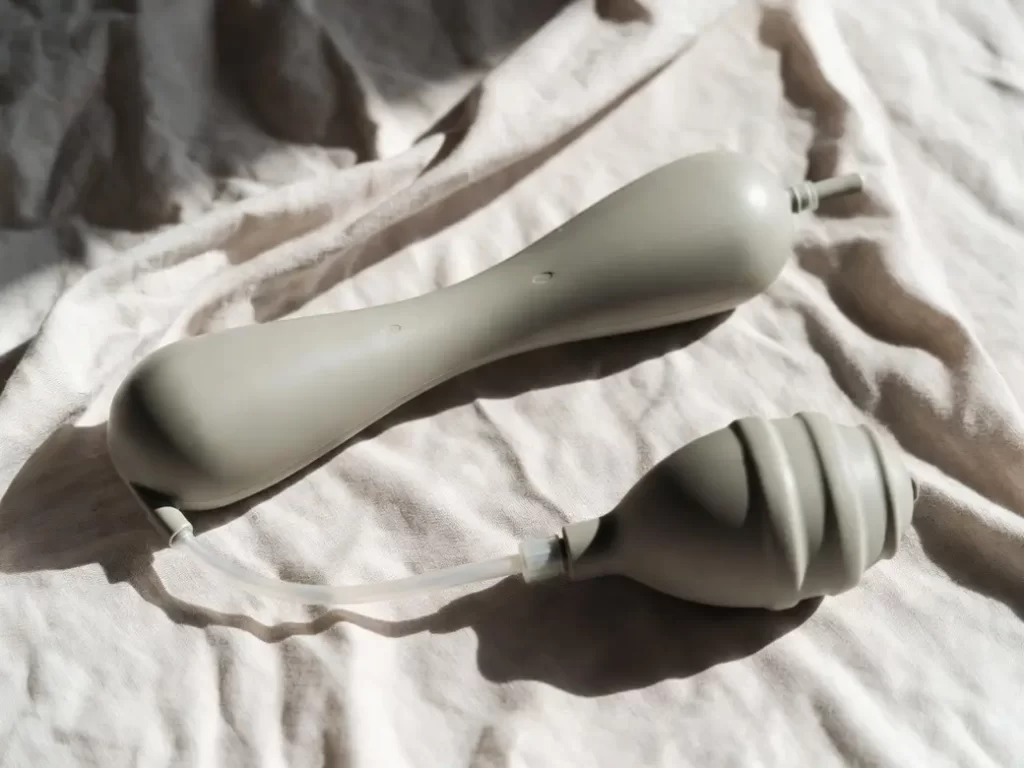


A thrusting dildo may appear to work normally when tested in the air but slow down, shorten its stroke or stop when pressure is applied. This does not always mean that the motor has failed. Battery level, alignment, friction, mounting stability and overload protection can all affect performance under load.
However, repeated stalling should not be ignored. Continuing to run a jammed mechanism may place additional stress on the motor, gears and moving shaft. Unusual heat, grinding, electrical odor or visible damage are reasons to switch the product off immediately.
Begin troubleshooting without applying body weight or manually forcing the shaft to move.
Why Does It Work Normally in the Air?
Testing a thrusting dildo without resistance places relatively little demand on the motor. The mechanism only needs to move the shaft and its own internal parts.
Under pressure, the motor must work against additional resistance. That resistance may come from:
- Friction
- Product angle
- Body positioning
- A soft outer layer folding
- An unstable base
- Thick or tacky lubricant
- Low battery power
- An obstruction around the moving shaft
- Internal wear or damage
A product that operates unloaded but stalls immediately under light pressure may have insufficient power, an overly sensitive protection system or a mechanical problem. One that stalls only under excessive force may be responding as designed to protect its motor.

What Does “Stalling” Mean?
Stalling occurs when the motor continues trying—or attempts—to move while the thrusting shaft cannot complete its intended stroke.
Possible symptoms include:
- The shaft stops at one point
- The stroke becomes much shorter
- Movement slows significantly
- The product clicks without moving
- The motor hums while the shaft remains still
- The dildo pauses and restarts
- The controls switch off automatically
- Speed settings become inconsistent
- The mechanism works again after pressure is removed
Stalling is different from a loose or unstable mount. If the entire base moves backward while the shaft moves forward, the product may still be completing its stroke even though little movement is transferred in the intended direction.
Overload Protection vs. Mechanical Failure
Some thrusting products are designed to stop or reduce power when the motor encounters excessive resistance. This can protect internal parts from overheating or gear damage.
Possible overload-protection behavior includes:
- Automatic stopping under strong pressure
- Restarting after resistance is removed
- Requiring the power button to be pressed again
- Temporary shutdown followed by normal operation after cooling
- Consistent stopping at a similar load level
Mechanical failure is more likely when:
- The dildo stalls with almost no resistance
- It clicks or grinds while unloaded
- Stroke length changes randomly
- The shaft moves unevenly
- The product becomes unusually hot
- A component feels loose
- The problem worsens rapidly
- The mechanism does not restart normally
- There is a burning or electrical odor
Not every product includes overload protection, and manufacturers do not all use the same behavior. Check the manual before assuming that automatic stopping is intentional.
Start With the Battery
A low battery can power lights or controls while failing to provide enough energy for the motor under load. The dildo may run in the air but lose speed when resistance increases.
Charge It Fully
Use the supplied cable and a compatible power source. Follow the specified charging time and indicator-light instructions.
Do not assume that an illuminated charging light confirms a full charge. Some lights indicate only that the connection is active.
After charging:
- Disconnect the cable.
- Inspect the charging area.
- Turn the product on without pressure.
- Test each speed briefly.
- Apply only very light resistance if the manufacturer permits it.
- Stop if clicking, heat or irregular movement occurs.
If performance improves significantly after charging, low power was likely contributing to the problem.
Inspect the Charging Connection
A loose magnetic connector, dirty contact or damaged port may prevent a complete charge.
Check for:
- Misaligned magnetic pins
- Dust or dried residue
- Corrosion
- Bent contacts
- A cable that disconnects easily
- A damaged port cover
- Heat around the charging point
Clean only according to the product instructions. Do not scrape contacts with metal objects or charge the product while the port is wet.
Consider Battery Aging
Rechargeable batteries gradually lose capacity. An older thrusting dildo may appear fully charged but run for less time or lose power quickly under resistance.
Rapid battery drain, unexpected shutdowns and performance that improves only briefly after charging can indicate reduced battery capacity. Most sealed products are not designed for user battery replacement.
Our dildo charging and battery guide explains common charging indicators, cable issues and battery-aging signs.
Check the Operating Angle
A thrusting shaft usually moves most efficiently along its intended line. Sideways force can press it against the internal opening or housing, increasing resistance.
Misalignment may occur when:
- The base is tilted
- The shaft is pushed sideways
- The mounting surface moves
- The product is used at an extreme angle
- A curved shaft rotates away from its intended position
- Body weight presses across rather than along the stroke
Realign the base before increasing speed. The product should not be used as a lever.
If the dildo stalls only at one angle but works normally when properly aligned, the mechanism may be experiencing side-loading rather than a lack of motor power.
Check the Mounting Base
A thrusting dildo requires a stable foundation. If the base slides, tilts or lifts, some of the mechanical movement is lost.
The product may appear to have a shortened stroke because the housing moves in the opposite direction.
Place the base on a strong, level surface recommended by the manufacturer. Confirm that suction cups, straps or mounting hardware are secure before operation.
Do not place the product on fragile glass, unstable furniture or a surface that cannot support its movement and weight.
A stable base should not require you to hold the motor housing tightly against a surface while it operates.
Is Friction Overloading the Motor?
Friction can increase resistance around the moving shaft. Insufficient lubricant, dried lubricant or an unsuitable product may make the surface drag rather than move smoothly.
Use a compatible lubricant and reapply when needed. Clean away old residue instead of layering new lubricant over a tacky film.
The objective is smooth movement, not complete saturation. Lubricant should not enter:
- Charging ports
- Control openings
- Motor housings
- Air vents
- Unsealed mechanical gaps
Unless the manufacturer says otherwise, apply it to the external dildo surface rather than directly into the mechanism.
Read our lubricant compatibility guide before using an unfamiliar formula on a soft or mechanical dildo.
Can the Soft Outer Material Cause Stalling?
On some thrusting dildos, a soft sleeve or exterior moves around a firmer mechanical shaft. If the outer material folds, twists or bunches near the moving opening, it can increase resistance.
Inspect for:
- A sleeve pulled out of position
- Material caught near the housing
- A fold forming at the base of the shaft
- A stretched outer layer
- Dried residue between moving surfaces
- Separation between the exterior and internal mechanism
Switch off the product before touching or repositioning any moving section. Never put fingers near an active mechanism.
If the soft exterior repeatedly bunches or becomes trapped, stop using the product and contact the manufacturer. Do not trim away material to create more clearance.
Why Has the Stroke Become Shorter?
A shorter stroke may result from reduced power, resistance or the product’s selected mode. Some modes intentionally vary stroke length instead of maintaining full movement.
Check:
- Battery level
- Speed or pattern setting
- Whether a travel lock is active
- Product angle
- Base movement
- Soft material bunching
- Unusual sound
- Whether the shaft completes its stroke when unloaded
If the product consistently provides its full stroke in the air but loses most movement under light resistance, record the behavior for customer support.
In Part 2, we will cover safe load testing, sounds and temperature warning signs, methods to avoid, reset procedures, when to stop using the product and how to document a load-related failure for a warranty claim.
How to Test a Thrusting Dildo Safely?
Troubleshooting should reproduce the problem using the least resistance necessary. The objective is to observe performance, not test the product’s maximum force.
Place the clean, charged dildo on a stable surface approved by the manufacturer. Keep loose clothing, hair and fingers away from moving gaps.
Test It Without Resistance
Run each available speed or movement mode briefly. Observe:
- Stroke length
- Movement speed
- Sound
- Shaft alignment
- Base stability
- Motor temperature
- Whether the product pauses or restarts
Some patterns intentionally vary their speed and stroke, so use a steady mode when comparing performance.
Apply Only Light, Even Resistance
If the manufacturer permits a resistance test, use a broad, soft contact surface and apply very light pressure along the intended stroke direction.
Do not grip the moving shaft, block it suddenly or press it sideways. Stop as soon as the mechanism slows significantly, clicks, grinds or becomes warm.
A product that repeatedly stalls under minimal resistance after a full charge should be assessed by the seller or manufacturer.
Record the Difference
A short video can show the unloaded stroke followed by the same setting under light resistance. Keep the camera positioned so the product, controls and base are visible.
Do not stage an extreme test simply to make the failure more obvious. Excessive force may damage the dildo and weaken a warranty claim.
What Do Different Sounds Mean?
Mechanical products naturally produce some motor and gear noise. A change from the original sound is generally more useful than the sound’s volume alone.
Regular Motor Hum
A steady hum that changes predictably with speed may be normal. Compare it with the manufacturer’s demonstration videos if available.
Repeated Clicking
Clicking may occur when gears slip, a protective clutch activates or the mechanism reaches an obstruction. Switch the product off if the sound is new, repetitive or accompanied by reduced movement.
Grinding
Grinding is more concerning because it may indicate gear wear, misalignment or an internal component rubbing against another part.
Do not continue operating the dildo to see whether the sound disappears.
Knocking
A rhythmic knock can come from an unstable base or the housing contacting the mounting surface. It may also indicate a loose internal part.
Test the product unloaded on a suitable stable base. If the knocking remains inside the housing, contact the manufacturer.
Squeaking
A squeak may come from the soft exterior, dried residue or friction between moving surfaces. Do not apply oil or household lubricant to the mechanism unless the manufacturer provides that instruction.
Our dildo noise troubleshooting guide explains how to distinguish surface sounds from possible internal problems.
When Is Heat a Warning Sign?
Motors generate some warmth during operation. Unusual or rapidly increasing heat can indicate excessive load, poor ventilation, battery trouble or mechanical resistance.
Switch the product off when:
- The housing becomes uncomfortable to hold
- Heat develops much faster than before
- The charging area becomes hot during use
- The product smells electrical or burnt
- Movement slows as temperature rises
- The controls behave unpredictably
- The outer material begins softening or changing shape
Place it on a nonflammable surface away from direct heat and let it cool naturally. Do not put it in water, a refrigerator or a freezer.
Do not recharge a product that is swollen, visibly damaged, leaking, abnormally hot or producing an electrical odor. Contact the manufacturer for disposal or warranty guidance.
Can You Reset a Stalling Thrusting Dildo?
Some products include a reset sequence, travel lock or automatic protection mode. Consult the manual for product-specific steps.
A typical manufacturer-approved reset may involve:
- Switching the product off
- Disconnecting it from the charger
- Allowing it to cool
- Holding a specified button
- Removing the travel lock
- Restarting it without resistance
Do not invent a reset procedure by rapidly pressing buttons or repeatedly connecting and disconnecting the charger.
A reset may restore controls after overload protection, but it cannot repair damaged gears, a failing motor or a separated internal component.
Troubleshooting Methods to Avoid
Do Not Pull the Thrusting Shaft by Hand
Manually extending or retracting the shaft can strip gears, misalign the mechanism or damage its connection to the exterior.
Move it by hand only if the manufacturer explicitly provides that step.
Do Not Block the Shaft to Test Motor Strength
A deliberate stall places heavy load on the motor and gears. The product is not meant to be tested like industrial equipment.
Do Not Open the Housing
Opening a sealed product may expose electrical components, damage waterproofing and invalidate its warranty.
Do Not Add Household Oil
Cooking oil, machine oil, petroleum jelly and general-purpose lubricants may damage materials or migrate into electrical parts.
Mechanical lubrication should be performed only when the manufacturer specifies the exact product and application point.
Do Not Use an Unapproved Charger
A cable that fits may not provide the correct electrical connection. Use the supplied cable or a manufacturer-approved replacement with a compatible power source.
Do Not Continue After Automatic Shutdown
An automatic stop may indicate overload or overheating. Remove resistance, switch off the product and follow its cooldown or reset instructions.
Repeatedly restarting it without resolving the cause may worsen the problem.
When Should You Stop Using the Product?
Stop using and seek manufacturer support when:
- It stalls under very light pressure
- It grinds, clicks or knocks internally
- The housing becomes unusually hot
- There is an electrical or burning odor
- The battery area looks swollen
- The shaft is misaligned
- The soft exterior is caught in the mechanism
- Internal parts feel loose
- The charging port is damaged
- The product no longer responds consistently
- A reset does not restore normal operation
- The problem is becoming progressively worse
Do not continue using a mechanical dildo with an exposed moving component, torn outer surface or damaged electrical housing.
How to Document Load-Related Stalling
A useful warranty report should show that the problem occurs after normal charging and under light, ordinary resistance.
Include:
- Product name and model
- Order number
- Purchase and delivery dates
- Charging time and indicator behavior
- Speed or mode being tested
- Whether it runs normally without resistance
- How quickly it stalls under light pressure
- Any sound, heat or odor
- Photographs of the shaft, base and charging area
- A short comparison video
A clear description could say:
The thrusting dildo completes its normal stroke when unloaded, but it slows and stops under very light resistance. The battery was fully charged using the supplied cable. The same problem occurs on every steady-speed setting, and a repeated clicking sound begins before the shaft stops. I discontinued use and have attached a short video.
Keep the charger, accessories, packaging and labels. Do not open the housing or attempt an internal repair before the seller responds.
Check the store’s warranty and defective-product policy for reporting deadlines and return instructions.
How to Prevent Stalling
Charge the Battery Before Use
A complete charge gives the motor its intended operating power. Avoid storing a rechargeable product with a fully depleted battery for long periods if the manufacturer advises periodic charging.
Use Adequate Compatible Lubricant
Reduce external friction without allowing lubricant to enter unsealed mechanical or electrical areas.
Keep the Shaft Aligned
Apply pressure along the intended movement direction. Avoid using the shaft as a lever or forcing it sideways.
Stabilize the Base
Use a strong, level mounting surface. Confirm that straps, clamps or suction components are secure.
Keep Moving Areas Clean
Remove dried lubricant and debris according to the cleaning instructions. Do not insert brushes or tools into moving gaps unless they are manufacturer-approved.
Respect Operating-Time Limits
Some motors require rest periods. Follow the stated continuous-use limit and allow the product to cool before restarting it.
Stop When Resistance Increases
If the movement becomes strained, release pressure and realign the product rather than increasing the speed or force.
Choosing a Thrusting Dildo With Better Load Performance
Marketing terms such as “powerful” do not provide a standardized measure of performance. Look for specific information and realistic demonstrations.
Useful details include:
- Stroke length
- Number of speed settings
- Product weight
- Base design
- Shaft alignment
- Motor location
- Battery capacity or runtime
- Charging time
- Overload protection
- Continuous-use limits
- Warranty coverage
- Replacement-cable availability
- Reviews discussing performance under normal resistance
A longer stroke is not automatically more powerful. Stability, motor torque, shaft alignment and product construction all influence how movement performs under load.
Our thrusting dildo buying guide can help you compare movement patterns, mounting options and practical specifications.
Frequently Asked Questions
Why Does My Thrusting Dildo Stop When Pressure Is Applied?
The motor may be encountering excessive resistance, low battery power, side-loading, friction or a mechanical fault. Remove the pressure and check the charge, alignment and base stability.
Is Automatic Stopping Normal?
Some products use overload protection, but behavior varies. Check the manual. Repeated stopping under minimal resistance is not something to ignore.
Why Has the Stroke Become Shorter?
Possible causes include low battery power, resistance, an unstable base, soft material bunching, mode selection or internal wear.
Can I Pull the Shaft to Restore Its Full Stroke?
Do not manually force the shaft unless the manufacturer specifically instructs you to do so. Pulling it can damage gears and internal connections.
Does More Lubricant Make the Motor Stronger?
No. Compatible lubricant can reduce external friction, but it cannot increase motor power or repair mechanical damage.
Why Does the Dildo Click but Not Move?
The mechanism may be obstructed, a gear may be slipping or a protective clutch may be activating. Switch it off and contact the manufacturer if the sound continues.
Should a Thrusting Dildo Become Warm?
Mild warmth may occur during operation. Rapid, excessive or unusual heat—especially with odor, reduced movement or charging problems—is a reason to stop using it.
Can I Repair the Motor Myself?
Most sealed thrusting dildos are not designed for home motor repair. Opening the housing can damage the exterior, waterproofing and electrical system.
Why Does It Work Again After Cooling?
Overload or thermal protection may have activated. Review the operating limit and reduce resistance. Repeated shutdowns can still indicate a problem requiring manufacturer assessment.
Final Thoughts
A thrusting dildo that works unloaded but stops under pressure may be experiencing low battery power, poor alignment, excessive friction, an unstable base or motor overload. Test it conservatively after a full charge and compare performance using a steady mode.
Never force the shaft, deliberately stall the motor or continue operating through clicking, grinding, unusual heat or electrical odor.
If the product repeatedly stops under light resistance, document the difference between unloaded and loaded operation and contact the seller. A reset can clear some protection states, but it cannot repair worn gears or a failing motor.
Explore our thrusting dildo guides and reviews for comparisons of stroke length, mounting stability, battery performance and movement modes.