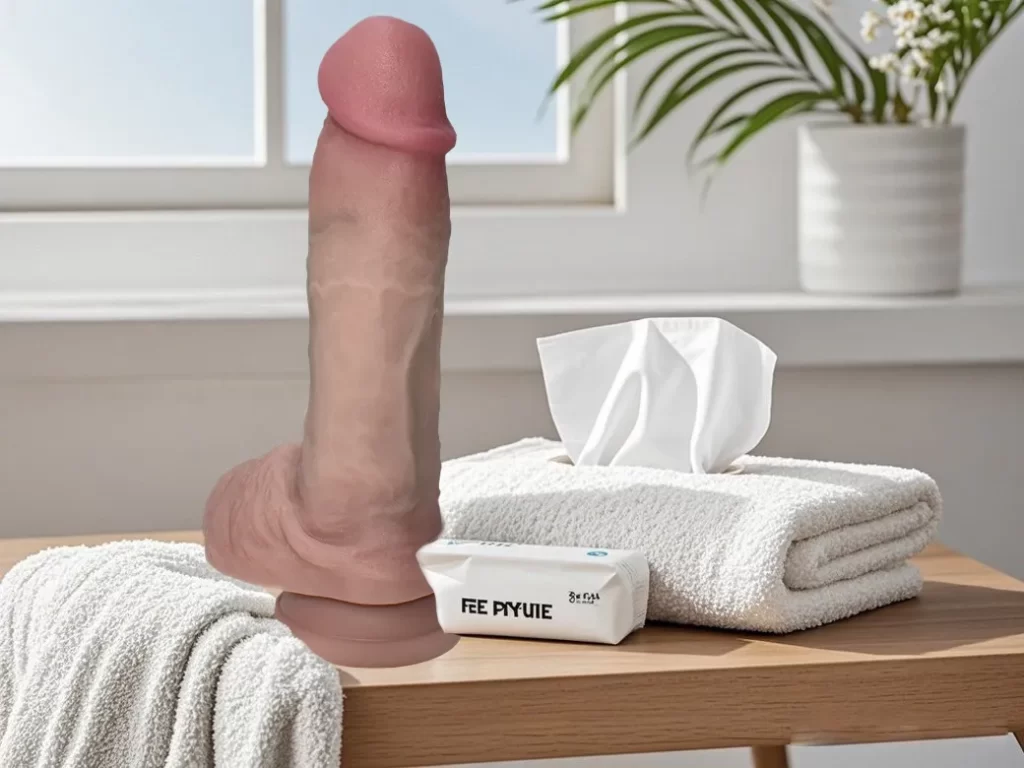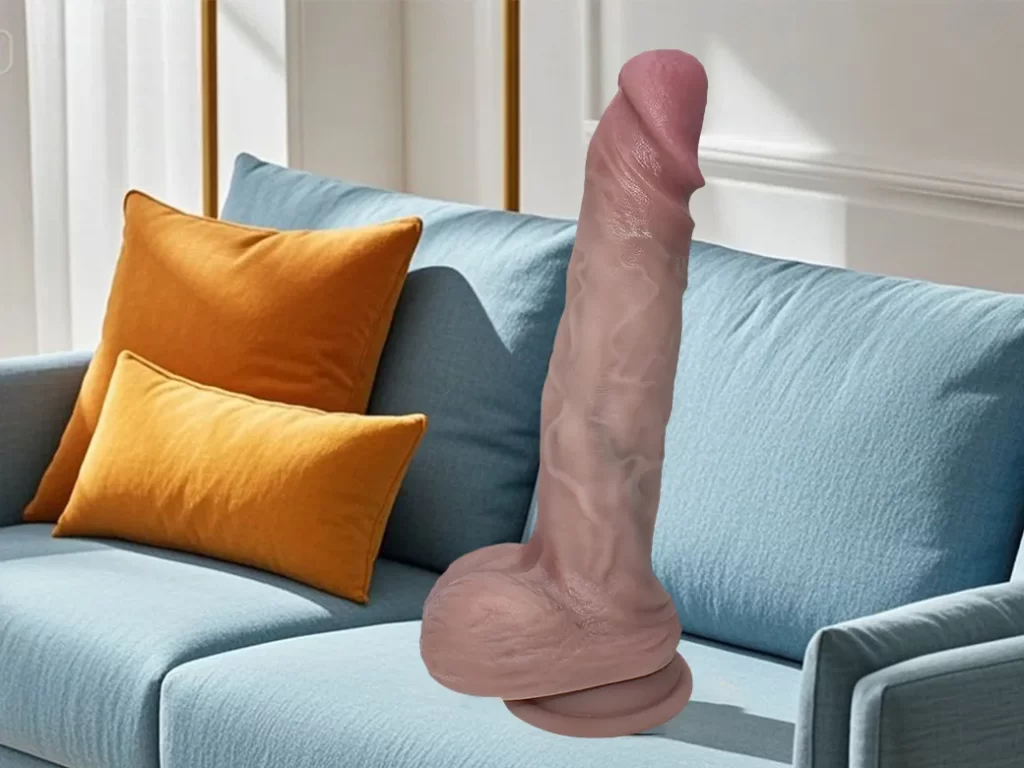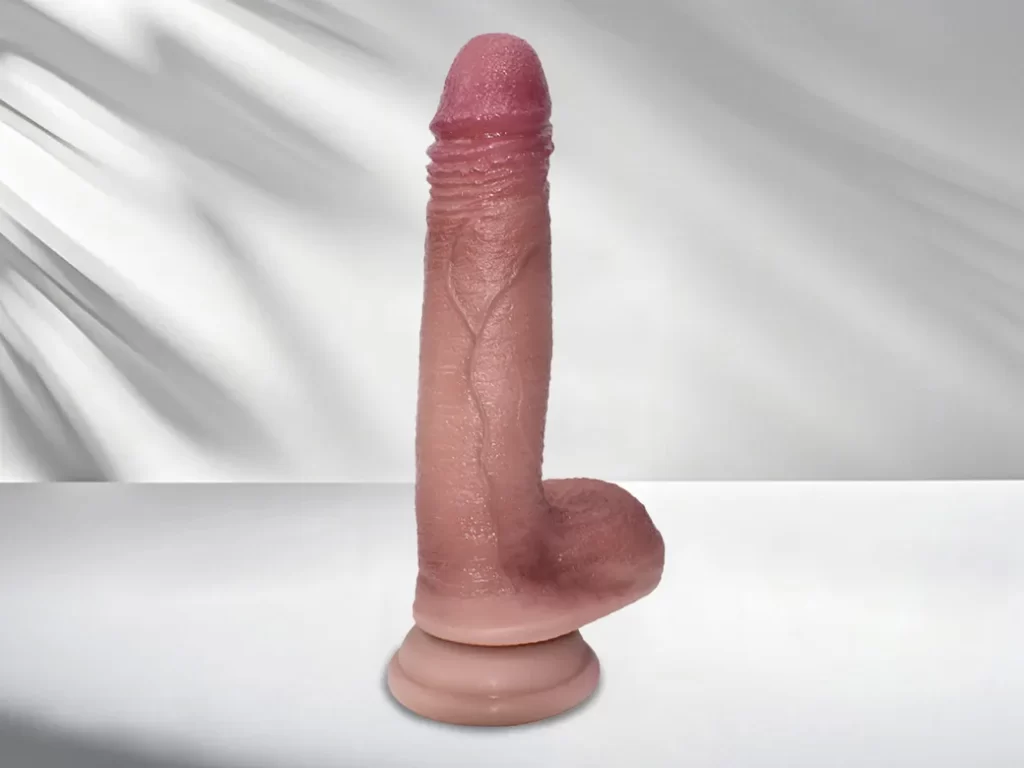

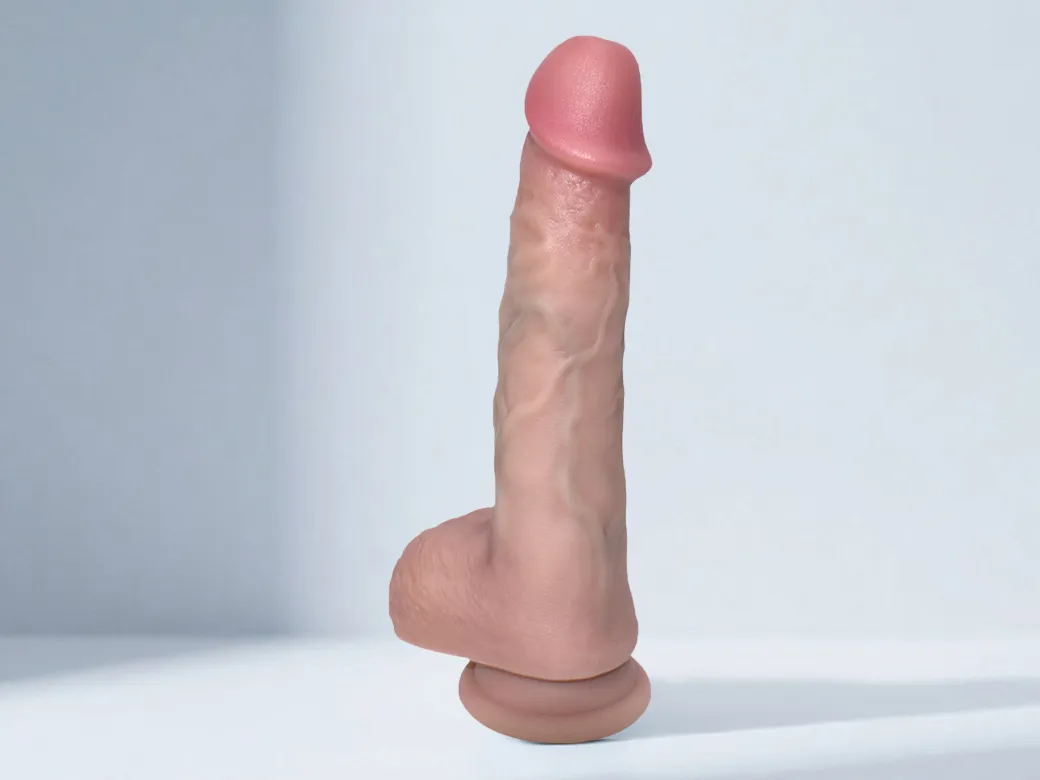
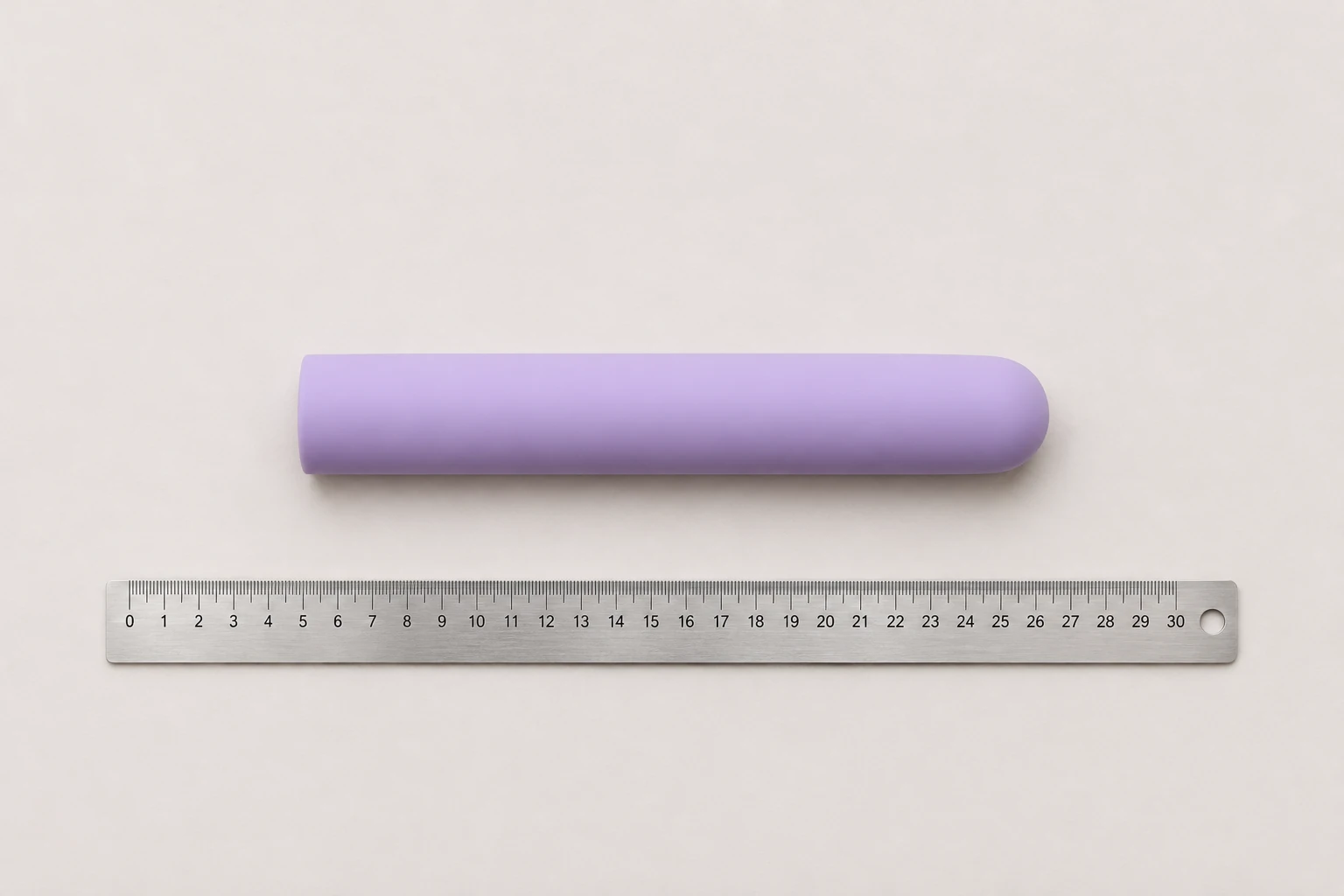
A dildo can look dramatic in a listing and surprisingly compact when it arrives. That gap does not automatically mean the measurements are wrong: a close camera position, a tight crop, an angled view, or no familiar scale reference can all change how large an object seems on screen. Treat the photo as a guide to shape and finish; use labeled dimensions to judge size.
Why a dildo can look larger in a product photo
Photos present a three-dimensional object inside a flat frame. The photographer chooses the camera distance, angle, crop, lighting, and background. Those choices can make a dildo fill more of the image or emphasize one end, even though the physical dimensions stay the same.
| Photo choice | What your eye may infer | What to check instead |
|---|---|---|
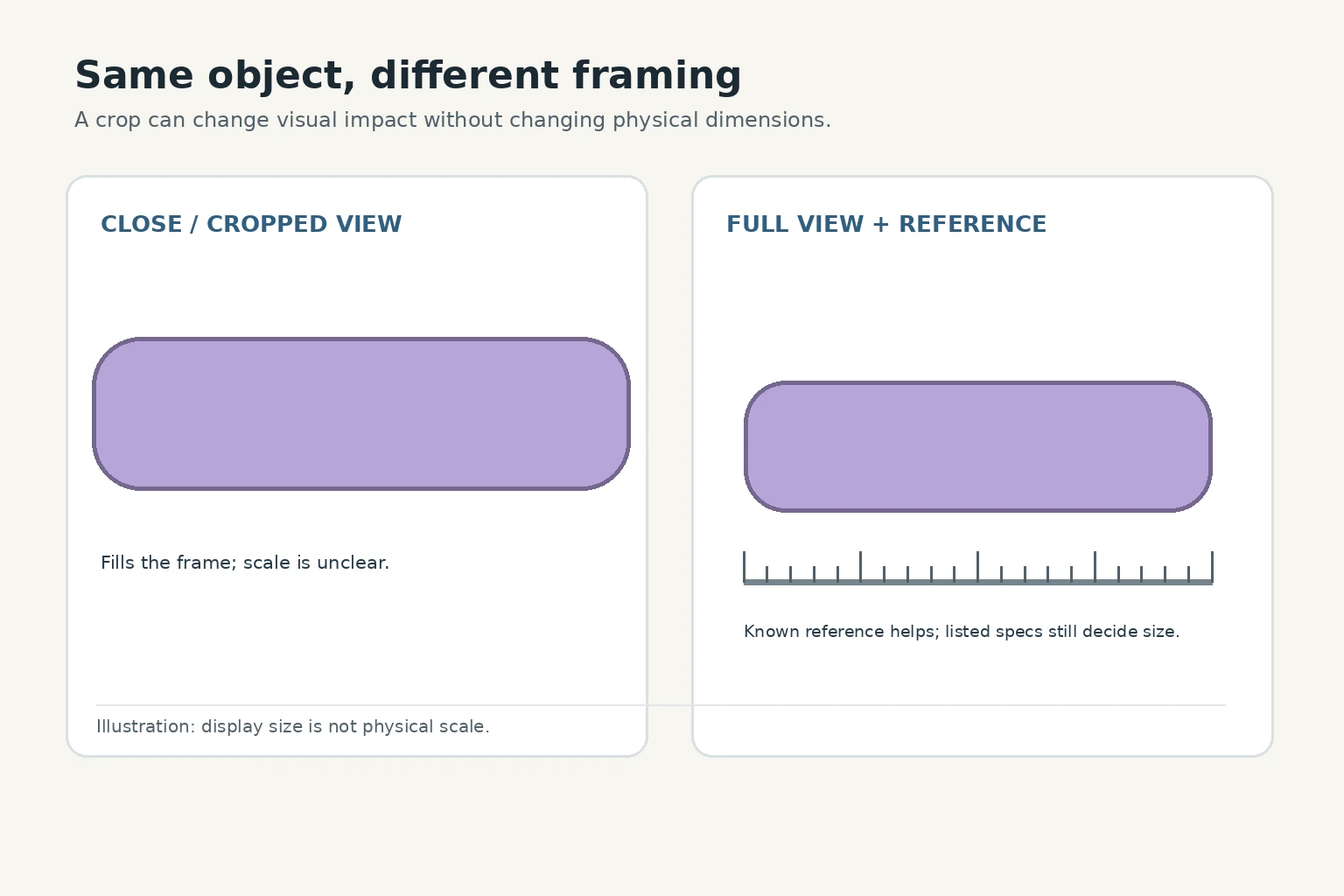
| Close-up or tight crop | The dildo seems oversized because it fills most of the frame | Look for a full-length view and the stated total and insertable lengths |
| Angled view with one end closer to the camera | The nearer end can appear larger; the shaft may look shorter or thicker | Compare with a straight-on side view, if available |
| No familiar scale reference | There is no visual anchor for judging length or width | Use listed dimensions or a photo with a ruler or known-size object |
| Different crop across listings | One dildo appears larger because it occupies more of its image | Compare the written measurements, not the percentage of the frame filled |
| Strong shadows or dramatic highlights | Contours, ridges, or width changes can seem more pronounced | Check a neutral side view and the shape description |
Perspective changes apparent proportions
When one end of a dildo is closer to the camera than the other, the near end can look larger relative to the far end. An angled photo can also foreshorten the object: its length runs partly toward the camera, so it takes up less space across the screen than a side-on view would. The photo may make the base, head, or shaft look unusually prominent without changing the actual measurement.
This effect is easiest to notice when comparing different listings. One seller may photograph a dildo directly from the side; another may turn it toward the camera to show the head or base. Even if both products have the same length, they will not occupy the same amount of screen space. Use an image to inspect shape, then use dimensions to compare scale.
Cropping and screen display can fool your sense of scale
A tightly cropped image can make a small object look huge because there is little surrounding space. A wide banner can make the same object look smaller. Websites may also resize images to fit mobile and desktop layouts, and zoom controls can enlarge a detail without changing the product itself.
Do not estimate real length from how many centimeters the image spans on your phone or monitor. The displayed image has no fixed physical scale: screen size, browser zoom, image resolution, and layout all affect its on-screen dimensions. A photo that covers half a phone screen is not evidence that the dildo is half a phone long.
Why hands and everyday objects are imperfect references
A hand-held photo can help show how a dildo is gripped, but hand size varies, and the hand and dildo may not be the same distance from the camera. A coin, phone, bottle, or package is useful only if you know its dimensions and it appears in the same plane as the dildo. If the reference is farther back or closer to the lens, perspective can make the size comparison misleading.
A ruler is a clearer reference when it is placed parallel to the dildo and at roughly the same distance from the camera. Even then, an angled shot or edited image can distort proportions. Use reference objects as a rough visual check, not as a replacement for a product specification.
Read the measurements that photos cannot tell you
Before ordering, identify what each number describes. Product pages may list total length, insertable length, diameter, circumference, or width at a particular point. Those measurements answer different questions, and one number cannot stand in for all the others.
- Total length includes the entire dildo, including the base or handle.
- Insertable length describes the section intended to be inserted; it may be shorter than total length.
- Maximum diameter is the widest straight-line measurement across a round cross-section, but the listing should clarify where it was taken.
- Circumference is the distance around a round shaft and communicates girth differently from diameter.
- Width and depth both matter for an oval or flattened shape; one diameter may not describe its cross-section.
For help distinguishing length and girth, use the dildo size guide. If two stores show different figures for what appears to be the same model, our article on why dildo measurements differ between stores explains how measurement labels and methods can vary.
A practical way to picture the listed size
- Write down the labeled measurements. Note total length, insertable length, maximum width or circumference, and the point where each width is measured.
- Convert units once. If one page uses inches and another uses centimeters, convert before comparing rather than relying on visual memory.
- Use a familiar object with a known measurement. A ruler or measuring tape can help you visualize the listed length and width. Do not infer scale from an object whose size you are guessing.
- Compare images taken from similar angles. Prefer a full side view for length and a cross-section or straight-on view for width.
- Check whether the photo shows the exact size or color variant. A gallery can include several sizes, and the photographed version may not match the selected option.
- Use the product page and packaging as the measurement source. If a listed number is unclear, ask the retailer what it measures instead of trying to calculate exact dimensions from a perspective photo.
When judging a shape rather than a size, compare the tip, the location of the widest point, the shaft profile, and the base. Our guide to measuring an oval dildo covers why width and depth can differ. For material and label claims, see how to read dildo packaging.
What product photos are good for
Photos are valuable for details that numbers do not capture well: whether the shaft is curved, where ridges sit, how the tip transitions into the body, how the base is shaped, and how the surface finish looks. Multiple angles can help answer those questions. A short video may show flexibility or how a dildo rests, though it still does not replace measurements.
Look for a set of views rather than relying on one hero image: a full side view, a top or front view, close-ups of the head and base, and any size-comparison image. If the photos show different proportions, colors, or base details, confirm they all represent the exact model and size you plan to order. A mismatch could reflect a different variant, a revised design, or simply different camera presentation; ask the retailer when the distinction matters.
Before you buy: a quick photo-and-measurement check
- Does the listing show the entire dildo in at least one image?
- Is there a straight-on side view, not only an angled close-up?
- Are the total and insertable lengths clearly distinguished?
- Does the maximum width say where it was measured?
- Is any ruler or comparison object placed beside the dildo at a similar distance?
- Does the image match the selected size, color, and model version?
- Do the written specifications and packaging information agree?
If several answers are missing, the photo gallery may be incomplete rather than intentionally misleading. Use the specifications as your starting point and request clarification when a key measurement is absent. The checklist in common mistakes people make when buying a dildo can help with the other decisions to check before ordering.
Frequently asked questions
Can I measure a dildo from a product photo?
You can make a rough comparison if a known-size ruler is visible in the same plane and the photo is taken straight-on. Perspective, angle, cropping, and editing can still affect the estimate, so do not treat it as an exact measurement.
Does a close-up mean the dildo is large?
No. A close crop makes the item fill more of the frame, but it does not tell you its real dimensions. Check the listed total and insertable length and the width measurement.
Why does the same dildo look different on my phone?
Phones have different screen sizes and display settings, and websites resize images to fit the page. Screen appearance is not a physical scale reference.
What if the photo and measurements seem inconsistent?
First confirm that the image shows the selected size and model. Then check which points the listed measurements describe. If it is still unclear, ask the retailer to confirm the specifications for that exact version.
Let the photo show shape and the specs show scale
A striking image can help you understand a dildo’s design, but it cannot reliably establish how long or wide it is on its own. Close framing, perspective, image cropping, and missing reference objects all shift visual impression. Use photos to inspect contour and details; use labeled measurements to judge size. When those two sources do not agree, verify the exact model and ask for a measurement clarification before buying.