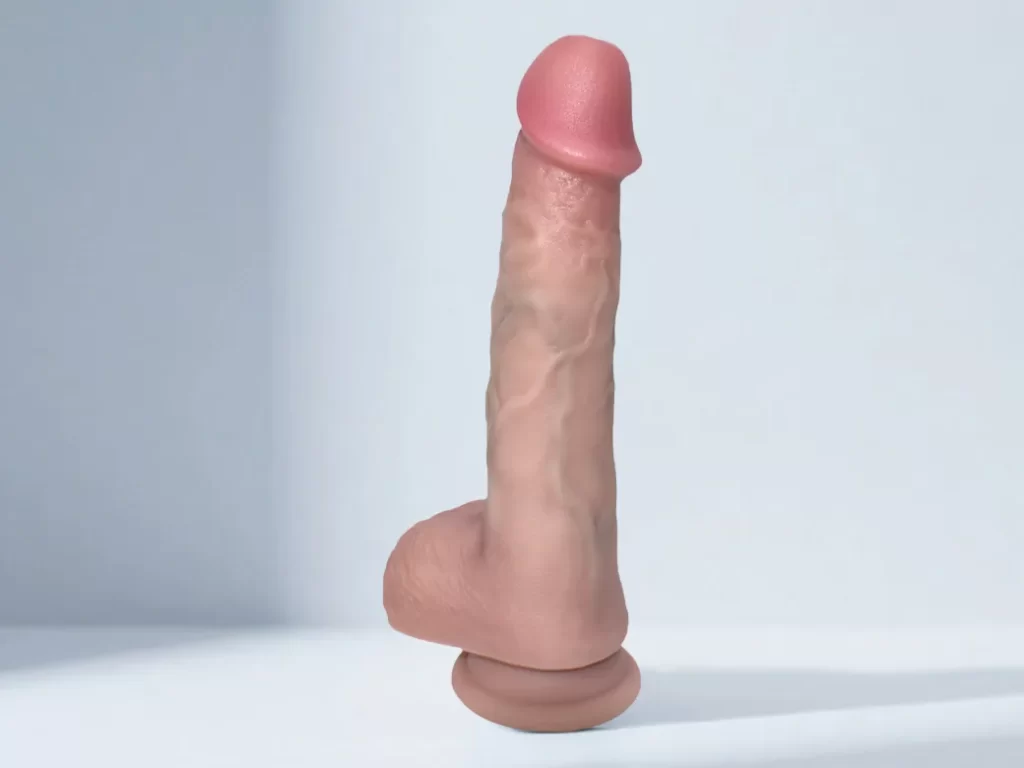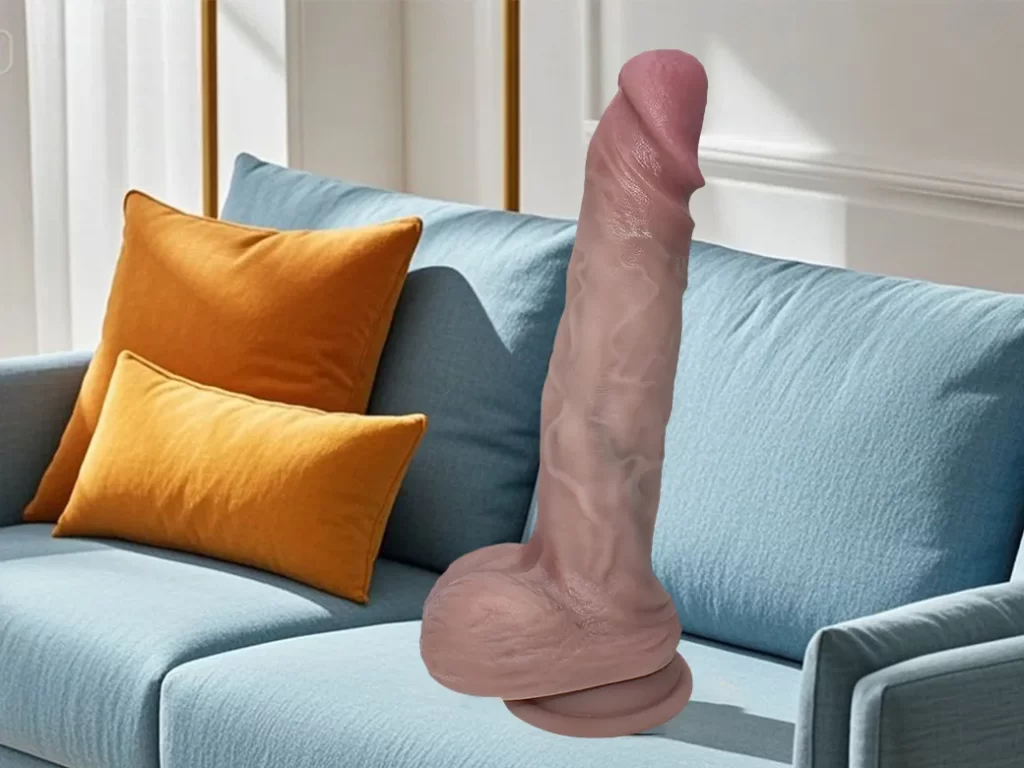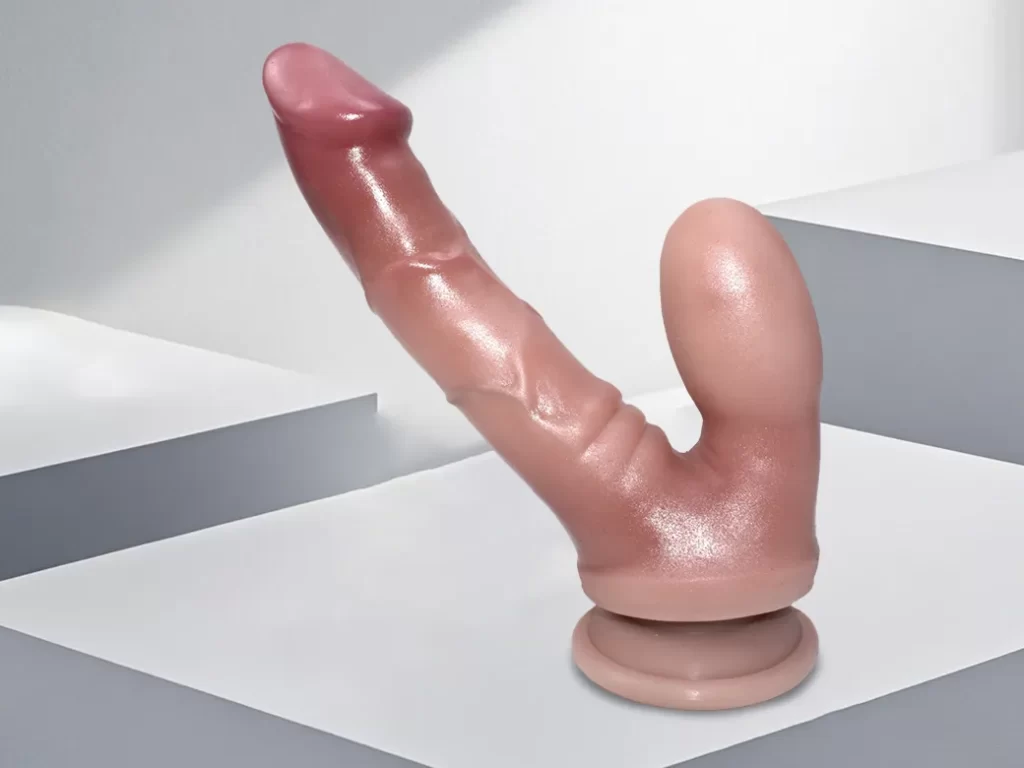


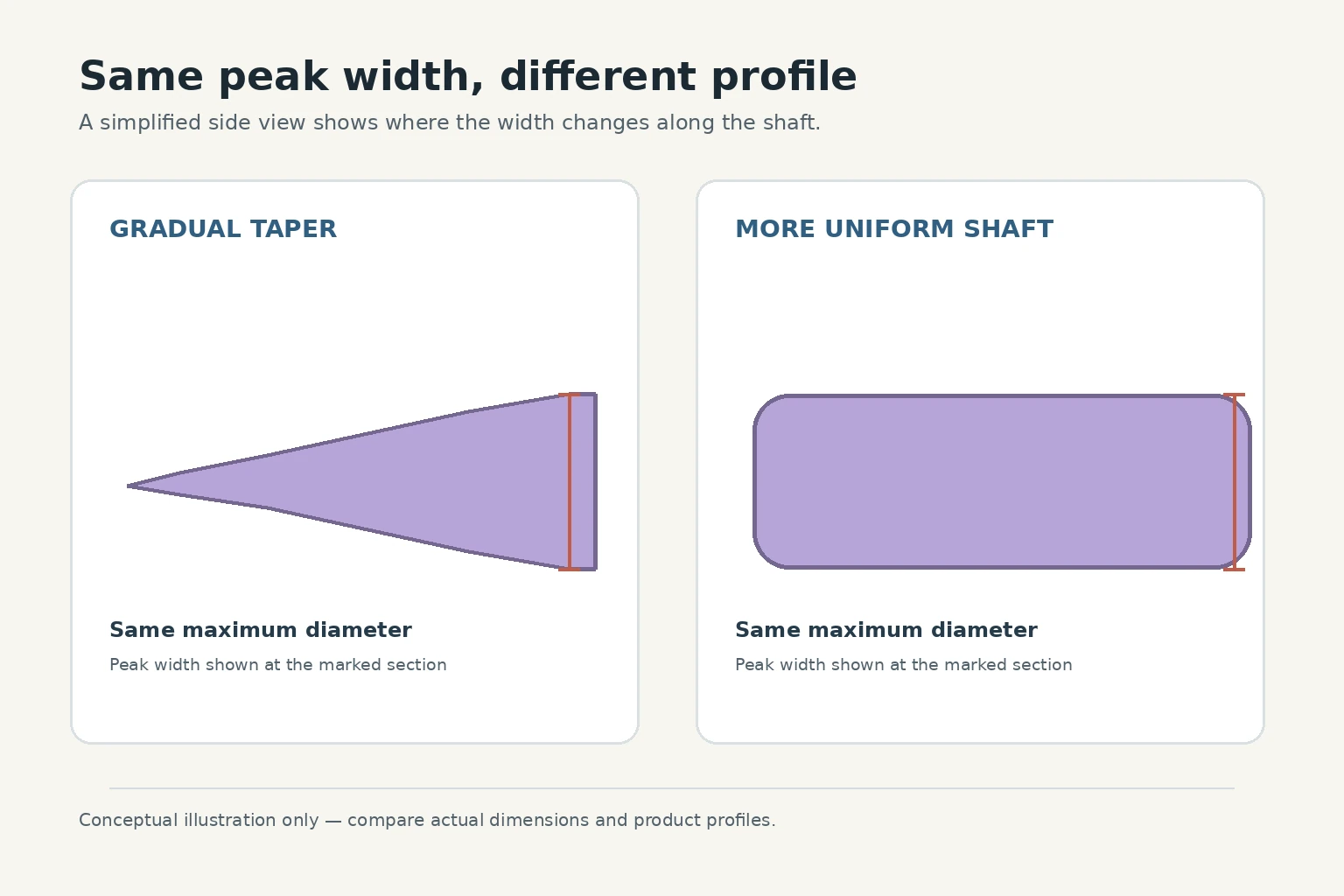
Two dildos can share the same listed maximum diameter and still feel noticeably different. The number tells you the widest point; it does not tell you how quickly the shaft reaches that width, how much of the shaft stays there, or how the tip transitions into the body. That difference is the profile: tapered or nearly uniform.
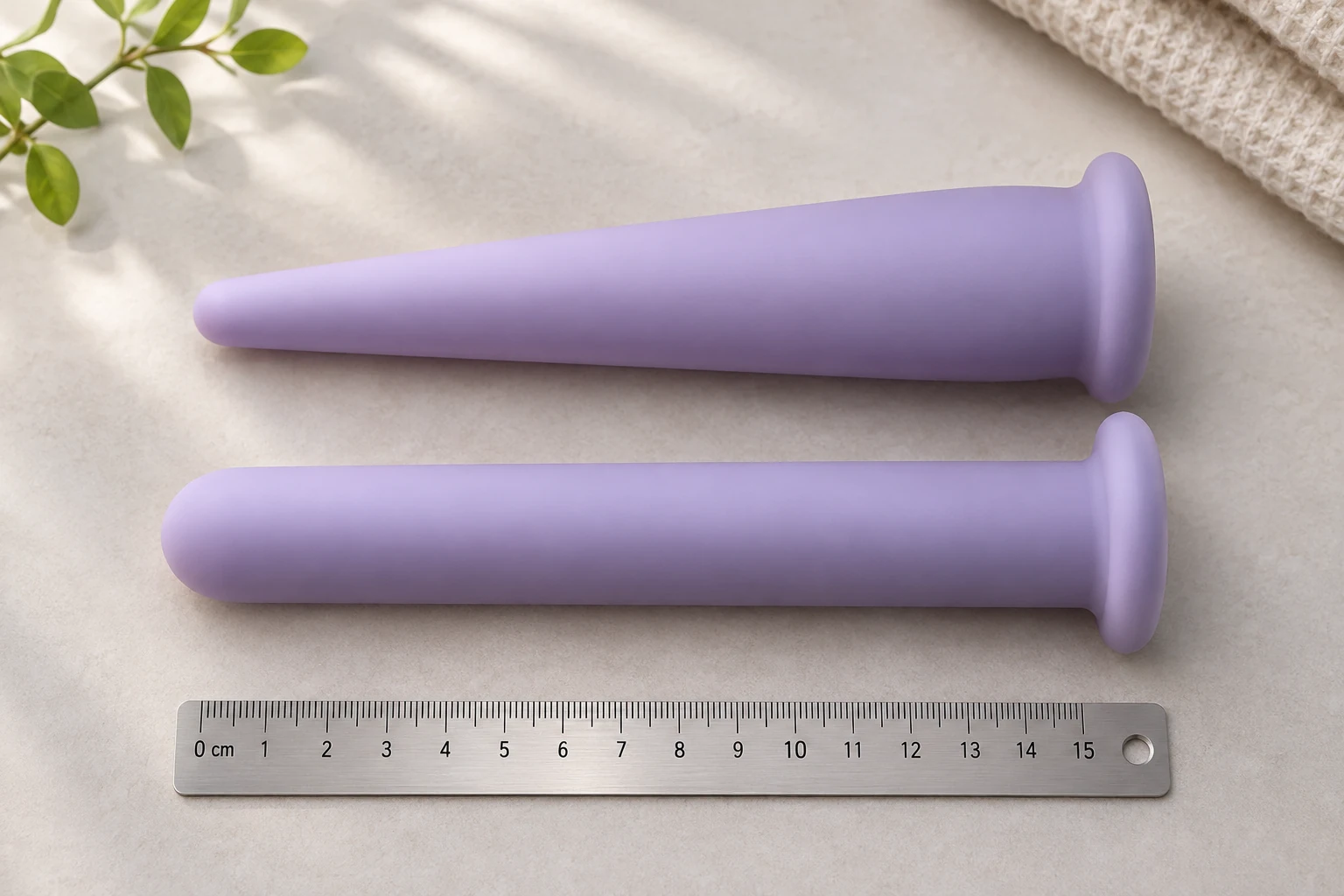
What “tapered” and “uniform-width” mean
A tapered dildo gradually gets wider from its tip toward its widest section. The amount of taper varies: some designs widen gently over much of the shaft, while others stay slim and then broaden more quickly near the head or shoulder.
A uniform-width dildo has a shaft that stays close to one diameter for more of its length. It may still have a rounded or narrower tip, a wider head, or a base flare; “uniform” describes the main shaft profile, not every millimeter from tip to base.
These are ends of a spectrum, not rigid categories. Many dildos combine a tapered tip with a mostly even shaft, or have a defined head followed by a gradual taper. Product photos and names can make those profiles hard to compare, so look for dimensions at more than one point when they are available.
Why the same maximum diameter can feel different
Imagine two dildos that both reach a maximum diameter of 3.5 cm. On one, the tip begins narrow and the shaft widens gradually. On the other, the tip is rounded and most of the shaft is already close to 3.5 cm. Their widest measurement matches, but the width arrives at a different pace.
| Shape detail | Tapered profile | More uniform profile |
|---|---|---|
| Width near the tip | Often narrower, then increases along the shaft | May approach the shaft’s main width sooner |
| How quickly peak width appears | Can build progressively; the slope depends on the exact design | Can feel fuller earlier if the shaft is near its maximum for much of its length |
| Width across insertion depth | Changes more as different sections enter | Changes less once the main shaft is inserted |
| What a maximum-diameter label misses | How long the gradual widening lasts | How much of the shaft is close to the listed maximum |
With a tapered profile, each small change in depth can bring a different section of the shaft into contact. With a uniform profile, the sensation may become more consistent once the shaft’s main width is in place. Neither is automatically gentler or more intense: the result depends on the rate of widening, tip shape, firmness, length, lubrication, position, and personal preference.
The width progression matters as much as the peak
The key question is not only “How wide is it?” but “Where does it reach that width?” A long gradual taper spreads the increase over more shaft length. A short, pronounced taper concentrates the change closer to the head or shoulder. A uniform shaft keeps its width more consistent after the tip.
This is why two designs with identical peak measurements can create different transitions. One may feel like a gradual increase as more of the shaft enters; another may feel broad sooner and stay broad. If you prefer a steady sense of fullness, you may like a shaft that reaches its main width early. If you prefer the width to build in stages, a gradual taper may be more appealing. These are shopping clues, not guarantees about how your body will respond.
Tip shape changes the first impression
The tip is the first part to make contact, so its shape can affect the initial sensation independently of the maximum diameter. A narrow, rounded tip typically transitions differently from a broad blunt tip or a pronounced head. Two tapered dildos can therefore feel quite different if one has a long narrow lead-in and the other widens quickly just behind the tip.
Look at the transition immediately behind the tip, not just the tip itself. A product can have a small-looking point but a rapid shoulder; another can have a rounded head that blends smoothly into the shaft. If you are comparing measurements, try to find the head width and the main shaft width separately. Our dildo size guide covers the basics of length and girth, while the guide to measuring an oval dildo explains why a single width measurement may not describe the full cross-section.
Firmness and flexibility affect the comparison
Shape is only one part of the feel. A firmer dildo holds its profile more consistently under pressure, while a softer or more flexible shaft may give and change shape during use. As a result, a tapered firm design and a uniform soft design cannot be compared by maximum diameter alone—or by shape name alone.
Check material and firmness notes alongside the shape. If a manufacturer gives a hardness scale, use it only as a comparison within the context provided; ratings and testing methods may vary. Our guide to soft versus firm dildos explains how firmness can change pressure and flexibility. For a flexible design that is difficult to guide, see why a soft dildo may bend during positioning.
How to compare two listings more accurately
- Find the maximum diameter and its location. Check whether the listed number refers to the head, the widest insertable point, or the shaft.
- Look for additional width measurements. Tip, head, mid-shaft, and widest-point dimensions show more of the profile than one maximum value.
- Compare the shape in side-view images. Notice how far the shaft stays narrow and how quickly it broadens. Treat photos as approximate because perspective and image scaling can distort proportions.
- Check circumference if it is listed. For a round shaft, circumference is another way to express girth; for oval profiles, width and depth both matter. Read our oval width-versus-depth explainer for that distinction.
- Compare tip, firmness, and usable length. A more pronounced head, a firmer material, or a longer shaft can change the overall experience even if the peak diameter is identical.
- Use reviews for context, not as measurements. Look for descriptions of where the width increases and how much of the shaft feels full. Individual sensation varies, so one person’s “gradual” may not match another’s.
Which profile might suit your preference?
A tapered dildo may be worth comparing if you like a gradual change in width, want the profile to vary with insertion depth, or prefer a narrower lead-in before the shaft gets wider. A more uniform-width dildo may appeal if you prefer a steadier shaft thickness after the tip has passed. The exact contour matters more than the label: a sharply tapered model can widen quickly, while a nominally straight dildo may still have a narrow tip.
If you are unsure, compare the side profile and any point-by-point measurements before comparing the maximum diameter. Choose dimensions that feel manageable for you, use adequate lubricant compatible with the dildo’s material, and go at a pace that feels comfortable. Stop if you feel pain or persistent discomfort; do not treat a particular shape as a promise that a size will be comfortable for everyone.
Frequently asked questions
Does a tapered dildo always feel smaller?
No. It may feel narrower near the tip or during the beginning of insertion, but it can still reach the same maximum width as a uniform design. How much of the shaft reaches that width is what changes.
Is a uniform-width dildo harder to use?
There is no universal rule. Some people prefer the consistent fullness; others prefer a more gradual increase. Tip shape, firmness, dimensions, lubrication, and individual comfort all matter.
Are diameter and girth the same thing?
They describe related but different measurements. Diameter is the straight-line width across a round cross-section; circumference is the distance around it. On an oval shaft, one diameter may not describe both the width and depth.
What should I compare if both dildos list the same diameter?
Compare where the widest point is, how quickly the shaft reaches it, how much of the shaft stays near that width, and the tip profile. Then consider firmness and insertable length.
Look beyond the single number
Maximum diameter is useful as a reference point, but it compresses a three-dimensional shape into one measurement. To predict how a dildo may feel, compare the full width progression: tip, transition, shaft, and widest section. That profile explains why a gradual taper and a mostly uniform shaft can feel different even when their peak diameter matches.