


A dildo does not come with a universal expiry date. How long it remains usable depends on its material, construction, care, storage, and how often it is used. The better guide is its current condition: can you clean it fully, is the surface intact, and does every part still work as intended?
These nine signs help you decide when to stop using a dildo and ask the seller or maker about replacement. Some changes are reasons to pause and get product-specific guidance; others—such as a crack in a body-contact surface or a chipped glass edge—mean the dildo should be retired. This is a replacement decision guide, while our dildo repair guide covers what can and cannot be fixed.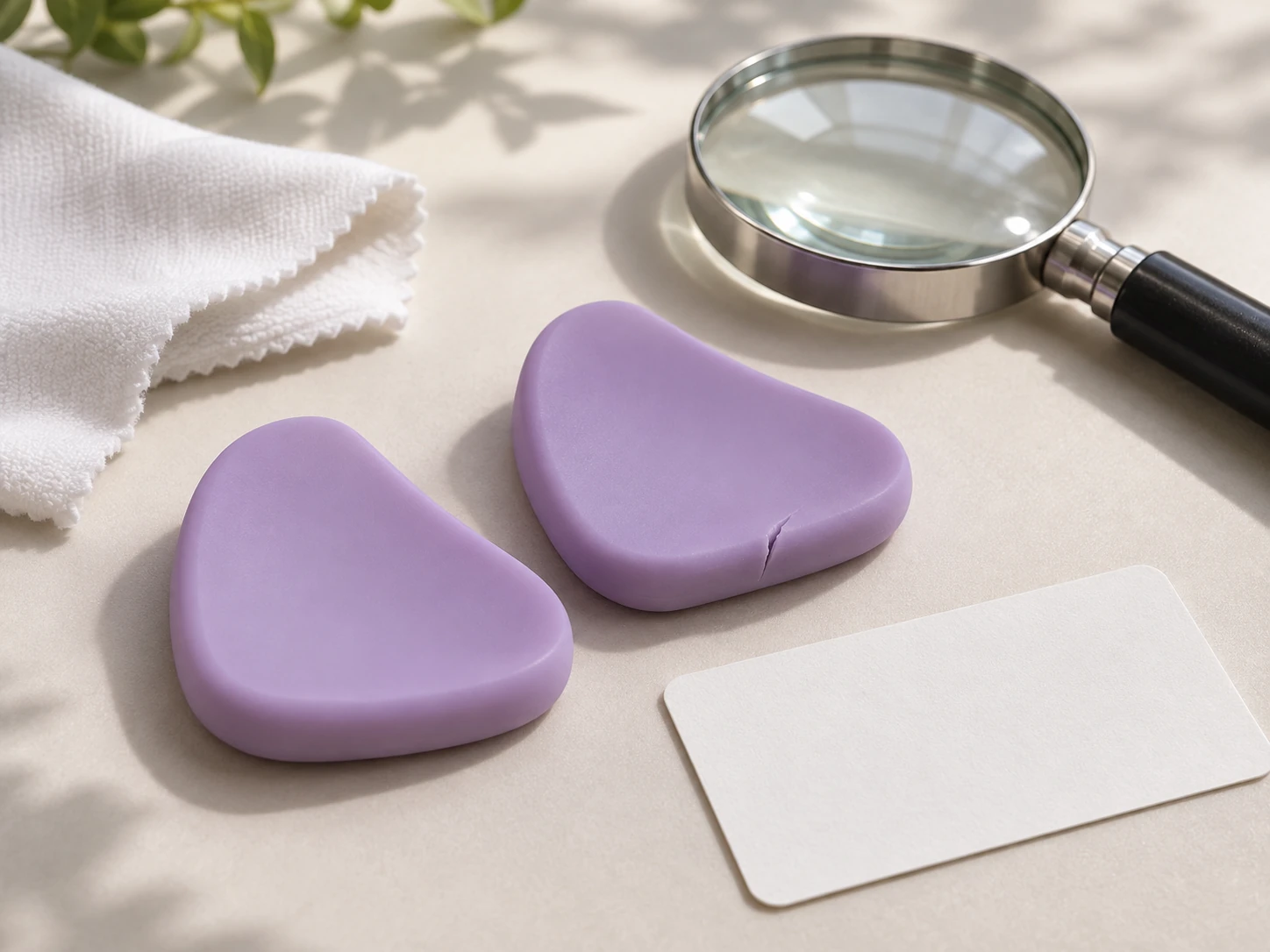
Quick decision guide
| What you notice | What to do now | Does it always mean replacement? |
|---|---|---|
| Loose lint or washable residue | Clean and dry according to the maker’s instructions | No, if the surface returns to its normal condition |
| Open crack, tear, peeling, or loose construction | Stop using it and contact the seller or maker | Often; do not patch it yourself |
| Persistent surface change after proper cleaning | Pause use and ask for product-specific guidance | It may; appearance alone cannot confirm the cause |
| Chipped glass, unstable base, or battery damage | Stop using the affected feature; do not charge if electrical damage is present | Usually requires maker assessment or replacement |
| It no longer suits your comfort or preferences | Retire it or choose a design that fits better | Replacement is a personal choice, not a defect finding |
Nine signs it may be time to replace a dildo
1. The body-contact surface has an open crack, tear, or hole
A split can widen when the dildo flexes and may create an area that is difficult to inspect or clean. Do not pull the opening to check its depth, fill it with adhesive, or cover it with tape. Stop using the dildo, photograph the damage, and contact the retailer or manufacturer. If they cannot confirm an approved solution that restores the surface, replacement is the practical option.
2. An outer layer is peeling or separating
Flaking, peeling, a lifting edge, or an outer layer that moves independently from the core changes the product’s surface and construction. The material beneath may not be designed for direct contact or routine cleaning. A condom does not repair the separation. Stop use and ask the maker whether the exact model can be assessed under its return or warranty policy.
3. Stickiness or oiliness remains after approved cleaning
Lubricant, cleaner, soap residue, or a surface treatment can affect how a dildo feels, so first follow its care instructions and allow it to dry fully. If a localized gummy patch, slick film, or unusual tackiness remains or returns, pause use and contact the seller. These changes can have different causes and do not prove a silicone curing problem on their own. See our guide to possible silicone cure and surface issues.
4. Residue or contamination is trapped somewhere you cannot clean
If residue, visible growth, or a persistent odor is inside a crack, opening, porous area, or inaccessible cavity, washing the outside may not resolve the concern. Do not cut the dildo open or use stronger household chemicals to investigate it. Stop use and ask the manufacturer what care method applies. If the affected area cannot be cleaned and assessed, replace the dildo. Our mold and contamination guide explains why location and material matter.
5. Glass or metal has a chip, crack, or rough edge
Inspect rigid materials under bright light. A chip, crack, sharp edge, or damaged coating can create a contact hazard and cannot be made reliable by sanding or polishing at home. Stop using the dildo and contact the seller if it is new or under warranty. If the maker cannot provide an approved remedy, replace it. A cosmetic mark is not automatically a crack, so ask for an assessment when you cannot tell.
6. The base, suction rim, or attachment point is damaged
A split base, loose connection, curled sealing edge, or suction cup that no longer sits flat can affect stability. Do not rely on a suction feature that repeatedly releases, and do not glue or trim the rim. Ask the maker whether the shape is expected for that model and whether an approved replacement part exists. For a base that has changed shape, see our guide to dildo base curling or warping.
7. A core, seam, or internal part shifts unexpectedly
A new clicking sensation, moving core, growing gap, or seam that opens may indicate a structural change. Do not repeatedly bend, twist, or squeeze the dildo to test it; that can make a weak area worse. If the product is powered, stop operating it until the maker has assessed the issue. A loose internal part cannot be evaluated reliably by looking at the outside alone.
8. Electronics, charging contacts, or the battery housing are damaged
Cracked housing, exposed wiring, a loose charging port, unusual heat, swelling, fluid near an electronic compartment, or unexpected activation are reasons to stop using and charging a powered dildo. Follow the maker’s instructions and contact support. Do not open or puncture a battery compartment. Depending on the defect, the manufacturer may offer service or replacement; if it cannot confirm safe operation, retire the dildo.
9. Permanent deformation means it no longer works or fits as intended
A mild bend after shipping or tight storage may relax when the dildo is left uncompressed at room temperature. Permanent flattening, a base that no longer sits properly, a shaft that has become unstable, or a shape that prevents the dildo from functioning as intended is different. Check for accompanying surface or structural changes and ask the maker if it is new. If there is no damage but the design no longer feels right for you, replacing it is a preference decision.
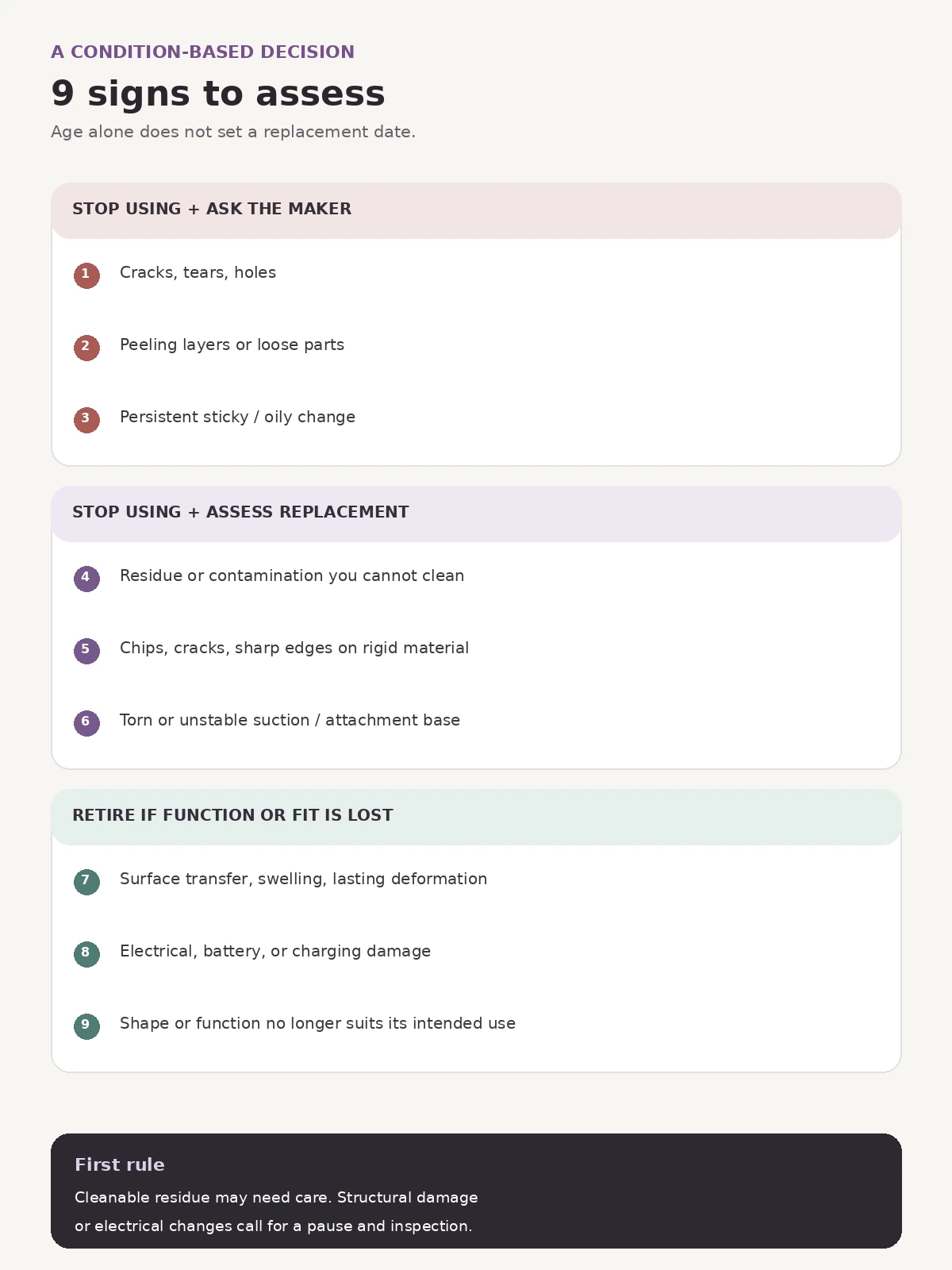
Changes that do not automatically mean replacement
Several issues can look alarming but may be resolved by routine care or a closer check:
- Lint or dust: If it washes away and the surface feels normal after drying, improve storage before considering replacement. See why silicone dildos attract lint.
- Washable residue: Clean with the method approved for that material. Our dildo cleaning guide covers material-specific care.
- A temporary bend or dent: Remove pressure and let the dildo rest naturally. Do not apply heat or force it straight.
- Normal wear in appearance: A color difference, scuff, or change in shine needs context. Compare it with the maker’s description and check whether the material is damaged or difficult to clean.
- Age by itself: There is no universal number of months or years after which every dildo must be replaced. Inspect its condition and follow the manufacturer’s care guidance.
If a new dildo arrives with a defect, photograph it before cleaning, modifying, or using it. Keep the order information and ask the seller about the return window or warranty. Our new dildo inspection checklist can help you document its condition.
How to make the replacement decision
- Pause use if the surface or structure is compromised. Do not use a condom, adhesive, or household repair as a workaround for a crack, loose part, damaged base, or electrical fault.
- Clean only when the concern is ordinary residue. Use the maker’s instructions; do not introduce a new cleaner to test a damaged surface.
- Document what changed. Take clear photos and note when you first noticed it, what care method you used, and whether the issue is new or worsening.
- Ask the seller or manufacturer. Request guidance for the exact model and ask whether an approved repair, replacement, or warranty remedy applies.
- Retire it if the problem cannot be assessed or resolved. If the surface cannot be cleaned, the structure is unstable, or safe operation cannot be confirmed, replacement is the more dependable choice.
For a replacement, compare the material, size, base, and care requirements against what you need now. Browse the full dildo selection or read how to choose a replacement for a discontinued dildo if the same model is no longer available.
Frequently asked questions
How often should I replace a dildo?
There is no universal replacement schedule. Material, construction, frequency of use, care, and storage all affect condition. Inspect it regularly and replace it when damage or persistent changes prevent reliable cleaning or intended function.
Can a dildo last for years?
Some can remain in good condition for a long time with appropriate care, but no lifespan applies to every material or model. Follow the manufacturer’s instructions and pay attention to changes in the surface, construction, or function.
Is a sticky dildo always unsafe?
Not necessarily. Residue or a surface treatment may affect feel. Clean and dry it according to the maker’s instructions. If stickiness persists, returns, or appears with peeling, swelling, oiliness, or odor, pause use and ask the seller.
Can I use a condom on a damaged dildo instead of replacing it?
A condom does not repair a crack, restore a stable base, or make a loose part secure. Do not use it as a workaround for structural damage.
Should I throw away a dildo with a small cosmetic mark?
Not automatically. Check whether the mark is superficial, whether the surface remains smooth and cleanable, and whether the maker’s care instructions apply. If you cannot tell whether the material is split or damaged, stop use and ask the manufacturer.
Let condition—not a calendar—make the call
A dildo does not need replacing just because it is old or has collected washable lint. The decision changes when the surface cannot be cleaned, the structure is separating, a rigid material is chipped, or a base or powered feature no longer works as intended. Pause use when you find a serious change, document it, and get model-specific guidance. If the maker cannot confirm an approved remedy, retire the dildo and choose a replacement that fits your current needs.