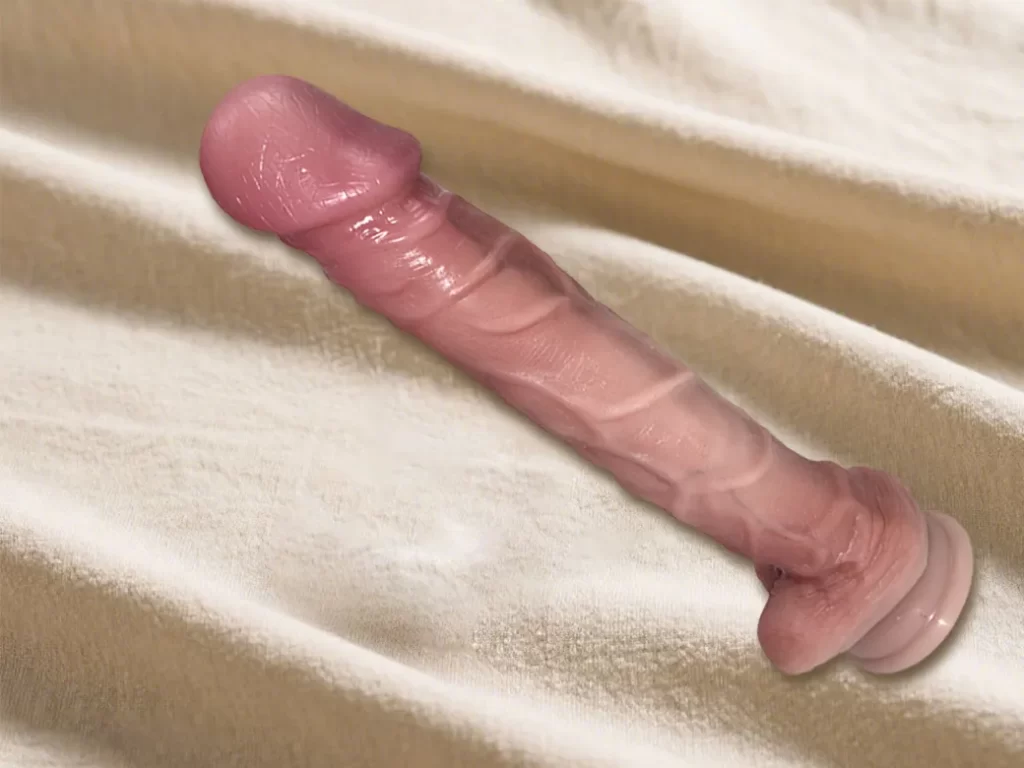

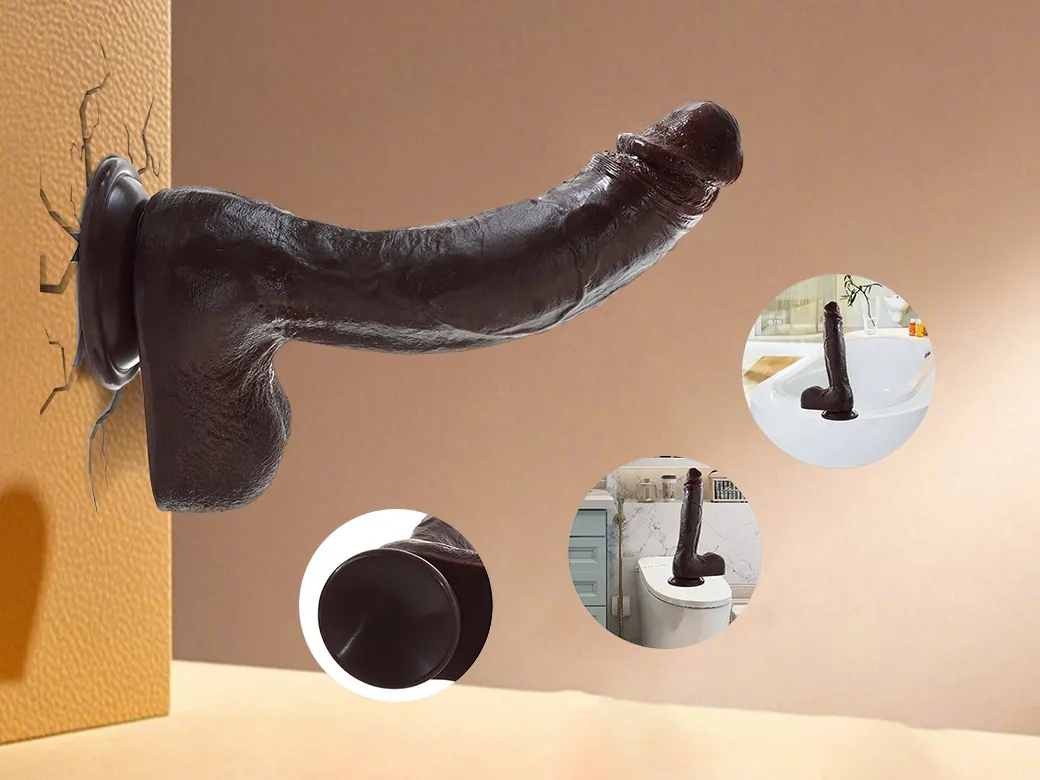
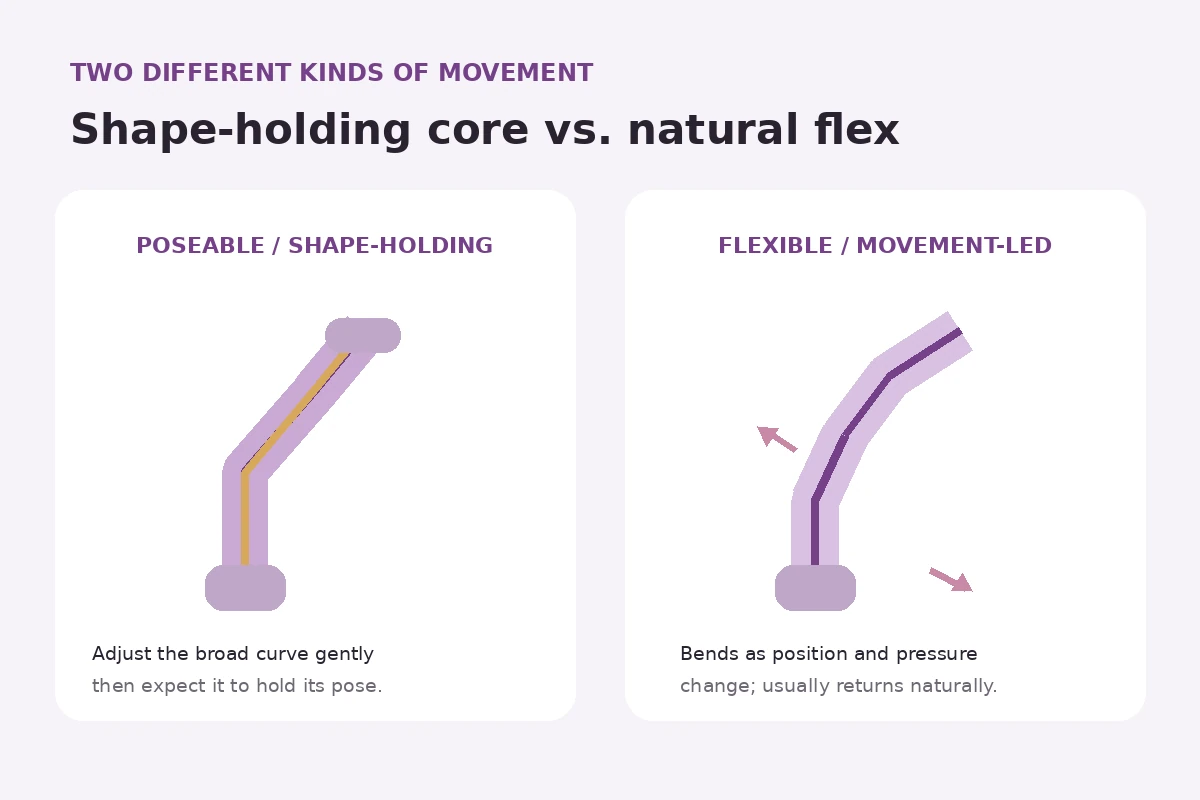
“Bendable” and “flexible” sound interchangeable on a product page, but they can describe two different jobs. A bendable dildo is generally designed to be adjusted into a chosen curve and hold that pose. A flexible dildo yields as it moves or meets pressure, with the shaft often returning toward its resting shape afterward. Product wording is not standardized, so the construction notes matter more than the adjective.
Use this guide to compare movement, control, storage, and product descriptions. It focuses on the design distinction; for a broader discussion of how much a dildo compresses, see our soft vs. firm dildo guide.
At a glance: what is the difference?
| Design | Typical movement | Often useful when you want | Check before buying |
|---|---|---|---|
| Bendable / poseable | Can be gently adjusted into a broad shape that remains in place, if the manufacturer describes it that way. | A specific angle, a shaped curve, or a form that is easier to position for a particular setup. | Whether the core is explicitly poseable, where it can bend, and any limits on repositioning. |
| Flexible | Gives or arcs under movement and pressure rather than staying fixed in each adjusted position. | A shaft that moves with the body or feels less rigid during repositioning. | How much the complete shaft bends; material softness alone does not tell you this. |
| Firm / low-flex | Resists bending and keeps a more consistent profile. | More predictable directional guidance or a shape that stays steady. | Length, thickness, material, and how firmness is described or demonstrated. |
Quick answer: choose a bendable design when you want to set a curve and have it stay there; choose a flexible design when you want the shaft to give during movement. Neither is automatically more comfortable or higher quality.
How a shape-holding core works
A poseable dildo may contain a flexible support or shaping structure beneath its outer material. The support can allow a gentle adjustment while helping the shaft retain the chosen curve. The exterior may still compress or feel soft, so squeezing the surface does not necessarily reveal whether a poseable core is inside.
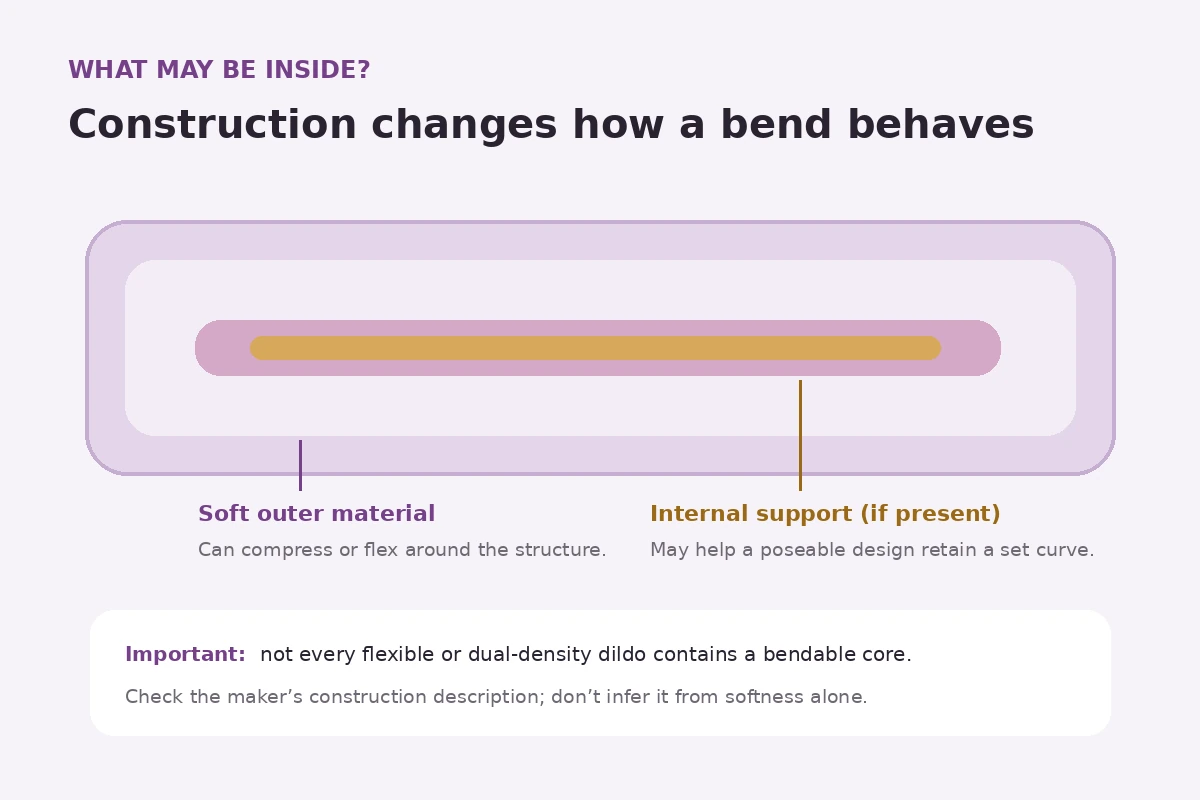
Some designs use different construction, and listings may use “bendable” loosely. Look for direct wording such as “poseable core,” “holds its position,” or a demonstration of the product being adjusted and retaining the curve. If the page only says “flexible,” ask the seller whether it is intended to hold a manually set shape.
Shape retention is not the same as firmness
Firmness describes how much the material compresses when pressed. Flexibility describes how readily the shaft bends. Shape retention describes whether an adjusted bend stays in place. These properties can overlap, but they are not interchangeable. A softer surface can cover a firmer support, while a uniformly soft shaft may bend easily without holding a pose.
For a deeper look at compression and material hardness, read what Shore hardness can tell you about a dildo. Hardness figures do not, by themselves, confirm whether a complete dildo is poseable.
When a bendable design may suit you
- You want a repeatable angle. A shape-holding design may let you set a broad curve before use, subject to the maker’s instructions.
- You need help with positioning. A retained shape can make the dildo easier to orient in a chosen setup, though the base and total length still affect stability.
- You like to customize the profile. A poseable shaft may allow modest adjustment instead of offering only one molded curve.
- You prefer less readjusting. If the design is intended to hold a position, it may require fewer manual corrections than a shaft that continually yields.
A bendable core does not mean unlimited reshaping. Treat the product’s stated range as a limit. Avoid sharp kinks, forceful twisting, or repeatedly bending it back and forth unless the maker specifically says that movement is supported.
When a flexible design may be a better match
- You want the shaft to move with you. A flexible dildo can yield as angle or pressure changes instead of remaining fixed.
- You prefer a less rigid feel. Flex may reduce the sense of a completely fixed shape, depending on the design, size, and material.
- You want a naturally curved profile. A flexible dildo may adapt more easily to changing positions, but can also feel less precise to guide.
- You do not need a manually held pose. If you expect the shaft to bend naturally rather than stay in one adjusted curve, a poseable feature may not be necessary.
Very flexible or long shafts can be harder to guide in some positions. Our article on why a soft dildo may bend before insertion covers that separate handling issue.
Other design details that change how bending feels
The core is only one part of the experience. Two dildos described with the same flexibility label can behave differently because their dimensions and shapes distribute pressure differently. A longer, slimmer shaft may arc more readily than a shorter, thicker one made from a similar material. A pronounced curve can also concentrate bending around one area, while a straighter profile may flex across a broader section.
| Detail | Why it matters | Question to ask |
|---|---|---|
| Length and thickness | Change how much leverage is applied to the shaft and how much it resists bending. | Are the listed dimensions for the exact size and variant? |
| Molded curve | A fixed curve is part of the shape; it does not necessarily mean the dildo is poseable. | Is the curve molded in, or can it be adjusted and held? |
| Base and mounting | A suction cup or harness-compatible base can affect how the shaft behaves when mounted. | Does the listing describe the base as compatible with your intended setup? |
| Layered construction | A soft outer layer and firmer inner section can change compression without making the shaft poseable. | Does the maker specifically identify a bendable support? |
For mounted use, consider how the whole design works together. A very flexible shaft can move more under load; a shape-holding shaft may keep its angle but still shift if the base or harness fit is unstable. Check the base type and dimensions as well as the shaft description.
Translate product-page language carefully
Marketing adjectives can be suggestive without explaining the mechanism. Use them as clues, then look for a demonstration, a construction note, or a direct answer from the seller.
- “Flexible silicone” usually tells you the shaft can give, but does not prove it holds a manually set curve.
- “Poseable” or “shape-holding core” suggests adjustment is intended; read the usage limits before changing the shape.
- “Curved design” may mean the dildo is molded in one curve rather than adjustable.
- “Dual density” or “double layer” describes different material feel or structure; it does not automatically indicate a movable core.
If a listing leaves the distinction unclear, ask: “Does this exact model contain a poseable core that retains a manually adjusted curve, or is the shaft flexible and expected to return toward its resting shape? Are there limits on bending or repositioning?” A clear answer is more useful than relying on a single adjective.
Use the design-fit checklist
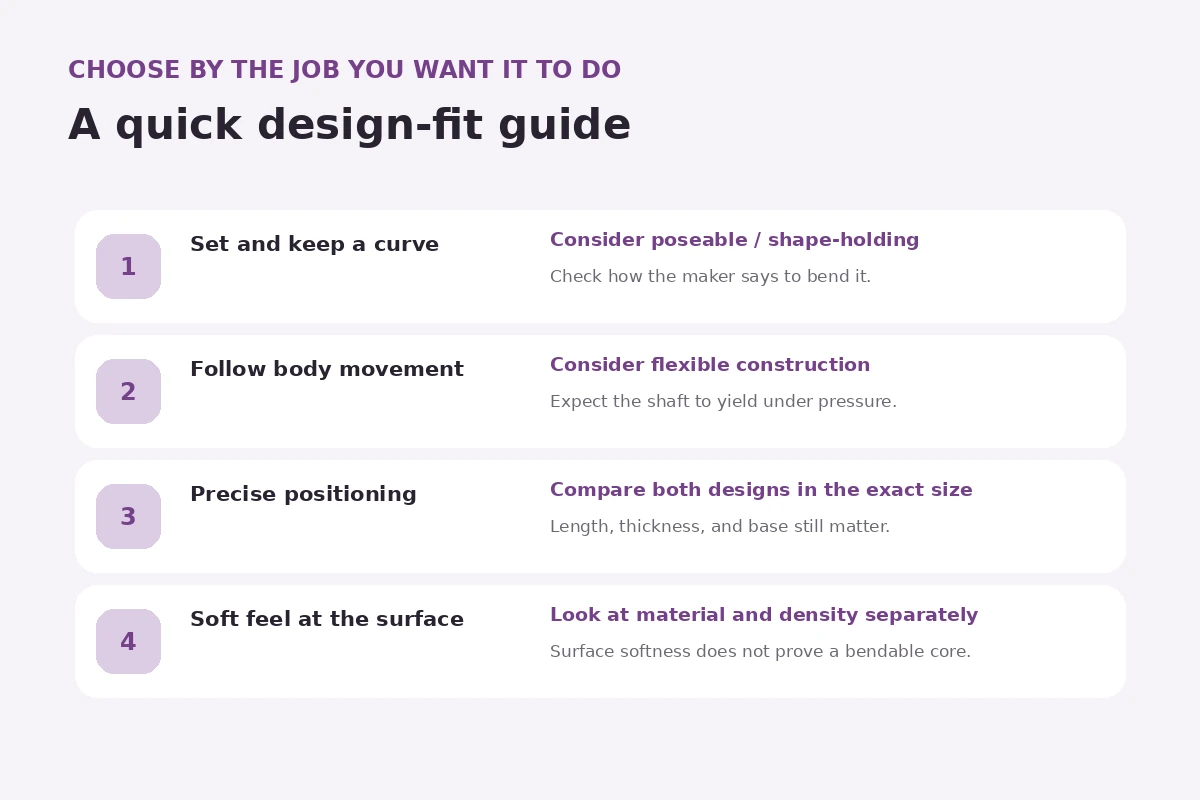
- Name the movement you want. Do you want to set a curve, or do you want the shaft to yield freely?
- Read the construction description. Look for an explicitly poseable core or shape-holding feature; do not assume one is present.
- Compare the full dimensions. Length, thickness, curve, and base design affect handling and positioning, regardless of core type.
- Check the adjustment guidance. Find out whether bending is intended, how to adjust the shaft, and what movements to avoid.
- Separate surface feel from movement. A soft-touch exterior does not tell you how the internal structure behaves.
If you are browsing by feel, our soft dildo collection is a useful starting point, but confirm each listing’s construction. You can also compare how firmness, flexibility, and support work together in our dildo firmness buying guide.
Care and handling: don’t force the bend
Follow the maker’s care and adjustment directions for the exact dildo. For a poseable design, make slow, broad adjustments only if bending is an advertised feature. Avoid twisting the shaft, making a tight fold, or using tools to reshape it. For a flexible design, let it return naturally; repeatedly pulling it straight or stretching it can stress the material or internal construction.
If a dildo develops a new hinge-like bend, clicking, shifting support, bulge, tear, or a shape that no longer behaves as described, stop manipulating it and inspect it according to the manufacturer’s guidance. A normal flexible bend is different from a sudden structural change. See our guide to signs of a damaged internal core if the movement changes unexpectedly.
Common questions
Does “flexible” mean the dildo has a bendable core?
No. Flexible may simply describe a shaft that yields under pressure. A poseable core should be identified in the listing or manufacturer instructions; ask the seller if the wording is unclear.
Can a bendable dildo hold any shape?
No. The permitted adjustment range depends on the design. Do not assume it can be sharply folded, twisted, or bent repeatedly. Follow the specific manufacturer’s instructions.
Is a flexible dildo always softer?
No. Flexibility and compression firmness are separate properties. A dildo can feel relatively firm when pressed yet still bend because of its length, thickness, or construction.
Are dual-density dildos automatically bendable?
No. Dual-density usually describes layers with different firmness or density. It does not automatically mean the dildo contains a poseable support. Check the product’s specific construction details.
Which design is better for a beginner?
There is no universal best choice. A person who values a set angle may prefer a poseable model; someone who wants the shaft to yield may prefer a flexible one. Consider manageable dimensions, the base, and the stated construction along with experience level.
Choose for the movement you expect
Think of “bendable” as a shape-setting feature and “flexible” as a movement response. That distinction makes product listings easier to compare: look for evidence that the dildo is meant to hold a manually set curve, then weigh that against how much you want the shaft to give during use. When the page does not explain the construction, ask before buying rather than reading more into the adjective.