

Start with the shape, not the label
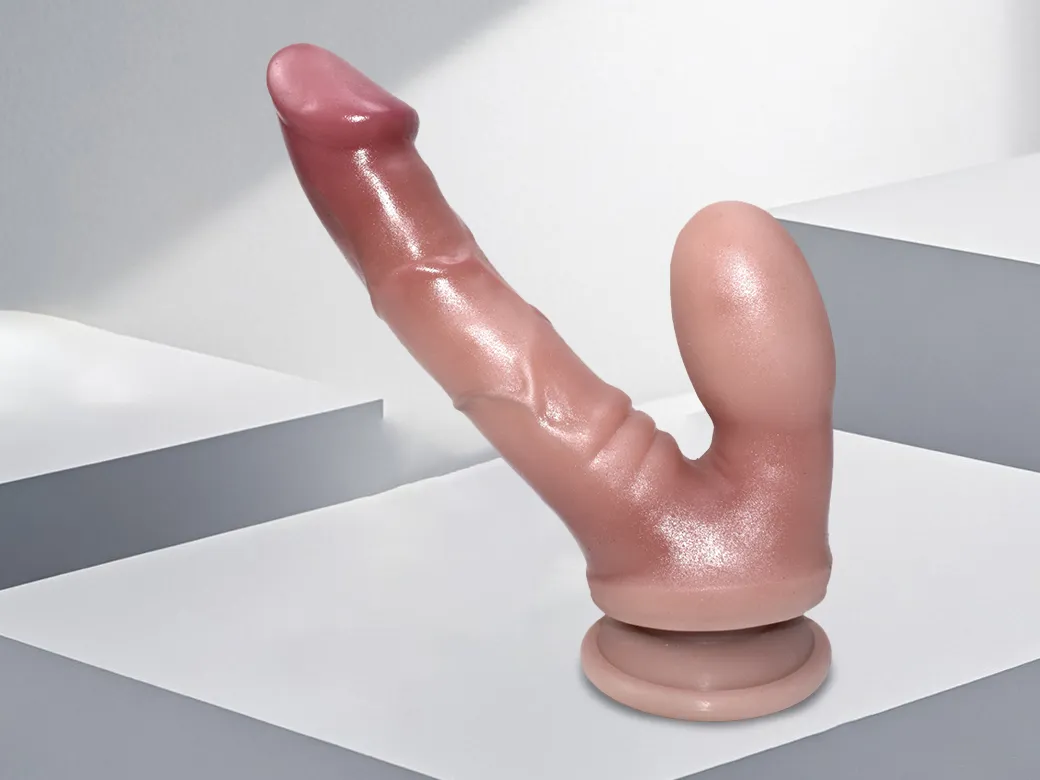
“Double-ended dildo” sounds like one category, but listings can use the phrase for very different shapes. Some have a long shaft with a usable end on each side. Others curve into a U and are intended to sit between a wearer’s legs, with one end held internally and the other extending outward. Those designs do different jobs, so a listing title alone is not enough to tell you whether a dildo suits your plans.
Before comparing color, texture, or price, decide who will use each end and how the dildo will be supported. Then check the shape, usable length on each side, flexibility, material, and care instructions. This order makes it easier to rule out a poor fit before you get attached to a particular look.

Quick answer: A long double-ended dildo is usually the shape to investigate for shared play between two people. A U-shaped design is a separate option for strapless partnered use or certain solo setups. Choose by the actual geometry and manufacturer’s directions, not by the word “double.”
A quick shape selector
Two people, one end each
Look at a long-shaft design. Check whether the shaft can bridge the distance between both bodies without either person having to stretch or hold an awkward position. The center section and bend should feel manageable for both users.
One wearer and a partner
Look at a U-shaped design only if its instructions match your setup. The inner section, outer section, and curve need to work together for the wearer’s body and the intended movement. “Hands-free” or “strapless” is not a guarantee of a comfortable fit.
Solo use with more than one end
Check each end independently. Confirm that the dimensions, curve, reach, and intended body areas are suitable. A double-ended shape does not automatically make every end safe for every kind of insertion.
Long-shaft and U-shaped designs solve different problems
Think of a long-shaft double-ended dildo as a flexible bridge between two users. Think of a U-shaped design as a wearable curve whose inner and outer sections have different roles. Retailers do not always use these labels consistently, so read the manufacturer’s diagram and dimensions instead of relying on category names.
| What to compare | Long-shaft double-ended dildo | U-shaped design |
|---|---|---|
| Main fit question | Is there enough usable length on both sides after allowing for the space between bodies? | Does the curve fit the wearer while leaving a useful, controllable outer section? |
| Movement | Both users may need to coordinate pace and direction around one shared shaft. | The wearer’s body position and the design’s internal anchor affect how much movement is practical. |
| Flexibility | Some flexibility can help the shaft follow the space between two bodies. | The design needs to bend enough to fit while remaining stable enough for its intended role. |
| Before buying | Look for dimensions for each usable end, total length, center span, and the maker’s intended uses. | Look for a clear diagram, insertable dimensions, stated fit guidance, and instructions for positioning. |
Neither shape is a universal upgrade. If you mainly want to share a dildo while facing one another or lying side by side, a long design may be easier to evaluate. If the attraction is a wearable curve, inspect the U-shaped design as its own category rather than treating it as a shorter version of a long dildo.
Measure the usable sections, not just the full length
Total length can be misleading on a double-ended dildo. A portion of the shaft may sit between bodies, remain outside the body, or form the curve that gives the design its shape. The amount left for each person can therefore differ from a simple half-and-half split.
- Find the usable length for each end. If the listing gives one insertable measurement, ask whether it applies to both ends or only one.
- Identify the center section. Look at how much of the dildo will remain between the users, or how the inner curve sits in a U-shaped design.
- Compare both users’ comfort ranges. For shared use, the less experienced or more size-sensitive person should not have to accept a dimension that feels too large or too deep.
- Check the maximum intended insertion. A long end is not a target. Use only the depth that feels comfortable and remains under the user’s control.
Reading a listing: If a page shows only “overall length,” ask for the manufacturer’s diagram or the usable length of each end before purchasing. If the two ends differ, confirm which dimension belongs to which end.
Read the dildo size guide for a refresher on total length, insertable length, diameter, and girth.
Choose flexibility for the bodies and movement involved
Flexibility is useful when a dildo needs to curve between two people, but “softer” does not automatically mean “easier.” A very flexible shaft can fold, droop, or make direction harder to control. A rigid design may hold its shape but feel less accommodating when users shift position. The right balance depends on the shape and how it will be supported.
- For shared movement: look for a shaft that can follow the distance and angle between both users without collapsing under light pressure.
- For a U-shaped design: check whether the curve can rest in the intended position while the outer section remains usable. Do not assume that every U-shaped dildo fits every body.
- For a harness: confirm that the base and attachment method are specifically compatible with the harness. A double-ended label does not confirm harness fit.
When specifications are vague, ask the retailer what the manufacturer says about flexibility and intended use. Avoid relying on a dildo photo alone: camera angle and posing can hide how much the shaft bends or how the center section is built.
Match the ends to the people using them
Some double-ended dildos have matching ends; others have different lengths, curves, or diameters at each end. Matching ends can make the design simple to understand, while an asymmetric shape may give each user a different option. Either way, compare each end to the person who will use it.
For a shared dildo, make the comfort decision together. One person’s preferred diameter or depth may not suit the other. If one end is narrower or shorter, assign it deliberately rather than discovering the difference after the dildo is in use. If either person is new to insertion, a moderate, manageable size and a gradual start are more useful than choosing a size to match an image or a claim about experience.
Check material and cleaning before sharing
A double-ended dildo can touch more than one person, so material information and cleaning instructions matter. Look for a clear material listing and care directions from the manufacturer. Do not assume that a marketing phrase such as “body safe” tells you how a particular layered, powered, or mixed-material design should be cleaned.
If you share the dildo, wash it according to the maker’s instructions between users. A new external condom can be used for each person; change it before the dildo touches another person or moves between body areas. Planned Parenthood also recommends changing the condom on a shared dildo before another person uses it. Read Planned Parenthood’s safer-sex guidance.
Use lubricant that is compatible with the dildo’s material, and reapply if friction increases. Water-based lubricant is a common starting point, but follow the maker’s instructions for the specific design. Clean the entire shaft, including the center and any textured edges, and allow it to dry fully before storage. For material-specific cleaning, see how to clean a dildo and the lubricant compatibility guide.
Set a shared pace before you begin
A shared dildo connects two people through one object, so small differences in rhythm can become noticeable quickly. Decide who will guide the first movement, how either person can ask for a pause, and what kind of pressure feels comfortable. Start with small movements and check in before changing depth, speed, or angle.
1. Agree on a simple pause signal. Use a word or gesture that either person can use without explaining first.
2. Let the person receiving each end set their own comfort limit. Do not use the other person’s movement as a reason to go deeper or faster.
3. Adjust the position before adding force. If the dildo bends awkwardly or either person feels pulled out of alignment, pause and change the distance or angle.
4. Stop if there is pain, numbness, or unexpected bleeding. Do not treat discomfort as a fitting problem that must be pushed through.
Ongoing consent includes being able to slow down, change the plan, or stop. For a concise overview, see RAINN’s consent guide.
Anal use needs a separate safety check
Do not assume that a straight double-ended dildo is suitable for anal insertion just because it has two rounded ends. An anal dildo needs a flared base or another design feature that keeps it from being drawn fully inside and allows controlled removal. Many long, straight double-ended designs do not have that kind of stop. Use one anally only when the manufacturer clearly identifies that end and shape as intended for anal use and provides a suitable safety feature.
Planned Parenthood advises that anything inserted into the anus should have a flared base or another way to remove it safely. Read its dildo safety guidance. If a dildo’s shape leaves you unsure whether it has a safe stop, choose a dildo designed specifically for the intended use instead.
Do not guess from a dildo photo. If a double-ended dildo has no clear flared base, handle, or other retention feature for anal use, do not use it anally. A rounded tip is not a retrieval feature.
Use this pre-purchase checklist
- Can I identify the exact shape: long-shaft, curved long-shaft, or U-shaped?
- Does the maker explain the intended use and the role of each end?
- Are usable length and diameter listed for each end?
- Will the center span or curve fit the distance and position we expect to use?
- Is the flexibility appropriate for the amount of support the design needs?
- Are the material and cleaning instructions clear?
- If sharing, do we have a plan for cleaning or using a fresh condom for each person?
- If considering anal use, is there a clearly identified flared base or another safe retention feature?
If several answers are missing, pause before checkout and ask the retailer for the manufacturer’s dimensions or instructions. Unclear information is a reason to keep comparing, not a reason to guess.
Frequently asked questions
Are all double-ended dildos made for couples?
No. A long-shaft design may be intended for two people, while a U-shaped design may be designed for a wearer and partner. Some shapes have other intended uses. Check the maker’s description and diagram.
How long should a double-ended dildo be?
There is no single useful length for everyone. Consider the usable length at each end, the space between bodies, the shape’s center section, and the positions you expect to use. Overall length alone cannot answer whether it will fit.
Should a double-ended dildo bend?
Some flexibility can help the design follow the body, but too much flex can make control difficult. Match the amount of bend to the shape and intended use, and ask the manufacturer when the listing does not explain it.
Can two people share one double-ended dildo?
Some designs are intended for shared use. Clean the dildo as directed between users, or put on a fresh condom for each person. Replace the condom before moving the dildo to another person or body area.
Can a double-ended dildo be used anally?
Only if the specific design is intended for anal use and has a flared base or another suitable safety feature. Do not assume that a rounded end, a long shaft, or a U-shaped center prevents the dildo from moving farther inside than intended.
Is a double-ended dildo the same as a double-penetration dildo?
Not always. “Double-ended” usually describes a dildo with a usable end on each side, while “double-penetration” can refer to a design with two shafts arranged for simultaneous use. Retailer wording varies, so inspect the actual shape and intended use.
Let the setup decide
A double-ended dildo is easiest to choose when you can describe the setup in one sentence: who uses each end, where the middle sits, and how the dildo is supported. If the answer points to two people sharing one long shaft, compare the usable sections and flexibility. If it points to a wearable curve, evaluate the U-shaped fit and maker’s directions. If any planned use involves anal insertion, treat the base and retrieval design as a required check.
Once those details line up, compare material, finish, and care requirements. The most suitable double-ended dildo is the one whose geometry fits the people and movement involved, with enough information to use and clean it confidently.
Further reading: dildo dimensions · curved vs. straight dildos · cleaning a dildo