

Quick Answer
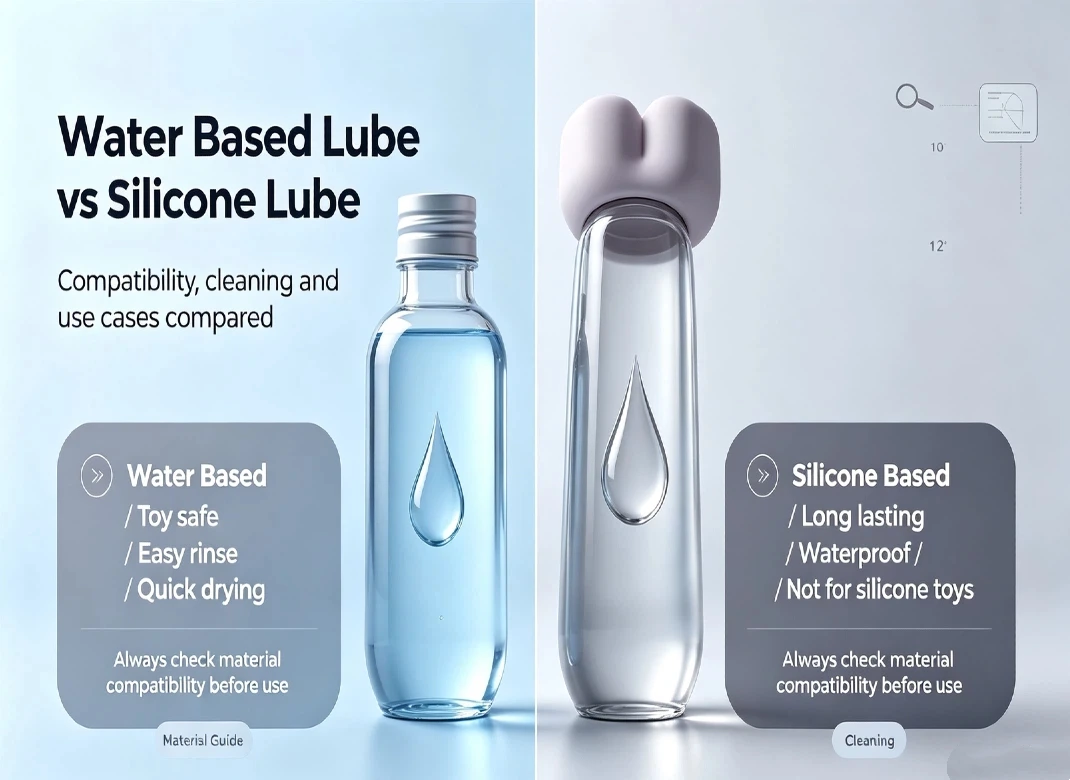
For most dildo users, water-based lubricant is the safest and most versatile choice. It is compatible with nearly all sex toy materials, easy to clean, and suitable for both beginners and experienced users. Silicone-based lubricant lasts significantly longer and provides excellent glide, but it isn’t compatible with every silicone toy and may require additional care during cleaning.
The best lubricant depends on the type of toy you own, the material it’s made from, and how you intend to use it.
Why Your Lubricant Choice Matters
Many buyers spend hours comparing dildo sizes, materials, and features but give very little thought to lubricant.
In reality, the lubricant you choose can have just as much impact on comfort as the toy itself.
A good lubricant helps reduce friction, improves comfort during penetration, and allows smoother movement throughout a session. Choosing the wrong type, however, may affect the feel of your toy or create unnecessary maintenance issues.
Rather than asking which lubricant is “best,” it’s more useful to understand when each type performs well.
What Is Water-Based Lubricant?
Water-based lubricant is the most widely recommended option for sex toys.
Its popularity comes from one simple advantage:
It works with almost everything.
Whether your dildo is made from silicone, glass, stainless steel, ABS plastic, or TPE, a quality water-based lubricant is generally the safest choice.
Because it rinses away easily with water, cleanup is usually quick and straightforward.
This combination of versatility and convenience makes water-based formulas the first recommendation for most beginners.
Advantages of Water-Based Lubricants
Water-based lubricants offer several important benefits:
- Compatible with almost every toy material
- Easy to wash away
- Doesn’t leave heavy residue
- Available in many different formulas
- Suitable for everyday use
For anyone purchasing their first dildo, starting with a quality water-based lubricant is rarely a mistake.
What Is Silicone-Based Lubricant?
Silicone-based lubricant is formulated differently.
Instead of water as its primary ingredient, it uses silicone compounds that remain slippery for much longer.
This creates a noticeably smoother glide and significantly reduces the need for reapplication during extended sessions.
Many experienced users appreciate silicone lubricants because they continue performing well even after long periods of movement.
However, this extra performance comes with one important consideration.
Not every silicone dildo is compatible with silicone-based lubricant.
Why Compatibility Matters
Medical-grade silicone is one of the most popular materials used in premium dildos.
Some manufacturers advise against using silicone lubricant with silicone toys because prolonged contact may affect the surface finish of certain products.
Although not every silicone dildo reacts the same way, following the manufacturer’s recommendations is always the safest approach.
If you’re uncertain, choosing a water-based lubricant eliminates almost all compatibility concerns.
Which Lubricant Feels Better?
There isn’t a universal answer.
The experience depends largely on personal preference and intended use.
Water-based lubricants usually feel light, natural, and easy to control. They’re ideal for everyday use and are especially popular among people who value quick cleanup.
Silicone-based lubricants feel noticeably silkier and tend to maintain their glide for much longer. For users who dislike stopping to reapply lubricant, this can be a significant advantage.
Rather than viewing one as superior, think of them as solutions designed for different situations.
Performance: Which Lubricant Lasts Longer?
One of the biggest differences between these two lubricant types is how long they maintain lubrication during use.
Water-Based Lubricants
Water-based lubricants provide a smooth, natural feel, but because their primary ingredient is water, they gradually evaporate during longer sessions.
This isn’t necessarily a disadvantage.
Many users actually prefer the lighter consistency because it feels clean and washes away easily. If additional lubrication is needed, simply apply a little more.
For most everyday use, reapplication is quick and uncomplicated.
Silicone-Based Lubricants
Silicone lubricants are designed for longevity.
Their silky consistency remains stable for much longer, making them a popular choice for extended sessions or situations where continuous lubrication is preferred.
Because they don’t evaporate as quickly as water-based formulas, less product is usually needed over time.
The trade-off is that silicone lubricants generally require more thorough cleaning afterward.
Which Lubricant Is Easier to Clean?
Cleaning is often overlooked until after the session has ended.
In practice, the difference is noticeable.
Water-Based Lubricants
Water-based formulas rinse away quickly with warm water and mild soap.
They rarely leave behind noticeable residue, making them particularly convenient for regular toy maintenance.
For silicone, glass, stainless steel, and ABS plastic toys, cleanup is usually simple.
Silicone-Based Lubricants
Silicone lubricants tend to cling to surfaces much longer.
While this contributes to their impressive performance during use, it also means they often require a little more attention during cleaning.
Most toys can still be cleaned easily using warm water and mild soap, but you may need to spend a little longer removing any remaining lubricant from textured areas.
Which Lubricant Works Best With Different Toy Materials?
Compatibility is one of the most important factors when choosing a lubricant.
Here’s a general guide.
| Toy Material | Water-Based Lubricant | Silicone-Based Lubricant |
|---|---|---|
| Medical-grade silicone | ★★★★★ Recommended | Check manufacturer guidance |
| Glass | ★★★★★ Excellent | ★★★★★ Excellent |
| Stainless steel | ★★★★★ Excellent | ★★★★★ Excellent |
| ABS plastic | ★★★★★ Excellent | ★★★★★ Excellent |
| TPE | ★★★★★ Recommended | Usually suitable—check manufacturer guidance |
| PVC | ★★★★★ Recommended | Usually suitable—check manufacturer guidance |
When in doubt, water-based lubricant remains the safest universal option.
Which Lubricant Should Beginners Buy?
If you’re purchasing your first dildo, our recommendation is straightforward:
Start with a high-quality water-based lubricant.
There are several reasons for this recommendation.
It works with almost every toy material, cleans up easily, and allows you to focus on learning what feels comfortable without worrying about compatibility issues.
Once you become familiar with different materials and understand how you use your toys, you can decide whether trying a silicone-based formula offers any additional benefits for your personal preferences.
Expert Buying Tips
After reviewing hundreds of adult products and comparing long-term customer feedback, several patterns consistently emerge.
Match the Lubricant to the Toy
Rather than asking which lubricant is “best,” ask which lubricant best matches your toy.
A premium silicone dildo deserves a lubricant that preserves the material, while a glass or stainless steel toy gives you much greater flexibility when choosing formulas.
Thinking about compatibility first often prevents problems later.
Buy Quality Rather Than Quantity
A high-quality lubricant often performs better than a larger bottle of lower-quality product.
Smooth consistency, reliable ingredients, and skin-friendly formulations usually provide a noticeably better experience than simply choosing the cheapest option available.
Keep Both Types If You Use Different Toys
Many experienced users eventually keep both water-based and silicone-based lubricants available.
Water-based formulas become the everyday choice for silicone toys, while silicone lubricants may be used with compatible materials when longer-lasting glide is preferred.
This approach provides flexibility without limiting your options.
Always Read the Manufacturer’s Recommendations
Although general compatibility guidelines are helpful, the manufacturer’s care instructions should always take priority.
Following the recommendations provided with your toy helps protect the material and ensures you’re using the product as intended.
Editor’s Insight
Many shoppers assume that choosing a lubricant is a minor decision compared to selecting the toy itself.
In reality, lubricant has a direct impact on comfort, confidence, and overall enjoyment.
A well-chosen lubricant won’t completely transform an unsuitable toy, but it can make a good toy feel significantly better. That’s why we generally recommend investing in a quality lubricant at the same time you purchase your first dildo—it often becomes one of the most frequently used products in your collection.
Common Lubricant Mistakes
Choosing the right lubricant is only part of the equation. How you use and store it can have just as much impact on your overall experience. Over the years, we’ve noticed several mistakes that are easy to avoid with a little preparation.
Assuming Every Lubricant Works With Every Toy
One of the most common misconceptions is that all lubricants are universally compatible.
While many products perform well across a wide range of materials, compatibility isn’t guaranteed. Some silicone toy manufacturers recommend avoiding silicone-based lubricants with their products, while others specifically approve them.
Rather than relying on general advice alone, always check the care instructions provided with your toy. When no guidance is available, a quality water-based lubricant remains the safest choice.
Using Too Little Lubricant
Many beginners underestimate how much lubricant is actually needed.
A small amount may be enough for brief use, but if you begin to notice increased friction or reduced comfort, don’t hesitate to apply more.
Reapplying lubricant during longer sessions is completely normal and often improves both comfort and control.
Applying Lubricant Too Early
Lubricant performs best when it’s applied shortly before use.
Leaving it exposed to air for long periods before beginning may reduce its effectiveness, particularly with some water-based formulas.
Applying lubricant immediately before use usually provides the smoothest experience.
Forgetting to Replace Old Lubricant
Like many personal care products, lubricants have expiration dates.
Using an expired product may affect its consistency and overall performance.
Before use, take a quick look at the bottle. If you notice significant changes in color, texture, or smell, replacing it is generally the better option.
Storage Tips
Proper storage helps preserve the quality of your lubricant.
To help maintain performance:
- Store the bottle tightly closed after each use.
- Keep it in a cool, dry location.
- Avoid prolonged exposure to direct sunlight.
- Wipe away any residue around the cap before closing it.
These simple habits help keep the lubricant clean and ready whenever you need it.
Frequently Asked Questions
Can I use water-based lubricant with silicone toys?
Yes.
Water-based lubricant is widely recommended for silicone toys because it offers broad compatibility and is easy to clean. Unless the manufacturer advises otherwise, it is generally the safest option.
Can I use silicone lubricant with a silicone dildo?
Some manufacturers approve silicone-based lubricants for their silicone toys, while others recommend avoiding them.
Because formulations vary, always follow the care instructions supplied with your specific toy. If you’re uncertain, water-based lubricant remains the safest alternative.
Which lubricant lasts longer?
Silicone-based lubricants generally provide longer-lasting glide and require less frequent reapplication.
Water-based lubricants may need to be reapplied during extended sessions, but many users appreciate their lighter feel and easier cleanup.
Which lubricant is easiest to clean?
Water-based lubricant is usually the simplest to remove.
In most cases, warm water and mild soap are all that’s needed to clean both your toy and your skin.
Silicone-based lubricants often require a little more time to wash away because they adhere to surfaces more effectively.
Should beginners choose water-based or silicone lubricant?
For most beginners, we recommend starting with a high-quality water-based lubricant.
Its broad compatibility, straightforward cleanup, and suitability for nearly every toy material make it the easiest place to begin.
Can lubricant damage a dildo?
Using the wrong lubricant with certain materials may affect the surface of some toys over time.
Following the manufacturer’s compatibility recommendations is the best way to protect both the toy and its finish.
Editor’s Recommendation
If you’re buying your first dildo, purchase a quality water-based lubricant at the same time.
It works with almost every toy material, requires very little maintenance, and removes much of the uncertainty that first-time buyers often experience.
As your collection grows, you may decide to add a silicone-based lubricant for situations where longer-lasting glide is beneficial. Many experienced users keep both options available and choose the one that best suits the toy and the type of play they have planned.
Rather than thinking of one lubricant as universally superior, it’s more helpful to view them as different tools designed for different situations.
Final Verdict
Water-based and silicone-based lubricants each have clear strengths, but they aren’t direct competitors. Instead, they solve different problems.
If you want the most versatile, beginner-friendly option that works with almost every dildo material and is easy to clean, water-based lubricant is the best overall choice. It’s compatible with the vast majority of toys, simple to maintain, and an excellent everyday solution.
If your priority is maximum longevity and reduced need for reapplication, a high-quality silicone-based lubricant can be an excellent addition—provided it’s compatible with your toy.
By understanding how each lubricant performs, how it interacts with different materials, and when it’s most appropriate to use, you’ll be able to make a confident decision that improves comfort, protects your toys, and enhances every session.