
Dual-density dildos are designed to combine two different levels of firmness. A softer exterior creates a more flexible surface, while a firmer inner core helps the shaft hold its general shape. This construction can provide a different feel from a dildo made from one uniform layer of material, but it can also make unusual changes harder to evaluate.
The outer layer may move slightly when squeezed, and the shaft may show temporary wrinkles when bent. These characteristics are not automatically defects. More concerning changes include a growing bubble, an empty-feeling pocket, a section of the outer layer that slides independently or visible separation near the base.
Understanding how a dual-density dildo is constructed can help you distinguish normal flexibility from possible delamination.
What Is a Dual-Density Dildo?
A dual-density dildo usually contains a relatively firm internal structure surrounded by a softer exterior. The exact design varies between manufacturers. Some products have a clearly defined core and outer layer, while others create the firmness difference through a more integrated construction.
The softer exterior may compress, stretch and wrinkle more noticeably than the core. This is often intentional. The core supports the overall shape, while the outer layer provides surface softness and movement.
A dual-density label does not reveal:
- The exact thickness of the outer layer
- How the two sections are bonded
- Whether the core extends through the full shaft
- Whether the base uses the same construction
- The firmness of either layer
- How much surface movement is considered normal
For these reasons, two dual-density dildos can behave very differently even if their product descriptions use similar terminology. Our dual-density dildo guide explains how firmness, outer-layer thickness and core design affect the overall feel.

What Does Layer Separation Mean?
Layer separation, sometimes called delamination, occurs when two sections that should remain connected begin to pull apart. A gap may develop between the soft exterior and firmer core, allowing the outer material to move more independently than intended.
Possible signs include:
- A raised bubble that can be pushed from one area to another
- A pocket that feels hollow beneath the surface
- An outer layer that twists while the core remains still
- New wrinkles that do not smooth out
- Separation beginning near the shaft or base
- A visible boundary where the materials are pulling apart
- A sudden change in firmness within one small section
- Fluid or residue appearing beneath a translucent outer layer
Not every bump or wrinkle indicates delamination. Realistic textures, internal structures and differences in material thickness can create uneven areas from the time the product is manufactured.
The key questions are whether the feature is new, whether it is changing and whether the outer surface still appears securely connected.
Normal Surface Movement vs. Possible Delamination
A soft exterior needs some flexibility to perform as intended. When the shaft is squeezed or bent, the outer layer may compress and form temporary folds. Those folds should generally relax when the pressure is removed.
Possible normal characteristics include:
- Minor wrinkling while the shaft is bent
- Soft material compressing around a firmer center
- A small amount of surface movement when squeezed
- Slight differences in firmness between the head and shaft
- Symmetrical texture changes caused by the product’s design
- A visible core through a translucent outer layer
Possible warning signs include:
- Movement occurring in only one isolated area
- A bubble becoming larger over time
- The outer layer rotating around the core
- A crease remaining after the dildo is straightened
- A soft pocket appearing where the material was previously firm
- Separation spreading from the base upward
- A tear developing above a moving section
- A noticeable change after heat exposure or heavy stress
A useful comparison is the product’s original condition. If you photographed or inspected the dildo when it was new, compare the same area under similar lighting.
Why Can a Dual-Density Dildo Start Separating?
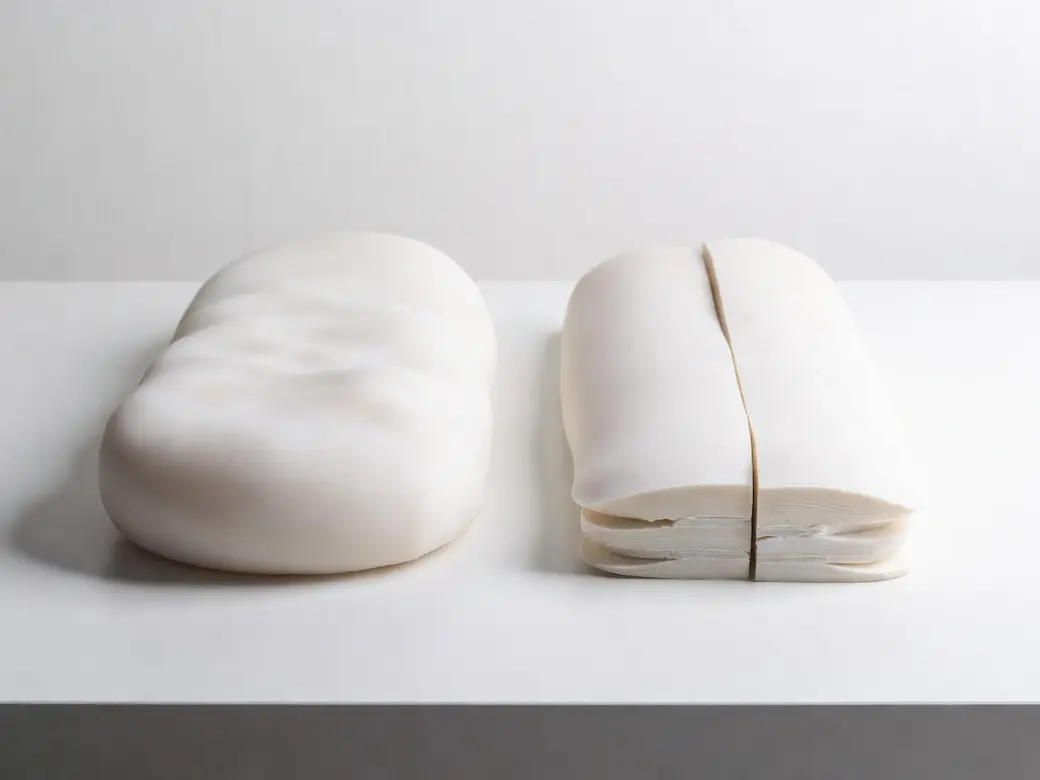
Several factors can contribute to layer movement. It may result from manufacturing, repeated mechanical stress, unsuitable care or gradual material deterioration.
1. Incomplete Bonding During Manufacturing
If the outer layer does not bond evenly to the underlying structure, a pocket may be present when the product is new. It might appear as a bubble, soft section or area that moves more than the surrounding material.
A small cosmetic irregularity is not necessarily proof of structural failure. However, a new product with a large movable pocket or obvious separation should be documented before use.
Contact the seller if the appearance differs substantially from the listing or if the defect affects the product’s shape. Do not cut into the surface to investigate it.
2. Repeated Bending at the Same Point
A flexible dildo may bend most easily at one location. Repeatedly folding it sharply at that point can place stress on both the outer layer and its connection to the core.
The risk may be higher near:
- The base-to-shaft connection
- A change in shaft thickness
- The end of a shorter internal core
- A narrow section of the design
- An area repeatedly compressed by a harness
Flexible does not mean that the product should be folded tightly for storage. Store it in a natural position instead of forcing the shaft into a container that is too short.
3. Pulling the Outer Layer
Very soft exteriors can sometimes be pinched or stretched away from the firmer center. Repeatedly testing the material this way may place unnecessary force on the connection between the layers.
Avoid pulling on a realistic skin-like surface simply to see how far it stretches. When inspecting the product, use light pressure and watch how the material returns to position.
4. Heat Exposure
High temperatures can affect materials, bonding methods and internal components differently. A product that looks normal before exposure may become softer, distorted or uneven afterward.
Potential sources include:
- Hot vehicles
- Direct sunlight
- Radiators
- Hair dryers
- Heating pads
- Dishwashers
- Boiling without manufacturer approval
If a bubble or shifting layer appears after significant heat exposure, do not attempt to reverse it by applying additional heat. Follow the manufacturer’s care instructions and inspect the entire product for texture changes.
5. Incompatible Products or Cleaning Methods
Material compatibility depends on the dildo’s actual composition, not merely its marketing name. Certain lubricants, cleaners or prolonged contact with other products may affect some soft materials.
A change caused by incompatibility may involve more than separation. The surface can also become swollen, sticky, unusually soft or discolored.
Use only cleaning methods and lubricants that the product manufacturer identifies as compatible. When that information is unavailable, choose conservative care methods and perform any compatibility test on a small exterior area first.
See our dildo lubricant compatibility guide before combining an unfamiliar lubricant with a soft or layered product.
6. Normal Aging and Material Deterioration
Repeated use, washing, pressure and environmental exposure can gradually change a product. The outer layer may lose elasticity or become less securely connected to the core.
Age alone does not determine whether a dildo should be replaced. Condition matters more. A newer product may suffer damage from heat or harsh treatment, while a carefully maintained older product may remain intact.
Layer movement accompanied by cracking, stickiness, peeling or an unexplained texture change is more concerning than a stable cosmetic wrinkle.
How to Inspect a Suspected Separation
Clean and dry the dildo according to its care instructions before inspection. Residue on the surface can make it difficult to see whether the material itself has changed.
Place the product under bright, indirect lighting. Examine the suspected area without bending the shaft first. Look for shadows, gaps, bubbles and changes in surface tension.
Next, apply light pressure around—not directly into—the area. Observe whether:
- The raised section returns to its original position
- The bubble moves beneath the surface
- The outer layer shifts separately from the core
- A crease becomes deeper
- The surface opens or develops a tear
- The affected area feels hollow
Do not squeeze aggressively. Testing should not worsen the suspected damage.
For a translucent dildo, inspect it from several angles. A line that appears to be a gap may actually be the edge of the internal core or an intentional design feature.
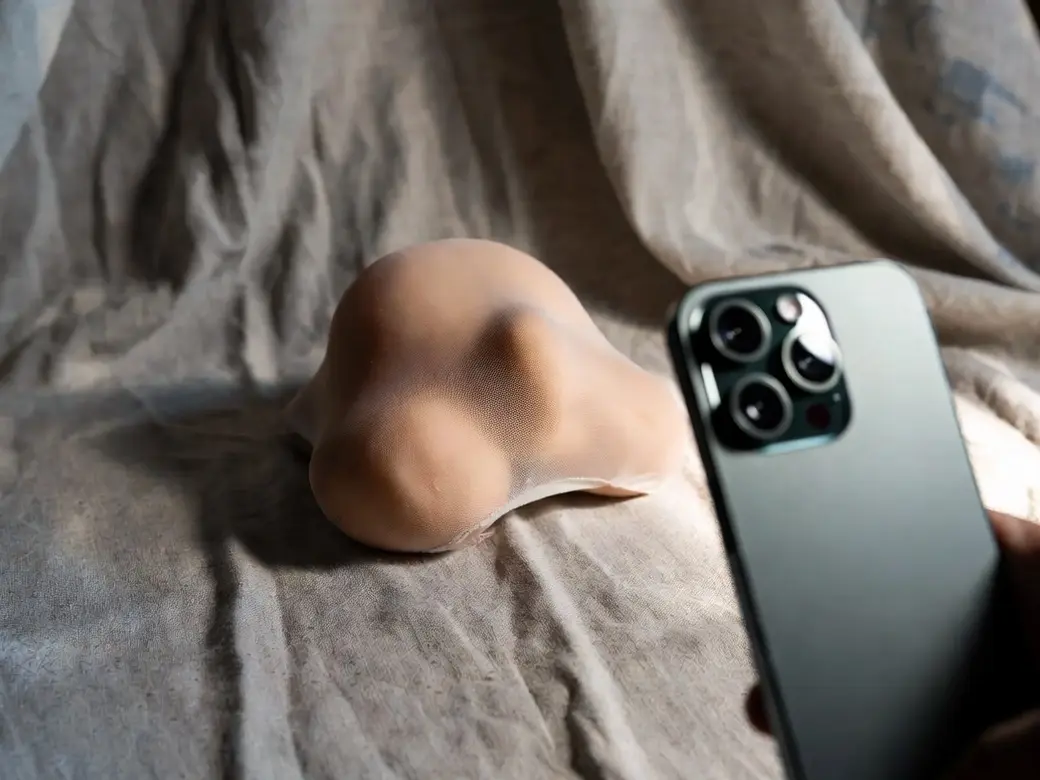
Take clear photographs and, if useful, a short video showing the movement. Record when you first noticed the change and whether it has grown. These details will help the seller or manufacturer assess the problem without requiring you to alter the product.
Can You Use a Dual-Density Dildo That Is Separating?
A dildo with confirmed or strongly suspected layer separation should not be evaluated only by whether it still holds its shape. The condition of the outer surface and the ability to clean the product reliably are also important.
A small wrinkle that has always been present and does not move, grow or affect the surface may simply be part of the construction. In contrast, a new hollow pocket, expanding bubble or freely shifting exterior suggests that the relationship between the layers has changed.
Stop using the dildo and contact the seller or manufacturer if:
- The outer layer moves independently from the core
- A bubble or hollow section is growing
- The surface is becoming thin above the affected area
- A crack, opening or tear has developed
- Liquid or unexplained residue appears between the layers
- The dildo has changed shape suddenly
- The separation affects its base or stability
- The material has also become sticky, swollen or flaky
- Cleaning solution or water may be entering beneath the surface
- A mechanical component no longer operates normally
Once an opening forms between layers, moisture and residue may enter areas that cannot be inspected or cleaned effectively. Continuing to use the product can also make a small damaged section larger.
If the feature was present from the beginning and you are unsure whether it is intentional, photograph it and ask the manufacturer. A product-specific answer is more reliable than assuming that all dual-density designs should look or move alike.
Can a Separating Dual-Density Dildo Be Repaired?
Home repair is generally not a dependable solution for layer separation. The issue is located between materials, while most household repair methods address only the visible exterior.
Even if an adhesive appears to hold the surface temporarily, it may not restore the original bond across the affected area. The repair can also create a raised seam, rigid spot or difficult-to-clean edge.
Do Not Inject Glue Beneath the Outer Layer
Injecting glue requires puncturing or enlarging the surface. This creates an additional opening and introduces a substance that may not be compatible with the dildo’s materials.
The adhesive may cure unevenly, remain liquid in some areas or produce a hard lump beneath the soft exterior. It may also spread farther than expected.
Do Not Seal the Area With Household Adhesive
Super glue, craft glue, silicone sealant and general-purpose repair products are not substitutes for the original manufacturing process. A repair that looks closed may reopen when the dildo bends or stretches.
An uneven seal can trap moisture and residue. Unless the manufacturer provides a product-specific repair method, replacement is usually more practical.
Do Not Use Heat to Rebond the Layers
Hair dryers, heat guns, boiling water and heated tools can worsen distortion or damage other parts of the dildo. Heat may soften the outer layer without reconnecting it to the core.
A powered model may contain batteries, wiring, adhesives or internal mechanisms that should not be heated.
Do Not Cut Away the Bubble
Removing a raised section exposes the material beneath it and permanently breaks the outer surface. It also makes a warranty assessment more difficult because the original condition has been altered.
Photograph the defect without cutting, puncturing or peeling it.
When Is Replacement Recommended?
Replacement should be considered when separation is confirmed, progressing or affecting the product’s integrity. The following signs are especially important:
| Condition | Recommended Response |
|---|---|
| Stable wrinkle present since purchase | Compare with product photos and ask the seller if uncertain |
| Small bubble on a new, unused product | Photograph it and contact the seller |
| Outer layer slides over the core | Stop use and request an assessment |
| Bubble grows between inspections | Discontinue use and consider replacement |
| Surface becomes thin or stretched | Replace rather than attempting a repair |
| Tear or opening exposes the inner layer | Stop using the product |
| Moisture enters between the layers | Replace because complete cleaning may not be possible |
| Separation affects the base | Do not rely on it for suction or harness stability |
| Sticky, swollen or peeling material | Replace and review possible compatibility problems |
| Powered function is affected | Stop charging or operating it and contact the manufacturer |
A product does not need to fall apart completely before replacement becomes reasonable. Progressive separation usually becomes more difficult to manage once the surface has started tearing.
How to Document the Problem for a Warranty Claim
Good documentation helps a seller distinguish a possible defect from ordinary flexibility.
Collect the following information before contacting customer service:
- Your order number
- Product name and model
- Purchase and delivery dates
- Material stated on the packaging
- Date the issue was first noticed
- Whether the product was used
- Cleaning and storage methods
- Lubricant used, if relevant
- Clear photographs of the affected area
- A short video showing independent layer movement
Take one photograph of the full product and several close-ups from different angles. If the size of the bubble matters, place a ruler beside it without pressing against the material.
Describe what you observe without overstating the cause. For example:
The soft outer layer on one side of the shaft appears to have separated from the firmer interior. The raised area feels hollow and moves when light pressure is applied. It was first noticed after the second cleaning and has become larger over three days. I have attached photographs and a short video.
Keep the product, original packaging and labels until the claim is resolved. Follow the seller’s instructions rather than mailing an opened product without authorization.
Read the store’s product warranty and damaged-item policy to understand reporting deadlines and the evidence required.
How to Reduce Stress on a Dual-Density Dildo
Layer separation cannot always be prevented, particularly when bonding was incomplete during manufacturing. Careful handling can nevertheless reduce avoidable stress.
Store It in a Natural Position
Use a container or compartment large enough for the dildo to rest without being folded sharply. Avoid placing heavy products on top of it.
Keep the base flat when possible and ensure that drawer edges or storage-box lids do not press into the shaft.
Avoid Pulling on the Soft Exterior
Lift and handle the product by supporting its overall weight. Do not carry a heavy dual-density dildo by pinching a thin section of the outer layer.
When removing a suction cup, release the edge of the seal instead of pulling forcefully on the shaft.
Use Compatible Lubricants and Cleaners
Check the manufacturer’s instructions before selecting a lubricant or cleaner. If you are uncertain about compatibility, ask the manufacturer or test a small exterior area before broader use.
Rinse away cleaning residue and let the dildo dry completely before storage.
Use the Correct Harness Fit
A tight O-ring can compress the shaft or pull unevenly against the base. A loose ring may allow excessive movement.
If the dildo is harness-compatible, match the harness opening to the product’s usable base and shaft dimensions. Do not force a thick dual-density shaft through a ring that is too small.
Inspect It Periodically
A quick inspection after cleaning can identify change before it becomes extensive. Pay particular attention to the base, narrow sections and any point that bends repeatedly.
Compare suspected changes with earlier photographs if available.
Choosing a Replacement Dual-Density Dildo
When buying another model, do not rely only on claims such as “real feel” or “ultra soft.” Look for practical construction information.
Useful product details include:
- Clearly stated materials
- Outer-layer firmness
- Core firmness
- Base dimensions
- Overall and insertable length
- Product weight
- Harness compatibility
- Cleaning instructions
- Lubricant compatibility
- Warranty coverage
- Seller photographs showing the actual construction
Customer reviews can be useful when several buyers mention the same bubble, loose exterior or separation point. However, distinguish construction complaints from comments describing normal softness or wrinkling.
Compare the product’s design with our dual-density vs. solid silicone dildo guide if durability and easier inspection matter more to you than having a very soft exterior.
Frequently Asked Questions
Should the Outer Layer of a Dual-Density Dildo Move?
A small amount of compression or surface movement may be part of a soft dual-density design. The outer layer should not normally form a growing hollow pocket or slide freely around the core.
Are Wrinkles a Sign of Layer Separation?
Not always. Temporary wrinkles can appear when a soft shaft is bent or squeezed. Wrinkles are more concerning when they are new, permanent, localized or accompanied by an empty-feeling area beneath the surface.
What Does Delamination Feel Like?
Possible delamination may feel like a loose skin, movable bubble or hollow pocket over a firmer internal structure. Because construction varies, ask the manufacturer if you cannot determine whether the movement is intentional.
Can Water Get Between the Layers?
Water or cleaning solution may enter if the outer layer develops a tear, puncture or open seam. If liquid becomes trapped beneath the surface, stop using the dildo and consider replacement.
Can I Use Silicone Adhesive to Repair It?
A household adhesive cannot reliably recreate the original manufacturing bond and may introduce incompatible or difficult-to-clean material. Do not attempt a repair unless the manufacturer provides specific instructions.
Does Layer Separation Mean the Product Is Poor Quality?
Separation can be associated with a manufacturing defect, but it may also follow heat exposure, incompatible products, repeated sharp bending or material deterioration. The product’s history and overall condition should be considered.
Is a Bubble Inside a Translucent Dildo Always Dangerous?
No. A stable internal feature may be cosmetic or part of the construction. A bubble that moves, grows, weakens the surface or appears together with a tear requires more attention.
Should I Return a New Dildo With a Loose Outer Layer?
Document the condition and contact the seller before use. A clearly loose or independently moving layer on a new product may qualify for replacement under the store’s damaged-item or warranty policy.
Final Thoughts
Dual-density dildos naturally contain areas of different firmness, so softness, compression and temporary wrinkling do not automatically mean that the layers are separating. The more important warning signs are growing bubbles, hollow pockets, independent movement, surface thinning and openings between layers.
Inspect the product gently and avoid cutting, heating or injecting adhesive into the affected area. If the separation progresses or makes complete cleaning uncertain, replacement is more dependable than a home repair.
Explore our dual-density dildo buying guides to compare firmness, construction, size and base design before choosing your next model.