

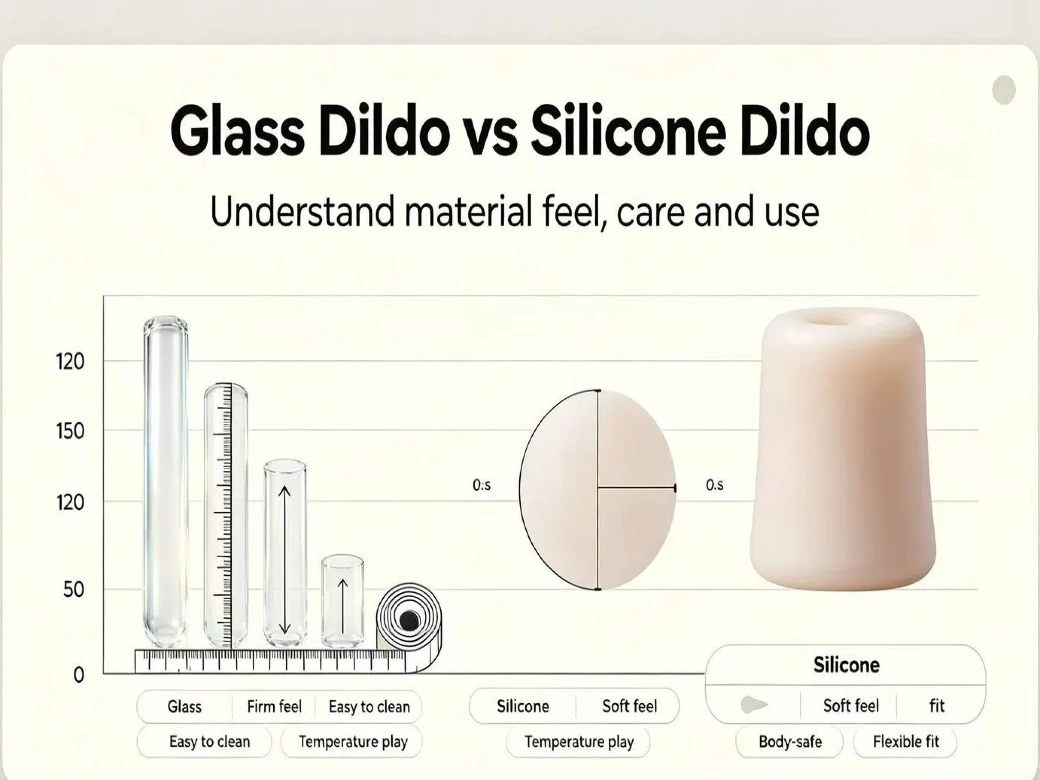
Quick Answer
Glass and silicone dildos each offer unique advantages, but they appeal to different types of users. Silicone dildos are generally the best choice for most people because they’re flexible, lightweight, and comfortable for everyday use. Glass dildos, on the other hand, are completely rigid, exceptionally smooth, and ideal for users who enjoy precise pressure or temperature play.
Neither material is objectively better. The right choice depends on your experience level, preferred sensation, and how you plan to use the toy.
Why This Comparison Matters
Many shoppers assume the biggest difference between glass and silicone is simply softness.
In reality, these two materials create completely different experiences.
Material affects:
- Firmness
- Weight
- Surface texture
- Cleaning routine
- Durability
- Temperature response
- Overall sensation
Understanding these differences before purchasing makes it much easier to choose a toy you’ll genuinely enjoy rather than one that simply looks attractive online.
What Makes Silicone So Popular?
Medical-grade silicone has become the industry standard for premium sex toys.
Its popularity comes from one simple fact:
It balances comfort, safety, and practicality better than almost any other material.
Silicone is naturally flexible without feeling unstable. It compresses slightly during use, making it comfortable for a wide range of experience levels while still providing enough firmness for controlled movement.
Because it’s non-porous, silicone is also easy to clean and suitable for frequent use when cared for properly.
Advantages of Silicone Dildos
Silicone remains our recommendation for most buyers because it offers:
- Body-safe, non-porous construction
- Comfortable flexibility
- Wide range of firmness options
- Easy maintenance
- Excellent durability
- Compatibility with suction cup designs
- Availability in realistic, fantasy, and dual-density models
For first-time buyers, silicone provides one of the easiest introductions to penetrative toys.
What Makes Glass Different?
Glass dildos are unlike any other category.
Although many people assume they’re fragile, quality borosilicate glass is surprisingly durable when manufactured specifically for adult products.
Instead of flexibility, glass offers complete rigidity.
This creates highly precise pressure and allows every curve and contour of the toy to be felt clearly during movement.
The polished surface also produces remarkably low friction when paired with a suitable lubricant.
Advantages of Glass Dildos
Glass dildos provide several characteristics that silicone simply cannot reproduce.
These include:
- Perfectly smooth surface
- Completely non-porous material
- Exceptional durability when properly cared for
- Easy cleaning
- Elegant appearance
- Excellent temperature responsiveness
Because glass transfers heat and cold efficiently, many users also enjoy incorporating temperature variation into their experience by warming or cooling the toy before use according to the manufacturer’s recommendations.
Which Material Feels Better?
This is the question most buyers really want answered.
The truth is that “better” depends entirely on what kind of sensation you’re looking for.
Silicone
Silicone offers a softer, more forgiving feel.
Its slight flexibility reduces pressure during movement, making it particularly comfortable for beginners and anyone who enjoys longer sessions.
Premium dual-density silicone adds another level of realism by combining a firm internal core with a soft outer layer.
Glass
Glass provides a completely different sensation.
Because the material doesn’t compress, every movement feels more direct and more precise.
Some experienced users appreciate this consistency, while others prefer the softer feel of silicone.
Neither is objectively superior—they simply create different experiences.
Surface Feel
The surface texture is another major difference.
Silicone generally has a soft, slightly grippy finish that helps keep the toy secure during use.
Glass is perfectly smooth.
This polished finish allows effortless movement when sufficient lubricant is used, making glass especially appealing to users who enjoy an exceptionally sleek sensation.
Editor’s Insight
One misconception we hear frequently is that glass is “only for experienced users.”
That isn’t necessarily true.
What matters isn’t your experience level—it’s your preference for firmness.
Some beginners actually enjoy the predictable, smooth surface of glass because it glides so easily. Others immediately prefer the forgiving flexibility of silicone.
Rather than thinking about which material is more advanced, think about which type of sensation sounds more enjoyable to you. That’s usually a much better guide than your level of experience.
Temperature Play: A Feature Unique to Glass
One of the biggest advantages of glass dildos is their ability to retain temperature.
Unlike silicone, which quickly adjusts to body temperature, borosilicate glass can be gently warmed or cooled before use, allowing you to explore different sensations without changing the shape or firmness of the toy.
For example:
- Warming the toy in warm (not boiling) water can create a soothing, more natural sensation.
- Cooling it in cool water or the refrigerator can provide a refreshing contrast that some users enjoy.
Always test the temperature against the inside of your wrist before use. The toy should feel pleasantly warm or cool—never uncomfortably hot or extremely cold.
Temperature play is entirely optional, but it’s one of the reasons many experienced users keep at least one glass dildo in their collection.
Weight and Control
Glass and silicone also feel very different because of their weight.
Silicone
Silicone is relatively lightweight, making it easy to handle during longer sessions. Its lower weight also makes it a popular choice for suction cup dildos and harness-compatible designs, where flexibility and reduced fatigue are important.
For many users, the lighter feel contributes to a more relaxed, comfortable experience.
Glass
Glass is noticeably heavier.
Rather than being a disadvantage, this added weight creates a different style of stimulation. Some users appreciate how the toy naturally applies gentle pressure without requiring as much manual force.
The additional weight also gives many glass dildos a premium, substantial feel that distinguishes them from softer materials.
However, because glass is rigid and heavier, slower, more controlled movements are generally recommended.
Cleaning and Maintenance
Both materials are among the easiest to maintain, but there are a few differences worth noting.
Silicone
Routine care is simple:
- Wash with warm water and mild, fragrance-free soap or a toy cleaner.
- Rinse thoroughly.
- Dry completely before storage.
- Store separately whenever possible.
Silicone’s non-porous surface makes it an excellent choice for frequent use.
Glass
Glass is equally easy to clean thanks to its perfectly smooth, non-porous surface.
After use:
- Wash with warm water and mild soap.
- Rinse thoroughly.
- Dry with a clean, lint-free towel.
- Store in a protective pouch to help prevent accidental scratches or impacts.
Before each use, inspect the glass dildos carefully for chips, cracks, or other signs of damage. If any damage is present, discontinue use and replace the toy.
Price vs. Long-Term Value
Price is another area where these materials often differ.
Silicone
Silicone dildos are available across almost every price range.
Entry-level models remain affordable, while premium dual-density silicone products typically cost more because of their advanced manufacturing and realistic construction.
This wide selection makes silicone suitable for virtually every budget.
Glass
Quality glass dildos often fall into the mid-range or premium category.
Although the initial investment may be higher than some silicone models, borosilicate glass is exceptionally durable when properly cared for. Many users purchase a single high-quality glass dildo that remains part of their collection for years.
When evaluating value, think beyond the purchase price and consider durability, maintenance, and the type of experience each material provides.
Which Material Should You Choose?
Choosing between silicone and glass is less about finding a winner and more about matching the toy to your preferences.
Choose Silicone If You:
- Are buying your first dildo
- Prefer a softer feel
- Want a realistic design
- Plan to use a suction cup or harness
- Value flexibility and versatility
- Want the broadest selection of styles and sizes
Silicone is the material we recommend for the majority of users because it adapts well to almost every situation.
Choose Glass If You:
- Enjoy firm, precise pressure
- Prefer an ultra-smooth surface
- Want to experiment with temperature play
- Appreciate elegant, minimalist designs
- Value easy cleaning and long-term durability
Glass offers a unique experience that many users find difficult to replicate with softer materials.
Expert Buying Advice
After reviewing a wide variety of products in both categories, one recommendation consistently stands out:
Choose the experience—not the material.
If comfort, flexibility, and versatility are your priorities, silicone will probably become your everyday favorite.
If you’re curious about firmness, precision, and temperature play, a quality glass dildo can add something completely different to your collection.
Many experienced users eventually own both because they serve different purposes rather than competing with one another.
Editor’s Insight
A common assumption is that buying a glass dildo means “upgrading” from silicone.
We don’t see it that way.
Silicone and glass complement each other remarkably well. Silicone is often the dependable everyday choice, while glass offers a unique experience when you’re in the mood for something different.
Thinking of them as complementary rather than competing materials usually leads to much better purchasing decisions.
Common Buying Mistakes
Choosing between glass and silicone is easier once you understand what each material is designed to do. Most disappointment comes not from buying the “wrong” material, but from expecting one material to deliver an experience it’s not intended to provide.
Here are the mistakes we see most often.
Choosing Glass Because It Looks Premium
Glass dildos often have a beautiful, elegant appearance that immediately attracts attention.
However, appearance alone shouldn’t determine your purchase.
If you’re expecting a soft, flexible experience, glass is unlikely to meet those expectations. Its defining characteristic is rigidity, and that’s exactly why many experienced users enjoy it.
Choose glass because you want the unique sensation it offers—not simply because it looks luxurious.
Assuming Silicone Is Always Soft
Not every silicone dildo feels the same.
Medical-grade silicone is available in a wide range of firmness levels, from very soft to noticeably firm.
Two silicone dildos can look almost identical in product photos while feeling completely different during use.
Whenever possible, pay attention to the manufacturer’s description of firmness rather than judging solely by appearance.
Ignoring Weight
Weight changes how a toy feels just as much as material.
A lightweight silicone dildo is often easier to maneuver during longer sessions.
A heavier glass dildo provides more natural pressure but also requires slower, more controlled movement.
Considering weight before purchasing often leads to a better match for your personal preferences.
Buying Without Considering Cleaning
Fortunately, both silicone and glass are among the easiest materials to maintain.
However, they still require proper care.
Clean your toy after every use, allow it to dry completely, and store it in a clean storage pouch. For glass toys, inspect the surface regularly for chips or cracks before each use.
Good maintenance protects both the material and your long-term investment.
Frequently Asked Questions
Are glass dildos safe?
Yes—when they’re manufactured specifically for adult use from high-quality materials such as borosilicate glass.
Before every use, inspect the toy carefully. If you notice chips, cracks, or other damage, stop using it and replace the toy.
Which material is better for beginners?
For most beginners, silicone is the easier starting point.
Its slight flexibility, lighter weight, and wide range of sizes make it comfortable for many first-time users.
That said, beginners who specifically prefer a firm, smooth toy may also enjoy a well-designed glass dildo.
Which material is easier to clean?
Both materials are non-porous and very easy to maintain.
Warm water, mild fragrance-free soap, or a dedicated toy cleaner are usually all that’s needed for routine cleaning.
The biggest difference isn’t cleanliness—it’s the overall feel during use.
Can I use the same lubricant with both materials?
Water-based lubricant works well with both silicone and glass, making it the easiest universal option.
If you’re considering a silicone-based lubricant with a silicone toy, always follow the manufacturer’s compatibility guidance.
Which material lasts longer?
With proper care, both materials can provide many years of reliable use.
Silicone resists everyday wear extremely well, while borosilicate glass is highly durable under normal conditions. Regardless of material, regular inspection and proper storage are key to maximizing lifespan.
Do glass dildos break easily?
Quality borosilicate glass is much stronger than ordinary household glass, but it isn’t indestructible.
Avoid dropping it onto hard surfaces and always store it in a protective pouch or case when not in use.
Editor’s Recommendation
If you’re buying your first dildo, we recommend starting with a high-quality medical-grade silicone model.
It offers the broadest range of sizes, firmness levels, and designs while remaining comfortable, versatile, and easy to maintain. Silicone is also available with features such as suction cups, dual-density construction, and harness compatibility, making it an excellent long-term investment.
If you already own a silicone dildo and want to experience something different, a quality glass dildo is one of the most worthwhile additions you can make. Rather than replacing silicone, it expands your collection with sensations that no flexible material can fully replicate.
Many experienced users eventually own both because each excels in different situations.
Final Verdict
Glass and silicone are two of the highest-quality materials available for modern dildos, but they serve different purposes.
If your priorities are comfort, versatility, realistic designs, and everyday use, silicone remains the best overall choice. Its flexibility, body-safe construction, and wide availability make it suitable for almost every experience level.
If your priorities are precision, smoothness, firmness, and temperature play, glass offers a unique experience that silicone simply cannot reproduce. Its elegant design, non-porous surface, and exceptional durability have made it a favorite among users looking to broaden their collection.
The best decision isn’t choosing one material over the other—it’s understanding what each does well. Once you know the strengths of silicone and glass, selecting the right dildo becomes much less about trends and much more about finding the experience that suits you best.