
“Accessible” is not one feature or one body type. A dildo that is easy to use for someone with limited grip may still be difficult to position, lift, or control for someone else. Start with the specific task you want help with—holding, reaching controls, supporting the dildo’s weight, or keeping it in position—then compare designs against that task.
This guide is a practical shopping framework, not a claim that one design works for every disability or mobility need. If you use an assistive device or have a personal safety concern related to sensation, movement, or pain, adapt the setup to your own comfort and any guidance from a clinician who knows your situation.
Begin with a task-by-task needs check
Before comparing product names, write down what you want to make easier. A short checklist can keep the search focused and help you ask better questions of a seller.
| Task | Features to compare | Details to verify |
|---|---|---|
| Hold and guide | Broad handle, loop, strap-compatible grip, textured but comfortable surface | Grip circumference, loop size, and whether an accessory is included or sold separately |
| Lift or reposition | Lower overall weight, balanced shape, shorter length, stable storage position | Actual listed weight and whether it applies to the selected size |
| Reach controls | Large or spaced buttons, simple control sequence, wired or wireless remote | Button placement, press force if available, remote setup, and whether a phone is required |
| Reduce continuous holding | Suction-cup base, compatible mount, harness or holder | Surface requirements, base dimensions, attachment compatibility, and safe positioning |
The best match may be a combination rather than a single special feature. A lightweight dildo can still be awkward if its grip is narrow; a hands-free base can reduce holding but may not solve reach or control issues.
Grip: look beyond “easy to hold”
Product pages often use “ergonomic” or “comfortable grip” without giving measurements. Look for the part you would actually hold and ask whether its shape suits your hand, grip range, and movement. A broader handle can distribute pressure differently from a slim shaft. A loop or strap may help keep the dildo in place, but only if it fits your hand or chosen aid and does not restrict circulation or cause discomfort.
- Handle shape: check whether the base or handle has a distinct grasping area, rather than relying on the shaft alone.
- Grip circumference: ask for a measurement if a thicker or thinner handle would make a meaningful difference.
- Surface texture: gentle texture may improve hold, while pronounced ridges can be uncomfortable for some users.
- Hand strap or loop: verify its opening size, adjustment range, material, and whether it is removable for cleaning.
- One-handed setup: consider whether the dildo can be placed, adjusted, and controlled with the hand or movement you plan to use.
Some people adapt an existing grip aid or strap, but do not attach a rigid accessory in a way that can pinch skin, trap a finger, or make the dildo difficult to release. Check the fit while stationary and make adjustments before use.
Weight and balance: compare more than the number
Weight can affect lifting, steadying, and repositioning. Balance matters too: a dildo with more mass toward the tip can feel different to control from one whose weight sits near the hand, even if the listed weights are similar. Product listings may show weight for only one size or color, so match the specification to the exact variant.
If lifting is tiring, compare lighter designs and consider whether a shorter dildo would meet your preferences. A support pillow, holder, or mount may reduce how much of the weight you need to carry, but it can introduce setup steps or a different reach angle. Our guide to how dildo weight affects control and stability explains why weight and leverage should be considered together.
Check weight in the intended position
A product’s listed weight is only one clue. Think about where the base will rest, how far the dildo extends from the support point, and whether you need to hold it at an angle. If the manufacturer does not publish weight or balance information, request it rather than guessing from a photo.
Controls: make the operation predictable
For a vibrating dildo, controls can matter as much as grip. Small flush buttons may be hard to locate by touch; tightly grouped buttons can be difficult to distinguish; and a long-press command may be easy to forget. Look for product images that show button placement and instructions that explain the control sequence clearly.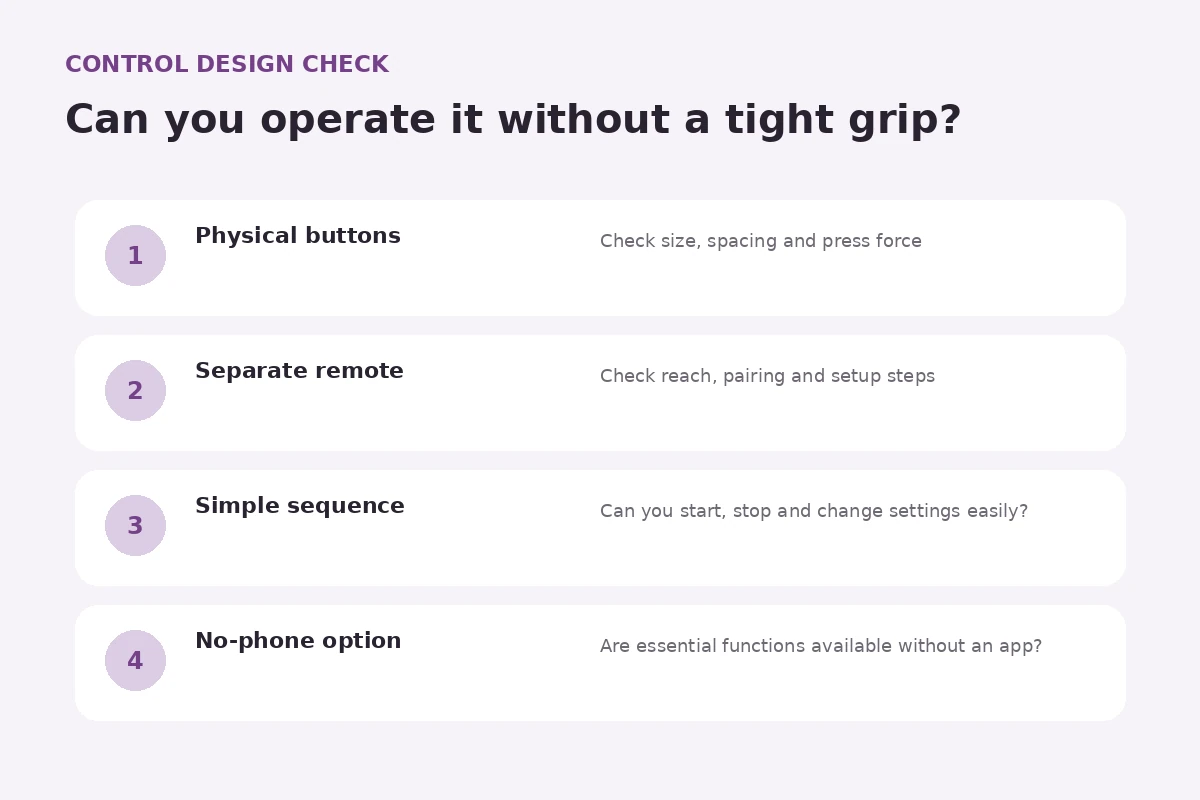
- Button size and spacing: can you identify the control you want without needing a precise pinch?
- Feedback: do buttons click, light up, or otherwise confirm an input? Check whether the feedback is visible, audible, or tactile.
- Control sequence: can you start, stop, and change settings without cycling through many modes?
- Remote access: does the remote have larger controls, a usable strap, or a simple interface?
- App dependency: determine whether essential functions work without a phone, account, or repeated pairing.
Do not assume an app is automatically easier than physical controls. Phone reach, screen visibility, connectivity, and app setup all affect access. A remote may help if it can be positioned within reach, while a simple on-device control may be preferable for someone who wants fewer setup steps.
Hands-free options: match the mount to the surface and setup
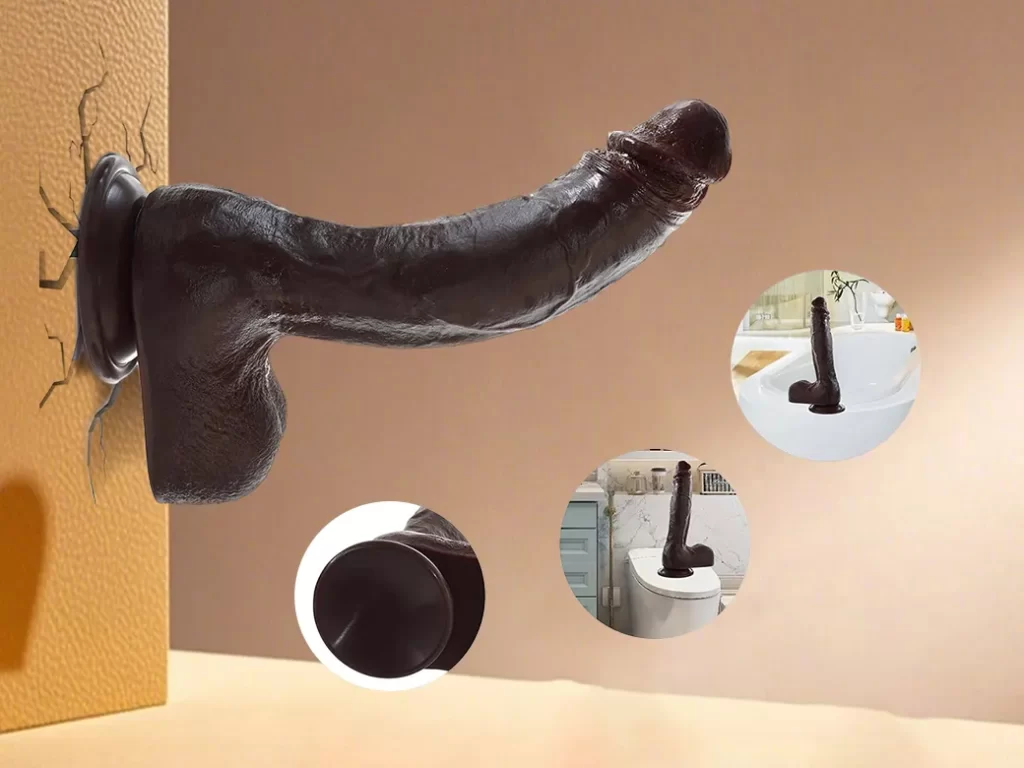
Hands-free can mean several things: a suction-cup base on a smooth surface, a harness, a pillow or holder, or a purpose-made mount. Each reduces a different kind of effort. A suction cup may secure a dildo to an appropriate smooth, nonporous surface; a harness may transfer support to the body; a holder may keep it in position without requiring a continuous grip.
| Option | May help with | Check first |
|---|---|---|
| Suction-cup base | Reducing the need to hold the base continuously | Surface compatibility, clean and dry contact area, base size, and how easily it releases |
| Harness | Keeping the dildo attached to a wearable setup | Base compatibility, strap adjustment, fastening steps, and whether you can put it on independently |
| Pillow or holder | Supporting weight or maintaining a chosen angle | Stability, reach, cleanability, and whether the mount can shift during movement |
| Hand strap or grip aid | Reducing the force needed to keep hold | Fit, quick release, pressure points, and compatibility with the dildo’s shape |
“Hands-free” does not mean setup-free or universally stable. Check whether you can attach, adjust, and remove the mount comfortably. If you want to explore a suction-cup design, browse the suction-cup dildo collection and confirm the base dimensions and surface requirements on each listing.
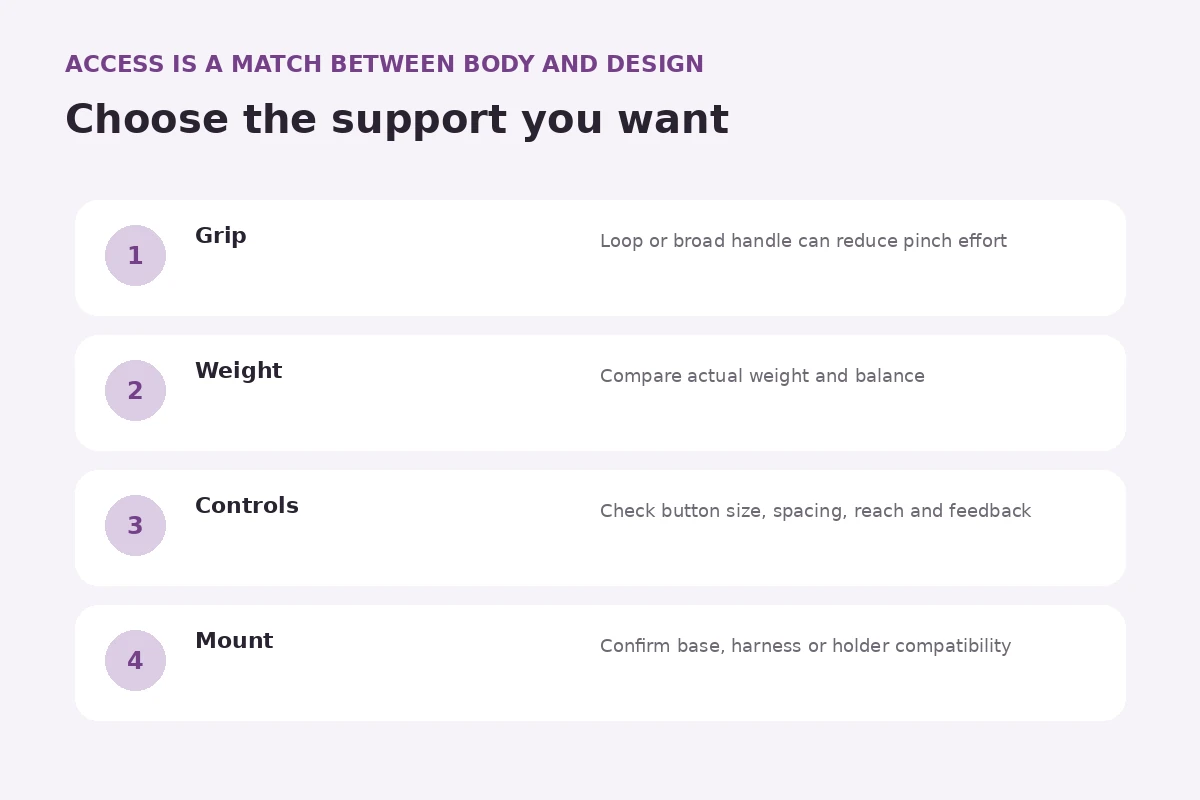
Use this four-step product-page check
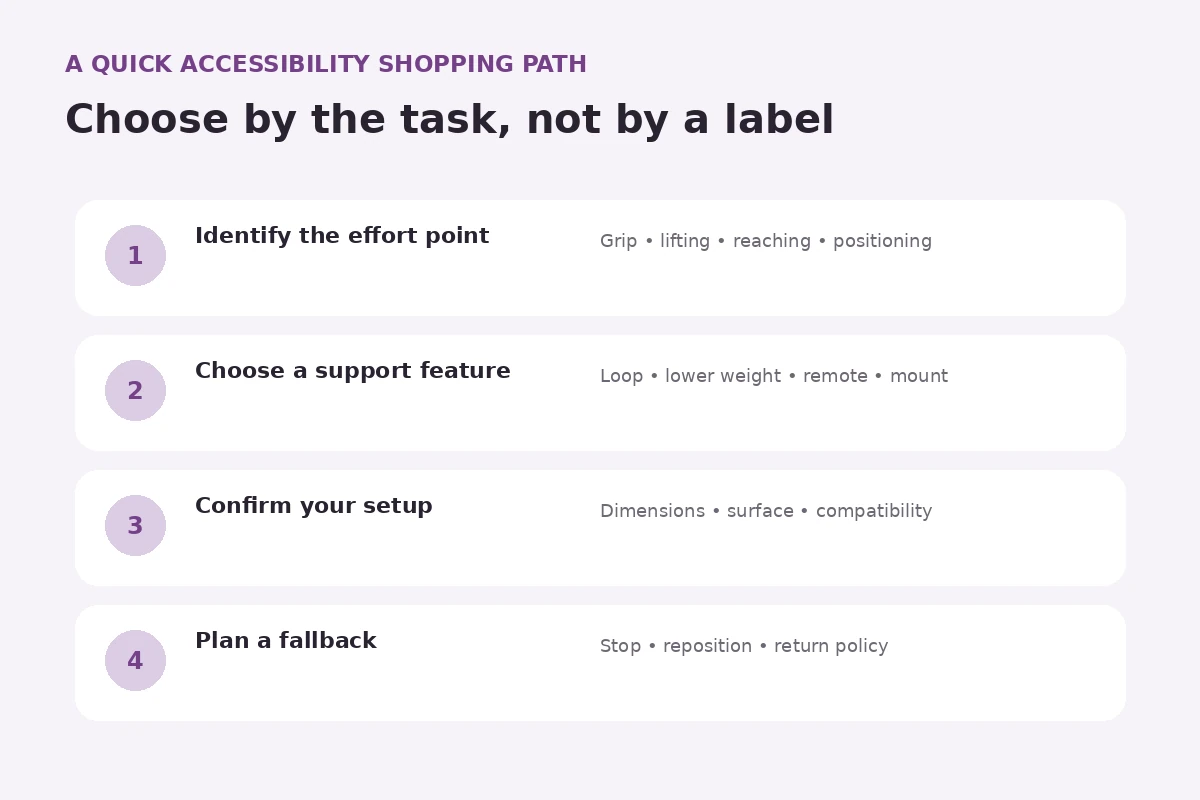
- Identify the effort point. Is the main challenge gripping, lifting, reaching controls, positioning, or maintaining a hold?
- Choose a feature that addresses it. Compare a loop, broad handle, lighter weight, remote, harness, suction base, or holder.
- Confirm fit and operation. Check dimensions, control layout, attachment compatibility, cleaning, and setup steps.
- Plan a fallback. Consider how to stop or reposition the dildo if a remote loses connection, a mount shifts, or a grip becomes tiring.
When product details are missing, send the seller a concise question: “Can you share the weight and handle circumference for this exact size? Are the controls usable without the app, and what mounts or harnesses fit its base?” Specific questions often get more useful answers than asking whether a dildo is simply “accessible.”
Comfort, sensation, and personal adaptation
Accessibility needs can change with fatigue, pain, medication, position, or the day. Build in time to adjust the setup, and choose a position where you can reach the controls or remove the dildo without strain. If sensation is reduced, avoid relying only on discomfort as a signal; consider shorter intervals, check the skin, and stop if you notice irritation or unexpected changes. This is general planning information, not a substitute for individual medical guidance.
Clinician resources on sexuality and neuromuscular conditions discuss adapting grip and control to individual function. The Holland Bloorview practical guide includes examples of grip and control adaptations. The United Spinal Association sexual aids resource also discusses adapted devices and hands-free options. These are starting points for ideas, not a one-size-fits-all prescription.
Questions to ask before choosing
- What is the weight of the exact size I plan to buy?
- What is the circumference of the handle or grip area?
- Can I operate the dildo without using an app?
- Does the base fit my harness, holder, or intended mounting surface?
- Can I attach and release the dildo with the hand or movement I plan to use?
- Are the cleaning and charging steps manageable for me?
- What is the return policy if the size, controls, or grip do not suit my needs?
For more comparison points, see our guides to why a dildo slips during use and how flexibility can affect control.
Frequently asked questions
What makes a dildo accessible?
There is no universal feature list. A useful design is one that supports the specific task you want to make easier, such as holding, lifting, operating controls, reaching, or mounting.
Is a lighter dildo always easier to use?
Not always. Lower weight may reduce lifting effort, but grip shape, balance, length, and positioning also affect control. Compare those details together.
Can a suction-cup dildo provide hands-free use?
It can reduce the need to hold the base when attached to a compatible surface, but stability depends on the surface, base design, and setup. Check the seller’s instructions and test the attachment before relying on it.
Are app-controlled dildos easier for limited hand mobility?
They may help some people by moving controls to a phone, but app setup, screen access, pairing, and reach can add steps. Check whether the dildo also has usable physical controls.
What if the listing does not provide grip or control details?
Ask the seller for exact measurements, weight, control instructions, and compatible mounts. If those details are unavailable, consider whether you can try the design or return it if it does not fit your needs.
Choose the feature that removes the most friction
There is no single “accessible dildo” that fits everyone. Begin with the movement or task you want to make easier, then judge the handle, weight, controls, and mounting options against that need. A clear measurement or setup answer is more useful than a broad accessibility claim—and the best choice is the one that gives you more control with less effort in your own setup.