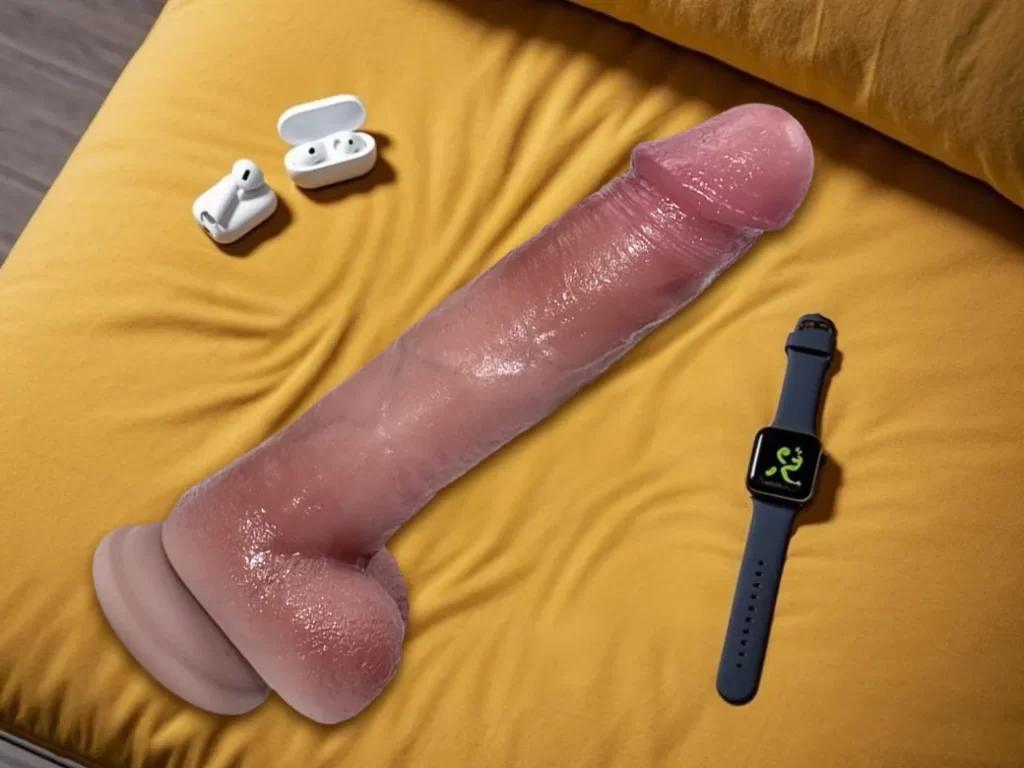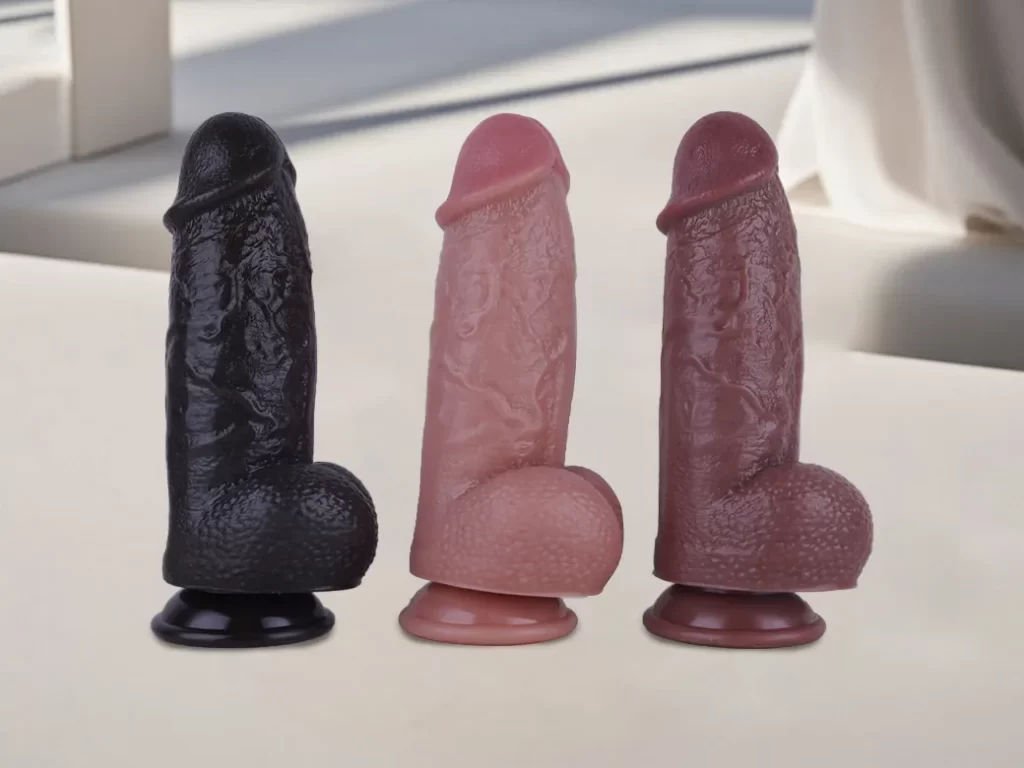

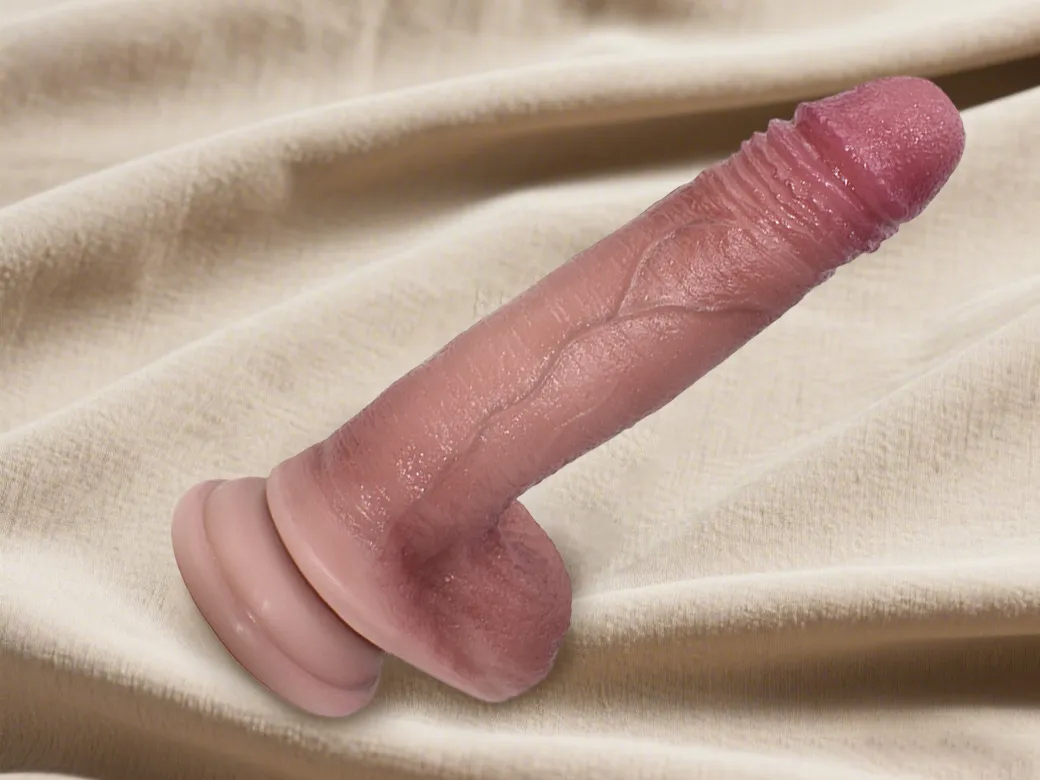
There Is No Single Factory Process
A silicone dildo may look simple once it is finished, but the route from design to finished shape can involve product modeling, mold making, material preparation, molding, curing, trimming, and inspection. The exact steps depend on the design, material, production volume, and whether the dildo contains more than one layer or has internal components.
Two silicone molding methods help explain why manufacturing can differ. Liquid silicone rubber (LSR) is often metered, mixed, and injected into a closed mold. High-consistency rubber (HCR) may be shaped through compression or transfer molding. Other materials, such as TPE or PVC blends, use different processing methods. A description of one factory’s process should not be treated as a description of every dildo.
In short: The mold creates the shape, the selected material and curing method form the body, and finishing and inspection help prepare the dildo for packing.

From Design Brief to Production Mold
1. The design is specified
Before a mold is made, a manufacturer needs a defined shape and set of design requirements. These may include overall and insertable length, diameter, curves, texture, base design, target firmness, color, and surface finish. A design intended to flex will have different requirements from one expected to hold a rigid shape.
The first version may be created as a digital model or physical master. Designers and manufacturers review the proportions and details before converting the design into production tooling. The number of samples and revisions varies; there is no universal number of prototypes required for every dildo.
2. The mold is prepared
The mold is a negative version of the intended shape: its cavity defines the outside profile of the dildo. Mold makers account for details such as texture, seams, parting lines, material flow, and how the finished piece will release from the mold.
A multi-part mold can leave a faint seam where its sections meet. That does not automatically mean a defect, but the finished seam should be consistent with the design and should not have a sharp or rough edge. Surface texture may also come from the mold itself rather than being added afterward.
Choosing and Preparing the Material
The material affects how the dildo feels, flexes, cleans, and ages. “Silicone” covers different formulations and constructions; a label alone does not tell you the exact recipe or prove that the finished dildo has undergone a particular test.
For silicone molding, the material may be supplied as a liquid two-part system or as a more dough-like compound, depending on the process. Color pigments or other formulation components may be incorporated before molding. Manufacturers need to use a formulation and process compatible with the intended design.
Some dildos use a single material throughout. Others have a softer outer layer around a firmer center, a support component, or an internal mechanism. These designs require additional manufacturing steps, such as overmolding or assembly. For an explanation of how different firmness levels affect feel, see our guide to choosing dildo firmness.
How Silicone Takes Shape
Once the mold and material are ready, the uncured silicone is shaped and cured. The molding method depends on the compound and production setup.
| Method | General process | What it means for the finished design |
|---|---|---|
| Liquid injection molding | A two-part liquid silicone is metered and mixed, injected into a closed mold, then cured with heat. | Can support repeatable production of detailed molded shapes; the specific result depends on the material, tooling, and process controls. |
| Compression molding | A measured portion of silicone compound is placed into a mold, which is closed under pressure and heat until the material cures. | Often used for silicone parts and simpler shapes; the mold layout and finishing affect seams and surface details. |
| Transfer molding | Silicone is pushed from a chamber into a closed mold under pressure, where it is shaped and cured. | Can be used for complex shapes or designs that require material to flow into a mold cavity. |
| Other material processes | Materials such as TPE or PVC blends follow processing routes suited to those materials. | Do not assume that a process or care instruction for silicone applies to a different material. |
Elkem describes LSR injection molding as injecting a two-part liquid into a closed mold before heating it to cure, and describes compression molding as shaping silicone between heated mold plates. These examples explain common silicone processes; they do not establish which method a particular brand uses. See Elkem’s overviews of LSR injection molding and HCR transfer and compression molding.
Curing, Demolding, and Finishing
3. The material cures in the mold
Curing changes the silicone from an uncured compound into a solid elastomer. In LSR processes, heat in the mold helps the material cure. Other silicone compounds and molding methods follow their own process conditions. Cure time and temperature are manufacturer-specific and should not be inferred from a product photo or general silicone guide.
Some formulations or designs may receive additional post-curing or conditioning steps. These steps vary by material and manufacturer, so there is no universal home method for “finishing” a dildo after purchase. If a new silicone dildo has an unusual sticky, oily, or unfinished surface, contact the seller and compare the issue with our guide to signs of silicone cure problems.
4. The molded piece is removed and finished
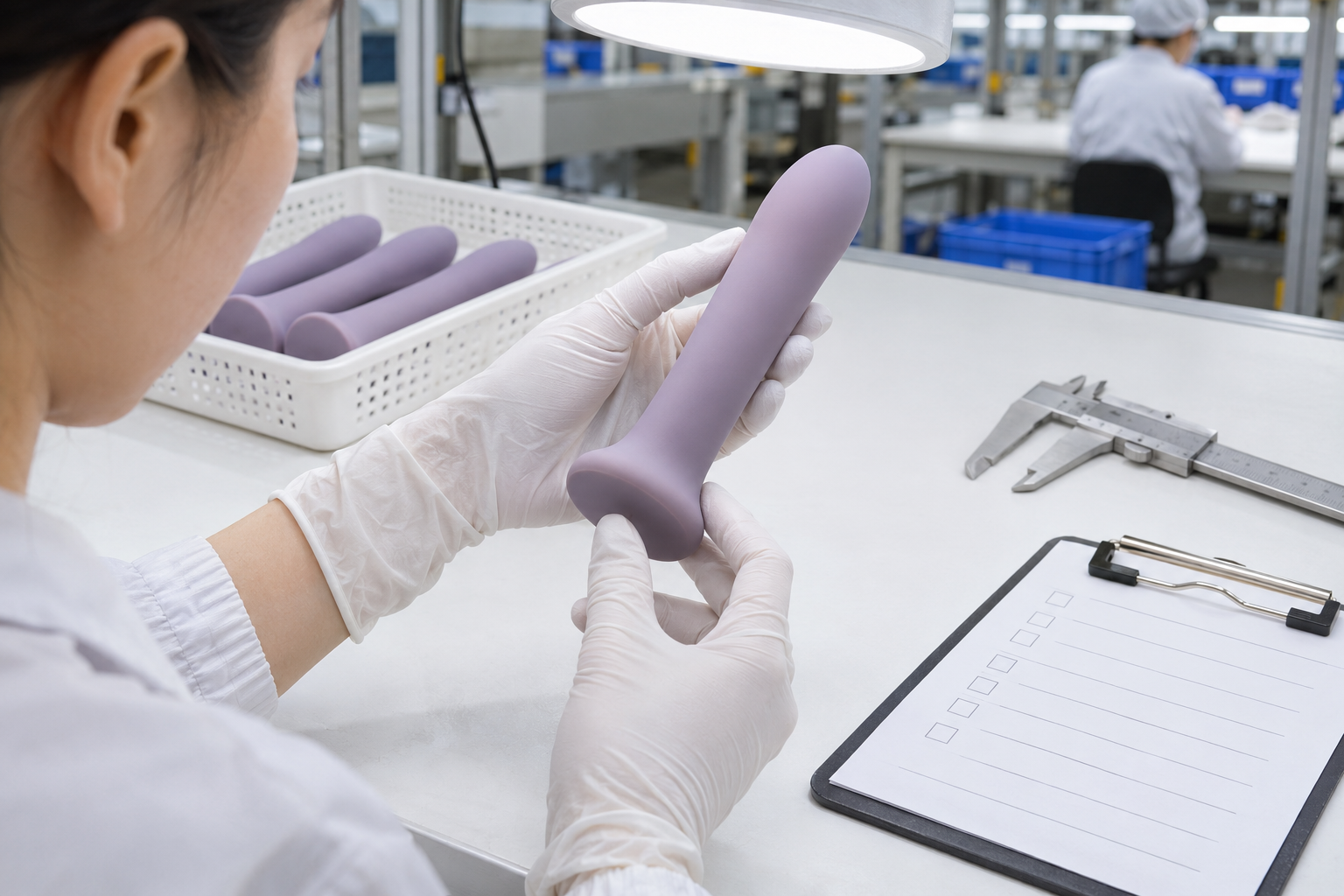
After curing, the mold opens and the molded piece is released. A thin line of extra material, often called flash, may form where mold sections meet. Depending on the design and process, manufacturers may trim or otherwise finish this excess material.
Finishing can include smoothing a mold seam, cleaning the surface, assembling separate components, or checking that a base and shaft meet as intended. A visible seam is not automatically a sign of poor quality; its location, feel, and consistency matter. A rough edge, opening, or separating layer is a different concern and should be reported.
Layered and Powered Dildos Need More Steps
A one-piece silicone dildo has a different manufacturing path from a dual-density design. To make a layered construction, a manufacturer must form and join the materials so the outer layer and firmer core remain connected. The exact sequence depends on the design and process.
Powered dildos require additional assembly for components such as motors, controls, batteries, and charging ports. Their outer shell, seals, and internal parts must be designed as a system. This is why a care instruction for a simple, non-powered silicone dildo may not apply to a rechargeable model.
Not every dildo contains a separate internal core. Some are made from one continuous material, while others have a support element or mechanism. Our guide to understanding possible internal core problems explains why construction details matter when a dildo changes shape or develops an unusual movement.
What Quality Checks May Look At
Manufacturers can inspect a finished dildo for visible surface issues, dimensions, color consistency, seams, base shape, and assembly. A maker may also use process records or tests tied to the material and intended design. The exact checks and acceptance criteria vary, and a general description of manufacturing cannot confirm that a specific product passed a specific test.
- Surface: Are there visible holes, tears, rough flashes, or areas that look different from the intended finish?
- Shape: Do length, diameter, curves, and base profile match the product specification?
- Construction: Are layers, seams, supports, or powered components seated as designed?
- Instructions: Does packaging identify the material and explain cleaning and storage for this model?
ISO 3533:2021 sets out safety and user-information requirements for manufactured products intended for direct contact with genitalia or the anus. Its existence does not mean every dildo has been certified to the standard. A shopper who sees an ISO claim can ask which model was assessed and what documentation supports the claim. See the official ISO 3533 listing.
What the Manufacturing Process Cannot Tell You From a Listing
A product page may describe a dildo as handmade, platinum-cured, body-safe, medical-grade, or carefully inspected. Those phrases do not all mean the same thing, and the manufacturing method alone does not verify them.
Useful product information identifies the body-contact material, explains any different outer layer or core, provides care instructions, and ties test or certification claims to the finished model. For a practical label checklist, read how to read dildo packaging and claims. For broader material guidance, see our article on what “body-safe” means.
Shopper’s note: A clean-looking surface or a detailed product page can be helpful, but neither reveals every material, assembly, or quality-control step inside the factory.
Frequently Asked Questions
Are all dildos made from silicone?
No. Dildos can be made from different materials, including silicone, TPE, PVC-based blends, glass, or metal. Each material has its own manufacturing and care requirements, so check the exact material listed for the model.
Are silicone dildos poured or injected into a mold?
It depends on the silicone compound and manufacturing setup. LSR can be injection molded, while other silicone compounds may be compression molded or processed using other methods. Do not assume one method applies to every silicone dildo.
Why does a dildo have a seam?
A seam can mark where parts of a mold meet or where separately made components join. A consistent, smooth seam may be part of the construction. A sharp edge, gap, or separation deserves closer attention.
Does “handmade” mean the whole process is done by hand?
Not necessarily. The term may refer to some stages, such as finishing or assembly, while molding and curing use machinery. Ask the manufacturer which steps are done by hand if that distinction matters to you.
Can I tell how a dildo was made by looking at it?
Usually not with certainty. A surface seam or product shape may offer clues, but it does not prove the exact molding process, material formulation, or quality checks. The manufacturer is the best source for model-specific details.
From Mold to Finished Shape
A dildo’s final feel and appearance reflect several linked decisions: the design, material, mold, molding method, cure, finishing, and construction. Understanding those stages helps explain why two dildos with similar shapes may behave differently—and why a broad material claim cannot answer every question. When a process detail matters, ask the maker about the exact model rather than assuming all dildos follow the same production route.