

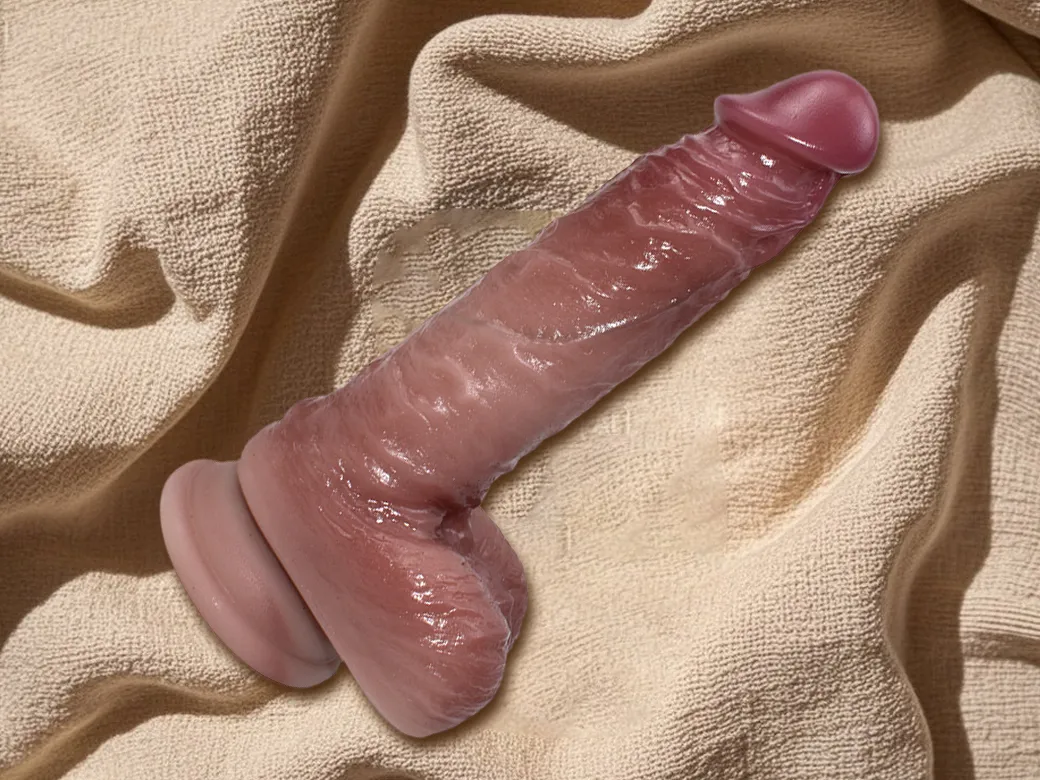
If your dildo keeps flopping down in a harness, the cause is usually one of three things: the harness is shifting, the dildo is moving inside its ring, or the shaft is bending under its own weight. Watch which part moves first; that tells you which adjustment is likely to help.
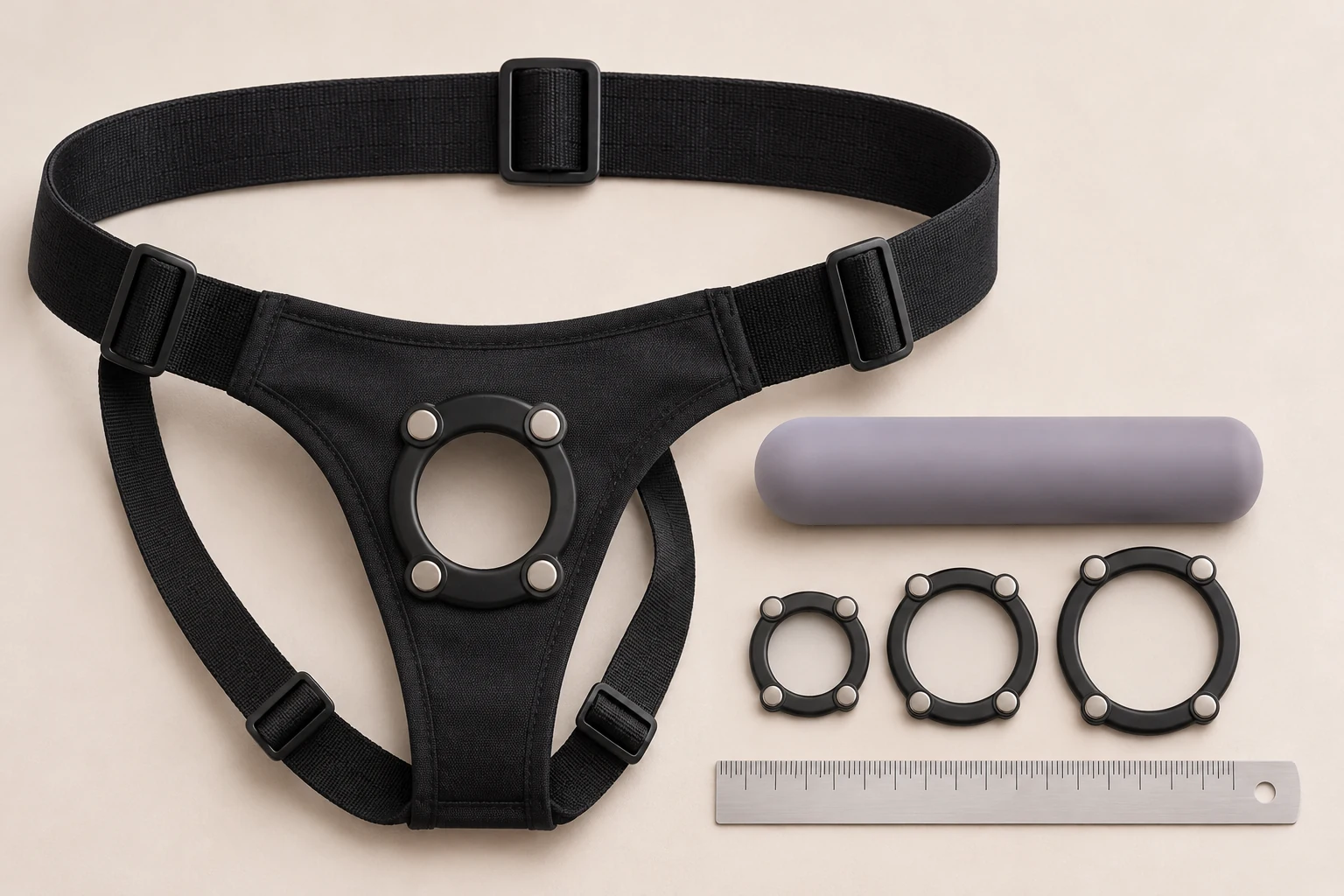
Diagnose where the movement starts
Pause and inspect the setup before tightening anything. With the harness off, check that the straps, stitching, ring, and any connector are intact. Then put it on and observe the front panel and dildo separately.
| What moves? | Likely cause | What to check |
|---|---|---|
| The harness panel and ring both slide down | Loose, uneven, or poorly positioned straps; the garment may not support the setup well | Re-center the panel and adjust each strap evenly. Check the fit while standing and moving gently. |
| The ring stays put, but the dildo pivots or slips in it | The ring opening and the dildo’s base area may not hold each other securely, or the parts may be incompatible | Check the maker’s sizing and compatibility guidance. Try a compatible ring size if the harness supports interchangeable rings. |
| The base is held, but the shaft droops | The shaft is flexible, or the dildo is long or heavy enough to create leverage | Consider a shorter, lighter, or firmer harness-compatible design. |
1. The harness itself is slipping
If the whole front panel moves, start with harness fit rather than the dildo. Put the panel in its intended position, make sure the straps are not twisted, and adjust both sides evenly. A snug fit should limit shifting without pinching, restricting movement, or making it hard to breathe. If the harness has adjustable leg or waist straps, check those as well as the main belt.
Some underwear-style harnesses rely on the garment’s cut and fabric tension for support. If the fabric stretches out or the size is wrong, tightening one strap may not solve the movement. Check the manufacturer’s fit instructions and whether the design is intended for the activity and position you have in mind.
2. The dildo is loose in the ring
On an O-ring harness, the ring should hold the dildo securely around the area specified by the manufacturer, while the dildo’s base or retention feature helps prevent it from passing through. If the shaft rocks freely in the ring, the opening may be too large for that particular dildo. If the dildo will not seat properly, the ring may be too small—or the two products may not be designed to work together.
Do not assume that every harness ring fits every dildo. Some harnesses use interchangeable rings, while others use a proprietary attachment. Follow both product makers’ compatibility guidance, and use only a correctly sized, undamaged ring. For more on a related fit issue, see our guide to why a dildo can slip out.
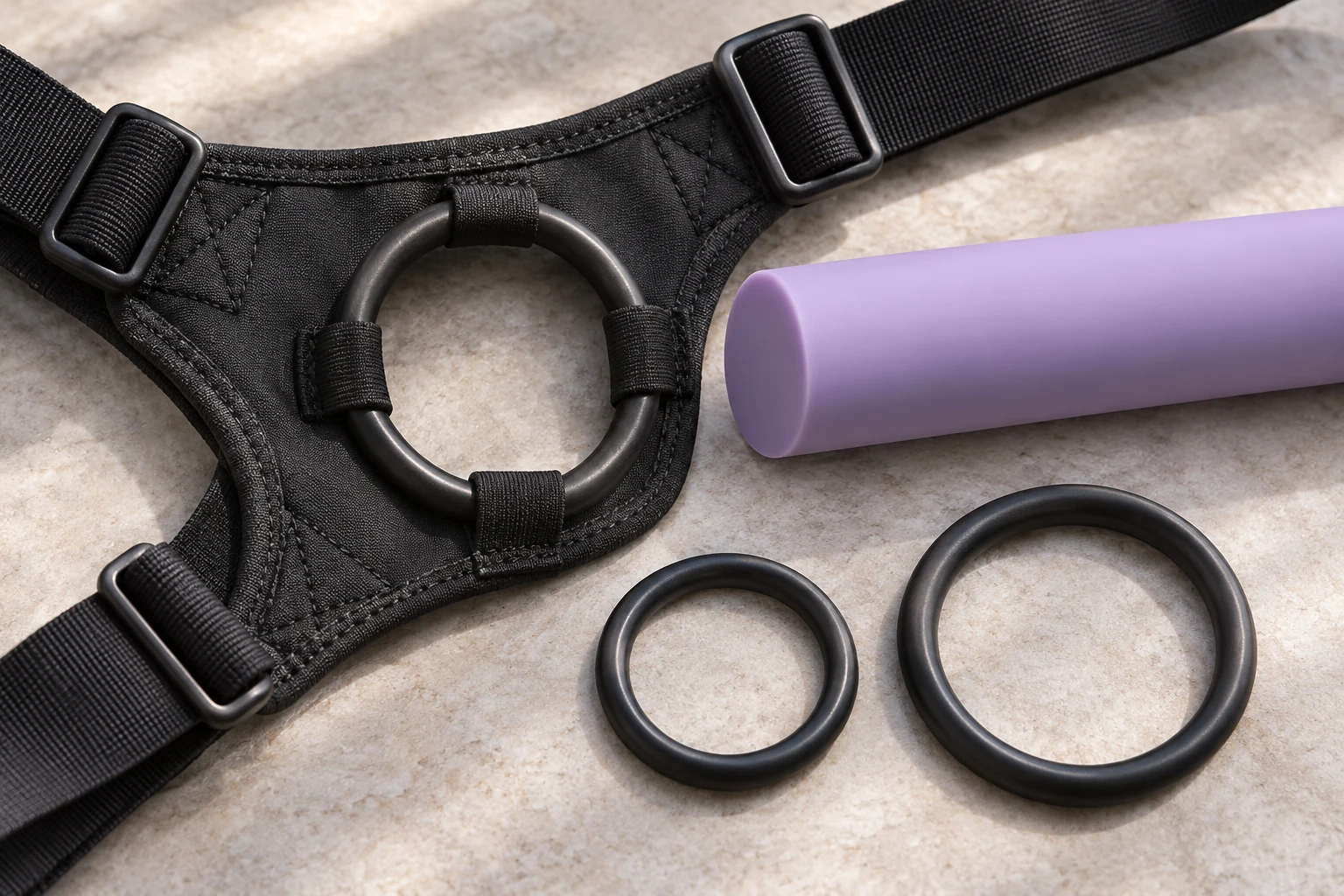
3. The shaft is bending under its own weight
If the harness and base stay in place but the shaft angles downward, the dildo may simply be too flexible for the support you want. A soft design can feel comfortable and bend easily, but that same flexibility may make it flop when suspended in a harness. A longer or heavier dildo can also increase leverage, making the bend more noticeable.
Try a shorter or lighter option, or choose a firmer model that is specifically compatible with your harness. Firmness labels vary between brands, so use product dimensions, material details, and reviews as clues rather than relying on a single word. Our guides to soft versus firm dildos and how dildo weight affects handling can help narrow the choice. If the dildo is unusually soft or folds during positioning, see what to know about a soft dildo that bends.
Check the base and attachment system
A harness-compatible dildo needs a base or connector designed to stay retained by that harness. Flared bases are common with O-ring styles, while some systems use a dedicated connector. Confirm that the base can be held securely and that the harness maker lists the dildo or attachment type as compatible. Scarleteen also notes that harness-compatible toys are designed with a flared base or a specific connection system; read its strap-on and sex toy guide.
For anal use, a secure flared base or purpose-built retention system is essential. If a base is damaged, cut, or does not stay captured by the harness, stop using that combination. Do not improvise with household shims, tape, or other loose pieces, and do not trim the base; those changes can make retention less predictable. See our guide to the risks of cutting or trimming a dildo base.
A quick setup checklist
- Confirm that the dildo and harness are designed to work together.
- Center the panel and adjust straps evenly so the harness stays in position without pinching.
- Check that the ring is the recommended size and is not stretched, cracked, or loose.
- Make sure the base or connector is properly seated and retained.
- If only the shaft droops, try a shorter, lighter, or firmer compatible dildo.
- Test the fit with gentle movement before use; stop if anything shifts, releases, or causes discomfort.
Frequently asked questions
Can I fix a drooping dildo by tightening the harness more?
Only if the harness itself is moving and the straps are meant to be adjusted. Excessive tightening will not correct a loose ring or a flexible shaft, and can cause discomfort. Adjust the component that is actually moving.
Will a smaller O-ring always stop the dildo from flopping?
No. A smaller ring may help if the dildo rocks inside an oversized ring and the ring is an approved interchangeable size. It will not solve a harness that slides or a shaft that bends, and an overly tight ring may prevent correct seating. Use the maker’s fit guidance.
Is a soft dildo unsuitable for a harness?
Not necessarily. Some soft dildos work well with compatible harnesses, but a flexible shaft may bend more under its own weight. Check the intended use and choose firmness and dimensions that suit the support you want.
When should I replace a ring or stop using the setup?
Stop if the ring is cracked, stretched, deformed, or will not hold the dildo securely, or if the harness stitching or connector is damaged. Replace parts only with compatible components recommended by the manufacturer.
The takeaway
Find the moving part first: adjust the harness if the panel shifts, check ring sizing and compatibility if the dildo pivots, and consider a shorter, lighter, or firmer design if the shaft bends. A properly matched harness, ring, base, and dildo should stay secure without relying on uncomfortable tension or improvised modifications.