
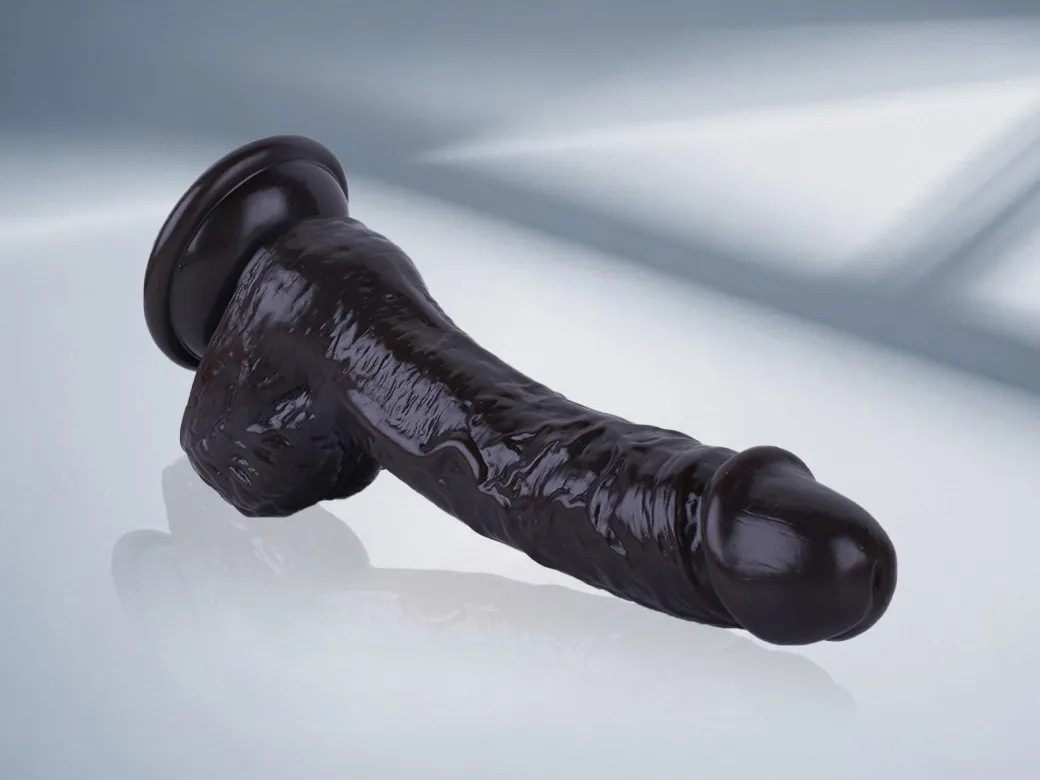
A brief pop can sound alarming, especially when it happens during a change in angle or when a suction base shifts. The sound does not point to one cause by itself. It may come from air moving around the shaft, a suction-cup seal releasing, wet surface contact, or—on a powered dildo—a mechanical component. Where and when it happens are the first useful clues.
This guide separates those situations so you can check the setup calmly. It focuses on ordinary air, suction, and fit sounds; a new internal click or pop from a powered dildo needs a different check.
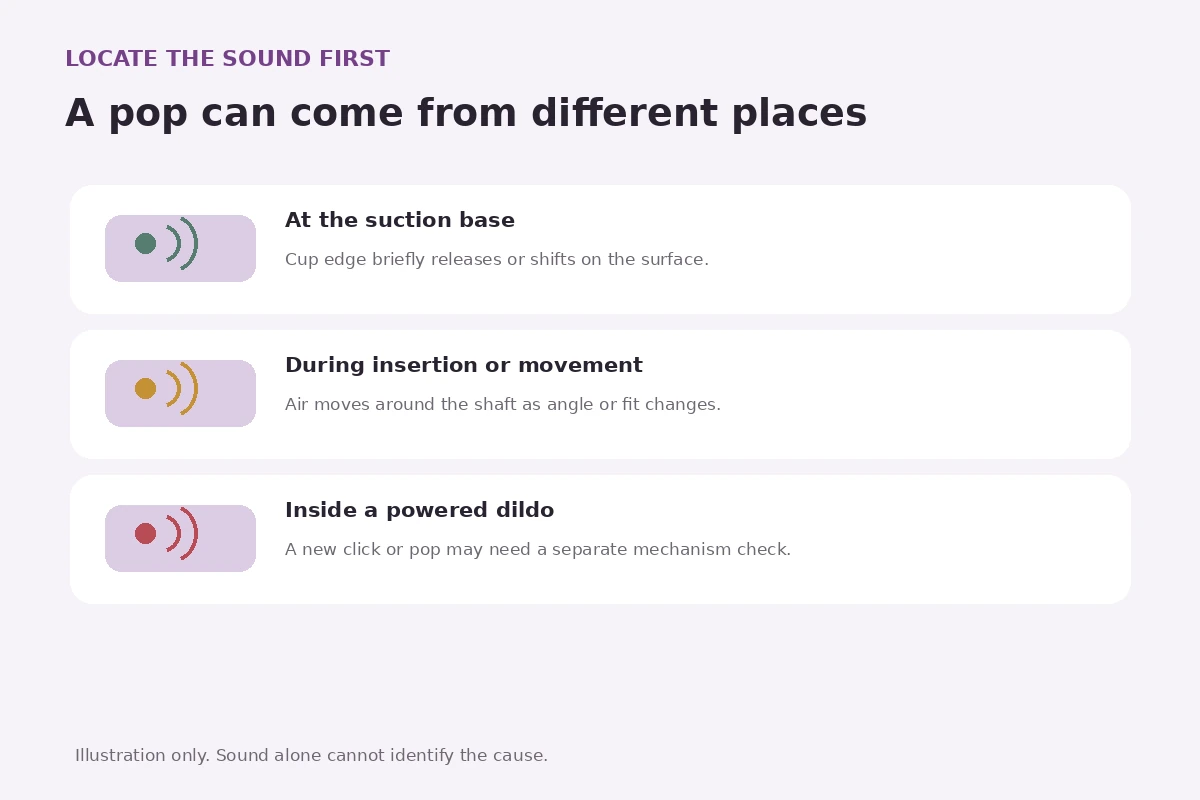
First clue: where does the pop happen?
| When you hear it | Possible source | First check |
|---|---|---|
| As the base moves or releases | The suction-cup rim may be shifting and letting air pass. | Check whether the cup is attached to a compatible, clean, smooth surface. |
| As the shaft enters or changes angle | Air may be moving around the shaft, or wet surfaces may briefly release. | Slow down, adjust the angle, and notice whether the sound changes with position. |
| When the dildo is withdrawn | A close fit or suction-like seal may release as the shaft moves out. | Reduce speed and avoid pulling suddenly; use compatible lubricant as directed. |
| From a motorized dildo, even when not mounted | A new internal sound may come from a mechanism, housing, or loose part. | Switch it off and consult the product manual or seller if the sound is new or repeated. |
A sound that changes when you move the base is different from one that follows the shaft when it is away from the surface. If the location is unclear, pause and listen while checking one part of the setup at a time.
Match the sound pattern to the movement
The timing can narrow down the source without proving it. A single pop when the base first releases is more consistent with a mounting seal than with the shaft’s fit. A soft sound that repeats only as the shaft changes direction may involve air or wet surface contact. A click that continues while a powered dildo runs, even when it is not touching a surface, deserves a mechanical check.
| Pattern | What it may suggest | A useful observation |
|---|---|---|
| One pop as the base detaches | The suction seal has released. | Did the cup edge lift or did the whole base move? |
| Pop at one angle only | Air movement or surface contact changes with alignment. | Does a small angle change alter or stop the sound? |
| Repeated wet clicks or pops | Contact and lubrication may be changing as the shaft moves. | Does slowing down or redistributing compatible lubricant change it? |
| Click from inside the powered housing | A mechanism, fit, or internal component may be involved. | Does it continue when the dildo is off the surface? Stop if new or repeated. |
Listen at rest before changing the setup. If the dildo is powered, switch it off and inspect its exterior. Then check the mount or movement separately. This avoids confusing a sound from the suction base with a sound from the mechanism.
Air movement during insertion and withdrawal
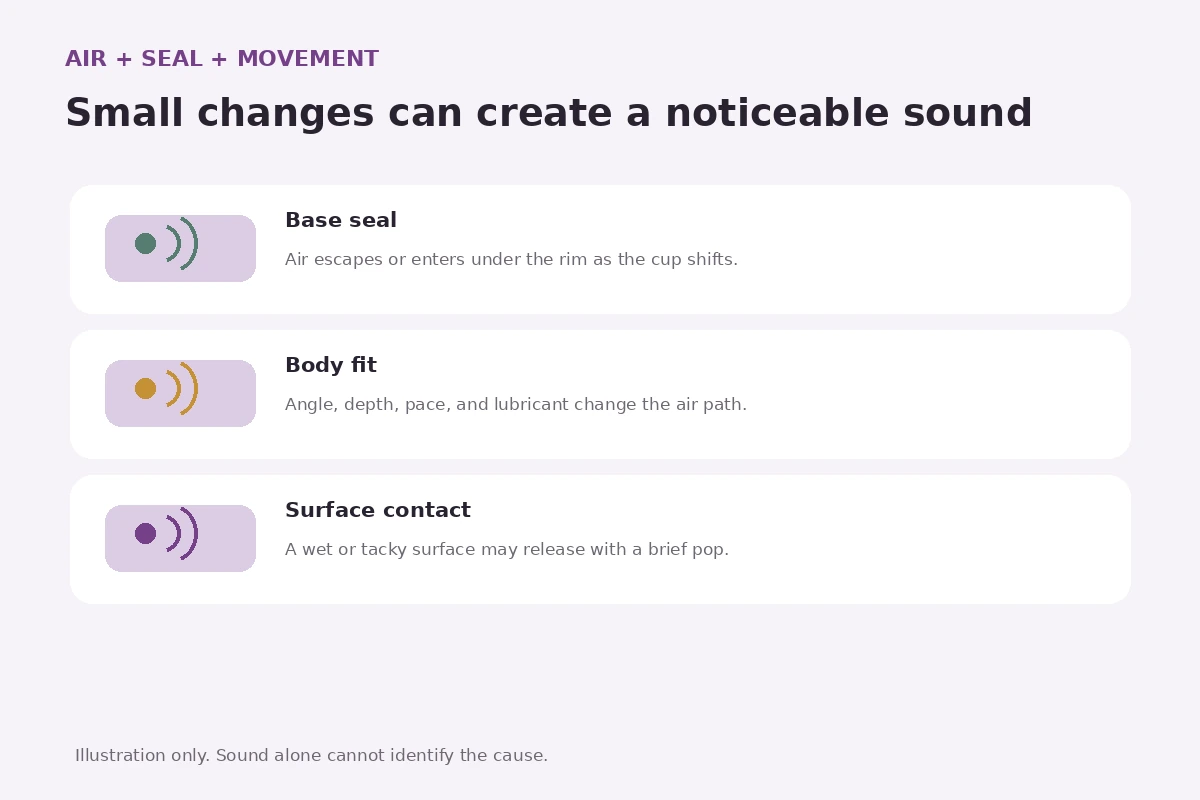
A shaft moving through a close-fitting opening can shift air. Angle, depth, pace, body position, and the amount of lubricant can change how air moves around it. A brief pop may simply be the sound of air escaping or a temporary seal releasing. It does not, on its own, prove that the dildo is damaged or that anything is wrong with the fit.
If the sound happens during a specific movement, pause, adjust the angle, and restart more gradually. Avoid forcing the dildo farther or faster just to reproduce the noise. The way the body and shaft meet is individual, so a sound may vary between positions and sessions.
Fit is more than diameter
Length, taper, tip shape, flexibility, and angle can all affect how air moves around a dildo. A wider section may create a closer seal than a tapered section; a flexible shaft may shift more with movement. These are design differences, not automatic signs of a problem. Our guide to tapered versus uniform-width dildos explains why two shafts with similar measurements can feel different.
For comfort, use a compatible lubricant and follow the dildo’s care and material instructions. If movement causes pain, irritation, or an unexpected change in sensation, stop rather than trying to push through it.
When the sound comes from a suction-cup base
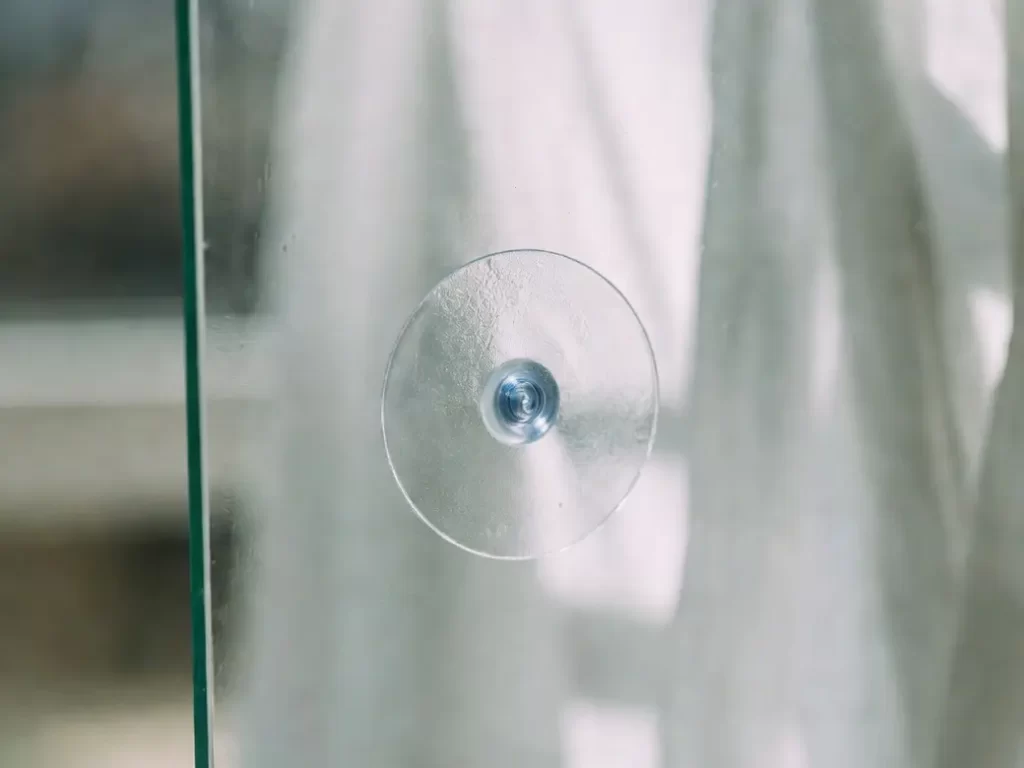
A suction cup holds by creating a seal against a compatible surface. If the cup shifts and air slips under the edge, you may hear a soft pop, click, hiss, or release. The sound may coincide with the base tilting, sliding, or detaching; sometimes the seal releases briefly and then catches again.
- Make sure the surface is smooth, flat, clean, and compatible with the cup design.
- Check the suction rim for hair, lint, residue, nicks, curling, or uneven areas.
- Press from the center outward according to the manufacturer’s instructions so air can escape beneath the cup.
- Test the attachment gently before relying on it, and keep the setup low and stable.
- Do not use the suction base as a safety support for body weight or in a position where a sudden release could cause a fall.
Lubricant, soap film, dust, grout lines, and textured surfaces can interfere with a seal. If the base repeatedly pops loose, stop using it hands-free until you confirm the cup and surface are working as intended. See our guides to why a suction-cup dildo leans or falls and why a dildo keeps slipping out for mounting and control issues.
When removing a suction cup intentionally, release one edge to let air underneath rather than pulling hard on the shaft. A pop at that moment can simply be the seal breaking. If the cup makes repeated sounds while still attached, check whether the rim is slowly lifting or the base is shifting; do not treat a noisy attachment as secure.
Lubricant and surface contact
Sometimes the sound is not an air pocket at all. Two wet surfaces can briefly cling and then release, producing a small pop or suction-like noise. Residue, a tacky surface, or the way lubricant is distributed can change the sound. If it appears only when the shaft is wet, compare the sound with a slower movement and an even layer of compatible lubricant rather than adding an unapproved product.
Do not use silicone-based lubricant with a silicone dildo unless both manufacturers say that combination is compatible. Follow the care guidance for the exact material and clean away old residue as instructed. If the dildo has a sticky surface even after approved cleaning, stop treating the sound as a simple fit issue and check the surface condition. Our articles on silicone surfaces that attract lint and possible silicone cure problems cover related changes.
Use this three-part sound check
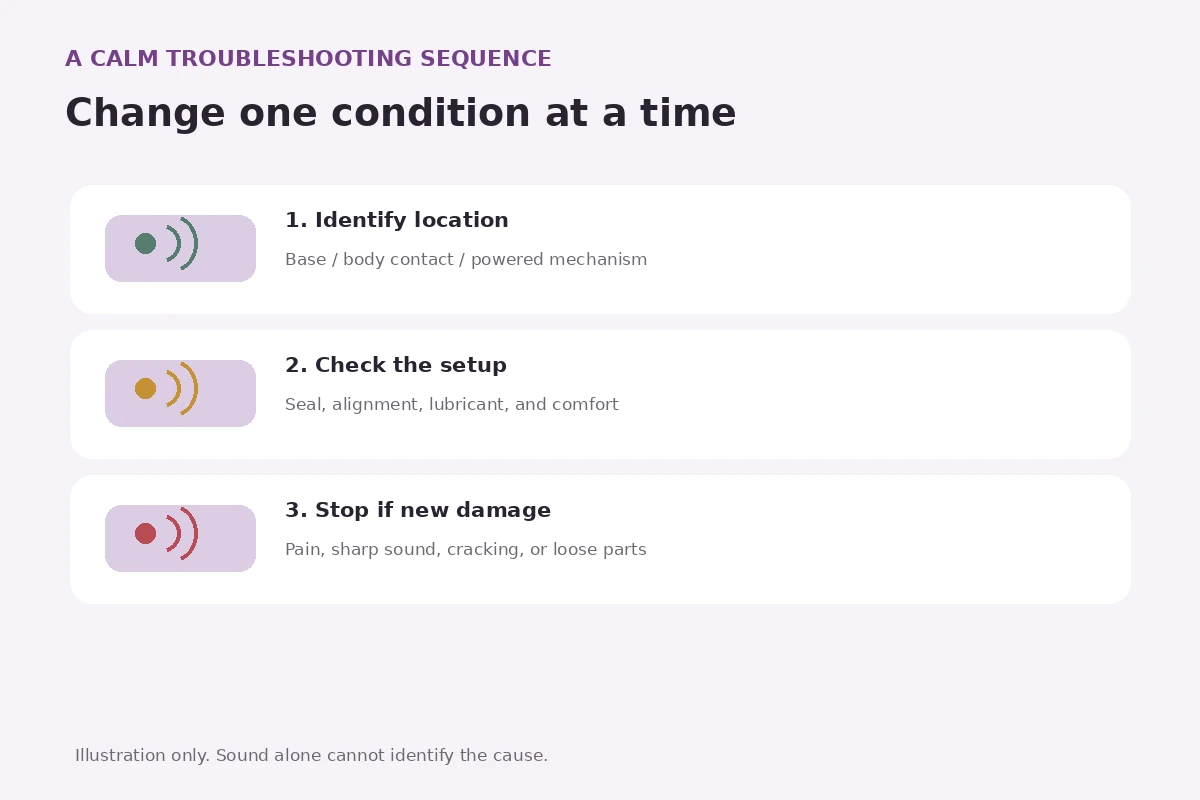
- Locate it. Is the pop at the suction cup, where the shaft meets the body, or inside a powered dildo?
- Change one setup detail. For a suction base, check the surface and seal. For movement, slow down and adjust angle or lubricant within the product instructions.
- Inspect for a change. Look for a crack, tear, loose component, damaged rim, or new internal movement. Stop if you see damage or the sound is mechanical and repeated.
If the sound disappears after correcting a loose suction seal or changing position, that gives you a useful clue—but it does not guarantee the setup is secure. Check the mount again before continuing and avoid any arrangement where sudden release could cause injury.
When a pop may signal a mechanical issue
A powered dildo may produce routine motor sounds, but a new, sharp, repeated pop or click from inside the housing is different from air escaping at a base. Switch it off if the sound is accompanied by reduced movement, grinding, unusual heat, a loose part, a burning or electrical odor, or visible damage. Do not open the housing, add oil, or run it repeatedly to see whether the noise goes away.
For a powered dildo, consult the manual and contact the manufacturer if the sound is new or persistent. Our guide to possible internal core problems covers changes such as clicking or shifting in non-powered designs; this guide to thrusting dildos stopping under pressure addresses mechanical sounds and operating issues.
Questions readers often ask
Is a popping sound during insertion normal?
A brief sound can occur as air moves or a close-fitting surface releases. The sound alone cannot determine whether the fit is suitable. Adjust pace and angle, use compatible lubricant as directed, and stop if there is pain or irritation.
Why does my suction-cup dildo pop off?
The seal may be letting air in because of surface texture, residue, a damaged rim, or movement that shifts the cup. Clean and inspect the base and use only a compatible mounting surface. Do not rely on a cup that repeatedly releases.
Does a pop mean the dildo is too large?
Not necessarily. Sound can relate to air movement, shape, angle, lubricant, surface contact, or mounting. If the dimensions cause discomfort, choose a size and shape that better suits your comfort rather than trying to force a fit.
Could lubricant cause a suction-cup base to pop?
Lubricant or soap residue on the cup or mounting surface may interfere with the seal. Keep the contact surface clean and follow the maker’s setup instructions; apply lubricant only where directed.
What if the pop comes from inside a vibrating or thrusting dildo?
Switch it off if the sound is new, repeated, or accompanied by heat, reduced movement, grinding, odor, or loose parts. Check the manual and contact the manufacturer instead of opening or lubricating the mechanism yourself.
Let the sound guide the check, not the conclusion
A pop can come from air moving around the shaft, a suction seal shifting, or a surface briefly releasing. Start with where the sound occurs, then check fit, lubricant, mounting surface, and product condition one at a time. If it is a new internal sound or appears with damage, heat, or loss of function, stop and ask the manufacturer. The sound is a clue; the movement and surface tell you what to inspect next.