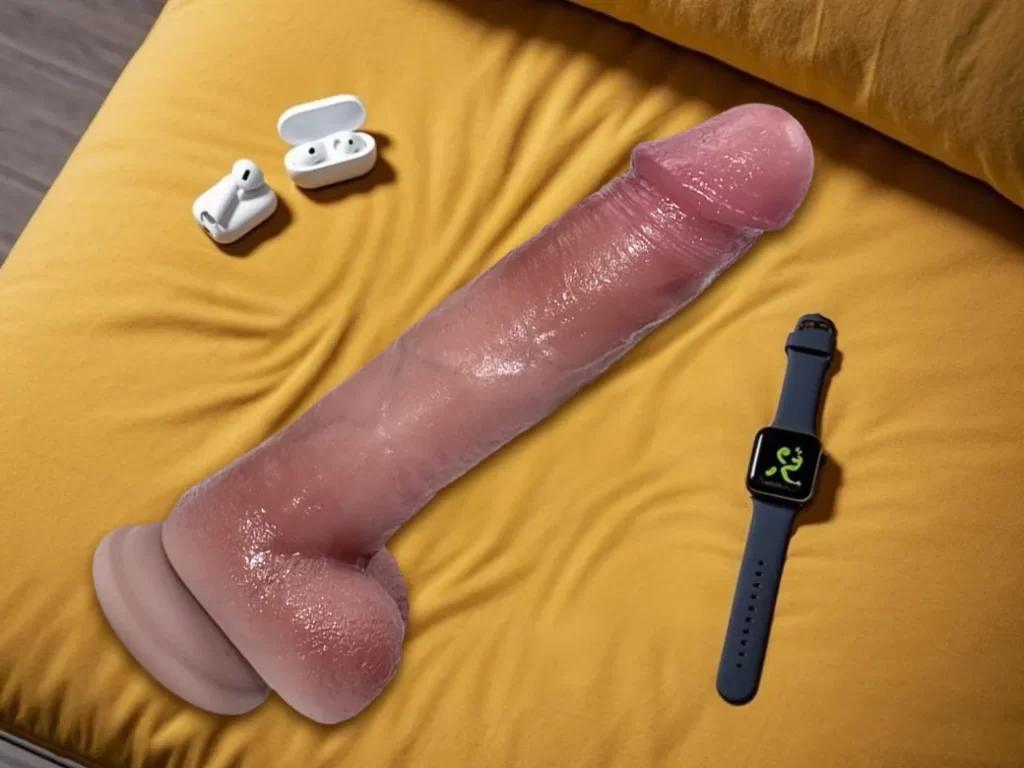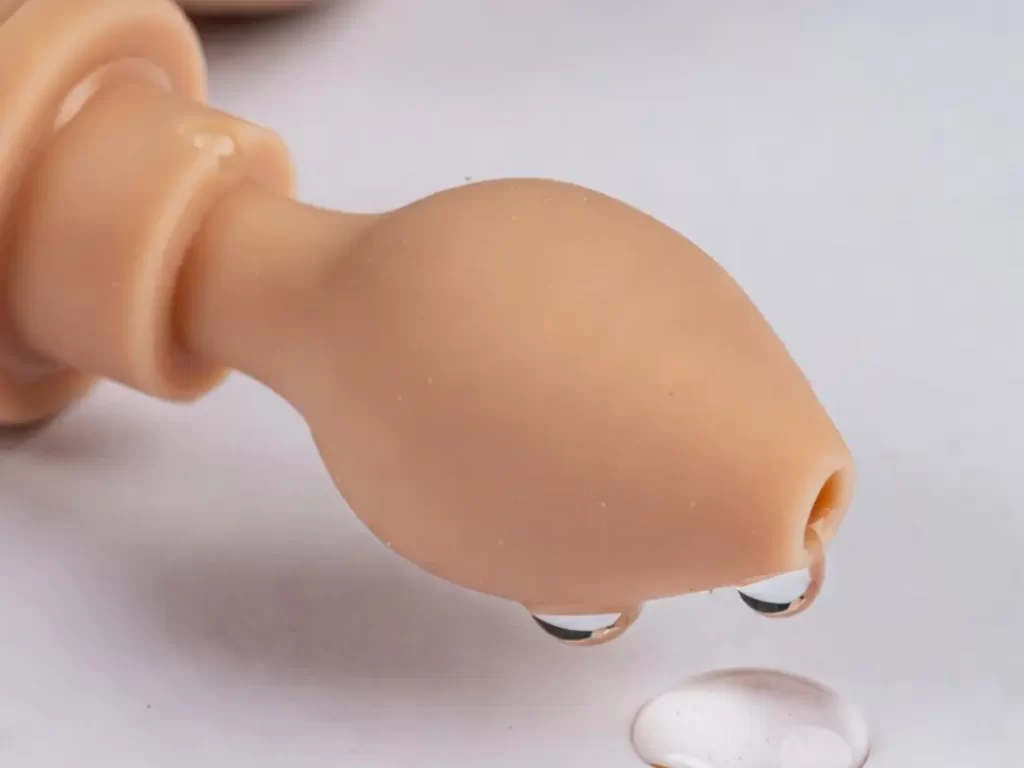


Yes, color can transfer between a dildo and nearby materials, but the direction matters. A dark sheet or garment may leave dye on a dildo; a surface finish, residue, lubricant, or another product may leave a mark on fabric or skin. A stain alone does not identify the source or prove a material is unsafe. Check what touched what, clean only as the manufacturer directs, and pause use if color keeps rubbing off or the surface changes.
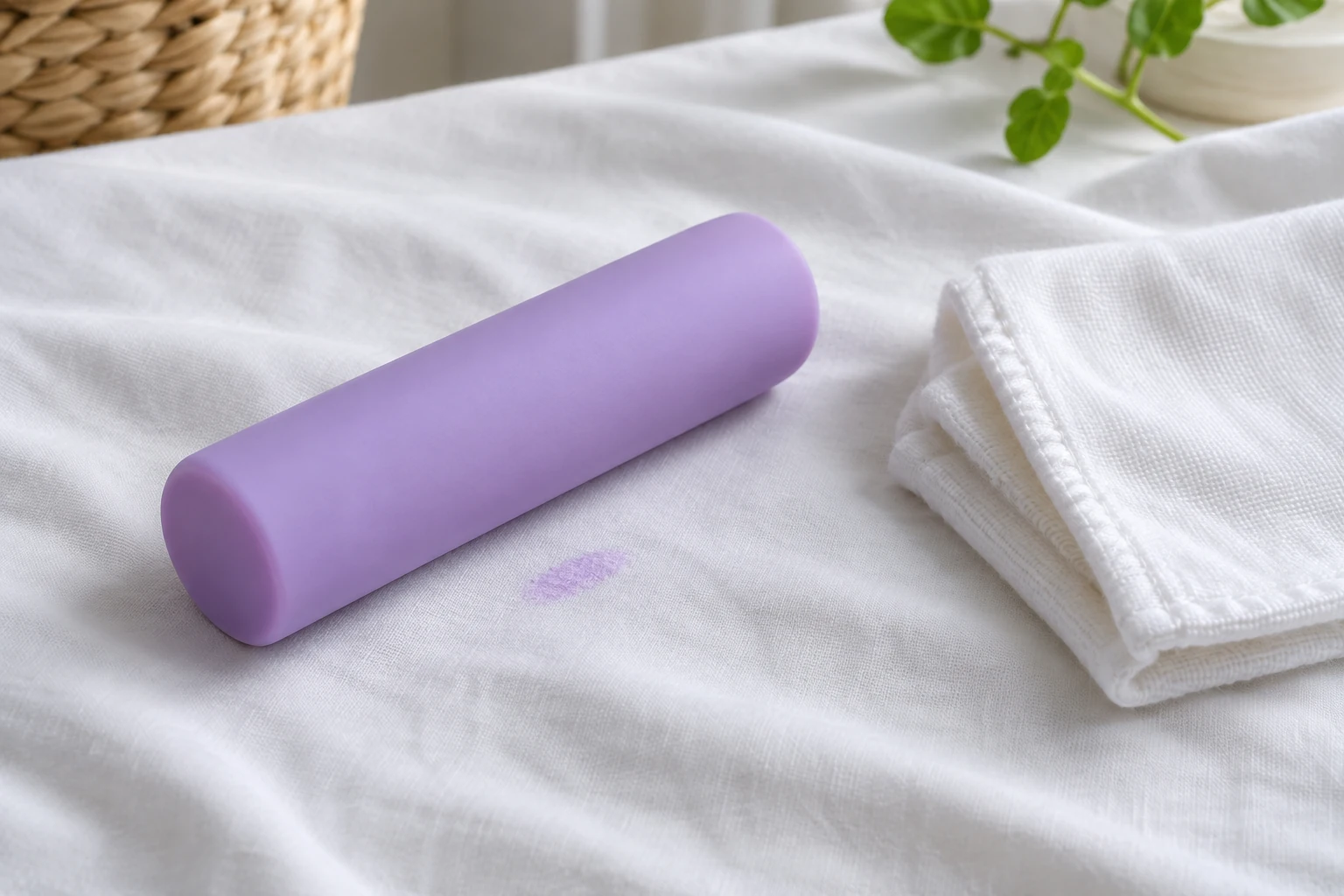
First, identify which direction the color moved
Color transfer is easier to assess when you separate the source from the surface that was stained. If the dildo has a blue or dark mark after resting against denim, a dyed sheet, a printed pouch, or colored packaging, the color may have come from that material. If a sheet or skin has a colored mark after contact with the dildo, the source could be a surface-applied finish, residue, lubricant, or another product used at the same time.
Color in the body of a material and a finish sitting closer to the surface can behave differently. The product’s appearance alone may not reveal how it was colored. Our guide to whether dildo color can peel off explains the difference between pigment and surface coloring. A stain or smudge is not automatically the same thing as peeling.
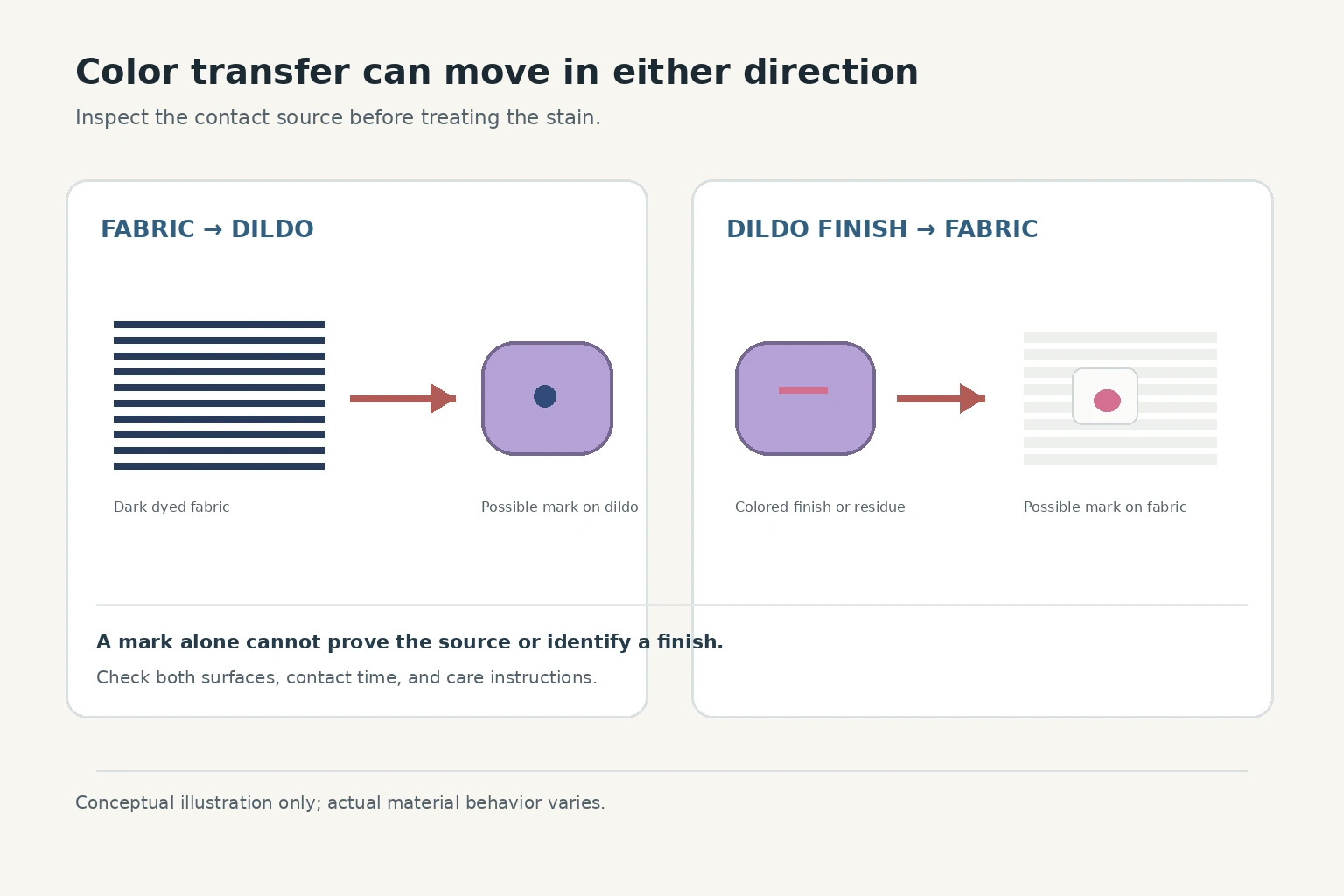
Common reasons a dildo or nearby fabric gets stained
| What is marked? | Possible source | Clue to check |
|---|---|---|
| Dildo surface | Dye from dark or brightly colored sheets, clothing, a pouch, or printed packaging | Did the mark appear after contact with colored fabric or packaging? |
| Sheet or clothing | Color from a surface finish, colored lubricant, or another product | Does the dildo’s colored area look changed, worn, or uneven? |
| Sheet or skin | Lubricant, body-care product, or residue that picked up color | Was another colored product used at the same time? |
| Dildo or fabric | Material interaction during prolonged contact or storage | Were the items pressed together, damp, warm, or stored together? |
| Either surface | Cleaner, dye, or printed material residue | Does the mark lift with the approved cleaning method, or remain as a surface change? |
Risk depends on the exact material, finish, fabric dye, contact time, and care history. Dark denim and brightly dyed textiles are worth keeping separate from light-colored dildos until you know how the materials behave together. Washing a new fabric first may reduce loose dye, but it cannot guarantee that every fabric is colorfast.
What to do if a sheet is stained
- Separate the items. Remove the dildo and any colored fabric or packaging so the mark does not spread.
- Inspect the dildo. Check for peeling, flakes, cracks, sticky patches, oily areas, or color that appears to be missing from a surface detail.
- Clean the dildo only by its approved method. Use the material-specific instructions. Do not apply bleach, alcohol, solvents, nail-polish remover, or laundry stain products to the dildo.
- Wash the sheet according to its care label. Use a fabric-appropriate method and test any stain treatment on an inconspicuous area first. Avoid improvising with chemicals that could damage the fabric.
- Keep the dildo out of use if color keeps transferring. Take clear photos and contact the seller or manufacturer with the model and material details.
Do not try to “seal” a dildo’s finish with nail polish, paint, glue, or a household coating. A coating can create an uneven surface, make cleaning difficult, or be incompatible with skin contact. If a color layer is lifting or repeatedly transferring during gentle cleaning, pause use and ask the manufacturer what to do.
What if color appears on skin?
A temporary mark on skin may come from transferred pigment or from another colored product used at the same time. Stop contact, wash the area gently with water and mild soap if appropriate, and check whether the mark comes away. Do not scrub hard or apply solvents, alcohol, bleach, or stain remover to skin.
If color continues to transfer from the dildo during gentle cleaning, do not use it internally until the maker has clarified the material and finish. If skin irritation, burning, swelling, pain, or discoloration persists after washing, stop using the product and seek medical advice. A color mark by itself cannot tell you whether the cause is a dye, a coating, residue, or a skin reaction.
Ways to prevent color transfer
- Use a clean, light-colored sheet or towel when trying a new, dark, or brightly colored dildo.
- Keep a dildo away from dark denim, new dyed garments, colored pouches, printed paper, and other materials that may transfer dye.
- Do not store products pressed together or wrapped in colored fabric; use a clean individual pouch or container recommended for the material.
- Wash new bedding and clothing according to their care labels before use, while remembering that washing does not guarantee zero dye transfer.
- Clean and fully dry the dildo before storage, following its manufacturer’s instructions.
- Check product labeling for the exact material and care guidance. “Soft-touch,” “skin-like,” or a color name does not tell you how the surface was finished.
- When evaluating a new dildo, gently inspect it under good light and follow the maker’s pre-use cleaning directions. Do not use aggressive rubbing or chemicals as a home dye test.
For material-specific cleaning, see how to clean a dildo properly. If the material or finish is unclear, read the label and packaging details and ask the seller rather than guessing.
Color transfer versus peeling or material damage
A single mark on a sheet does not prove that the dildo’s color is peeling. Peeling usually involves a visible edge, flake, crack, or layer lifting away. Transfer means color has appeared on another surface, but its source could be the dildo, the fabric, a lubricant, or another residue. A sticky or oily surface, repeat transfer, cracking, or a changing finish deserves closer attention than one removable mark.
For signs that go beyond staining, compare the surface with our articles on possible silicone cure problems and what can and cannot be repaired. These signs cannot confirm a specific manufacturing issue on their own; the maker is the right contact for product-specific guidance.
Frequently asked questions
Can a dildo stain white sheets?
It can happen if color, finish, lubricant, or another residue transfers to the fabric. The dildo’s exact material and finish matter. Use a clean light-colored barrier when testing a new item, and stop using it if color repeatedly transfers.
Can dark sheets stain a dildo?
Some dyed fabrics may leave color on some dildo materials or finishes, particularly during prolonged contact or storage. Keep dark or new dyed textiles separate until you know how the materials behave, and follow the dildo maker’s storage instructions.
Does color transfer mean a dildo is unsafe?
Not by itself. A mark does not identify its source or chemical composition. If the dildo’s color repeatedly rubs off, the surface is peeling or sticky, or the material is unclear, pause use and ask the manufacturer before using it again.
Can I use alcohol or bleach to remove a stain from the dildo?
Do not use them unless the manufacturer specifically approves the method for that exact dildo. Strong cleaners can affect some materials, finishes, or internal components. Follow the product’s care instructions.
What if my skin is still irritated after washing?
Stop using the dildo and seek medical advice if irritation, burning, swelling, pain, or discoloration persists. Do not try to remove a skin mark with household stain removers or solvents.
Keep the source separate from the stain
When you find a mark, check both sides of the contact: the dildo and the sheet, clothing, pouch, or other product it touched. A removable stain may be residue or transferred dye; recurring color, peeling, or a lasting surface change calls for a pause and a question to the manufacturer. Light-colored bedding, separate storage, and material-specific care can reduce surprises without relying on harsh cleaning experiments.