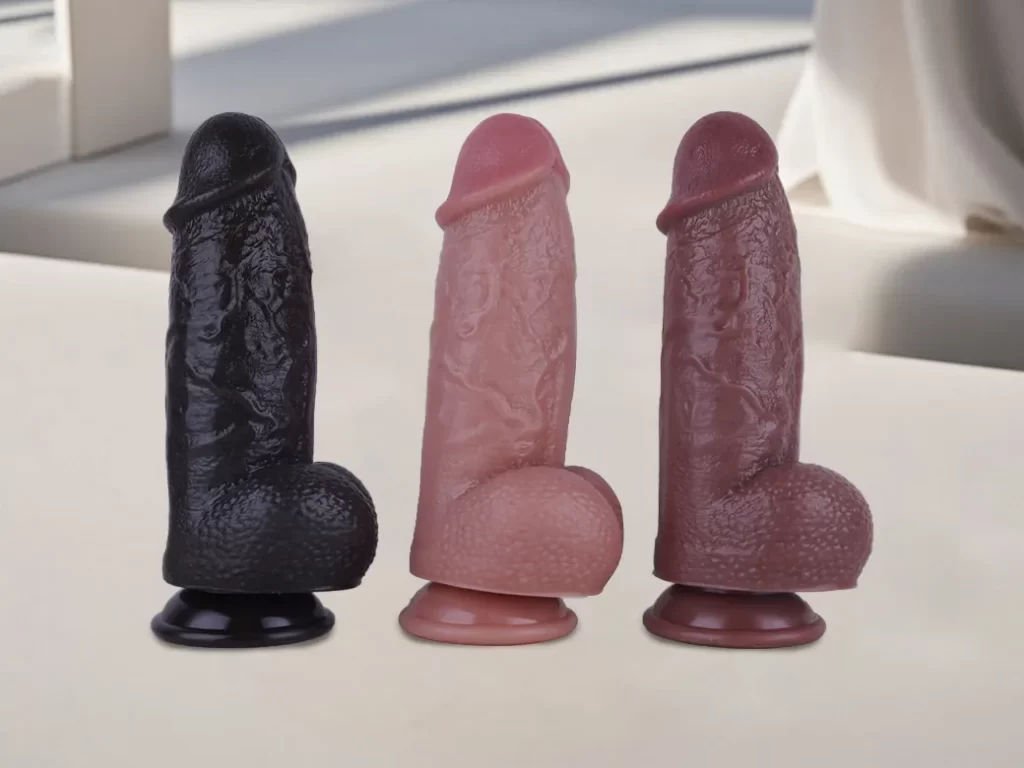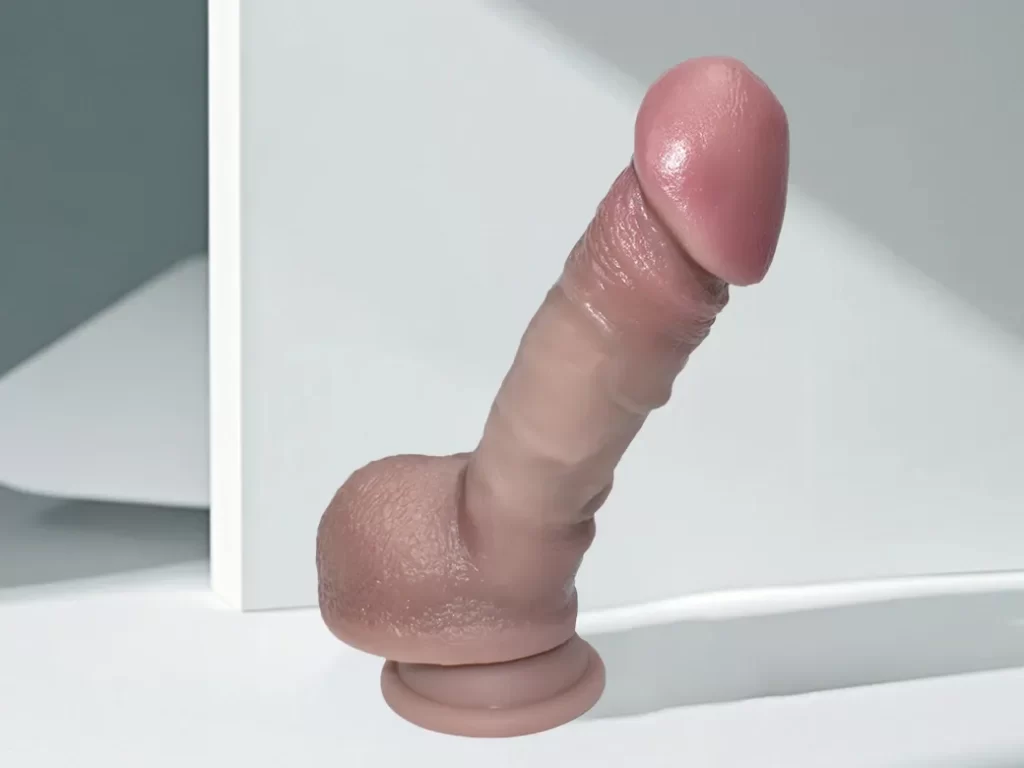


The color on a dildo can sometimes peel, fade or rub away—but whether that is possible depends on how the color was added.
Some dildos are colored throughout the material. Pigment is mixed into the uncured silicone or other material before the product is molded. Because the color becomes part of the finished body, there is no separate layer of ordinary paint to peel away.
Other products use a compatible surface-coloring system to add realistic veins, gradients, heads or other details after the main shape has been formed. These colors remain closer to the surface and can potentially wear if the coating is damaged, incorrectly applied or chemically incompatible.
Peeling color should not be confused with staining, lint, dried lubricant or material deterioration. Before deciding what has happened, inspect the surface under good lighting and determine whether a separate layer is actually lifting away.
Quick Answer
Dildo color is more likely to peel when it comes from a surface-applied coating rather than pigment distributed through the complete material.
However, a properly formulated silicone-based coloring system can bond strongly to compatible silicone and flex with the product. “Painted” does not automatically mean unsafe or low quality.
Stop using the dildo and inspect it if you notice:
- Flaking pieces
- A surface layer lifting away
- Cracks that expose a different material underneath
- Color repeatedly transferring during gentle washing
- Sticky or oily areas around the colored details
- Rough edges where the finish has separated
- Peeling combined with odor or structural deterioration
Do not repaint or seal the surface with household paint, nail polish, glue or a general-purpose coating.
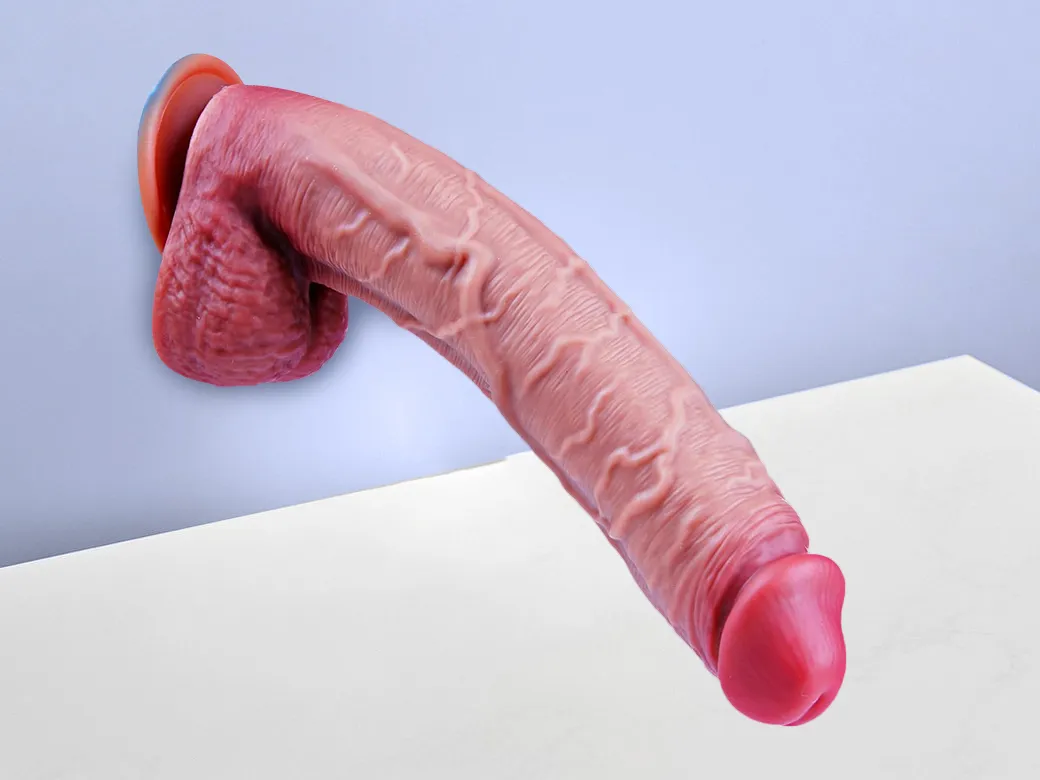
Four Common Ways Dildos Are Colored
“Colored dildo” can refer to several manufacturing methods. Understanding them makes it easier to judge whether a visible change is normal.
1. Pigment Mixed Into the Material
In this method, colorant is blended into liquid silicone or another uncured material before casting.
The pigment becomes distributed through the molded section rather than sitting only on top of it. Smooth-On, a silicone-material manufacturer, describes silicone pigments that are added directly to uncured tin-cure or platinum-cure silicone before the components are mixed and cured. (Smooth-On Silc Pig Technical Information)
An internally pigmented dildo may still fade, stain or deteriorate over time, but the color should not normally lift away as a distinct paint film.
Possible signs of internal pigmentation include:
- Consistent color across the complete product
- No visible edge between the color and surface
- Color that remains present in molded details
- A uniform shade even when the material bends
- No transparent top layer above the color
These observations are not a guaranteed identification method. Manufacturers should still disclose how decorative finishes are produced when the distinction affects care or durability.
2. Multiple Pigmented Silicone Pours
A multi-color dildo may be made by pouring or molding differently colored silicone sections.
For example, a realistic design could combine:
- A lighter shaft color
- A darker head
- Contrasting veins
- A separate testicle shade
- Translucent outer silicone
- A firmer internal core in another color
Because each section is made from pigmented silicone, the color may extend deeper than the surface. The visible boundary is created by two molded or bonded silicone regions rather than a layer of ordinary paint.
This method can produce durable color variation, but quality depends on proper bonding, curing and material compatibility between the layers.
A visible line between two colors does not automatically indicate peeling. It may be an intentional transition between molded sections.
3. Silicone-Based Surface Coloring
Fine details and natural gradients may be applied to the cured surface using a coloring system designed to bond with silicone.
Most ordinary paints do not adhere well to cured platinum silicone. Smooth-On explains that silicone normally resists adhesion and therefore requires a compatible silicone-based paint system. Its dedicated system uses a platinum-cure silicone base mixed with pigment and applied in thin layers. (Smooth-On: How to Paint Platinum Silicone)
The company describes the cured finish as flexible and capable of moving with the silicone without cracking or peeling when correctly prepared and applied. (Psycho Paint Technical Bulletin)
This distinction is important: a surface-colored dildo is not necessarily covered in rigid craft paint. A compatible silicone coating can behave more like a thin additional silicone layer.
Still, because the detail is concentrated near the surface, abrasion, poor adhesion or chemical exposure may affect it before the internally pigmented base color.
4. Printed, Sprayed or Unknown Surface Finishes
Lower-cost or poorly documented products may use surface color without identifying the coating system.
A listing might use vague terms such as:
- Hand painted
- Realistically colored
- Airbrushed details
- Skin-tone finish
- Premium color treatment
- Multi-tone technology
These phrases describe the appearance but do not identify the material.
If the retailer cannot explain whether the finish is made from compatible silicone, dye, ink or another coating, buyers have less information for evaluating durability and care.
Avoid assuming that a beautiful gradient proves the underlying finish is durable. Product photos can show appearance but not adhesion, chemical compatibility or resistance to repeated cleaning.
Painted Does Not Automatically Mean Peeling
The word “painted” can sound less durable than “pigmented,” but application quality matters.
A compatible flexible coating may remain stable when it is:
- Formulated for the base material
- Applied to a properly prepared surface
- Fully cured
- Thin enough to bend with the dildo
- Protected from incompatible chemicals
- Tested for the intended use
Peeling becomes more likely when:
- Ordinary rigid paint is placed on flexible material.
- The surface was contaminated before coloring.
- The coating and base stretch at different rates.
- The finish was not fully cured.
- Thick layers were applied.
- The product is repeatedly abraded.
- Harsh cleaners or solvents attack the surface.
- Material deterioration weakens the layer underneath.
Therefore, the correct question is not only “Is it painted?” Ask what kind of color system was used and whether it was developed for that material.
Peeling, Fading, Staining and Color Transfer Are Different
Several visual changes can look similar but have different causes.
| What You See | Possible Explanation |
|---|---|
| Thin pieces lifting from the surface | Coating separation or material damage |
| Color becoming gradually lighter | Fading or surface wear |
| New dark or bright patches | Staining from another material |
| Color appearing on a storage bag | Dye or pigment transfer |
| White film over the color | Dried cleaner, lubricant or mineral residue |
| Sticky colored surface | Material deterioration or incompatible substance |
| Different shade when stretched | Thin surface layer or translucent material |
| Color boundary between sections | Intentional multi-part molding |
Do not scrape the product to identify the cause. Scratching can create damage that was not previously present.
Instead, clean it according to the manufacturer’s instructions, allow it to dry and inspect it under neutral lighting.
What Does Actual Peeling Look Like?
Peeling usually involves a distinct surface layer separating from the material beneath it.
Possible signs include:
- A loose edge that can be seen without pulling it
- Thin flakes visible after washing
- A patch with a sharply defined boundary
- A different base color exposed underneath
- Cracking concentrated in painted details
- Surface texture changing where the color is lost
Do not intentionally pull a loose section to see how far it extends. Photograph the area and contact the retailer or manufacturer.
If the apparent “peeling” disappears after proper washing, it may have been dried product residue rather than color loss.
Why Might Color Rub Off During Washing?
A small amount of color on a cloth or in rinse water requires investigation. Possible causes include:
- Unbound surface pigment
- An incompletely cured coloring layer
- Dye transfer from packaging
- A strongly colored lubricant
- Residue from manufacturing
- Material deterioration
- A cleaner reacting with the finish
Test only through the normal cleaning process recommended for the product. Do not use alcohol, bleach, acetone or another solvent as an informal colorfastness test unless the manufacturer explicitly approves it.
If color transfer continues after ordinary cleaning, stop using the product and ask the seller for material and coating information.
Can Internally Pigmented Color Fade?
Yes. Color that cannot peel as a separate layer may still change.
Possible causes include:
- Prolonged sunlight or ultraviolet exposure
- Excessive heat
- Contact with another strongly colored product
- Chemical incompatibility
- Material aging
- Repeated exposure to an unsuitable cleaner
- Migration of dyes from storage materials
Fading usually appears as a gradual loss of intensity rather than a layer lifting from the surface.
A faded color does not automatically mean the dildo is structurally unsafe, but it should prompt a complete inspection. Check for changes in texture, firmness, odor, cracks, oiliness or stickiness.
Why Realistic Dildos Often Use Surface Details
Realistic coloring frequently includes subtle variations that are difficult to produce with one solid pigment.
Manufacturers may add:
- A darker head
- Blended skin-tone gradients
- Contrasting veins
- Freckles or mottling
- Shading around the base
- Different colors on circumcised or uncircumcised details
These features may require several pigmented pours, a silicone-based surface color system or a combination of both.
The presence of surface details is not itself a quality problem. What matters is whether the coloring method is compatible with the base material and durable enough for normal cleaning and flexing.
Can Cleaning Products Cause Color Damage?
Potentially. A cleaner that is suitable for one product may be unsuitable for another, particularly when the dildo has a specialized surface finish.
Avoid assuming that stronger cleaning means better care.
Unless the manufacturer provides different instructions, use the recommended mild cleaning method and avoid:
- Abrasive scrubbers
- Household solvents
- Undiluted bleach
- Strong alcohol solutions
- Scented household sprays
- Rough brushes
- Extremely hot water
- Prolonged soaking of products not designed for it
Electronic or water-resistant products require additional care because they may not be fully submersible.
Link this section to your dildo cleaning guide and waterproof vs water-resistant dildos article.
Can Storage Cause Color Transfer?
Yes. Prolonged contact between different products may lead to staining or color migration, especially when materials and dyes are not clearly identified.
Store dildos separately rather than allowing colored surfaces to press directly against one another. Individual storage also reduces friction between delicate painted details.
Use clean, dry storage bags or containers recommended for the product. Avoid:
- Dark fabric that releases dye
- Printed plastic bags
- Unknown soft plastics
- Damp containers
- Direct sunlight
- High heat
- Heavy objects pressing against painted details
Color transferred onto a dildo is a stain; color transferred from the dildo may indicate pigment or coating loss. Sometimes both processes occur at once, making the original source difficult to identify.
Do Not Repair Peeling Color at Home
Do not cover a damaged area with:
- Nail polish
- Acrylic paint
- Model paint
- Permanent marker
- Craft sealant
- General-purpose silicone caulk
- Superglue
- Epoxy
- Clear varnish
These materials were not selected or cured as part of the original intimate product. A homemade repair can introduce hard edges, incompatible chemicals and areas that are difficult to clean.
If a finish is genuinely peeling, document the problem, check the warranty and contact the retailer or manufacturer.
Cosmetic Variation or Product Defect?
Realistic dildos often contain blended colors, handmade details and translucent layers. Small differences between products may be intentional rather than signs of damage.
Use the following comparison as an initial guide:
| What You Notice | More Likely Cosmetic | More Likely Damage |
|---|---|---|
| Slightly uneven shading | Yes, especially on hand-finished designs | Not by itself |
| Different color from website photo | Possible lighting or batch variation | Investigate if material also changed |
| Color looks lighter when stretched | Possible with thin or translucent silicone | Inspect for cracking or separation |
| Sharp-edged patch exposing another color | Unlikely | Possible coating loss |
| Loose colored flakes | No | Likely surface damage |
| Sticky area around the color | No | Possible material or coating deterioration |
| Color repeatedly appears on cleaning cloth | Unusual | Possible transfer or incomplete finish |
| Thin visible layer lifting at an edge | No | Likely peeling |
| Gradual fading without texture change | Usually cosmetic aging | Monitor and inspect |
| Crack extending into the material | No | Structural damage |
Appearance alone cannot always identify the cause. Check whether the texture and integrity of the material have changed along with the color.
When Should You Stop Using the Dildo?
Stop using the product while you investigate if you notice:
- Colored flakes separating from the surface
- An exposed layer beneath a damaged finish
- Cracks, cuts or tears
- Sticky or oily patches
- A rough edge where the coating has lifted
- Persistent color transfer after recommended cleaning
- Unexpected swelling or softening
- A strong new odor
- Separation between molded layers
- Unknown residue that repeatedly returns
These signs indicate more than normal color variation.
Do not continue using a damaged product while waiting to see whether the peeling becomes worse. Clean it only as directed, photograph the issue and contact the seller or manufacturer.
A minor difference in shading, by contrast, may not require replacement when the surface remains smooth, stable and intact.
How to Inspect a Suspected Color Problem
Avoid destructive tests. Cutting, scraping or stretching the product beyond normal movement can create damage and make a warranty claim more difficult.
Use this inspection process instead.
Step 1: Check the Care Instructions
Confirm the recommended cleaning method and any prohibited cleaners. If you no longer have the packaging, look for the instructions on the manufacturer’s official website.
Step 2: Clean the Product Normally
Use only the approved method. The goal is to remove lubricant, soap film, storage powder and surface residue without introducing another chemical.
Step 3: Allow It to Dry Completely
Moisture can make a surface look darker, shinier or more uneven than it actually is. Inspect the product only after the entire shaft and base have dried.
Step 4: Use Neutral Lighting
Colored bedroom lights and warm bathroom bulbs can alter the appearance. Natural daylight or a neutral white light provides a more accurate comparison.
Step 5: Examine the Surface Without Picking It
Look for lifted edges, cracks, flakes and differences in texture. Do not pull on a loose section or scratch the color with a fingernail.
Step 6: Gently Flex the Product
Bend it only within its normal range. Watch whether a colored section moves with the base material or separates from it.
Some translucent finishes naturally become lighter when stretched. Separation, cracking or lifting is more concerning.
Step 7: Compare With Earlier Photographs
If possible, compare the affected area with photographs taken when the product was new. Product listing images may help, but your own photographs provide a better record of changes over time.
Step 8: Document the Issue
Photograph:
- The full product
- The affected area
- The same area under different angles
- Any transferred color
- The packaging or batch information
- The product label
Keep the order number and date of purchase available when contacting support.
What to Ask the Manufacturer or Retailer
A useful support request should be specific. Instead of asking only whether the color change is normal, ask:
- Is the base material internally pigmented?
- Are the realistic details molded, printed or surface applied?
- What type of color system is used?
- Is the surface finish made from compatible silicone?
- Is slight color transfer expected during the first wash?
- Which cleaners are approved?
- Which cleaners or lubricants should be avoided?
- Is fading covered by the warranty?
- Does peeling qualify as a manufacturing defect?
- Can the product continue to be used?
- Is a replacement available?
- Does the brand need photographs or a batch number?
A retailer may not know the complete manufacturing process. If the answer is vague, request confirmation from the supplier or brand.
How to Evaluate Coloring Before Buying
Product images can show visual quality, but the listing should also explain the construction.
Look for descriptions such as:
- Internally pigmented silicone
- Multi-pour silicone
- Layered silicone coloring
- Silicone-compatible surface details
- Hand-finished silicone coloration
- Solid-color molded material
- No surface paint
- Manufacturer-tested color finish
These phrases are useful only when the retailer can support them. Avoid treating broad claims like “premium painted” as a complete material disclosure.
A strong product page should identify:
- The main material
- Whether the product is single or dual density
- Whether color is internal or surface applied
- Whether every color layer uses the same material
- Approved cleaning methods
- Lubricant compatibility
- Storage instructions
- Warranty coverage
Link this section to your how to read a dildo product label and how to tell if a dildo is good quality articles.
Quality Checks for Realistic Dildos
Before first use, inspect the product for:
- Smooth color transitions
- Fully cured surfaces
- No loose flakes
- No sticky painted areas
- No visible bubbles breaking through the surface
- No lifting around veins or head details
- No cracking when gently flexed
- No unexpected residue
- No separation between soft and firm layers
- Consistent texture across colored areas
Hand-finished products may contain minor differences in tone and pattern. Those variations can make each product look more natural and do not necessarily indicate poor workmanship.
The important distinction is whether the color is visually varied or physically unstable.
How to Reduce Color Wear
Even a durable finish benefits from appropriate care.
Clean Gently
Use the manufacturer’s recommended method. Avoid abrasive cloths, rough sponges and unnecessarily aggressive scrubbing.
Rinse Away Lubricant
Do not leave lubricant on painted details for extended periods. Confirm that the lubricant is compatible with the dildo material and finish.
Dry Before Storage
Trapped moisture may affect the surface and makes residue more difficult to distinguish from material change.
Store Products Separately
Individual storage helps prevent dye transfer and rubbing between different products.
Avoid Direct Sunlight
Long-term light and heat exposure can affect both color and material.
Prevent Repeated Abrasion
Do not store the dildo where painted details constantly rub against hard accessories, zippers, buckles or other textured products.
Follow Temperature Limits
Do not boil, freeze or heat the dildo unless the manufacturer specifically says the complete product and finish can tolerate that treatment.
What Retailers Should Add to Product Pages
Clear coloring information can reduce returns and help buyers compare realistic dildos more accurately.
For multi-color products, consider adding a specification field such as:
Color Method:
- Solid pigment
- Multi-pour pigment
- Silicone-based surface detail
- Hand-finished surface color
- Combination coloring
- Not disclosed by manufacturer
Also add:
- Care instructions for the finish
- A close-up photograph of colored details
- A note explaining handmade color variation
- Warranty information for peeling or fading
- A warning against unapproved cleaners
- Material information for every density layer
Do not describe an unknown finish as “body-safe paint” without documentation from the manufacturer.
Common Myths About Dildo Coloring
Myth 1: Every Hand-Painted Dildo Will Peel
Not necessarily. A compatible flexible silicone coloring system can bond strongly to the base material. Durability depends on formulation, preparation, curing and care.
Myth 2: Internally Pigmented Color Can Never Change
It cannot peel away as a separate paint film, but it may still fade, stain or change as the underlying material ages.
Myth 3: Color Transfer Is Always Harmless
Persistent transfer deserves investigation. It may come from packaging, another stored product, loose pigment or material deterioration.
Myth 4: A Clear Coating Can Repair Peeling
A household clear coat may not bond to the dildo and may introduce a hard, incompatible surface. Damaged coloring should not be repaired with an unknown sealant.
Myth 5: More Realistic Coloring Always Means Better Quality
Detailed gradients can improve appearance, but material disclosure, curing, surface stability and construction matter more than the number of colors.
Myth 6: Any Paint Can Be Used on Silicone
Most general paints do not bond reliably to cured platinum silicone. Silicone requires a compatible coloring system and correct application process.
Myth 7: A Color Difference Means the Product Is Fake
Website lighting, screens and handmade batch variation can alter appearance. A color difference alone does not establish that the material or product is counterfeit.
Frequently Asked Questions
Can silicone dildo color peel off?
Color mixed throughout the silicone should not peel as a separate layer. Surface-applied silicone details can potentially separate if damaged, poorly bonded or exposed to incompatible chemicals.
Is a hand-painted dildo safe?
The term “hand-painted” alone does not answer that question. Ask what coating was used, whether it is compatible with the base material and what care instructions apply.
Why is color coming off when I wash my dildo?
Possible causes include manufacturing residue, loose surface color, packaging dye or material deterioration. Stop using it if transfer continues after cleaning according to the manufacturer’s instructions.
Is fading the same as peeling?
No. Fading is a gradual reduction in color intensity. Peeling involves a layer lifting, flaking or separating from the material underneath.
Can I repaint a realistic dildo?
Home repainting is not recommended. Household paints, markers and sealants may be chemically incompatible, difficult to clean or too rigid for a flexible surface.
Why does the color look lighter when I bend the dildo?
A thin or translucent colored layer may appear lighter when stretched. If the surface remains smooth and returns to normal, it may be a visual effect. Cracking or separation requires investigation.
Can two dildos stain each other?
Yes, dyes or colorants can sometimes migrate during prolonged direct contact. Store different products separately.
Does peeling mean the whole dildo is damaged?
It may be limited to the surface finish, but the product should still be removed from use until the manufacturer confirms the cause and whether replacement is necessary.
Are solid-color dildos more durable?
They have fewer decorative surface details that can wear, but overall durability still depends on the material, curing quality, construction, storage and care.
Is color variation normal on handmade realistic dildos?
Small differences in shading, veins or gradients may be normal. Loose flakes, stickiness, cracks and lifting layers are not ordinary artistic variation.
Final Verdict
Dildo color can peel when it comes from a surface layer that loses adhesion or becomes damaged. Internally pigmented color does not normally peel as a separate film, although the material can still fade, stain or deteriorate.
A painted dildo is not automatically low quality. Properly formulated silicone-based coloring can remain flexible and strongly bonded to compatible silicone.
The warning signs are physical changes: flakes, lifted edges, cracks, persistent color transfer, stickiness or separation between layers. When these appear, stop using the product, document the problem and contact the retailer or manufacturer rather than attempting a home repair.
CTA
Explore our realistic dildos and multi-color silicone dildos with detailed material, coloring and care information.
Before choosing, read our dildo materials guide, how to tell if a dildo is really silicone, how to identify a good-quality dildo and dildo cleaning guide.