

The Short Answer: Most Structural Damage Is Not a Safe DIY Repair
You can clean residue from a dildo and, in some cases, let a temporary storage bend relax without pressure. But a crack, tear, peeling layer, loose seam, chipped hard material, exposed internal part, or damaged suction base is different: glue, heat, tape, sanding, or trimming cannot reliably restore the original surface or structure.
If the damaged area touches the body, can trap moisture or residue, or affects the dildo’s stability, stop using it. Photograph the issue and ask the manufacturer or retailer whether they offer an approved repair, replacement, or warranty solution. If they cannot confirm that the dildo is safe and fully cleanable, replacement is the more dependable option.
Use This Repairability Check
Start by describing what changed instead of trying a repair. This quick table separates routine care from damage that needs a maker’s assessment.
| What you notice | Can you fix it at home? | Safer next step |
|---|---|---|
| Dust, lint, or washable residue | Usually a cleaning issue, not a repair | Wash and dry it according to the maker’s instructions |
| A mild bend after tight packaging | Sometimes it may relax naturally | Let it rest uncompressed at room temperature; do not heat or force it straight |
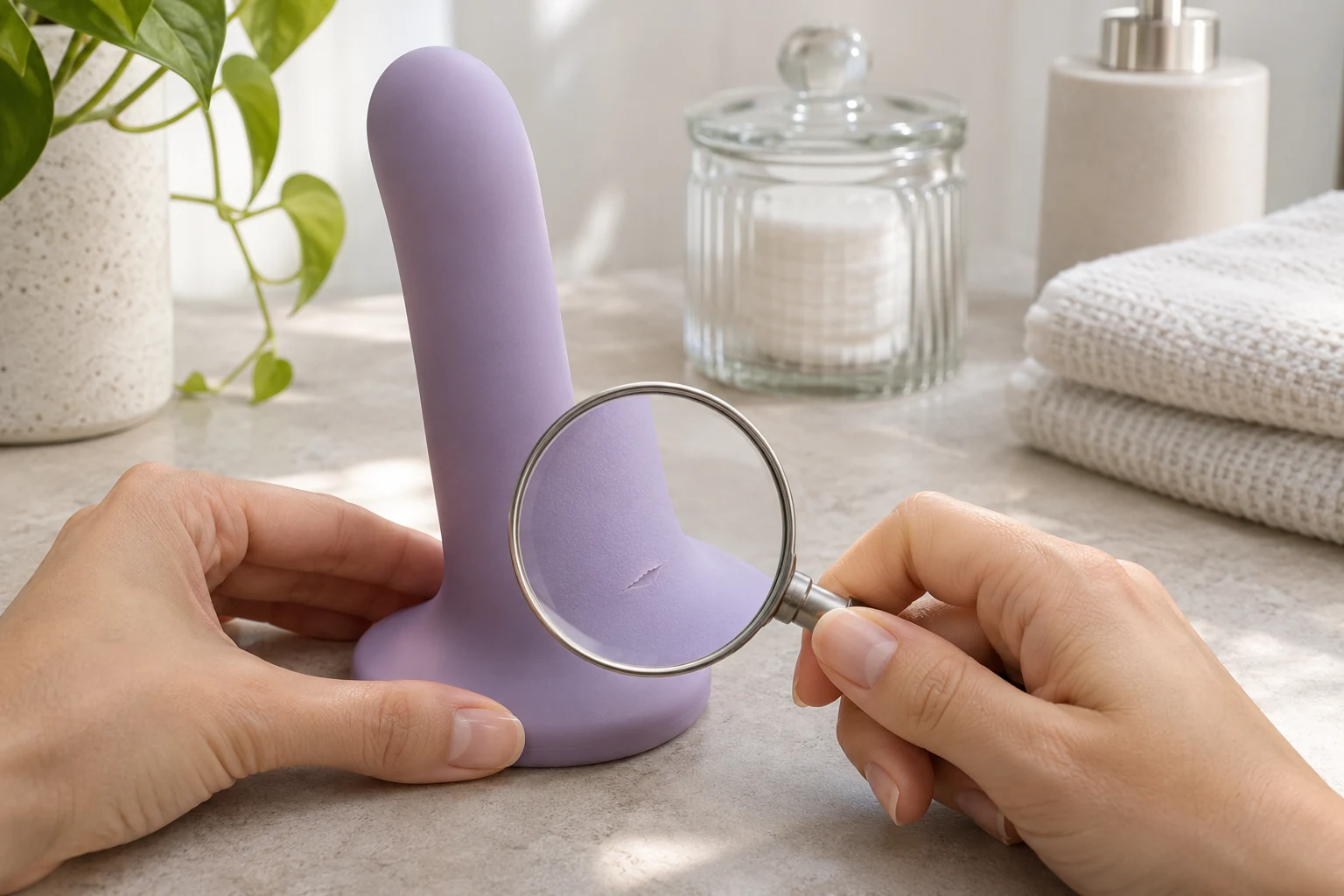
| Crack, tear, puncture, or peeling | No reliable household repair | Stop use, photograph it, and contact the maker or seller |
| A separating layer, loose join, or moving core | No | Stop use and request product-specific guidance |
| Chipped glass or cracked metal | No | Stop use; do not file or polish the damaged area |
| A suction base that no longer seals | Do not rely on a DIY repair | Stop using the suction feature and ask the manufacturer |
| A motor, charging port, or mechanism problem | Not without manufacturer authorization | Stop operating or charging it and contact support |
First, Identify the Kind of Problem
Cleaning residue or surface debris
A film from lubricant, cleaner, lint, or packaging can make a surface feel different without the dildo being structurally damaged. Clean it only with the method approved for its material and construction, rinse if the instructions call for it, and let it dry completely. If tackiness or an oily feel remains after proper cleaning, do not assume another cleaner or powder will fix it. See our guide to cleaning a dildo by material.
A bend or dent from storage
Soft silicone and other flexible materials can lean or hold a temporary shape after being compressed. Remove pressure and let the dildo rest naturally at room temperature. Take a photo before changing its position, especially if it is new and may be eligible for a return. Do not use hot water, a hair dryer, a clamp, or weights to speed up reshaping. Our guide to a dildo that arrives bent covers how to assess a delivery-related bend.
A tear, crack, or peeling layer
These are breaks in the body-contact surface. A patch can cover the visible opening without restoring the original molded surface or proving that the area can be cleaned fully. Stop using the dildo and do not pull at the damaged edge to see how deep the tear goes.
Internal movement or layer separation
A new hinge-like bend, clicking, shifting core, growing bubble, or an outer layer that slides independently may point to a structural issue. Avoid repeatedly bending or squeezing the dildo to test it. Read our guides to possible internal core damage and dual-density layer separation for signs that need closer attention.
What You Can Safely Do Before Contacting the Seller
- Stop using the damaged dildo. This prevents more pressure on a weak area while you assess your options.
- Photograph the condition. Take a clear overall photo and close-ups from more than one angle. Use neutral lighting and include the base or affected seam if relevant.
- Keep the original packaging and order details. Note the product name, date received, material listed, and batch or lot number if available.
- Describe what happened. Explain when you first noticed the change and mention any unusual storage pressure, heat exposure, lubricant, or cleaner. Do not guess at the cause.
- Ask for a product-specific solution. Ask whether the maker authorizes a repair, replacement, or other remedy for that exact model. Follow the seller’s return instructions before washing or modifying a new item.
A retailer may need to assess the original condition. Do not cut, glue, sand, paint, or otherwise alter the dildo while a warranty or return request is open.
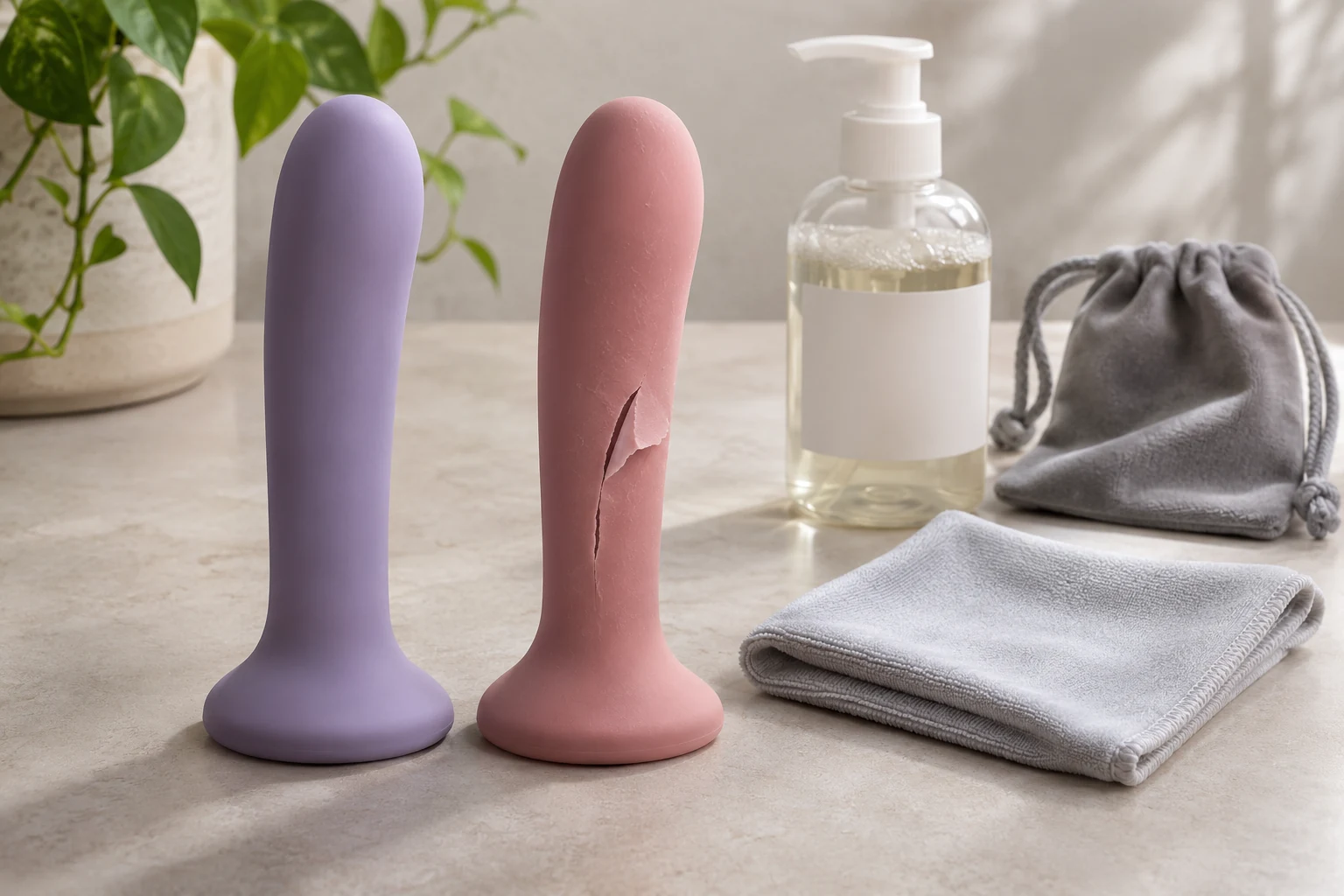
Why Common DIY Repairs Are Risky
Household glue and tape
Adhesives and tapes are not necessarily designed for repeated body contact, washing, flexing, or the dildo’s specific material. They can leave a rough edge, peel away, trap residue, or conceal damage beneath a patch. Do not use superglue, craft glue, silicone sealant, epoxy, or tape unless the manufacturer explicitly approves that exact product and repair method.
Heating, boiling, or melting
Heat is not a dependable way to reconnect a crack or restore a molded surface. A dildo may combine different materials, adhesives, a rigid support, or electronics under its outer layer. Heating can distort the exterior while leaving the underlying problem unchanged. Follow the maker’s care instructions; do not improvise with boiling water, ovens, microwaves, or heat guns.
Cutting or sanding
Removing a damaged edge changes the shape and exposes a new surface that may be rough, uneven, or difficult to clean. Cutting the base can also affect stability or a suction seal. If the base is misshapen, see our separate guide to a dildo base that curls or warps rather than trimming it.
Covering damage with a condom
A condom may be useful as a barrier in some situations, but it does not repair a tear, make a loose part stable, or restore a damaged base. Do not use a barrier as a workaround for a dildo with structural damage.
Material Changes the Decision
“Dildo” describes a shape, not a single material. Silicone, TPE, PVC, rubber-like blends, glass, and metal respond differently to cleaning products, heat, flexing, and wear. A repair method recommended for one material may be unsuitable for another. Confirm the material from the manufacturer rather than relying on feel or a “silicone-like” label.
Even within silicone dildos, construction matters. A solid one-piece design differs from a dual-density, poseable, suction-based, or powered model. If a surface becomes unexpectedly tacky, oily, brittle, or soft, compare the signs with our article on silicone cure and surface problems. A visible defect cannot be diagnosed from appearance alone, so ask the maker before deciding what happened.
For general cleaning, material, and lubricant guidance, Planned Parenthood recommends following the directions supplied with the specific sex toy and gives an overview of body-safe, nonporous materials and lubricant compatibility in its sex toy safety guide.
When Replacement Is the Better Choice
Replacement is usually the safer practical choice if the dildo has an open crack, a tear that catches or spreads, peeling material, a loose or shifting component, a damaged internal mechanism, or a surface that remains sticky after cleaning. The same applies if a glass or metal dildo is chipped, cracked, or has developed a sharp edge.
Consider replacement as well when you cannot confirm what the material is, cannot clean the affected area, or cannot verify that a suction base or handle remains secure. A product-specific assessment from the manufacturer can help clarify whether the issue is covered, but do not keep using the dildo while waiting for an answer.
FAQ: Repairing a Damaged Dildo
Can I glue a crack in a silicone dildo?
Do not use household glue as a repair for a body-contact surface. It may not bond reliably, tolerate flexing and cleaning, or leave a smooth, cleanable finish. Ask the maker whether it offers an approved repair; otherwise, replace the dildo.
Can a small tear be repaired?
A tear may look small but can extend when the material flexes. Do not stretch it to inspect the depth or cover it with adhesive. Stop use and send photographs to the manufacturer or retailer.
Can I fix a suction-cup base that has come loose?
Do not glue, heat, or cut the base. Stop relying on suction and contact the manufacturer. A base that no longer sits flat or holds a seal may not provide dependable attachment.
What if the dildo only has a dent?
If the dildo is new, photograph the dent before trying to reshape it and check the return policy. If it is flexible and was stored under pressure, leaving it uncompressed at room temperature may help it relax. Do not force it or apply heat.
Can I use a damaged dildo with a condom?
A condom does not restore the dildo’s surface or structural strength. Do not use it to cover a crack, tear, peeling layer, or loose part.
A Practical Rule to Keep
Cleanable residue and temporary compression may call for ordinary care or patient observation. A break in the surface, a moving structure, or a damaged attachment feature calls for stopping use and getting the maker’s guidance. If no approved repair can restore the dildo’s original integrity, choose replacement over an improvised patch.