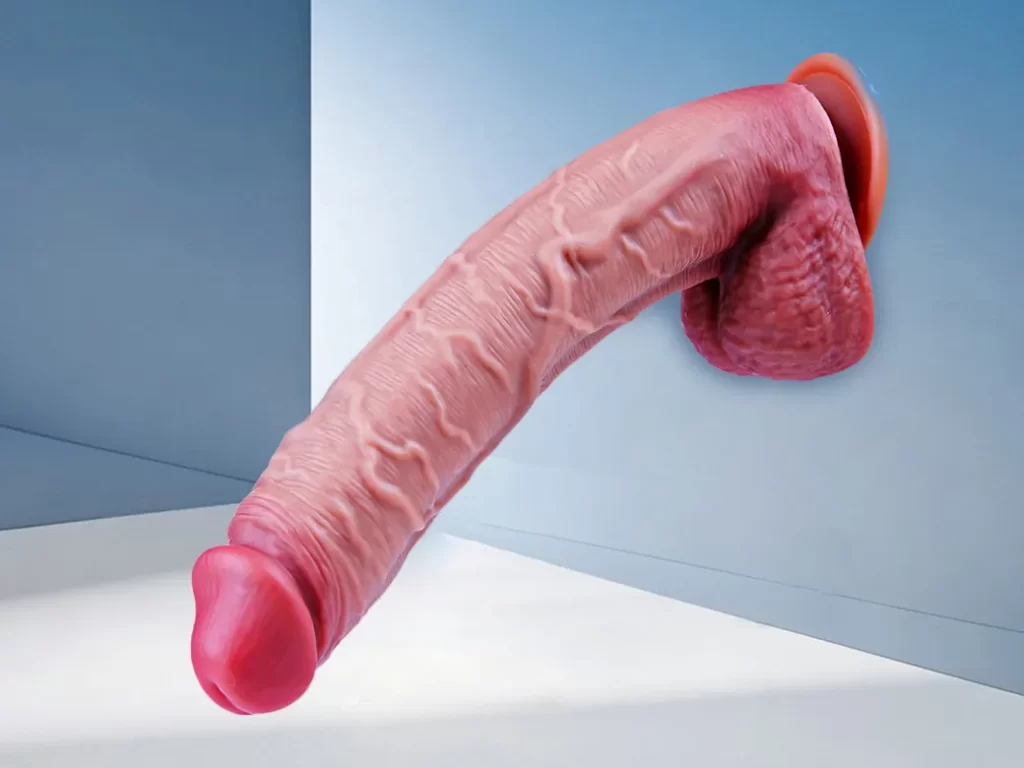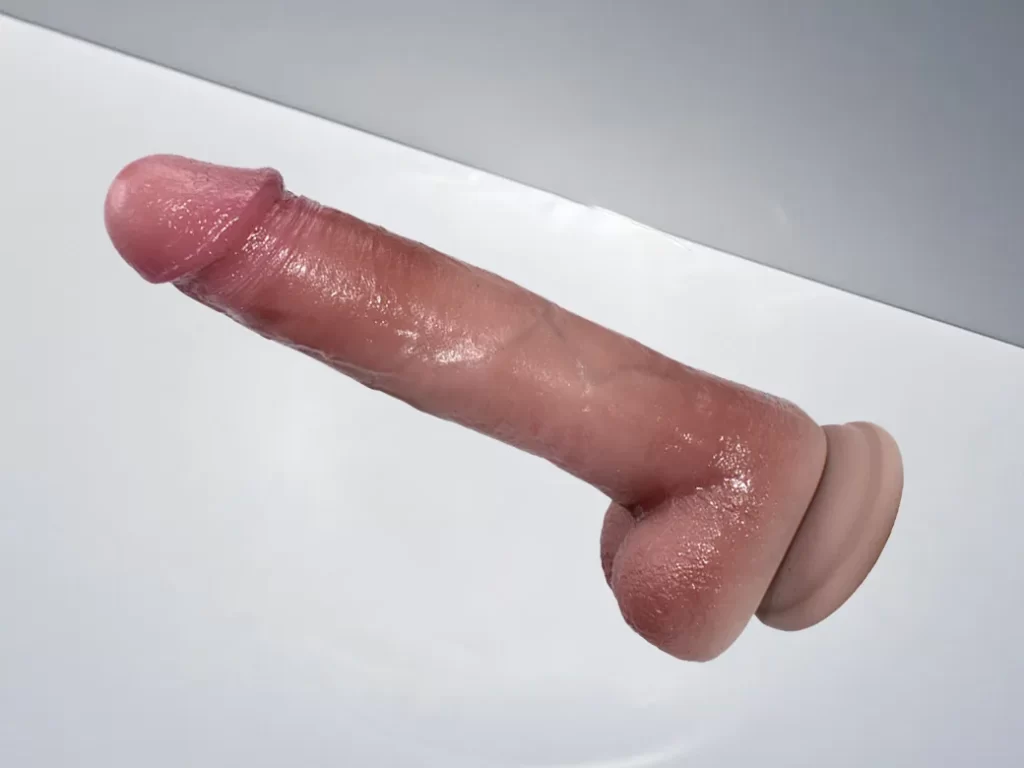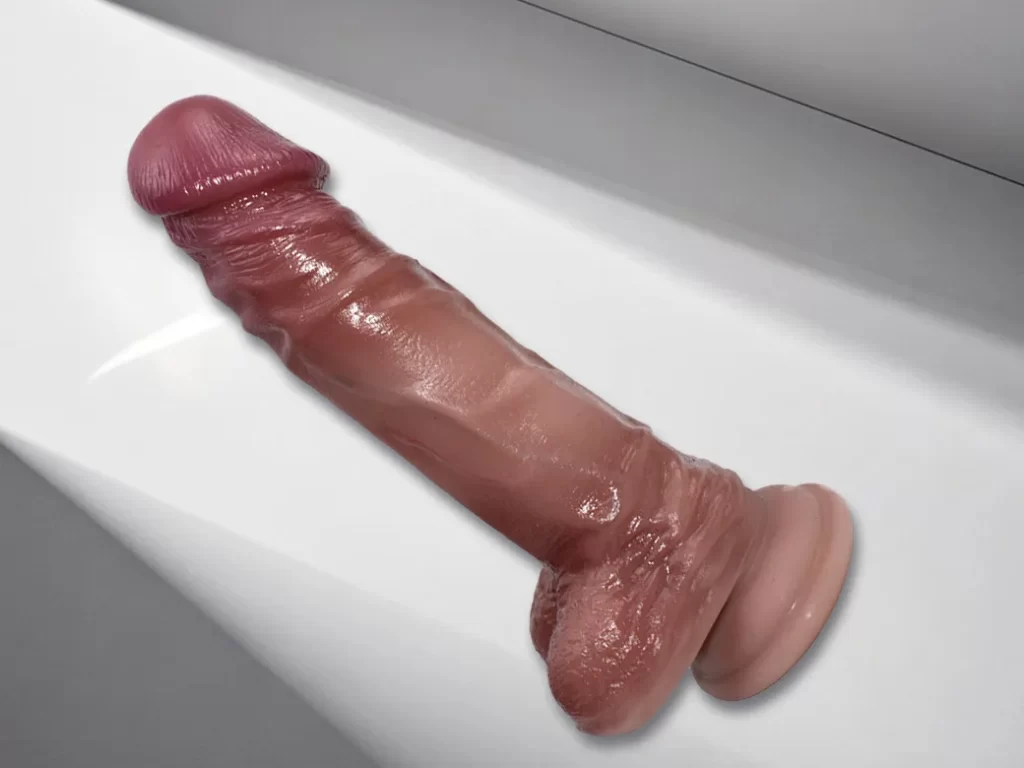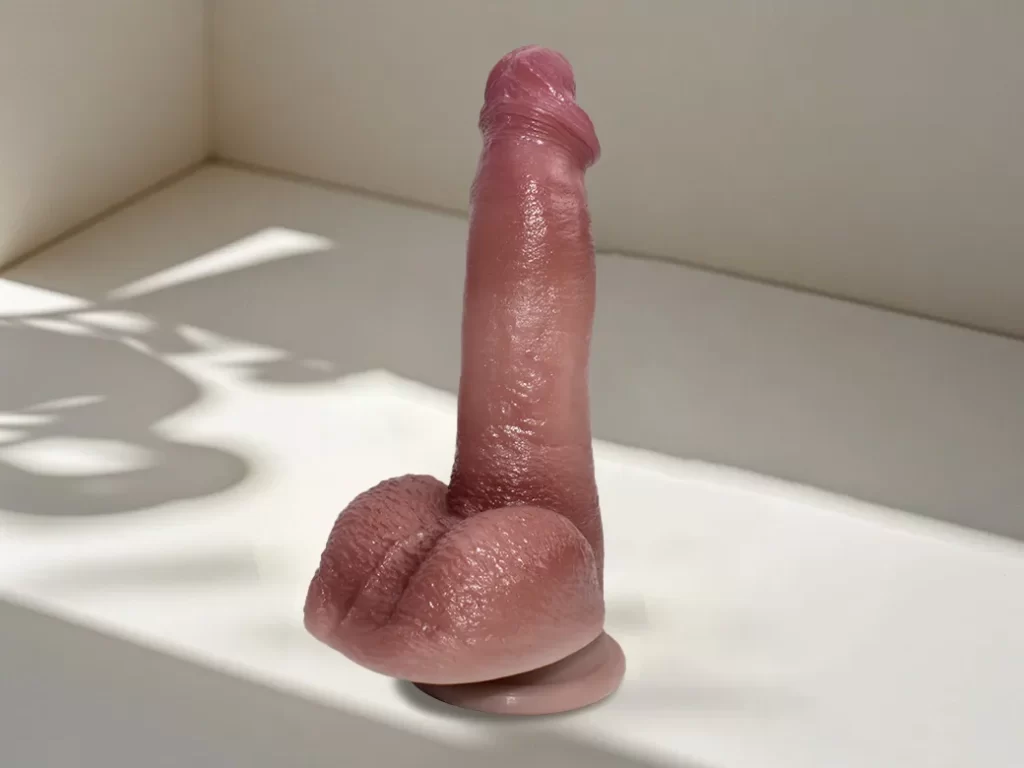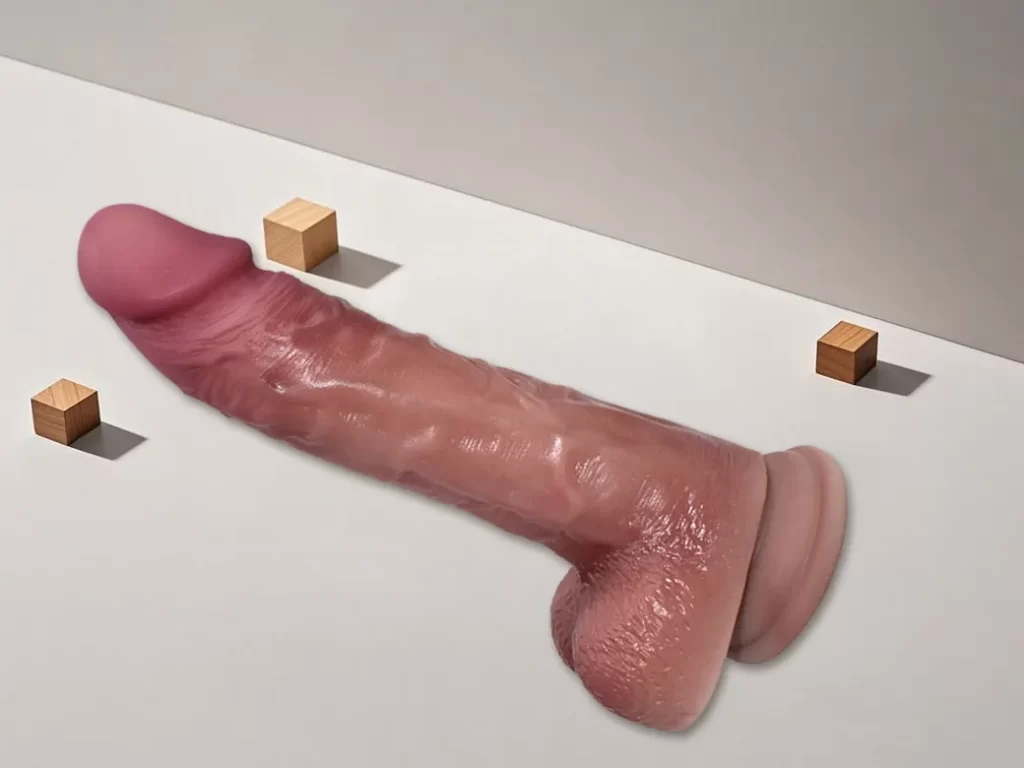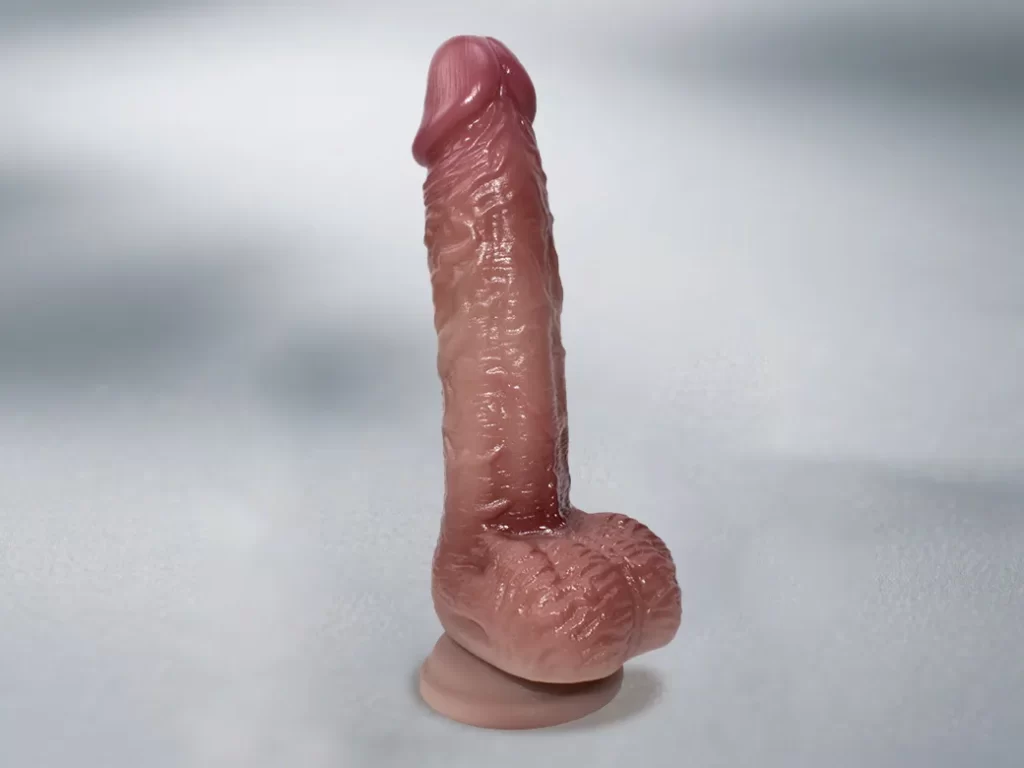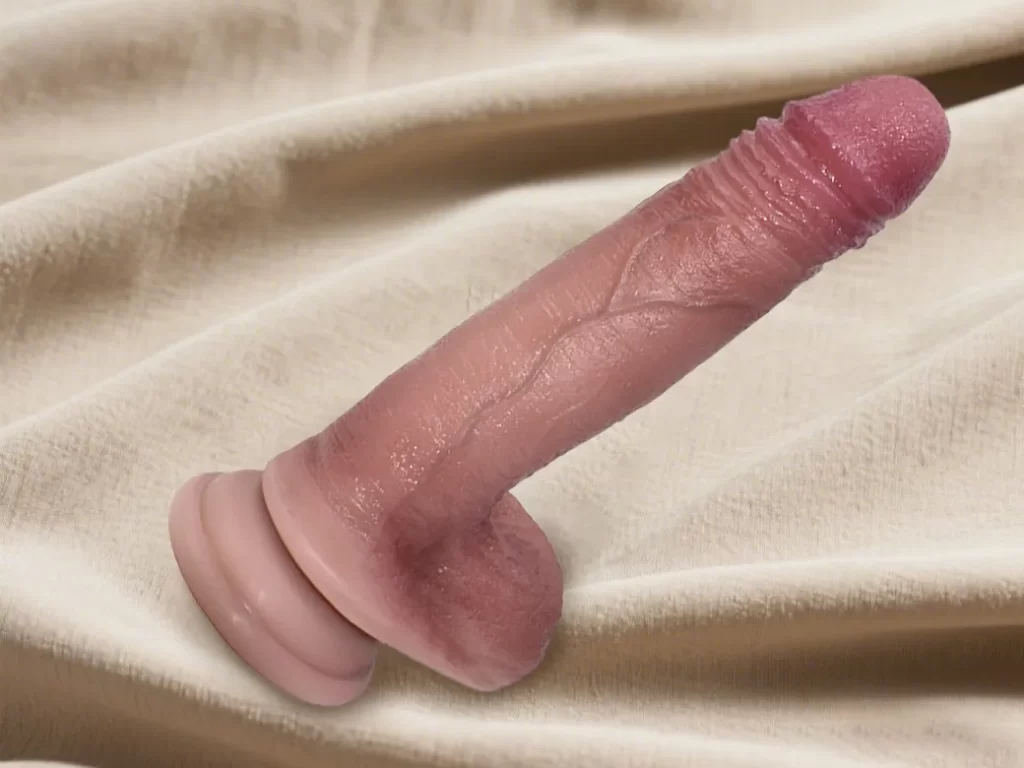

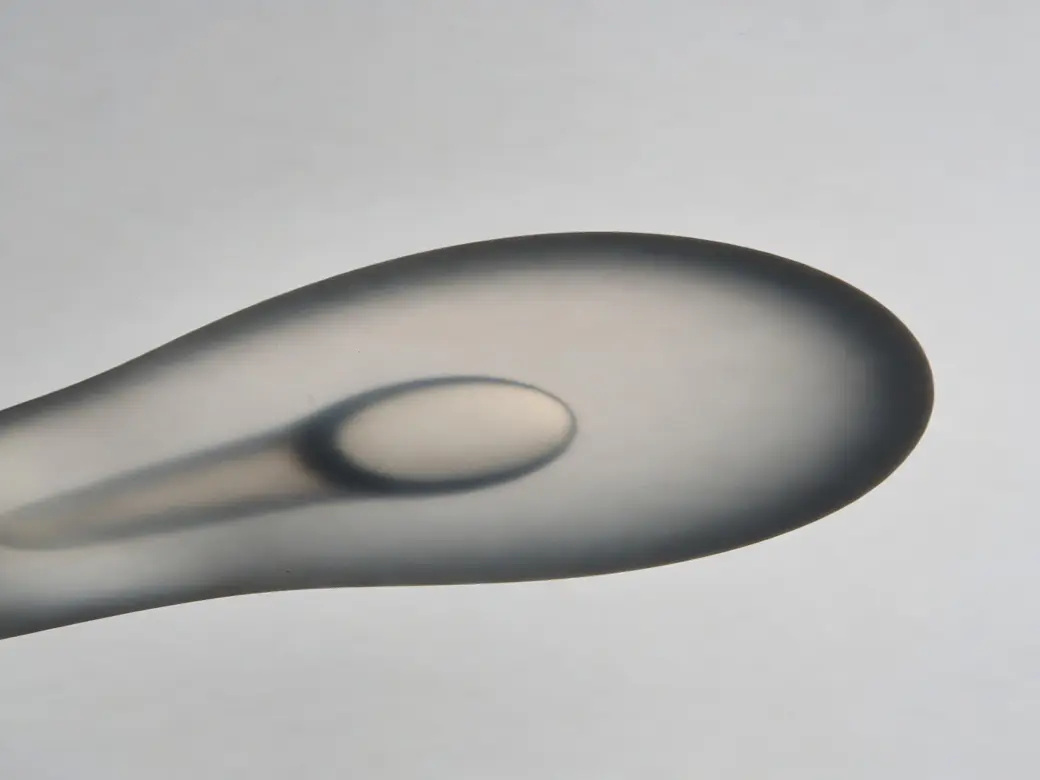
Finding a small bubble inside a new silicone dildo can be confusing. It may look like trapped air, a transparent circle, a cloudy pocket or a tiny hole just below the surface. Some imperfections are cosmetic and remain completely enclosed, while others can indicate a weak area or an opening that is difficult to clean.
The correct decision depends on more than the presence of a bubble. Its location, size, depth and connection to the surface all matter.
A sealed internal bubble is different from an open pinhole. A single tiny bubble in a thick, low-stress section is also different from a cluster of voids close to a thin edge, flexible neck or suction-cup connection.
Before using or returning the product, identify which type of mark you are actually seeing.
The Three-Zone Bubble Test
Most suspected silicone defects can be placed into one of three practical zones.
| Zone | What you see | Likely significance | Recommended response |
|---|---|---|---|
| Green | One or two tiny bubbles fully enclosed beneath an intact surface | Often cosmetic, especially in transparent or translucent silicone | Photograph and monitor |
| Yellow | A larger bubble, several bubbles in one area or a void close to the surface | May create a locally thinner or weaker section | Contact the seller before use |
| Red | An open pinhole, crater, split or cavity that reaches the surface | Potential cleaning and durability problem | Stop use and request an assessment or replacement |
This is a consumer inspection framework rather than a manufacturing standard. A photograph cannot always reveal how deep a void extends, so uncertainty should be handled conservatively.
Why Air Bubbles Form in Silicone
Many silicone products are made by combining liquid components and introducing the mixture into a mold. Air can enter while the material is measured, mixed, transferred or poured.
Silicone mixtures can be relatively viscous, which makes it harder for trapped air to escape before curing. Manufacturers may use vacuum degassing, controlled pouring or pressure-assisted processes to reduce bubbles.
Technical guidance from silicone manufacturer Smooth-On explains that high-viscosity silicone can trap air as it changes from liquid to solid. The company recommends vacuum degassing appropriate formulations to reduce bubbles in the finished material. Its silicone degassing guidance and Dragon Skin silicone specifications both describe degassing as a way to minimize entrapped air.
This does not mean that every visible bubble proves the manufacturer skipped quality-control procedures. Even with careful mixing and degassing, a small amount of air can sometimes be introduced during pouring or around detailed areas of a mold.
A complete how silicone dildos are made guide can explain the wider manufacturing process, but the important point for shoppers is simple: trapped air normally originates during production, not during ordinary ownership.
A bubble cannot suddenly enter the middle of fully cured, solid silicone without a pathway from the surface.
Is a Sealed Internal Bubble Unsafe?
A small bubble that is completely enclosed inside otherwise intact silicone is generally a manufacturing imperfection rather than a hygiene cavity. Because the surface remains closed, the bubble itself is not directly exposed to lubricant, water or residue.
However, appearance alone cannot verify:
- The exact silicone formulation
- Whether the material was correctly mixed and cured
- How close the bubble is to the surface
- Whether additional voids exist deeper inside
- How the affected area will respond to repeated bending
The bubble therefore should not be used as proof that a dildo is body-safe—or as automatic proof that it is unsafe. Material disclosure, seller reliability, surface condition and overall construction still need to be evaluated through a broader dildo materials guide.
If the product is new and the bubble is noticeable, photographing it before use gives you a reference point. If it later becomes larger, moves closer to the surface or develops into a split, discontinue use and contact the seller.
Internal Bubble, Surface Pinhole or Cloudy Spot?
Several marks can look similar through translucent silicone. Examine them without cutting, puncturing or aggressively stretching the product.
A Sealed Internal Bubble
A trapped bubble often has a rounded or oval boundary. It may reflect light differently as the dildo is rotated. The outer surface above it remains smooth and uninterrupted.
The bubble should not collect water when the dildo is rinsed because it has no opening to the exterior.
An Open Pinhole
A pinhole is a small opening in the outer surface. Under bright side lighting, it may appear as a dark dot, indentation or tiny crater.
Do not insert a needle or other object to determine its depth. Puncturing the silicone could enlarge the opening and make it impossible to tell whether the damage was originally present.
If water or residue visibly enters the hole, the mark is no longer merely internal.
A Cloudy Area
Cloudiness is not always trapped air. It may come from pigment distribution, a matte surface, light scattering through thick silicone or the inner core of a dual-density design.
Unlike a clearly defined air bubble, a pigment variation may have soft or irregular borders. It may also extend through a larger region instead of forming a single round pocket.
A Core Boundary
Dual-density dildos contain a softer outer layer surrounding a firmer internal structure. Depending on color and opacity, the boundary between these layers may be visible.
A consistent core outline is part of the construction. An isolated empty pocket, open cavity or separated area between layers is a different concern. Read a dual-density vs solid silicone dildo comparison before judging every visible internal line as a defect.
A Mold Line
A mold line appears on the exterior where sections of the mold met. It normally follows a longer path along the product instead of appearing as a circular pocket inside it.
If the mark is raised, rough or peeling, refer to our dildo seams and mold lines guide. That article covers external flashing and parting lines, while this guide focuses on air trapped within or opening through the silicone.
Why Bubble Location Matters
The same-sized bubble can have different implications depending on where it appears.
A dildo does not flex evenly throughout its entire shape. Thin areas, sharply curved sections and transitions between a shaft and base can experience more repeated bending than a thick, solid area.
Pay closer attention when a bubble is located:
- Directly beneath the outer surface
- Beside an existing seam
- In a thin or narrow section
- At the connection between the shaft and suction cup
- Around a sharply textured detail
- Near a built-in motor, control or attachment point
- Among several other bubbles in the same area
A void removes material from the affected location. If that location is already thin or frequently flexed, there may be less silicone available to distribute stress.
By contrast, one pin-sized bubble deeply enclosed inside a thick section may never produce a visible change. It should still be documented, particularly if the dildo is new and covered by a return or quality policy.
Size and Clustering Matter Too
There is no universal consumer rule stating that a bubble below a particular diameter must be acceptable. Different silicone formulations, dildo designs and manufacturing specifications make a single numerical cutoff unreliable.
Instead, compare the imperfection with the surrounding structure.
A bubble deserves closer attention when:
- It is visibly large relative to the thickness of the affected area
- It creates a raised or sunken spot on the surface
- Several small bubbles form a concentrated cluster
- The silicone looks unusually thin above the void
- Gentle movement causes the surface over the bubble to crease
- The mark has changed since the product arrived
Do not repeatedly bend the product in an attempt to make the bubble fail. A careful visual inspection under good lighting is more appropriate than a destructive test.
The next step is to determine whether the product should be kept, monitored, returned or replaced.
How to Inspect a Suspected Silicone Bubble
A careful inspection should help you classify the mark without damaging the dildo. Perform the check before first use whenever possible.
Step 1: Clean and Dry the Exterior
If the product has already been handled, clean it according to the manufacturer’s directions and allow it to dry completely. Moisture droplets can resemble clear bubbles, especially on glossy silicone.
Do not boil the dildo merely to inspect it. Heat resistance and cleaning instructions vary by construction, particularly when the product contains electronics, adhesives or multiple materials.
Step 2: Use Directional Light
Place the dildo against a plain background and direct a bright light across it from the side. Rotating the product slowly can reveal whether the mark is:
- On the surface
- Completely enclosed
- Connected to a seam
- Surrounded by a cloudy area
- Affecting the shape of the exterior
Translucent silicone may also be examined with light placed behind it. Do not assume that every shadow represents an air pocket; internal cores and pigment variations can create similar shapes.
Step 3: Inspect Without Puncturing
Run a clean fingertip lightly over the area. An internal bubble should not create an open edge that catches the skin.
Avoid using a needle, knife or fingernail to test the mark. An aggressive inspection could turn a cosmetic imperfection into a tear and may affect your ability to request a replacement.
Step 4: Record Its Size and Position
Photograph the dildo from several angles. Include one image showing the entire product and another showing the suspected defect at close range.
Place a ruler beside—not on top of—the area if scale is difficult to judge. Record whether the bubble is in the shaft, head, base, suction cup or another component.
This documentation is especially useful when completing a new dildo inspection checklist immediately after delivery.
Keep, Monitor or Return?
The following decision guide can help you choose a proportionate response.
Usually Reasonable to Monitor
Keeping the product may be reasonable when all of these conditions apply:
- The bubble is tiny and fully enclosed
- The surrounding surface is smooth and intact
- It is located in a thick section
- There are no nearby splits, open holes or separated layers
- The area does not change during gentle handling
- The seller confirms that it falls within the product’s quality standard
Monitoring does not require repeatedly stretching the silicone. Simply inspect the area during normal cleaning and stop using the product if the surface changes.
Contact the Seller Before Use
Ask the seller or manufacturer to review the issue when:
- The dildo arrived with a noticeable bubble
- The void is close to the surface
- Several bubbles appear in one area
- The affected section is thin or frequently flexed
- You cannot determine whether the mark is open
- The product differs significantly from its listing images
- You are still within the return or quality-claim period
Contacting the seller before use is important because hygiene policies may limit returns after intimate products have been opened or used.
Request a Replacement or Refund
A replacement is generally the better option when you find:
- An open pinhole or cavity
- A split extending from the bubble
- A surface that is peeling or separating
- A void that collects water or residue
- Multiple large cavities that distort the shape
- A defect where the shaft joins the base
- Sticky, liquid or incompletely cured material
- A bubble that has broken through the surface
These signs go beyond minor visual variation. They may affect durability, cleaning or the integrity of the outer surface.
For a wider evaluation of construction, materials and finish, see how to tell if a dildo is good quality.
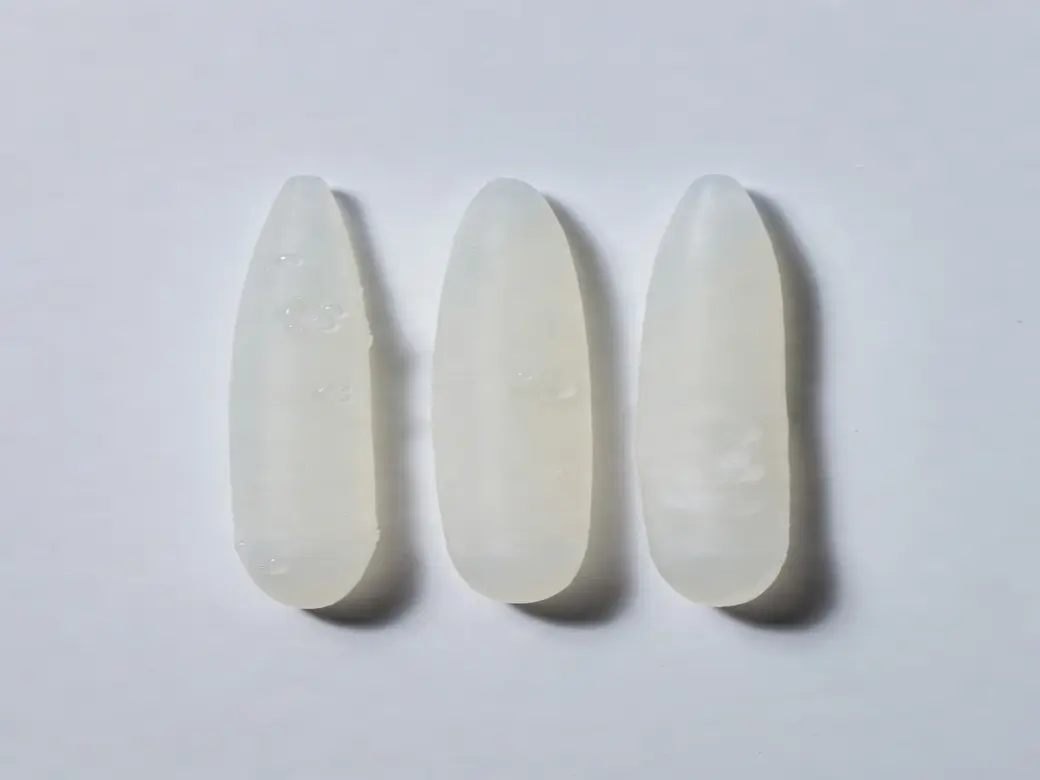
Can an Open Pinhole Be Cleaned?
An open cavity is more difficult to inspect and clean than a continuous surface. Even when the visible opening is small, its internal depth may be unknown.
Do not attempt to repair it with:
- Household glue
- Bathroom sealant
- Craft silicone
- Nail products
- Adhesive tape
- Melted material
- An unverified DIY coating
These products may not bond correctly, may introduce unsuitable chemicals and can hide further deterioration without restoring the original construction.
A factory-made dildo with an open pinhole should usually be assessed under the seller’s defect policy. Replacement is more dependable than attempting to rebuild the surface at home.
What If the Bubble Appears Later?
A true bubble trapped inside cured silicone was normally created during manufacturing. If a mark seems to appear only after months of ownership, several explanations are possible:
- The bubble was present but previously difficult to see
- The silicone above it has become thinner
- Repeated flexing has made the area more visible
- A small internal void has reached the surface
- Layers in a dual-density product have begun separating
- The mark is actually a new crack rather than a bubble
Compare the area with older product photographs if available. Stop use if the exterior has opened, changed shape or become easier to deform.
An older product with a developing void should be evaluated alongside other replacement signs described in when to replace a dildo.
How to Report the Problem to a Seller
A useful quality claim is factual and easy to review. Include:
- Your order number
- Product name and variation
- Delivery date
- Whether the product has been used
- Location and approximate size of the mark
- Whether it reaches the surface
- Clear photographs or a short video
- The resolution you are requesting
You can use this message:
Hello, I found what appears to be an air bubble or void in the silicone of my new dildo. It is located at [location] and measures approximately [size]. The area appears to be [fully enclosed/open/close to the surface]. The product has not been used. I have attached clear photographs for review. Could you please confirm whether this meets your quality standard or arrange a replacement?
Keep the original packaging until the seller responds. Follow the store’s dildo warranty and returns guide rather than mailing an intimate product back without authorization.
Frequently Asked Questions
Do bubbles mean a dildo is made from fake silicone?
No. Air can become trapped in genuine silicone during mixing or casting. A bubble does not confirm the exact formulation, purity or quality of the material. Evaluate the product disclosure and manufacturer separately.
Are bubbles more common in clear silicone?
Bubbles are easier to see in transparent and translucent materials. That does not necessarily mean those materials contain more bubbles than opaque silicone.
Can an internal bubble grow?
The trapped air does not usually generate more material by itself. However, repeated stress may stretch or tear the silicone surrounding a void, making the affected area appear larger or bringing it closer to the surface.
Is a cloudy patch the same as an air bubble?
Not always. Cloudiness may come from pigment, material thickness, internal layers or light scattering. A bubble normally has a more defined boundary, while a pigment variation may appear diffuse.
Should I return a dildo because of one tiny bubble?
Not automatically. If the bubble is sealed, extremely small and surrounded by intact silicone, it may be cosmetic. A new product with a large, clustered, near-surface or open void should be reported to the seller.
Can I squeeze the bubble out?
No. Once silicone has cured, an enclosed bubble cannot be pushed out like air in a liquid. Strong squeezing or stretching may damage the surrounding material.
Final Verdict
Not every air bubble makes a silicone dildo defective, but not every bubble should be ignored.
A tiny, fully enclosed mark in a thick section may only affect appearance. A near-surface void, clustered bubbles, an open pinhole or a cavity in a highly flexible area deserves closer attention.
Inspect the product under good lighting, document the mark and contact the seller before use when the condition is uncertain. Do not puncture, cut or repair the area yourself.
Shop more confidently by comparing clearly described silicone dildos from identifiable brands, and inspect every new product before removing its packaging or using it.