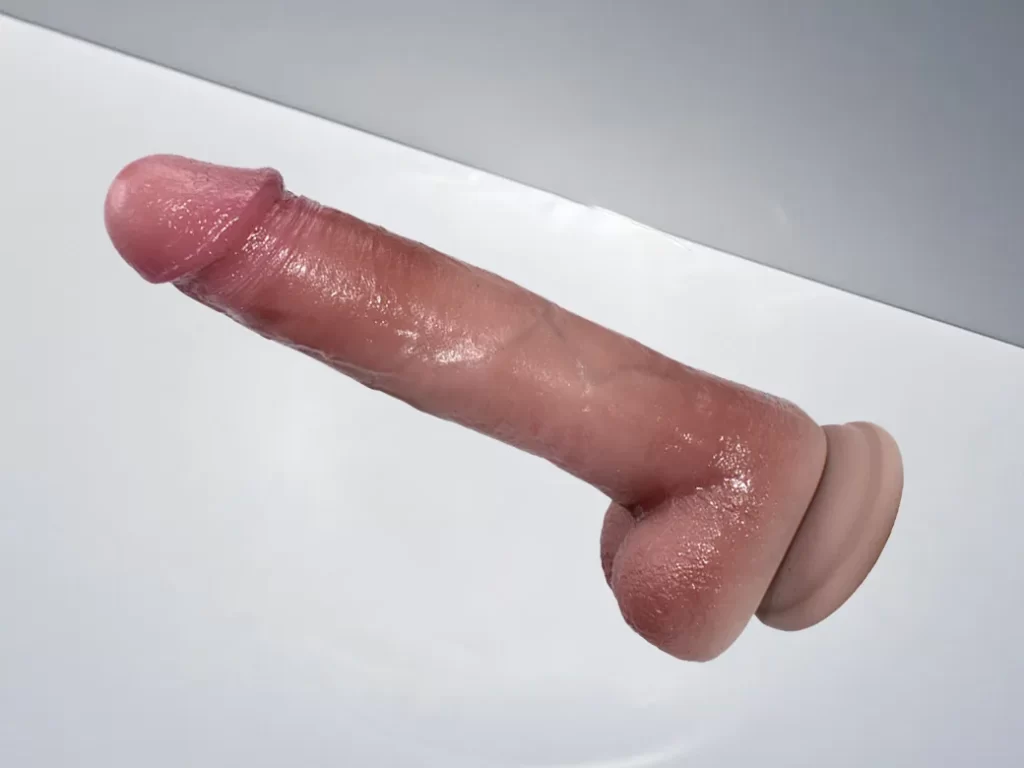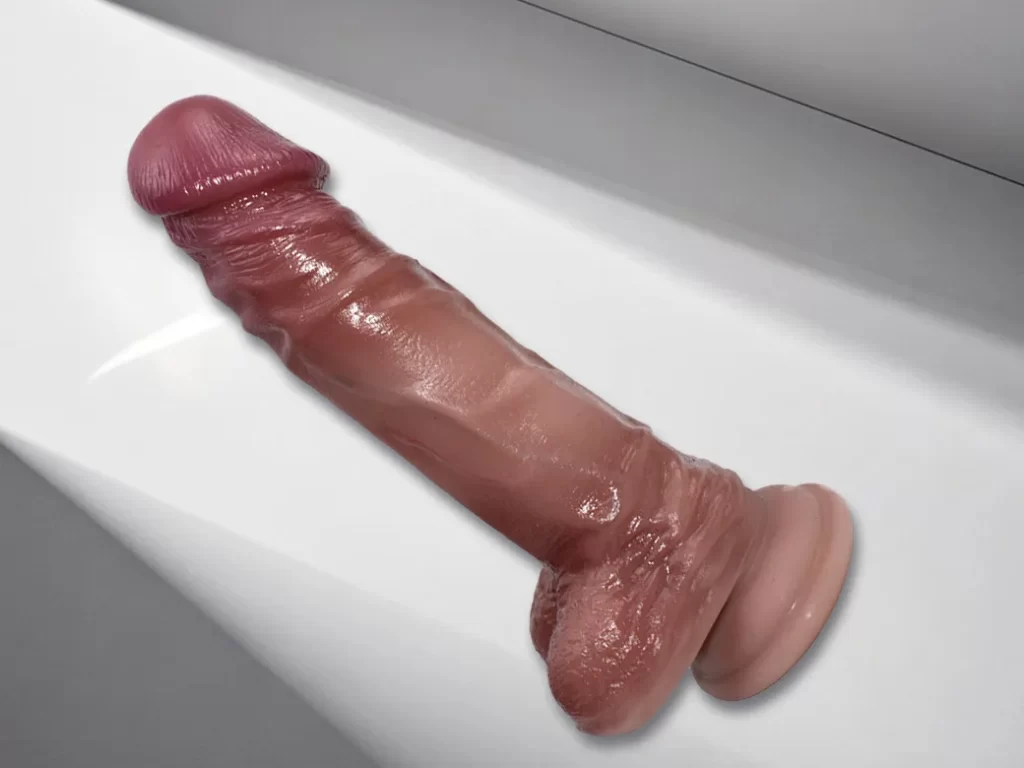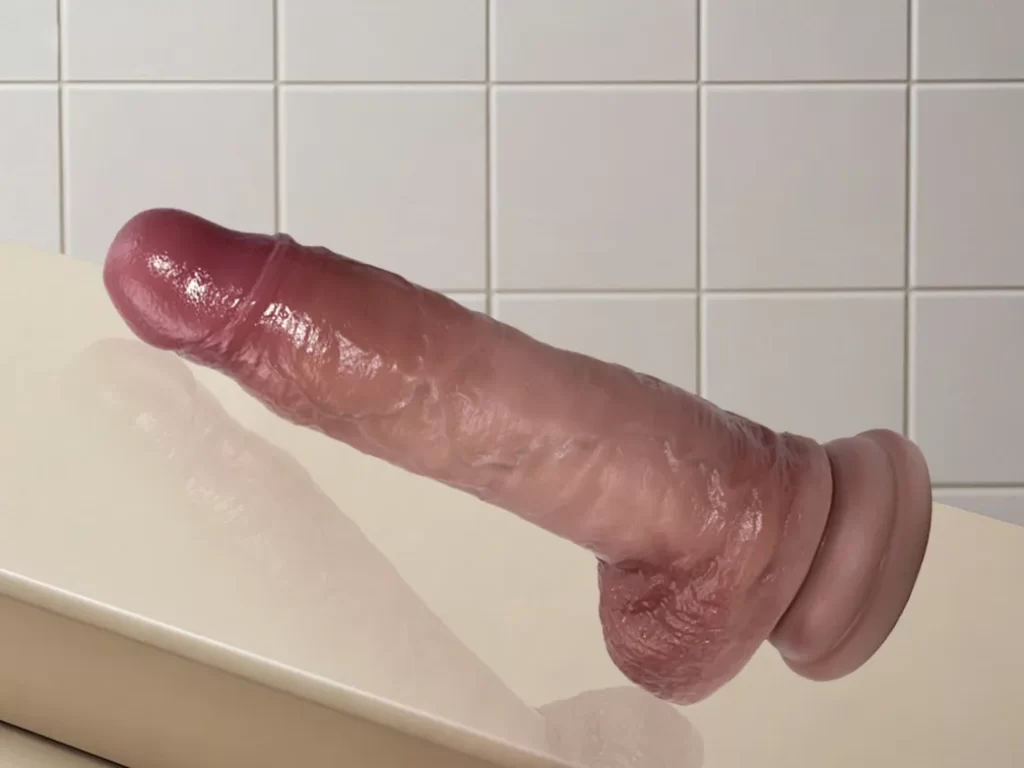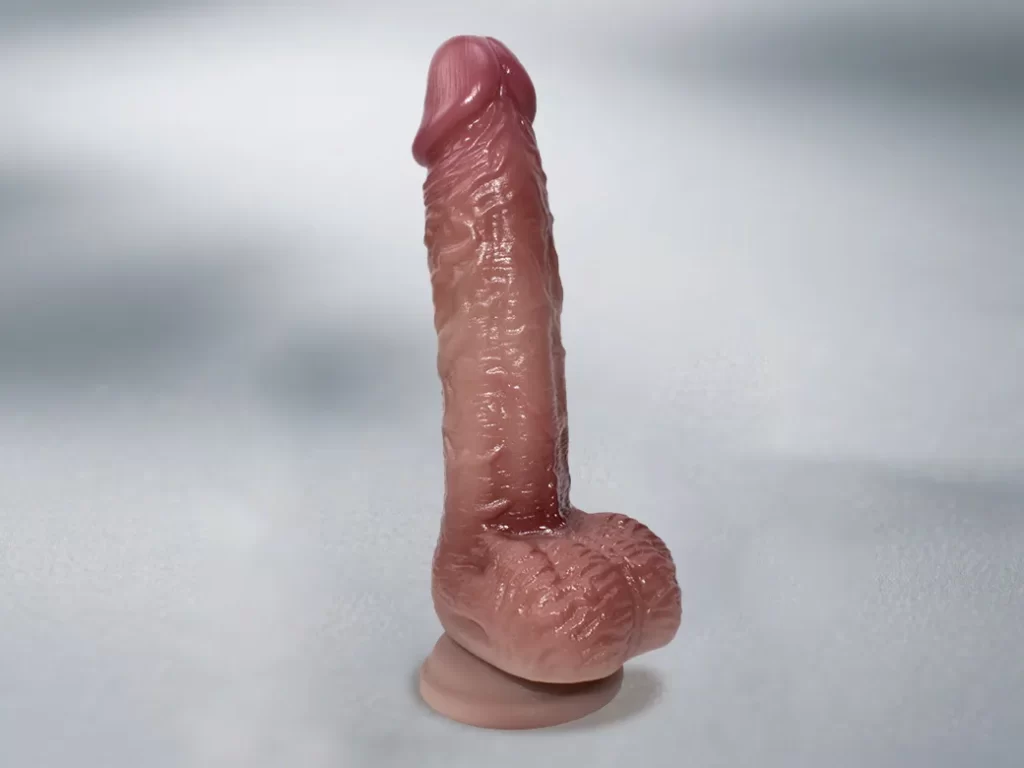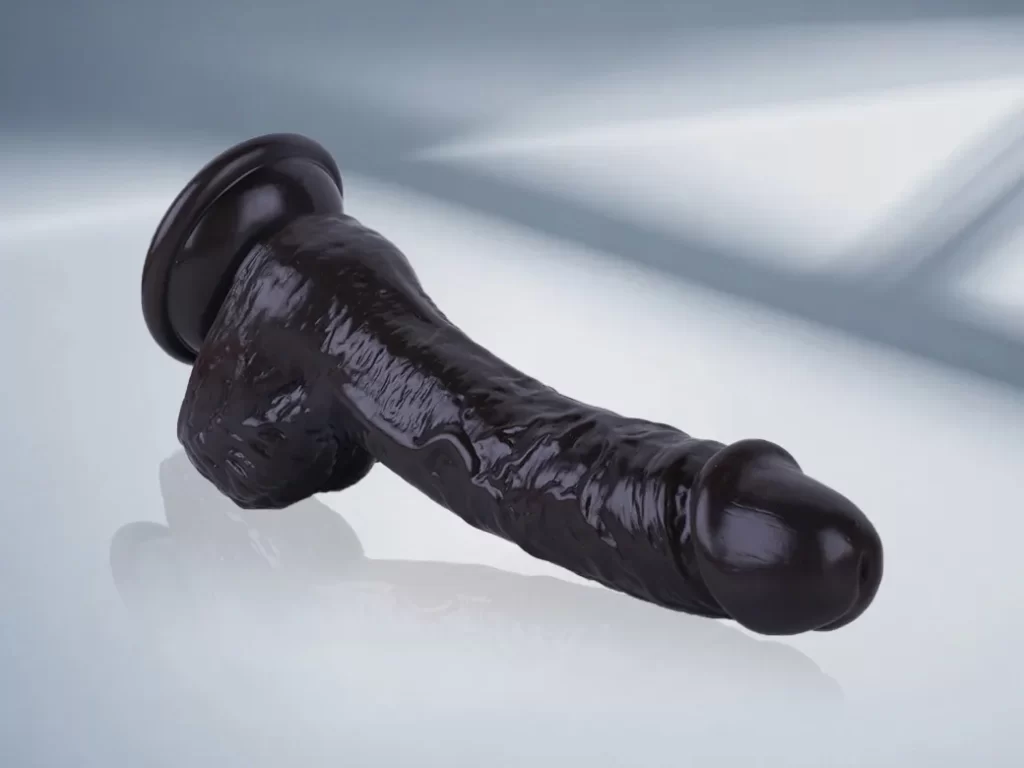


A “waterproof” label can sound like a simple yes-or-no answer, but shower use depends on the exact dildo and the conditions it is designed to handle. A non-powered silicone dildo has different water concerns from a rechargeable dildo with a charging port, control panel, seam, or removable attachment. And a suction cup may have to grip a wet, soapy tile surface even when the dildo itself is approved for water exposure.
Quick answer: Use a dildo in the shower only when its manufacturer explicitly allows shower use or its exact water-protection instructions cover that exposure. Do not infer that permission from the material, the word “water-resistant,” or a similar-looking model.
Start with the construction, not the material name
Silicone, glass, and metal describe materials; they do not tell you whether a powered base, seam, battery compartment, charging port, valve, or attachment can get wet. A dildo may have a water-compatible shaft and a separate component that must stay dry. Some powered models allow rinsing but not shower use or immersion. Others have model-specific approvals for certain conditions.
Before bringing a dildo into the shower, identify the complete item you plan to expose. Check whether the instructions cover the full assembly, including a detachable shaft, remote, charging seal, controller, and suction base. If the manufacturer says to remove an attachment before cleaning, that is not automatically permission to use the assembled dildo under running water.
Our guide to reading dildo packaging and claims explains why terms such as “waterproof” should be checked against the actual rating and instructions.
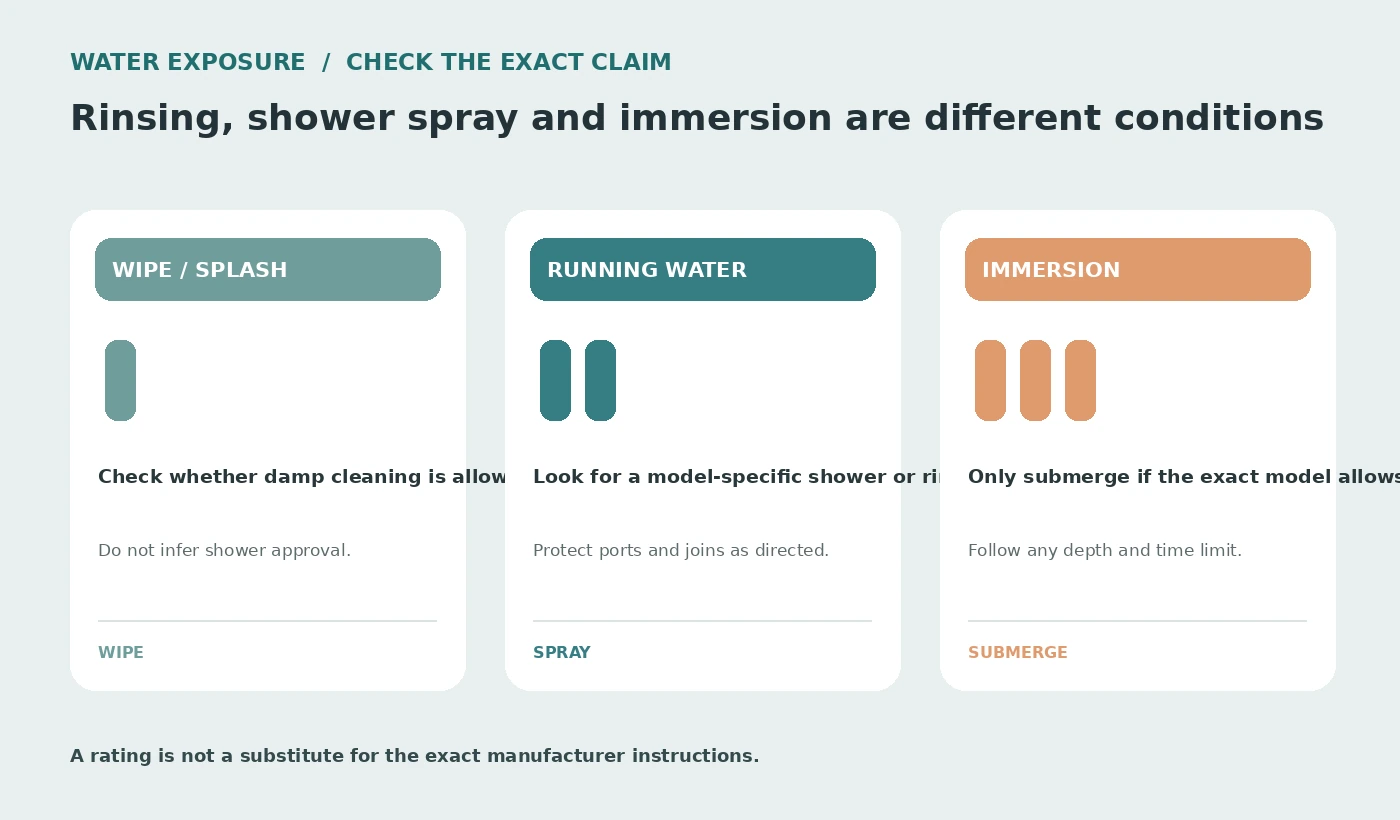
Water-resistant, shower-ready, and submersible are not synonyms
Some powered dildos use an IP code to describe protection provided by the enclosure against water under specified test conditions. The IEC 60529 standard is the basis for the IP Code classification. However, a code is not a blanket promise that every product with that label can be used in every wet setting; the model’s instructions still determine permitted use.
For example, one manufacturer describes an IPX6-rated model as suitable for shower use but not for soaking in a bathtub, while its FAQ for another IPX6 model says not to use that model in the shower. These model-specific instructions show why shoppers should not turn one product’s rating into a universal rule. See the manufacturer’s shower-use instructions for Spinel and its separate Gemini water-resistance guidance.
| Claim or situation | What it may indicate | What to confirm |
|---|---|---|
| Wipe-clean or damp cloth | Surface cleaning may be allowed with limited moisture. | Whether running water, rinsing, or shower spray is allowed. |
| Water-resistant or splash-resistant | Some water exposure may be tolerated. | Whether the exact model is approved for direct shower spray. |
| Shower-safe | The manufacturer allows shower use under stated conditions. | Any limits for ports, seals, attachments, heat, or use time. |
| Submersible or immersion rating | The enclosure may have been assessed for immersion conditions. | The exact depth, duration, and whether all components are included. |
| No water information | The listing does not establish water protection. | Ask the maker; until clarified, keep it out of the shower. |
IP ratings classify enclosure protection, not material safety, lubricant compatibility, or the condition of an older or damaged dildo. The IEC overview describes the scope of IEC 60529 and the IP Code. For practical use, rely on the instructions for your exact model.
A quick permission check before shower use
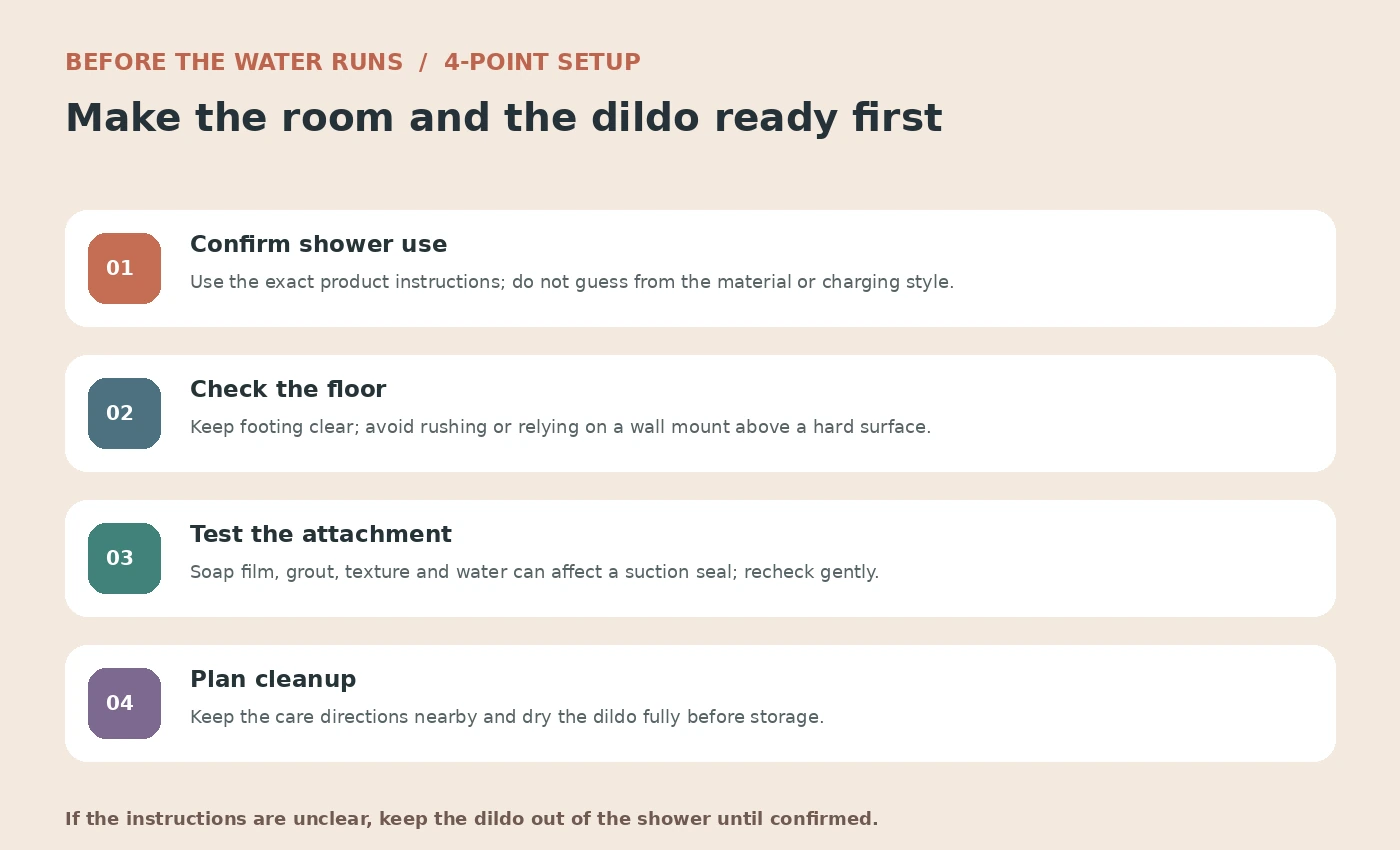
- Find the manual or official product page. Search the exact model name and version, not just the brand.
- Look for a direct shower statement. “Water-resistant,” “washable,” or “rinse to clean” may not authorize shower use.
- Check the complete assembly. Confirm whether the base, remote, charging cover, removable parts, and controls share the same instructions.
- Read any limits. Note water temperature, time, depth, charging-port position, and whether a seal must be installed.
- Inspect condition. Do not expose a cracked, peeling, loose, or recently repaired dildo to water.
If you cannot verify shower use: keep the dildo dry and clean it by the method the manufacturer specifies. Do not test waterproofing by submerging it.
What about a suction-cup dildo on shower tile?
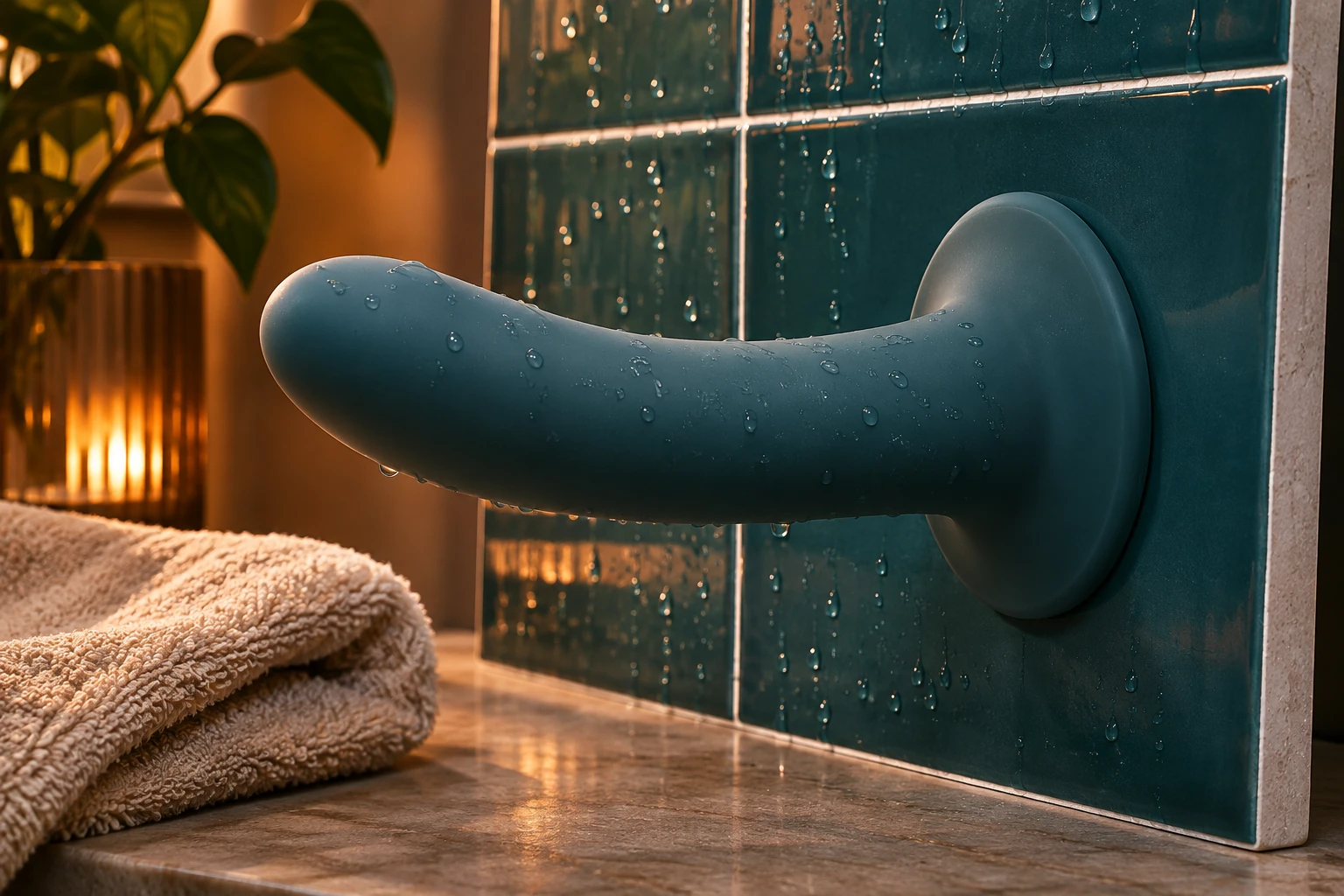
Waterproofing and attachment are separate questions. A dildo may be suitable for shower exposure while its suction cup still fails to grip a particular wall. Tile grout, embossed patterns, curved surfaces, soap film, body wash, residue, and uneven grout lines can prevent a continuous seal.
Before relying on a suction cup, choose a clean, smooth, flat area large enough for the whole cup. Keep lubricant and soap away from the contact patch, attach the base according to its instructions, and check it gently before use. Do not treat a successful attachment test as a guarantee that the cup will remain secure during movement. A wall-mounted dildo can fall onto a hard floor, so keep the setup low and avoid placing it where a slip could cause an impact.
If the cup shifts, leans, peels, or rotates, stop and reposition it. See our guide to suction-cup dildo stability, or browse the suction-cup dildo collection to compare base styles.
Grip, footing, and lubricant need their own plan
A shower floor and wet hands reduce friction. That can make it harder to hold a smooth dildo, keep a position steady, or reach for controls. Put needed items within easy reach, avoid balancing on one foot, and use a position that lets you stop or adjust without rushing. A shower stool or stable support may help some people, but only use bathroom equipment as intended and make sure it cannot slide.
Water is not a substitute for lubricant. Shower water can rinse lubricant away, so use a lubricant that is compatible with the dildo’s material and follow the lubricant and dildo instructions. Reapply when needed rather than continuing with uncomfortable friction. If the dildo is silicone, check before using a silicone-based lubricant; the maker’s guidance for that exact material takes priority.
If the setup feels slippery or difficult to control, pause and move to a dry, stable setting. A hands-free mount can reduce the need to hold the shaft, but it adds its own attachment and fall risks.
After shower use: clean, dry, and store carefully
Follow the cleaning directions even if the dildo has been rinsed during shower use. Shower water may not remove lubricant or residue from textured areas, seams, ports, or a suction-cup rim. Use only a compatible cleaner and avoid directing water into openings that the manufacturer says to keep dry.
Dry the entire dildo and any removable parts before storing them. Pay attention to seams, charging covers, control buttons, and the underside of a suction cup. Do not charge a powered dildo while it is wet or if moisture may remain around a port; use the maker’s instructions for drying and charging. Store the dildo in a clean, dry place, away from direct heat and incompatible materials.
For material-specific steps, use our dildo cleaning guide. If moisture or residue seems to remain inside a seam or cavity, check the manufacturer’s instructions before using heat or attempting to open the product.

Common assumptions that lead to trouble
- “It is silicone, so it is waterproof.” The exterior material does not confirm the protection of a motor, port, seam, or attachment.
- “Water-resistant means safe in the shower.” The permitted exposure may be limited to wiping or rinsing.
- “A higher rating means every kind of water use is allowed.” Different tests represent different exposure conditions; read the model’s instructions.
- “The suction cup held once, so it is secure.” Wet residue, soap, movement, and tile texture can change adhesion.
- “The shower cleans it automatically.” Rinsing does not replace the manufacturer’s cleaning routine.
- “The same brand uses the same waterproofing on every model.” Construction and instructions can vary between products.
Quick decision table
| Your situation | Next step |
|---|---|
| The exact manual says shower use is permitted | Follow its limits, inspect seals and keep charging parts dry as directed. |
| The manual says water-resistant or rinse-clean only | Use only the stated cleaning method; do not assume shower use is allowed. |
| The product page is silent about water | Ask the manufacturer or keep the dildo out of the shower. |
| The dildo has a crack, loose seam, or damaged port cover | Do not expose it to water; contact the seller or maker. |
| The suction cup slips on tile | Stop, clean and dry the contact area, and try a compatible smooth surface at a lower height. |
Frequently asked questions
Can I use a non-vibrating silicone dildo in the shower?
Only if the manufacturer’s instructions allow shower use for that exact dildo. Silicone as a material does not confirm whether its full construction or any attached base is suitable for water exposure.
Can I use an IPX6 dildo in the shower?
Do not decide from the rating alone. Some manufacturers approve shower use for a particular IPX6 model, while others may limit a similarly rated model to rinsing. Check the exact instructions.
Does waterproof mean I can submerge the dildo?
Not always. Look for explicit immersion permission and any depth or time limit. Shower approval and submersion approval are not interchangeable.
Can soap make a suction cup fall off?
Soap film or lubricant on the contact area can interfere with adhesion. Clean and dry the surface and cup as directed, then check the attachment gently before use.
Can I charge a dildo immediately after showering?
Only when it is fully dry and the manufacturer’s charging instructions allow it. Keep moisture away from the port and do not charge a wet or damaged dildo.
What if the package only says “waterproof”?
Look for a rating and detailed instructions on the official product page or manual. If they are missing, ask the manufacturer rather than guessing.
Let the exact instructions decide
Shower use is not decided by one material word or a generic waterproof label. Confirm what the exact model allows, check every seal and attachment, and think separately about footing, grip, suction, and cleanup. If any part of the water guidance is unclear, keep the dildo dry until the manufacturer confirms the permitted use.