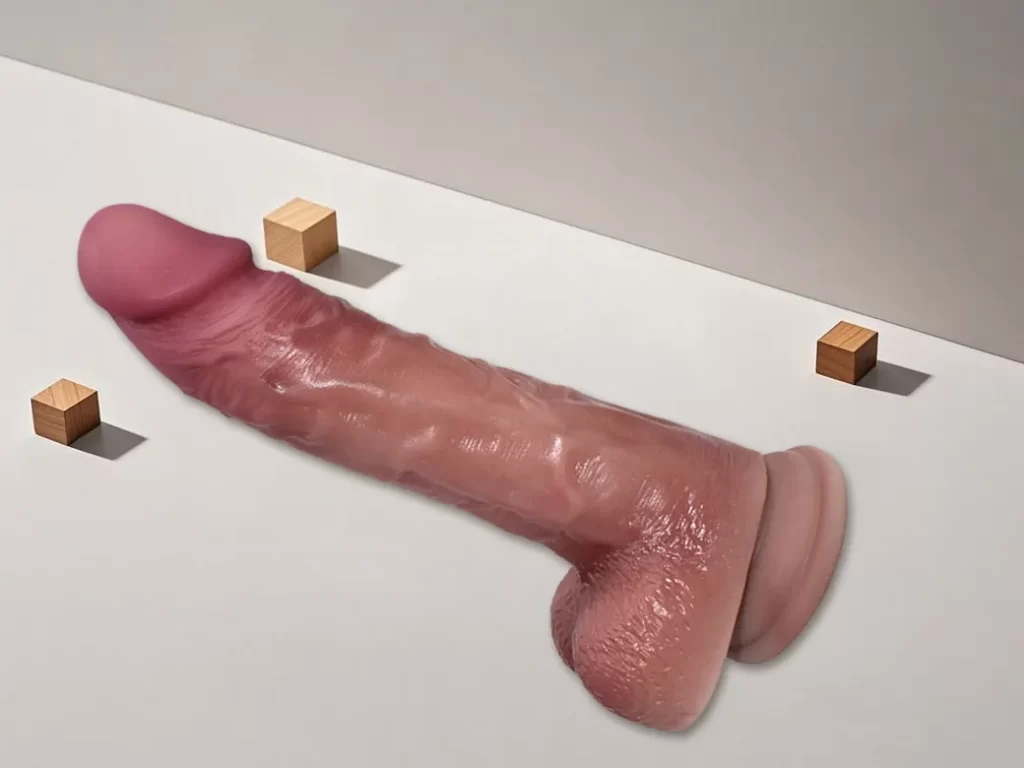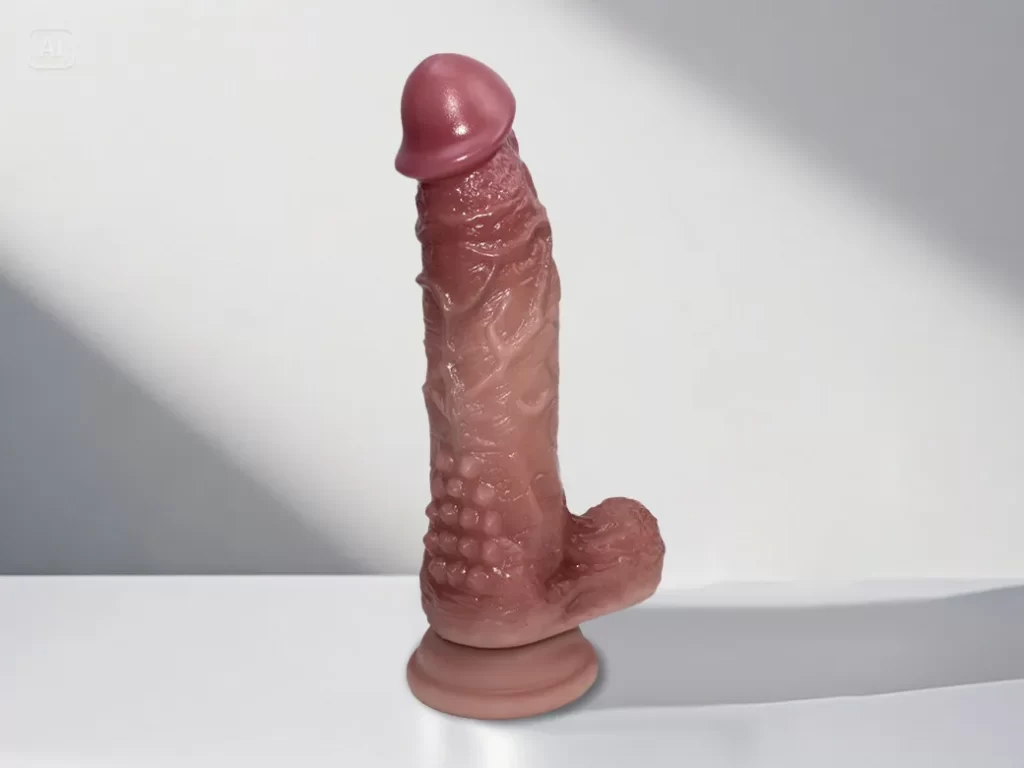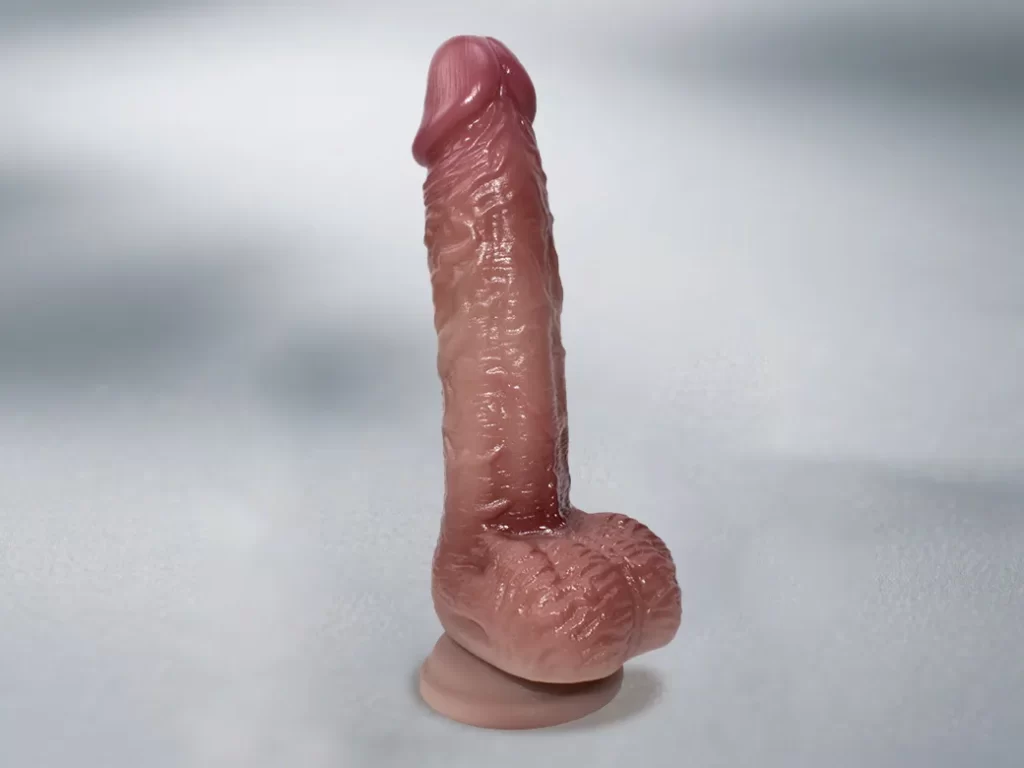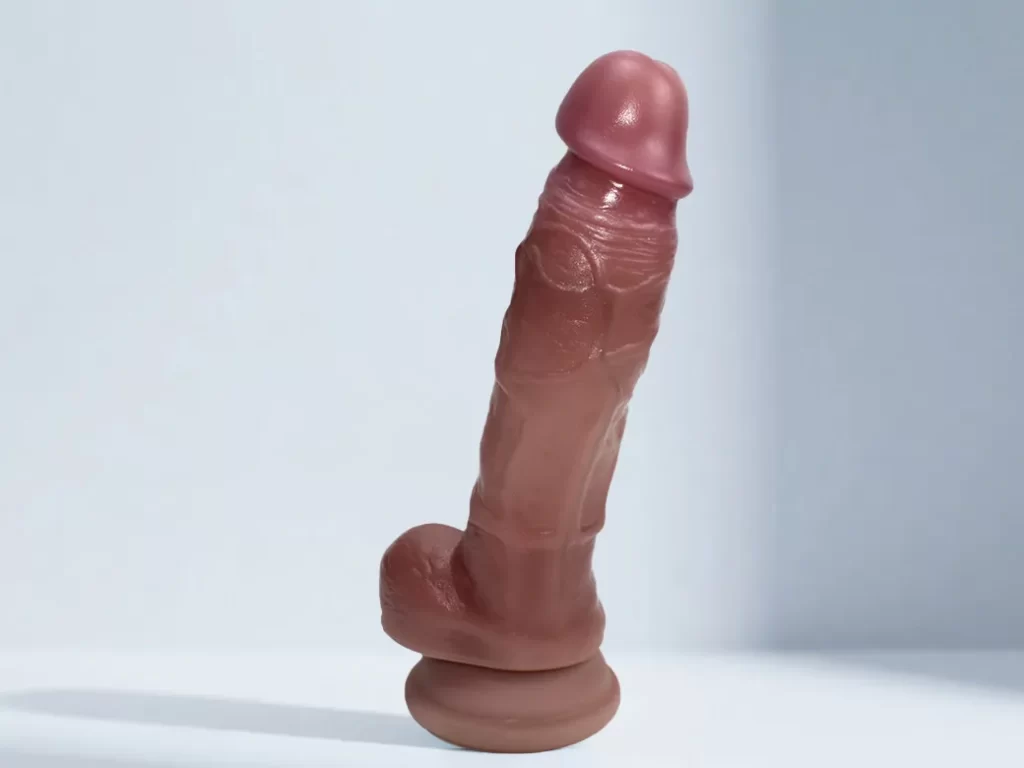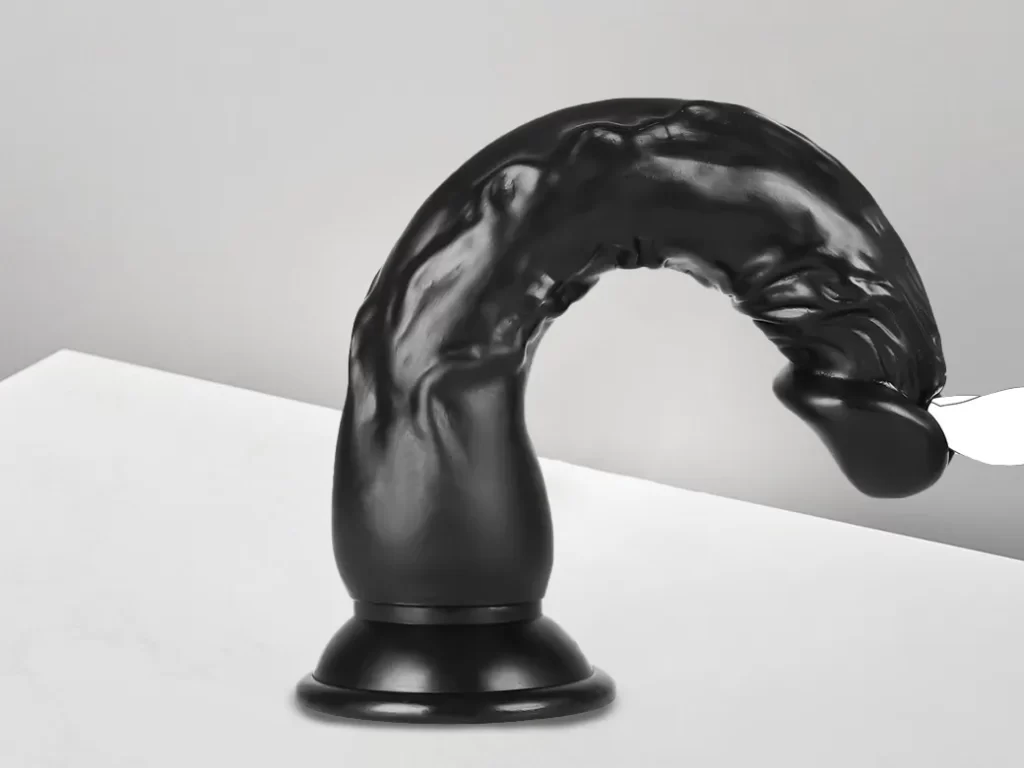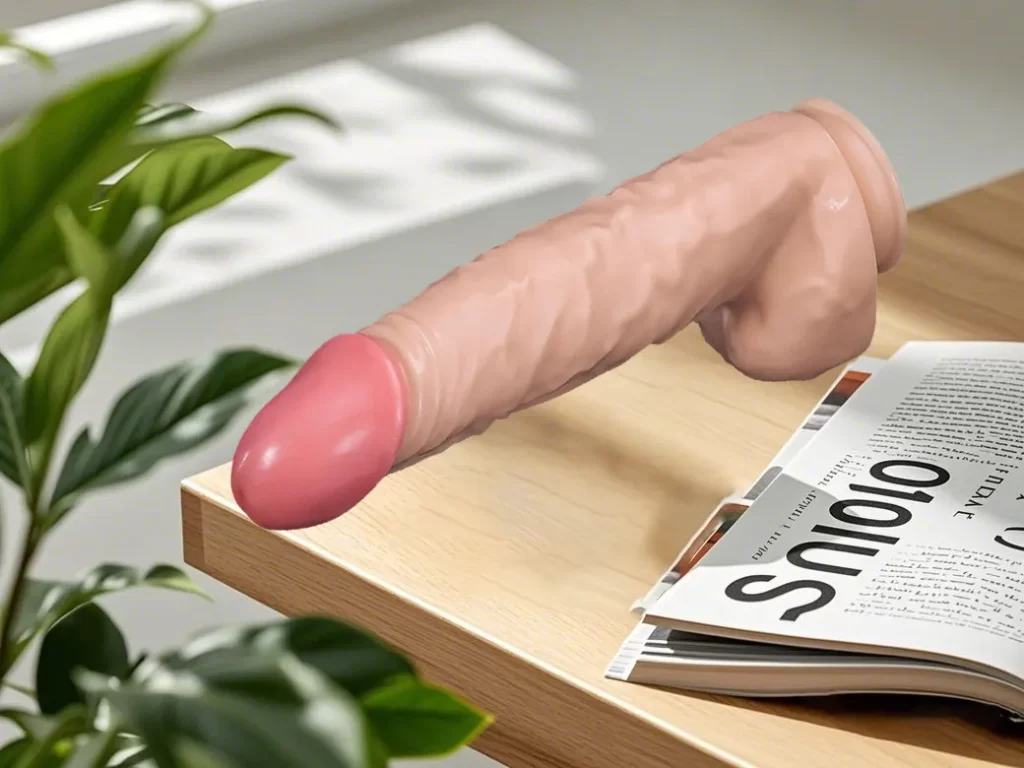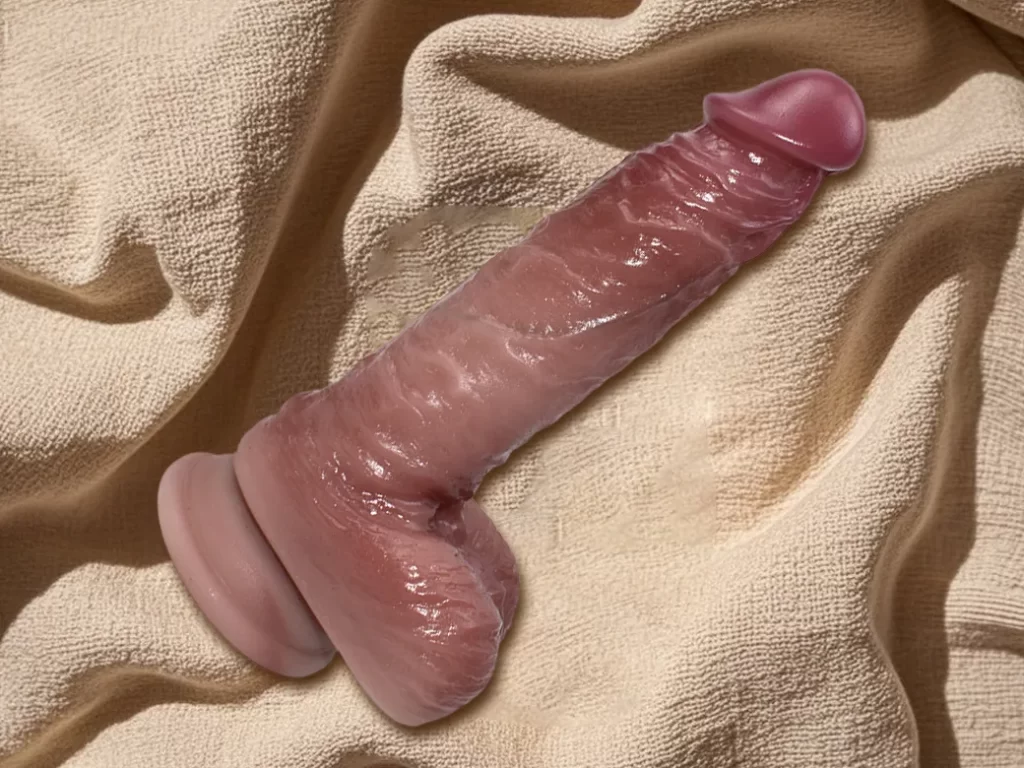

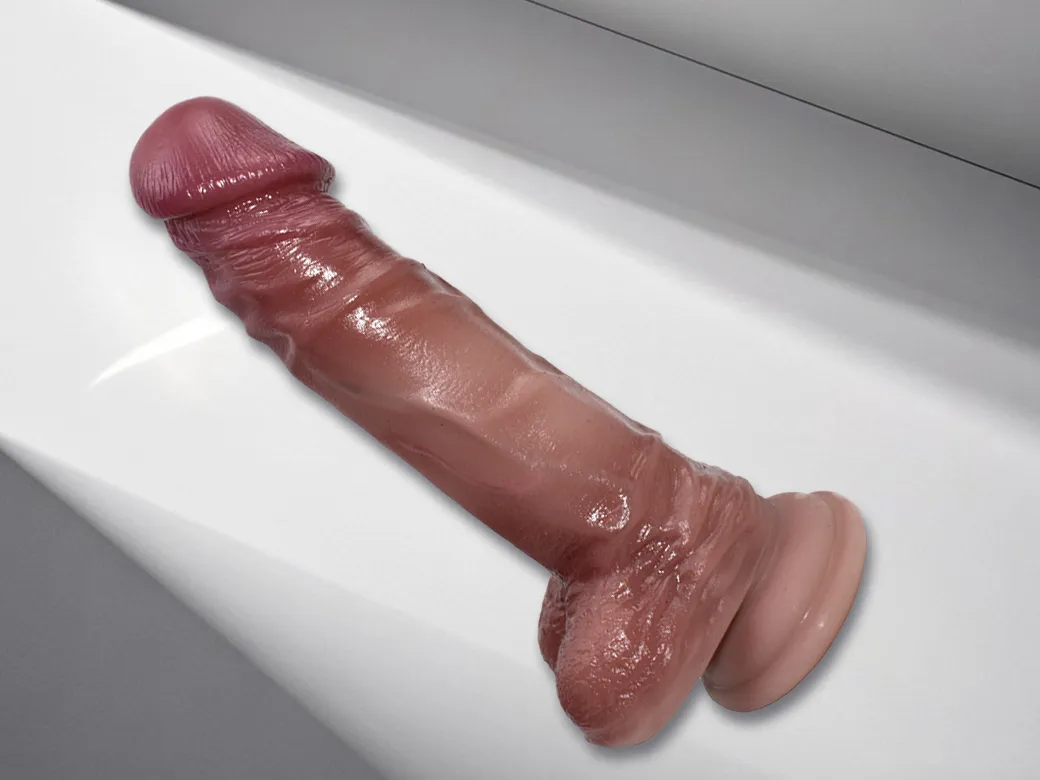
Direct answer: A dildo can feel rough, grainy or slightly gritty because of dried soap, lubricant residue, mineral deposits, lint, storage powder, intentional molded texture, friction-related surface wear, or a developing material problem.
The quickest way to separate those causes is to clean the dildo using its approved method, rinse it thoroughly, let it dry completely, and inspect the same area under angled light. If the roughness disappears, surface residue was the more likely cause. If the texture remains but has always been present and is uniform, it may be part of the molded finish. If the area is new, worsening, flaking, cracking, sticky, oily, peeling or shedding particles, stop using the dildo and investigate further.
The key question is not simply “Does it feel rough?” It is “Is the roughness removable, intentional, stable—or developing?”
A dildo does not have to feel perfectly glass-smooth to be normal.
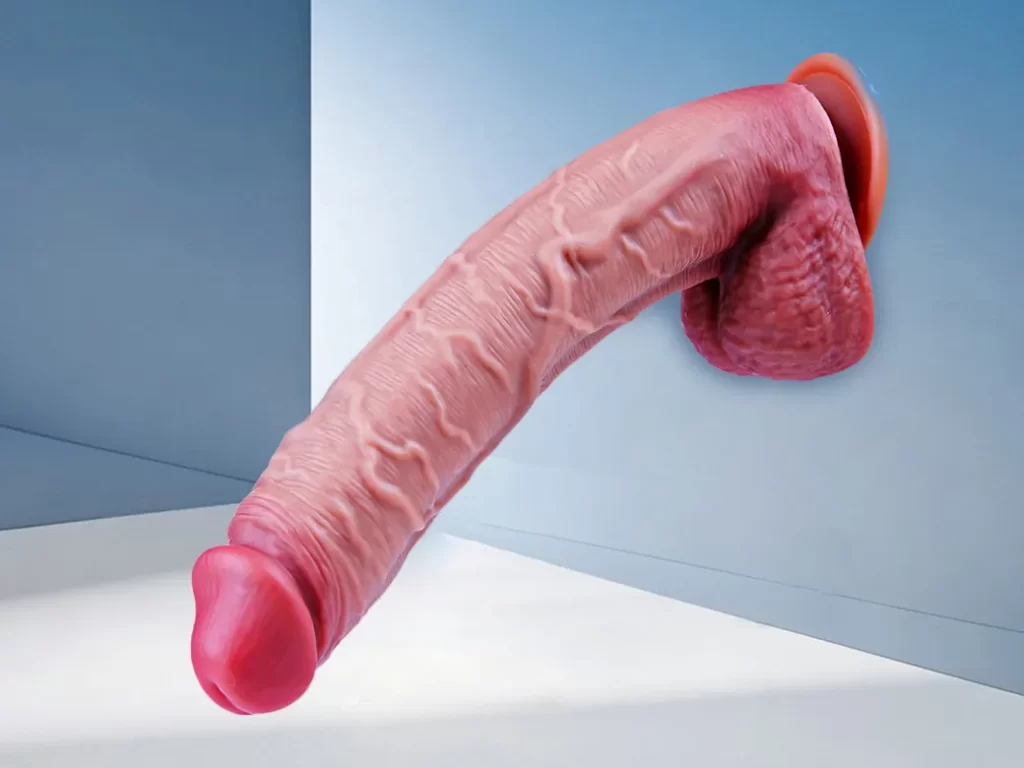
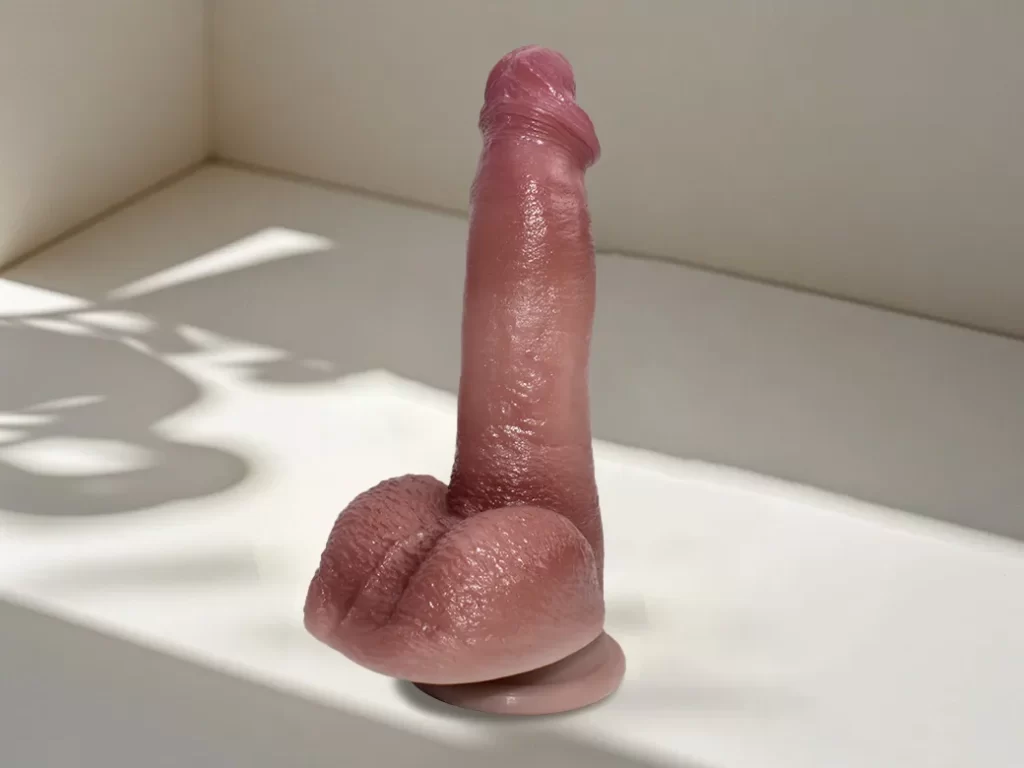
Matte silicone, realistic skin textures, molded pores, veins, folds and fine manufacturing texture can all create a surface that feels different from polished glass or metal.
But there is an important difference between a dildo that has always had a slightly textured finish and one that suddenly feels sandy, chalky or rough after cleaning or storage.
This guide separates those situations step by step.
First Classify What “Rough” Actually Means
People often use rough, grainy, gritty, chalky and dry interchangeably, but they can describe different conditions.
| What It Feels Like | What It May Suggest | First Check |
|---|---|---|
| Fine powder or grit | Dust, storage powder, dried cleaner or mineral residue | Does it rinse away? |
| Dry / chalky | Water deposits, cleaner residue or surface treatment | Did it appear after washing? |
| Fine uniform texture | Intentional matte or molded finish | Is the same texture present elsewhere? |
| One rough patch | Localized wear, residue or surface damage | Is it new or growing? |
| Sharp or scratchy | Cut, tear, raised seam or damaged finish | Stop use and inspect closely. |
| Rough + sticky | Residue or material deterioration | Clean, dry and check whether tackiness remains. |
The Timing of the Texture Change Is One of the Best Clues
Before touching the dildo repeatedly, think about when the roughness first appeared.
It Felt Rough From the First Day
If the entire dildo has always had the same fine matte texture, that may simply be how the surface was molded or finished.
Compare:
- The shaft
- The underside
- The base
- Areas between molded details
- Official product photos if they show close-up surface texture
A uniform texture is different from one isolated damaged patch.
It Became Rough Immediately After Washing
Start with residue.
Soap, cleaner and minerals left behind when water dries can produce a slightly gritty or chalky feel even though the dildo itself has not changed.
It Became Rough After Storage
Consider:
- Dust
- Lint
- Fabric fibers
- Storage powder
- Contact with another dildo
- Friction against a rough storage container
It Has Slowly Become Rougher Over Months
A gradual change deserves closer inspection because it may involve repeated abrasion, aging of a surface treatment, or material deterioration.
Look for changes in color, gloss, firmness and surface integrity at the same time.
Cause #1: Dried Soap or Cleaner Residue
One of the simplest explanations is incomplete rinsing.
Cleaner can remain in realistic surface details and dry into a thin film. When you run a finger over the area, the dried film can feel powdery or slightly abrasive.
This is especially common around:
- Deep veins
- Textured heads
- Small folds
- Raised lettering
- Base transitions
- Recessed decorative areas
Signs Cleaner Residue Is More Likely
| Observation | Supports Cleaner Residue? |
|---|---|
| Appeared directly after washing | Yes |
| Smells like soap | Yes |
| Concentrated in grooves | Often |
| Rinses away completely | Strong evidence |
| Returns while sitting clean and dry | Less consistent with simple cleaner residue |
Follow the cleaning instructions for the particular dildo instead of repeatedly adding stronger detergent.
For a full material-specific cleaning routine, see How to Clean a Dildo Properly.
Cause #2: Mineral Deposits From Water
If the dildo feels smooth while wet but slightly chalky after drying, the water itself may be contributing.
Dissolved minerals can remain behind after droplets evaporate.
On a dark or matte dildo, the same deposits may also appear as pale dots, rings or streaks.
This problem is easiest to recognize when:
- The texture follows dried water spots.
- The affected surface looks pale or cloudy.
- The roughness appears mainly after air-drying.
- The dildo feels normal immediately after rinsing.
Do not automatically use a household limescale remover. A product suitable for a faucet or shower screen is not automatically compatible with a dildo.
Cause #3: Storage Powder or Renewal Powder
Some soft-material dildos are supplied with powder or have manufacturer-specific powdering instructions.
That powder can collect unevenly and create a noticeably dry or grainy feel.
Before removing it, read the product’s care instructions.
Do not assume every dildo should be powdered. In particular, do not coat a silicone dildo with powder simply because another soft dildo uses it.
Cause #4: Dust and Lint Can Feel Rougher Than They Look
A matte silicone surface can collect extremely fine fibers.
Under ordinary lighting they may be hard to see, but a fingertip can detect them as a dry, slightly fuzzy or grainy texture.
Inspect the dildo under strong side light.
If you can see fine hairs, fabric fibers or dust, the surface itself may still be completely normal.
BestDildo has a separate guide explaining why silicone dildos attract dust and lint.
Cause #5: The Molded Surface May Be Intentionally Matte
Not all silicone surfaces are glossy.
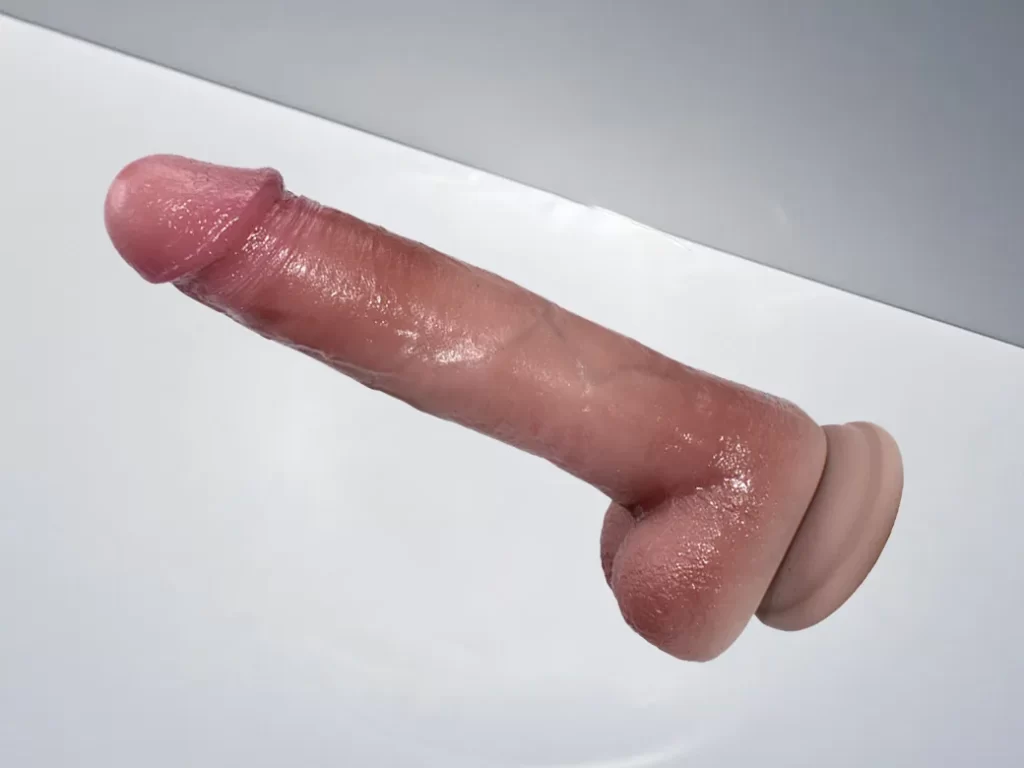
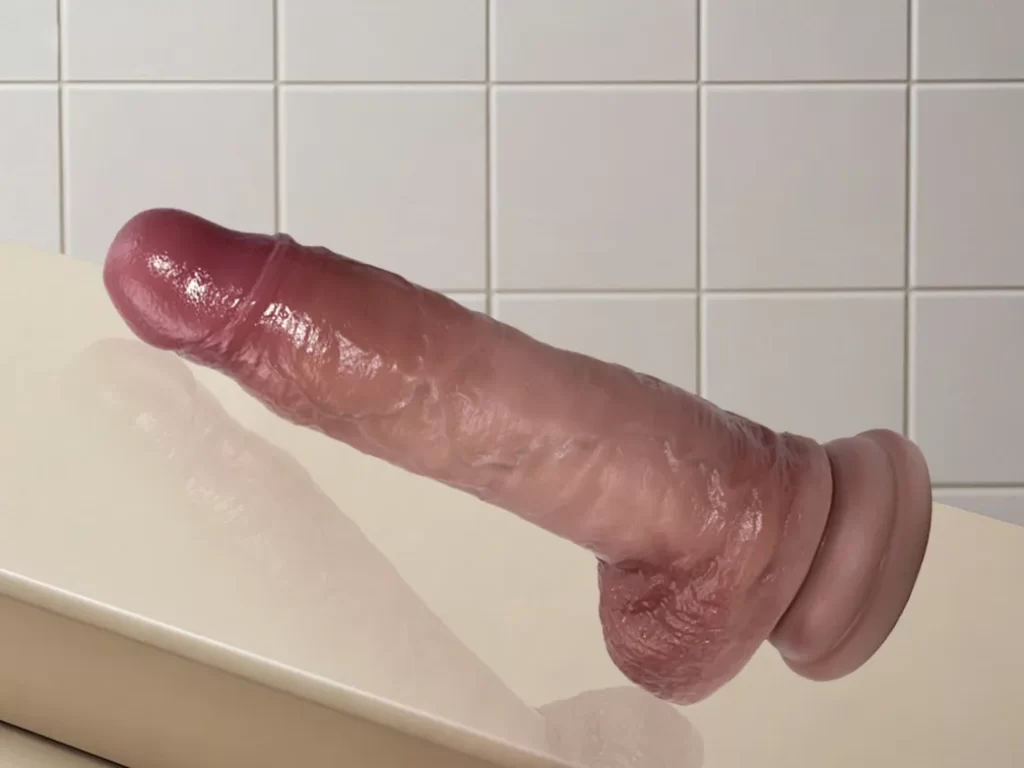
A matte finish can contain microscopic texture that scatters light and increases surface grip.
That fine texture may feel:
- Dry
- Velvety
- Slightly draggy
- Softly textured
- Less slippery than polished silicone
This can be normal when the finish is uniform.
Useful distinction: a dildo that has always had the same uniform matte texture is different from a dildo that develops a new isolated rough patch.
Cause #6: Surface Friction or Abrasion
A dildo can repeatedly rub against:
- A fabric storage bag
- A drawer
- A hard case
- Another dildo
- Packaging
- A rough cleaning cloth
If that contact occurs in the same location for months, the surface appearance and feel may gradually change.
Depending on the finish, abrasion may make an area either smoother and shinier or rougher and duller.
Roughness From Friction vs Roughness From Residue
| Clue | Residue More Likely | Surface Wear More Likely |
|---|---|---|
| Changes after rinsing | Yes | Little or no change |
| Visible loose particles | Often | Usually not |
| Localized to storage contact area | Possible | More suggestive |
| Texture slowly changes over months | Less typical | More typical |
| Surface remains structurally intact | Usually | May still be intact if wear is cosmetic |
Cause #7: A Surface Coating or Color Layer May Be Changing
Some dildos use decorative surface coloration or another specialized finish.
If a rough area appears only where a colored detail exists, inspect whether a thin surface layer is lifting, cracking or flaking.
A rough coating edge feels different from an intact matte texture.
| What You See | Interpretation |
|---|---|
| Uniform matte texture | May be intentional finish |
| Raised colored edge | Possible coating separation |
| Tiny colored flakes | Surface finish may be breaking down |
| Different color beneath rough patch | Possible surface layer loss |
For actual lifting or flaking color, see Can Dildo Color Peel Off?.
Cause #8: A Material Problem Can Create Roughness
Roughness becomes more significant when it appears together with other physical changes.
Examples include:
- Cracking
- Peeling
- Powdering
- Small open pits
- Sticky areas
- Recurring oily film
- Unexpected hardening
- Brittleness
- Layer separation
A dildo that is simply matte should not normally behave like a surface that is crumbling or shedding material.
The “Clean–Dry–Swipe–Inspect” Test
Use a controlled process rather than repeatedly scratching the rough area.
Step 1: Photograph It Before Cleaning
Take one full-product photo and one close-up.
Step 2: Clean the Dildo Normally
Use only the manufacturer-approved method.
Step 3: Rinse Thoroughly
If rinsing is part of the care instructions, remove all remaining soap or cleaner.
Step 4: Let It Dry Completely
Do not judge the texture while water is still on the surface.
Step 5: Use a Clean Lint-Free Cloth
Lightly swipe the affected area once.
Do not scrub.
Check whether anything visible transfers onto the cloth.
Step 6: Inspect Under Side Lighting
Look for:
- Particles
- Flakes
- Raised edges
- Fine cracks
- Shallow pits
- Changes in gloss
Step 7: Compare With an Unaffected Area
Use the same light and fingertip pressure.
How to Interpret the Test
| Result | Most Likely Direction | Action |
|---|---|---|
| Roughness disappears after rinsing | Residue | Improve rinsing and drying. |
| Uniform texture remains everywhere | Likely intentional finish | Compare with manufacturer description. |
| One stable rough patch remains | Possible localized wear | Photograph and monitor. |
| Particles transfer to cloth | Residue or surface breakdown | Identify whether particles are external or from the dildo. |
| Roughness + crack / peeling | Surface damage | Stop using the dildo. |
A Rough Seam Is Different From a Rough Surface
If the texture is limited to one straight or circular line, you may actually be feeling a mold seam rather than general surface roughness.
A smooth seam line can be a normal manufacturing mark.
A seam that is sharp, open, cracked or lifting should be treated differently.
Do not sand a seam flat. Sanding permanently modifies the surface and may create additional roughness.
Material-by-Material Differences
Silicone
Silicone can range from polished and glossy to matte and highly textured.
A fine uniform matte feel may be intentional.
New localized roughness is more important when it is accompanied by:
- Peeling
- Gummy material
- Recurring oiliness
- Cracking
- Residue transfer
If the area also remains gummy or wet-feeling after cleaning, review Is My Silicone Dildo Fully Cured?.
TPE / TPR
These are broad material categories with many formulations.
The surface may naturally feel softer or more draggy than silicone, and some products use renewal powder.
A new rough area combined with drying, cracking, hardening or oiliness deserves closer investigation.
Glass
Glass should normally feel extremely smooth unless it was intentionally manufactured with texture.
A new rough or sharp point on glass is much more important because it may represent a chip or damaged surface.
Do not continue using damaged glass.
Stainless Steel
Metal may contain intentional machining or decorative texture, but a new burr, sharp edge, damaged coating or corrosion-like roughness should not be ignored.
Roughness on a New Dildo vs an Older Dildo
| New Dildo | Older Dildo |
|---|---|
| Could reflect intentional mold texture. | Compare with earlier condition. |
| Could contain packaging or manufacturing residue. | Consider storage and cleaning history. |
| Document unusual patches before first use. | Look for progression over time. |
| Ask whether the finish matches specification. | Ask why the texture changed from its original state. |
For new products, the New Dildo Checklist can help establish a baseline before first use.
A Four-Level Roughness Risk Scale
| Level | Condition | Response |
|---|---|---|
| Level 1 — Removable | Dust, lint, cleaner or water residue | Clean correctly and improve storage. |
| Level 2 — Stable finish | Uniform matte texture present from new | Compare with manufacturer specification. |
| Level 3 — Monitor | New but stable localized rough patch without cracking | Photograph and monitor. |
| Level 4 — Stop use | Sharp, peeling, cracking, shedding or worsening roughness | Stop using and contact the seller or manufacturer. |
Do Not Sand or Polish a Rough Dildo
Trying to smooth a dildo with abrasives can create a worse surface than the one you started with.
Avoid:
- Sandpaper
- Nail files
- Scouring pads
- Magic erasers
- Polishing compound
- Grinding tools
- Razors
- Heat guns
These methods can remove material, create microscopic scratches or expose another layer underneath.
If a surface is rough enough that you feel it needs sanding, stop and identify why it became rough instead.
Do Not Use Oil to “Condition” an Unknown Rough Surface
A dry-feeling dildo may tempt you to coat it with oil.
Do not use household oil, cosmetic oil or conditioner unless the manufacturer specifically approves it.
Adding oil can:
- Mask the original surface condition
- Change the feel temporarily
- Interact with some soft materials
- Make later diagnosis harder
Storage Can Prevent Repeat Roughness
Once the dildo is clean and dry, store it so the surface does not repeatedly rub against rough materials.
Prefer:
- A clean individual storage pouch
- A smooth dedicated container
- Separation from other dildos
- A dry indoor location
- No heavy objects pressing against it
Avoid dusty open drawers, rough fabric and direct contact with unidentified soft plastics.
When Should You Replace the Dildo?
Replacement is not necessary just because a matte dildo feels less silky than a polished dildo.
Replacement becomes more appropriate when the roughness reflects an unstable body-contact surface.
| Situation | Recommended Action |
|---|---|
| Residue rinses away | Continue normal care. |
| Uniform matte texture | No replacement based on texture alone. |
| Stable cosmetic wear | Monitor and ask the maker if uncertain. |
| Sharp edge or chip | Stop use. |
| Flaking or shedding material | Stop use and replace or seek warranty support. |
| Cracking, peeling or opening surface | Stop use. |
What to Send Customer Support
Do not simply say:
My dildo feels rough.
Instead, describe the condition in a way that can be evaluated:
A localized area approximately 2 cm wide has developed a rough, grainy texture that was not present when the dildo was new. I cleaned and rinsed the product according to the care instructions and allowed it to dry completely. The roughness remains and does not appear to be loose dust or lint. I have attached close-up photographs under side lighting. Can you confirm whether this is expected surface wear or whether the dildo should be replaced?
Frequently Asked Questions
Why does my silicone dildo feel rough?
Possible causes include intentional matte texture, dust, lint, cleaner residue, water minerals, surface wear or a material change. Clean and dry it before judging the surface.
Why does my dildo feel gritty after washing?
Dried soap or mineral deposits are common possibilities when the gritty texture appears only after washing. Rinse thoroughly according to the dildo’s care instructions and compare after complete drying.
Is a matte dildo supposed to feel slightly rough?
It can. Matte surfaces often have more microscopic texture than glossy finishes and may feel less slippery. The texture should still be uniform and stable.
Can hard water make a dildo feel rough?
Dissolved minerals can remain after water evaporates and may create a chalky or slightly gritty surface deposit.
Why is only one part of my dildo rough?
Localized roughness may come from residue trapped in one area, repeated storage friction, surface wear, a seam, or localized damage. Compare that area with the rest of the dildo under strong light.
Can I sand down a rough seam?
No. Sanding permanently modifies the dildo surface and may create additional scratches or expose another layer.
Why does my dildo feel rough and sticky at the same time?
That combination is more concerning than dry texture alone. Remove ordinary residue first. If stickiness remains after approved cleaning and drying, contact the manufacturer.
Does roughness mean silicone is uncured?
No. Texture alone cannot diagnose silicone curing. Cure concerns require manufacturer-level knowledge of the material and process.
Can storage make a dildo surface rough?
Yes. Dust, fabric fibers, powder and repeated friction against a rough container can change how the surface feels.
When should a rough dildo be replaced?
Replace or stop using it when the roughness involves sharp edges, chips, cracks, peeling, flaking, shedding material or another progressive surface defect.
A Rough Feel Is Only Useful When You Know What Changed
Not every textured dildo is damaged.
A matte finish may naturally feel slightly draggy. Dust and lint can make an intact silicone surface feel grainy. Soap and mineral deposits can dry into a rough film. Storage powder can create a dry surface intentionally.
The more important warning signs are new, localized and progressive changes.
If the roughness does not rinse away, was not present originally, or appears with cracking, peeling, stickiness, shedding or sharp edges, stop treating it as a simple cleaning issue.
Clean it, dry it, inspect it under angled light, compare it with an unaffected area, and monitor whether the texture is stable or changing.