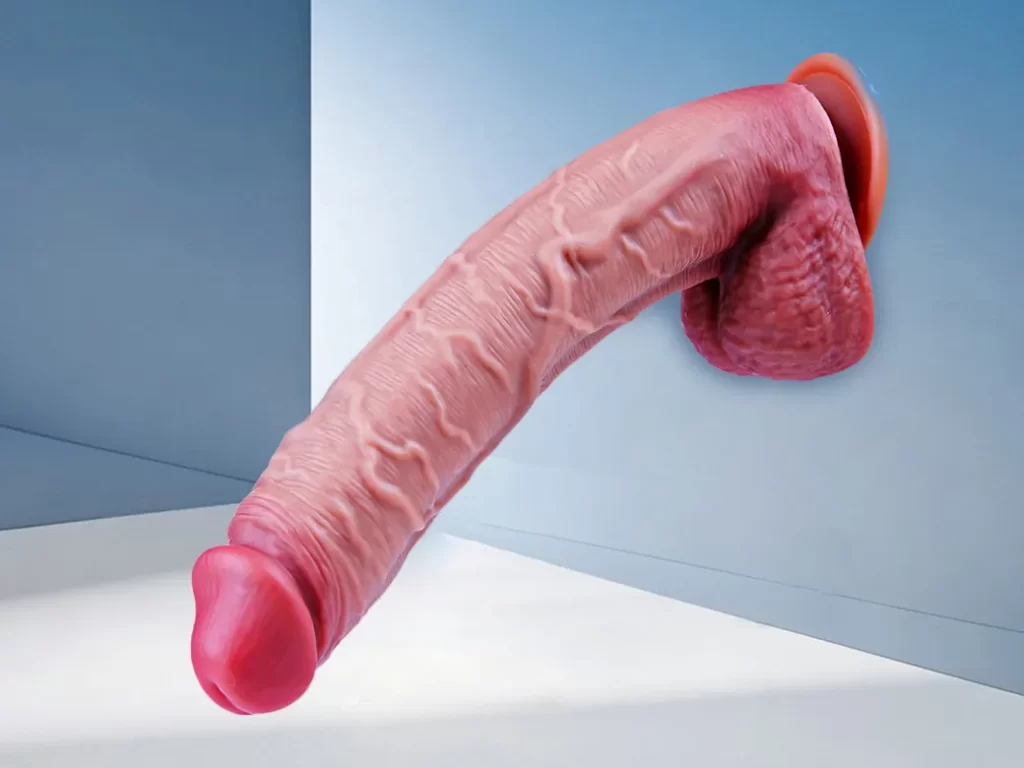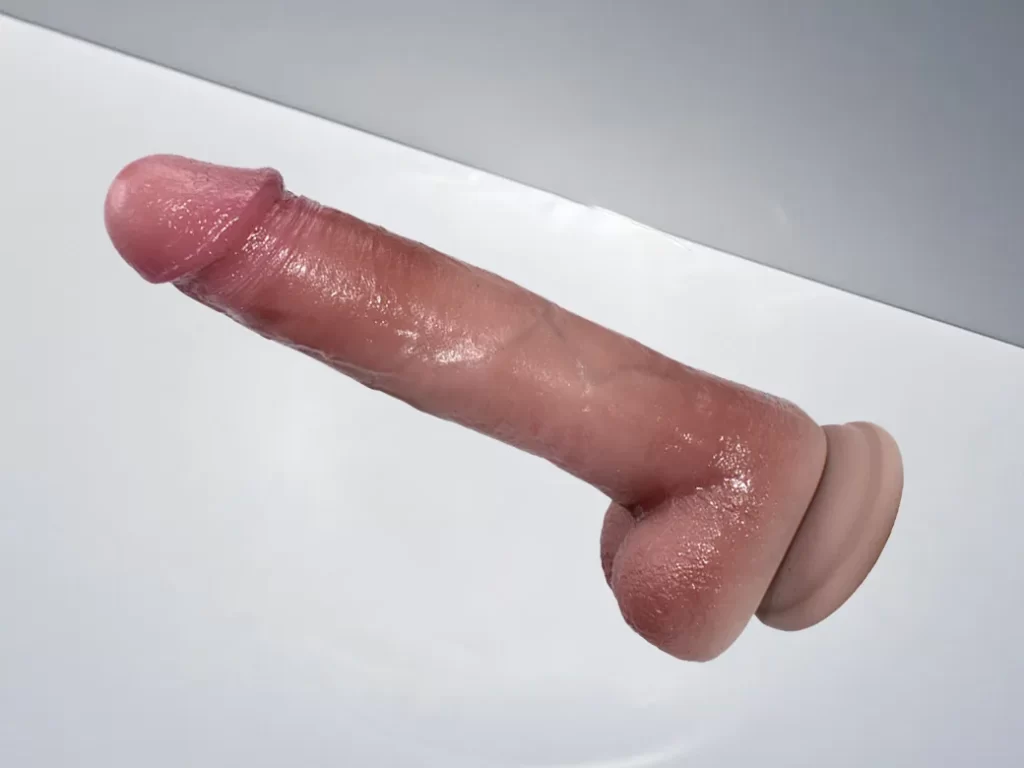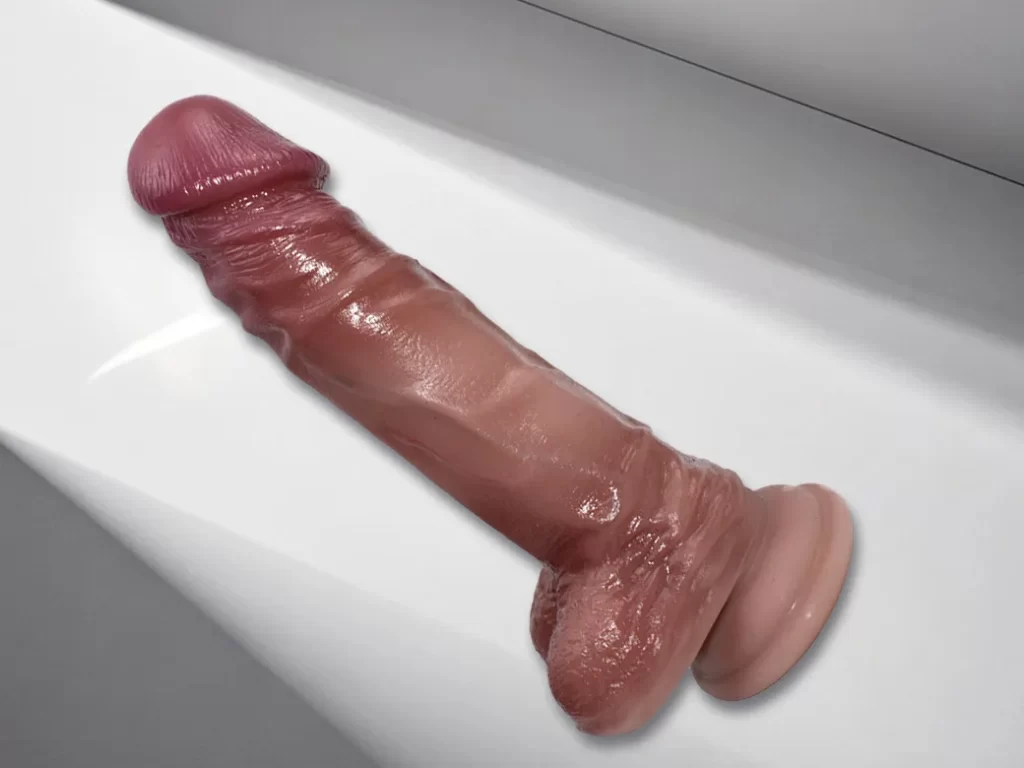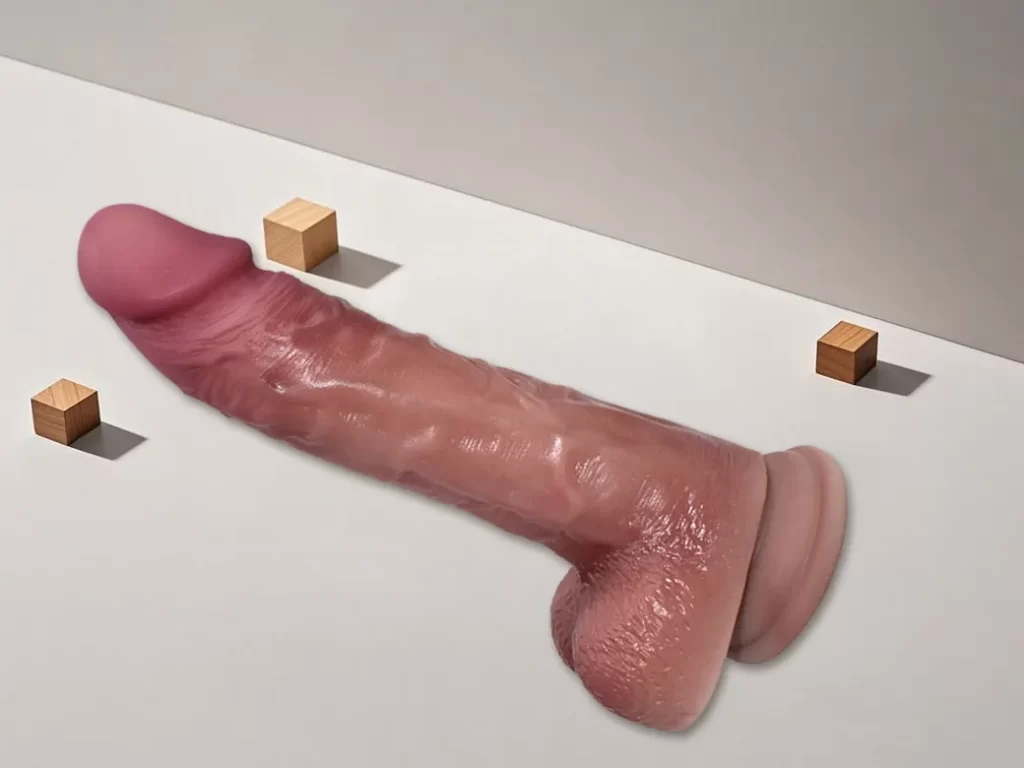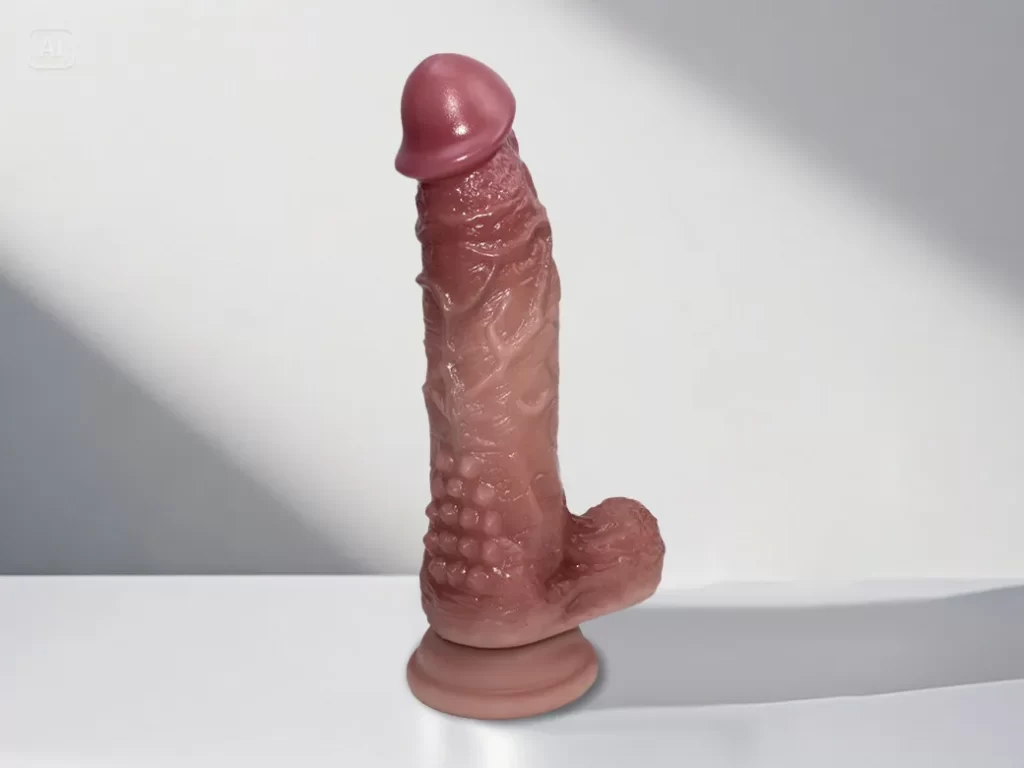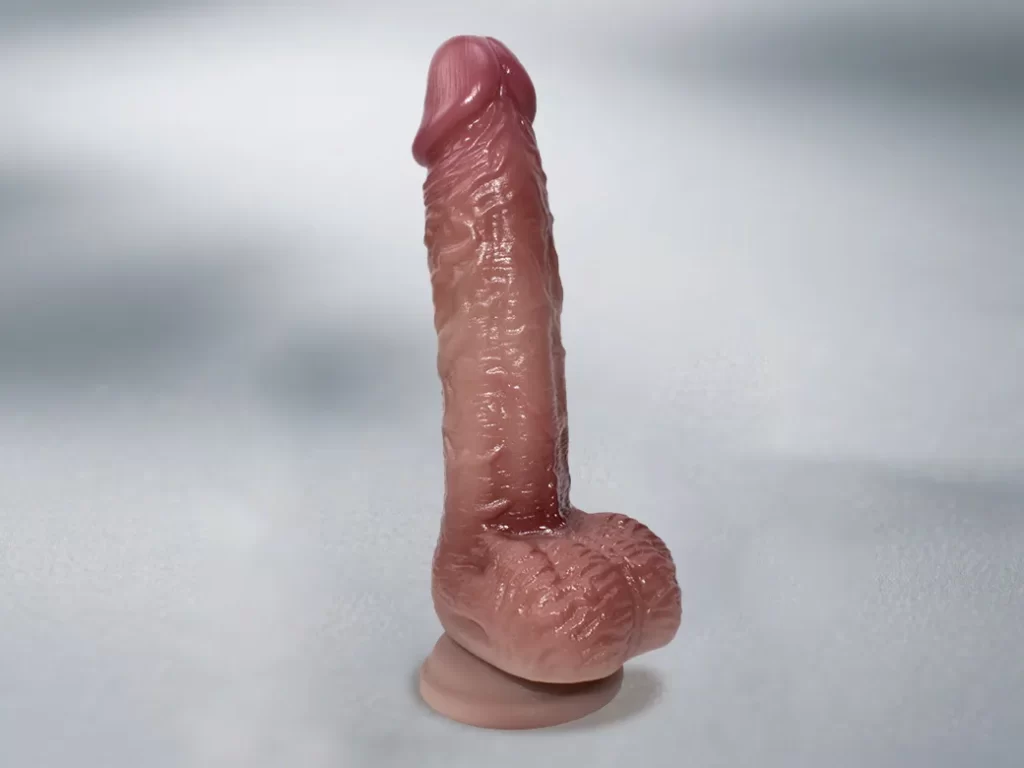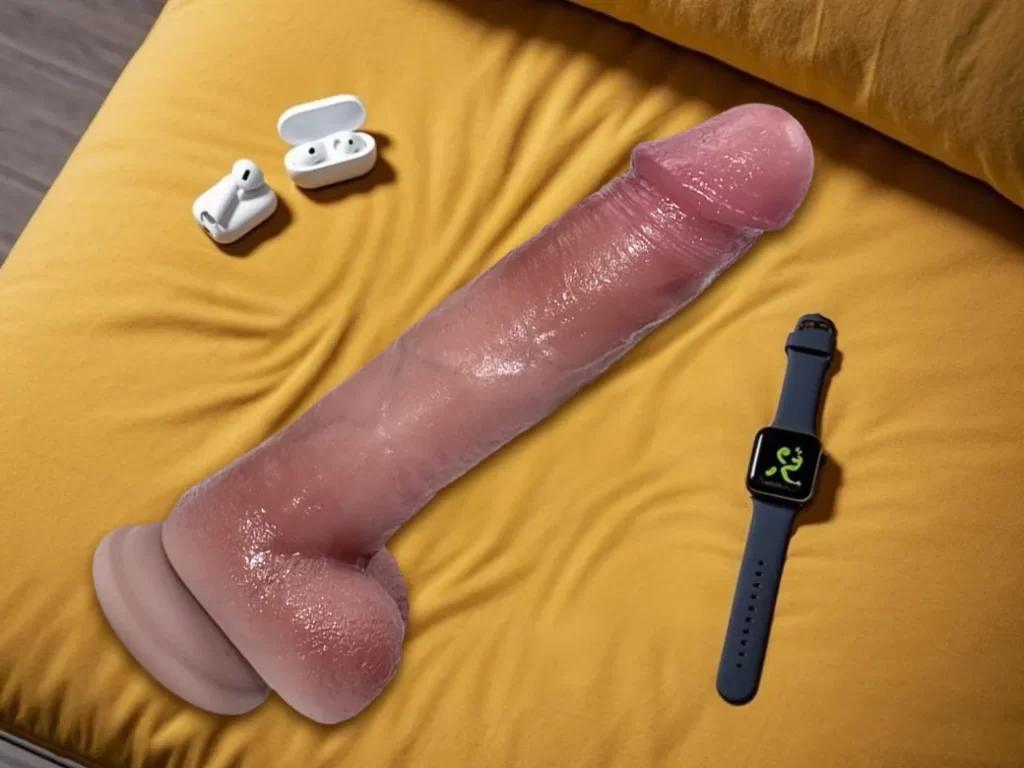


Direct answer: A dildo can become shinier because of lubricant or cleaner residue, moisture, repeated surface friction, a change in the original matte finish, or a developing material problem. A shiny area is not automatically damage.
The fastest test is to clean the dildo using its approved method, let it dry completely, and inspect it under neutral side lighting. If the shine disappears, residue or moisture was the more likely cause. If the shiny patch remains but the surface is otherwise smooth, stable and unchanged, it may be a cosmetic finish change. If it becomes sticky, oily, soft, swollen, peeling, cracked or increasingly glossy, stop using the dildo and investigate further.
The most important distinction is not “matte vs shiny.” It is “stable surface vs changing surface.”
A matte dildo does not necessarily remain visually identical forever.
Lighting, lubricant, cleaning residue, water, handling, friction and normal aging can all change how light reflects from the surface. A section that suddenly looks polished under a bathroom light may look almost normal once the dildo is washed, dried and viewed from another angle.
On the other hand, a localized glossy patch can occasionally appear alongside material changes that deserve attention.
This guide separates those situations instead of treating every shiny mark as the same problem.

Start Here: Five Reasons a Dildo Surface Can Look Shiny
| Possible Cause | Typical Appearance | After Proper Cleaning and Drying | Concern Level |
|---|---|---|---|
| Lubricant residue | Uneven gloss, streaks or shiny areas around texture | Usually disappears | Low |
| Soap or cleaner film | Slick or polished-looking coating | Often improves after thorough rinsing | Low |
| Moisture | Temporary darker or glossier appearance | Returns to normal once fully dry | Low |
| Surface polishing / finish wear | Localized smooth, reflective patch | Shine remains but surface may otherwise feel normal | Usually moderate / cosmetic |
| Material or coating change | Gloss combined with stickiness, oiliness, peeling or texture change | Persists or worsens | Higher |
The Timing of the Shine Changes the Diagnosis
Do not inspect the shiny patch in isolation. Ask when it appeared.
If It Looks Shiny Only When Wet
Water changes how light reflects from almost any surface. A matte dildo can look considerably darker and glossier immediately after washing.
Do not evaluate finish while the dildo is still damp.
Allow it to dry completely before comparing the affected area with the rest of the shaft.
If It Becomes Shiny Immediately After Lubricant Use
Lubricant is one of the simplest explanations.
Residue may remain in:
- Veins
- Ridges
- Wrinkles
- Textured areas
- Transitions near the base
- Recessed decorative details
Once spread into a thin layer, the residue may make matte material look polished even when very little lubricant remains.
If the Shine Appears Only After Cleaning
Investigate the cleaner.
A soap film can produce a slick reflective surface, particularly if it is not completely rinsed away.
If the dildo also smells strongly like the soap or feels unusually slippery while dry, incomplete rinsing is worth checking first.
If the Same Patch Slowly Becomes Shinier Over Months
This is a different situation.
Repeated handling or friction can change the appearance of some surface finishes. A matte texture may gradually look smoother in frequently contacted areas.
The key question becomes whether the change is only visual or whether the material itself is also becoming sticky, soft, thin, cracked or otherwise unstable.
A Matte Finish Can Look Different Without the Dildo Being Damaged
“Matte” describes how a surface scatters light. It does not necessarily mean that the complete dildo has a separate matte coating.
Depending on how the dildo was manufactured, the surface appearance can come from:
- The mold texture
- The silicone or elastomer formulation
- A finishing process
- A surface coloring system
- A combination of texture and pigment
This matters because different surface constructions can age differently.
A slight increase in gloss does not automatically mean the dildo has lost a separate coating.
Do not assume: “This area is shinier, therefore the silicone is failing.” First determine whether the surface is clean, dry, intact and physically unchanged.
Shine vs Peeling: These Are Not the Same Thing
A surface that becomes smoother or glossier is different from a surface layer that is physically lifting away.
| Observation | Simple Finish Change More Likely | Surface Damage More Likely |
|---|---|---|
| Edge | No visible edge | Raised or lifting edge |
| Texture | Smooth and continuous | Flaking, roughness or cracking |
| Color | Color remains consistent | Different color appears underneath |
| Cleaning | Nothing transfers | Color or material transfers during normal cleaning |
| Progression | Stable | Area continues spreading or lifting |
If you can actually see a separate colored layer lifting away, use our guide Can Dildo Color Peel Off? instead of treating the problem as ordinary surface shine.
Why Friction Can Make a Matte Area Look More Polished
Repeated contact may gradually change very fine surface texture.
This does not mean the dildo is literally being “polished” in the same way as metal or stone. Instead, microscopic surface texture may become less noticeable in a frequently handled area, causing it to reflect light differently.
Areas that may show this first include:
- The section most frequently held
- A prominent ridge
- The underside of a flexible shaft
- The transition near the base
- Raised texture that repeatedly contacts fabric during storage
A purely cosmetic wear pattern should normally remain smooth and intact.
If the shiny area also becomes thinner, gummy, cracked or sticky, treat it as a material-change problem rather than ordinary finish wear.
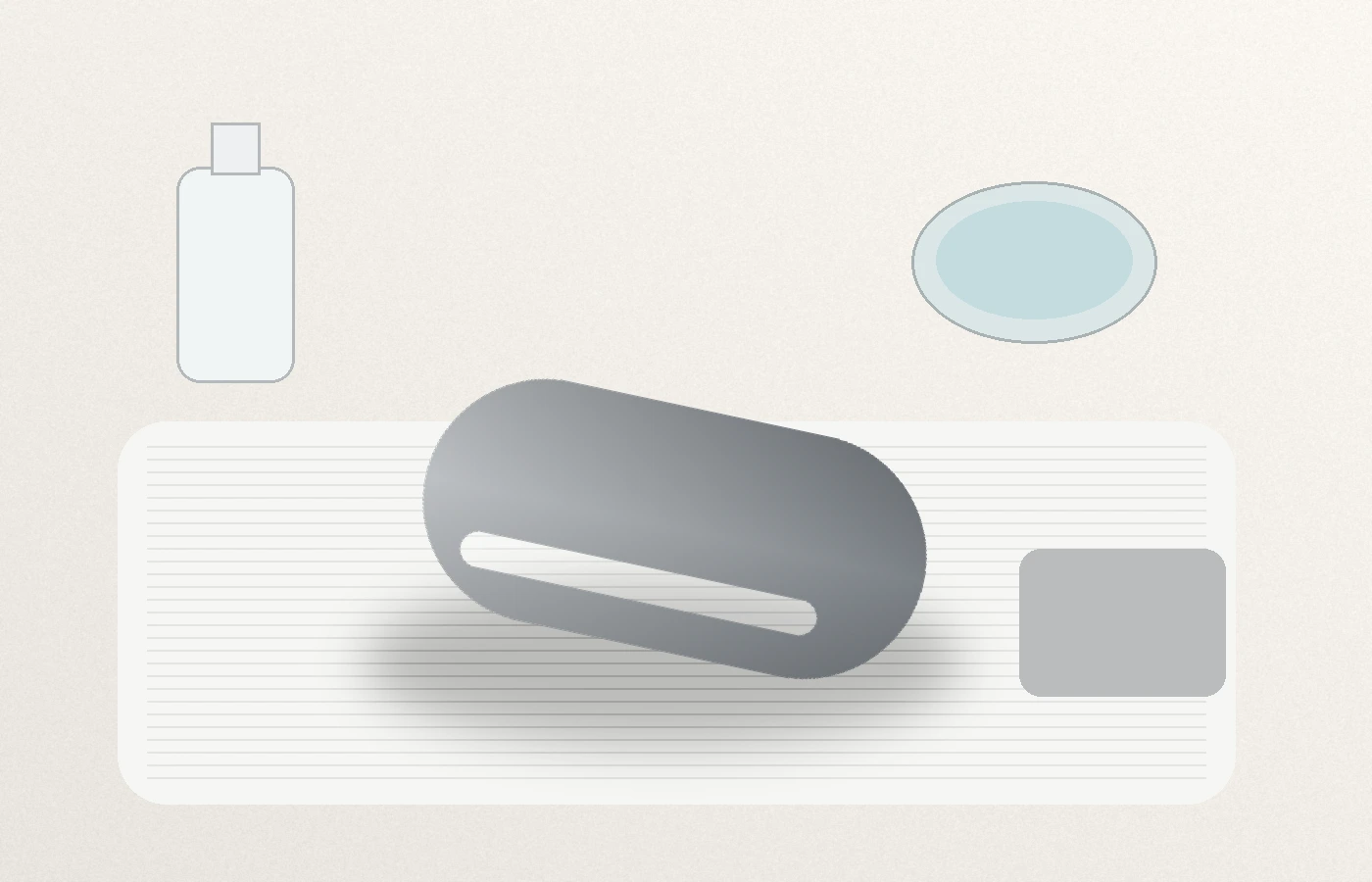
Use Side Lighting Instead of Looking Straight Down
Lighting can exaggerate or hide a shiny patch.

For a more consistent inspection:
- Use neutral white lighting.
- Place the dildo against a plain background.
- Rotate it slowly.
- Move the light rather than bending the dildo.
- Compare the affected area with an untouched section.
- Take photographs from the same angle for future comparison.
Direct overhead lighting can create large highlights that make an entire dildo appear glossy. Side lighting reveals smaller differences more clearly.
The Clean–Dry–Inspect Test
Before deciding that the surface finish has permanently changed, remove the most common temporary causes.
| Stage | What to Do | What You Learn |
|---|---|---|
| 1. Photograph | Record the shiny area before cleaning. | Creates a baseline. |
| 2. Clean | Follow the manufacturer’s normal care method. | Removes lubricant and ordinary residue. |
| 3. Rinse | Remove cleaner residue where the instructions require rinsing. | Separates cleaner film from permanent gloss. |
| 4. Dry | Let the dildo become completely dry. | Removes moisture as a visual variable. |
| 5. Inspect | Use side lighting and compare several angles. | Shows whether the shine is genuinely part of the dry surface. |
| 6. Feel | Lightly compare texture without scratching or stretching. | Reveals tackiness, oiliness or roughness. |
What the Result of That Test Means
| Result | Most Likely Direction | Next Step |
|---|---|---|
| Shine disappears | Lubricant, cleaner or moisture | Improve cleaning/drying and monitor. |
| Shine remains but surface feels normal | Possible cosmetic finish change or wear | Photograph and monitor. |
| Shine remains and feels sticky | Possible residue or material change | Recheck care instructions and contact the maker if persistent. |
| Shiny area becomes oily again | Recurring surface film | Stop using it until the cause is clarified. |
| Gloss appears with peeling or cracking | Physical surface damage | Discontinue use and ask about replacement. |
Material Matters: Silicone, TPE, Glass and Metal Behave Differently
Silicone
Silicone dildos can be manufactured with a wide range of finishes, from very matte and grippy to smooth and highly polished.
A shiny patch on silicone should first be checked for lubricant, cleaner and moisture. If the gloss remains on a fully dry surface, examine whether the texture is otherwise normal.
A persistent glossy area accompanied by a gummy feel, residue transfer, peeling or recurring oiliness deserves more attention.
Those signs overlap with several other possible material issues, so shine alone should not be used to diagnose incomplete curing. See Is My Silicone Dildo Fully Cured? for that separate question. BestDildo’s existing cure guide likewise treats a glossy patch as a reason to investigate, not proof of a cure failure.
TPE and TPR
TPE and TPR describe broad families of soft materials rather than one identical formulation.
Some surfaces may become shinier when oily or when the original finish changes with age. If gloss is accompanied by persistent tackiness, residue, swelling, deformation or a major firmness change, investigate the condition rather than treating it as cosmetic polishing.
Glass
Glass is already smooth and reflective. A new “shiny patch” is therefore more likely to involve residue, smearing or surface contamination than a matte finish wearing away.
Inspect glass instead for chips, cracks, rough edges and damaged decorative coatings.
Stainless Steel
Metal surfaces are also naturally reflective. Streaks, fingerprints, lubricant or cleaner residue can create uneven shine.
A change in gloss should be distinguished from damage to a separate coating or finish.
Surface Shine Can Also Be a Color-Finish Problem
Some realistic dildos use decorative surface coloring or shading.
If a glossy patch appears only inside a colored area, look closely at whether the color remains securely attached.
Do not scratch or pick at the patch to test it.
| Color Area Looks… | Possible Interpretation |
|---|---|
| Shiny but smooth | Finish difference or wear may be cosmetic. |
| Shiny with sharp border | Inspect whether a separate coating is changing. |
| Shiny and color transfers during normal cleaning | Stop and investigate the surface finish. |
| Shiny with flakes or lifted edges | More consistent with coating damage than simple polishing. |
BestDildo’s color guide explains that a surface-applied color system behaves differently from pigment distributed through the dildo material.
What If Only One Side Becomes Shiny?
A one-sided change can provide a useful clue.
Ask whether that side:
- Rests against the bottom of a storage pouch
- Contacts another dildo
- Is usually held in the same place
- Rubs against a hard storage surface
- Receives more cleaning friction
- Contains a different decorative finish
A localized pattern often points toward localized contact rather than a uniform change throughout the material.
What If the Entire Dildo Becomes Shinier?
A whole-surface change suggests a different set of possibilities.
Consider:
- A cleaner leaving a film
- Lubricant distributed over the whole surface
- A change in how the dildo was washed
- Storage next to another material
- Long-term finish change
- Oiliness or migration from a soft material
If the entire dildo has also changed in firmness, odor, size or texture, treat the gloss as one symptom among several rather than the main issue.
A Three-Level Risk Classification
| Level | What You See | Recommended Response |
|---|---|---|
| Level 1 — Low concern | Temporary gloss that disappears after drying or cleaning | Continue normal care and improve rinsing/drying. |
| Level 2 — Monitor | Stable shiny patch with no sticky, oily, cracked or peeling surface | Photograph and monitor for progression. |
| Level 3 — Stop and investigate | Shine plus tackiness, recurring oil, peeling, cracking, swelling, residue transfer or major texture change | Stop use and contact the retailer or manufacturer. |
Do Not Try to Restore a Matte Finish With Abrasives
A common mistake is trying to make the shiny area “matte again.”
Do not use:
- Sandpaper
- Abrasive sponges
- Scouring powder
- Magic erasers
- Files
- Rough cloth
- Polishing compounds
- Solvents
These methods may permanently alter the body-contact surface and make it harder to distinguish normal wear from damage.
Do not “fix” the appearance before you know the cause. A shiny surface is easier to evaluate before it has been sanded, coated, powdered or chemically treated.
Should You Apply Powder to Make It Matte Again?
Not unless the manufacturer specifically recommends a powder for that dildo material.
Powder can temporarily change the appearance and feel of a surface, which may hide the original condition.
Silicone dildos generally should not be powdered simply because they look shiny or attract lint.
If dust and fibers are the main issue instead of gloss, see Why Does My Silicone Dildo Attract Dust and Lint?.
What If the Shiny Patch Is Also Sticky?
That combination deserves more attention than shine alone.
Clean and dry the dildo correctly first.
If the patch remains sticky while the surrounding area feels normal, document:
- Its exact location
- Approximate size
- Whether it is growing
- Whether residue transfers
- Whether the area smells different
- Whether it has become softer or swollen
A persistent gummy or wet-feeling patch is one of the conditions BestDildo’s existing silicone-cure guide recommends escalating to the manufacturer rather than diagnosing at home.
What If the Shiny Area Is Oily?
A visible glossy patch may simply be a thin oily film.
If the oiliness returns after approved cleaning and complete drying, treat that as a separate material-condition question rather than cosmetic shine.
Do not keep washing repeatedly with stronger cleaners.
Document whether the coating reappears while the dildo is sitting untouched in a clean location.
What If the Surface Is Shiny and Cracking?
At that point, the issue is no longer only cosmetic.
Cracking indicates physical change in the surface.
Stop using the dildo and inspect:
- Whether the crack is open
- Whether it is spreading
- Whether the material is tearing
- Whether a layer is lifting
- Whether liquid or residue enters the opening
Do not fill the crack with glue or sealant. Use our damaged dildo repair guide before attempting any modification.
Compare the Surface Over Time
A photograph is often more useful than memory.
Create a simple comparison record:
| When | What to Record |
|---|---|
| Day 0 | Overall dildo + close-up under side lighting |
| After cleaning | Whether shine disappeared or remained |
| 24–48 hours later | Whether oiliness or gloss returned |
| Several weeks later | Whether the affected area expanded or changed texture |
Use similar lighting and camera angle each time.
When Should You Stop Using the Dildo?
A shiny finish by itself does not create a universal replacement rule.
Stop using the dildo and request product-specific advice when the gloss is accompanied by one or more of the following:
| Persistent gummy texture | Recurring oily film | Cracks or tears |
| Peeling surface | Color transfer | Swelling |
| Unexpected softening | Layer separation | Strong new odor plus other changes |
What to Tell the Retailer or Manufacturer
A useful support message should describe the condition rather than diagnose it.
A localized section of the dildo has become noticeably shinier than the surrounding matte surface. The area remains glossy after normal cleaning and complete drying. It is approximately 2 cm wide and currently does not appear cracked or peeling. Can you confirm whether this type of finish change is expected for this material?
If other symptoms are present, add them explicitly.
Useful photos include:
- The full dildo
- The shiny area under side lighting
- The same area from two angles
- The product label or packaging
- Any peeling, cracking or residue
Frequently Asked Questions
Why is part of my silicone dildo suddenly shiny?
First rule out lubricant, water and cleaner residue. If the patch remains after cleaning and complete drying, it may reflect a surface-finish change or wear. Investigate further if it also becomes sticky, oily, peeling or cracked.
Does a shiny silicone dildo mean it is damaged?
No. Shine alone does not prove damage. Look for physical changes such as tackiness, residue transfer, cracking, swelling or peeling.
Can lubricant permanently make a dildo glossy?
Lubricant can temporarily make a matte surface appear glossy. Whether a permanent finish change occurs depends on the dildo material, lubricant compatibility and surface construction. Follow both manufacturers’ compatibility instructions.
Why does my dildo look shiny only under bright light?
The viewing angle may be creating a reflection. Rotate the dildo and use side lighting before deciding that the surface has changed.
Can washing make a matte dildo shiny?
Cleaner residue or moisture can temporarily increase gloss. Repeated abrasive cleaning can also alter a surface, which is why abrasive pads and harsh household cleaners should be avoided.
Can I make a shiny dildo matte again?
Do not sand, abrade or chemically alter the surface. If the finish has permanently changed, ask the manufacturer whether it is cosmetic or whether replacement is recommended.
Why is only the area I hold becoming shiny?
Localized handling and friction may gradually change very fine surface texture. If the area remains intact and stable, the difference may be cosmetic.
Is a shiny patch a sign of uncured silicone?
Not by itself. Surface appearance cannot confirm the curing chemistry of silicone. Persistent gummy texture, residue transfer, oiliness or worsening physical changes require manufacturer evaluation.
What if the shiny patch keeps getting larger?
Document the progression. A growing area—especially with texture, color or firmness changes—deserves product-specific advice rather than continued home experimentation.
Should I replace a dildo because the matte finish is worn?
A purely cosmetic change does not automatically require replacement. Replacement becomes more appropriate when the body-contact surface is cracked, peeling, sticky, unstable or otherwise deteriorating.
The Surface Does Not Need to Look Brand-New Forever—but It Should Remain Stable
A dildo that becomes slightly shinier is not automatically defective.
First remove the temporary variables: lubricant, cleaner and moisture.
Then compare the dry surface under neutral lighting.
If the only difference is a stable cosmetic change in reflectivity, document it and monitor it. If gloss develops alongside tackiness, recurring oil, peeling, cracking, swelling or other physical deterioration, stop treating it as an appearance issue.
The practical rule is simple:
Clean it. Dry it. Inspect it. Compare it. Watch whether the surface is merely shinier—or actually changing.