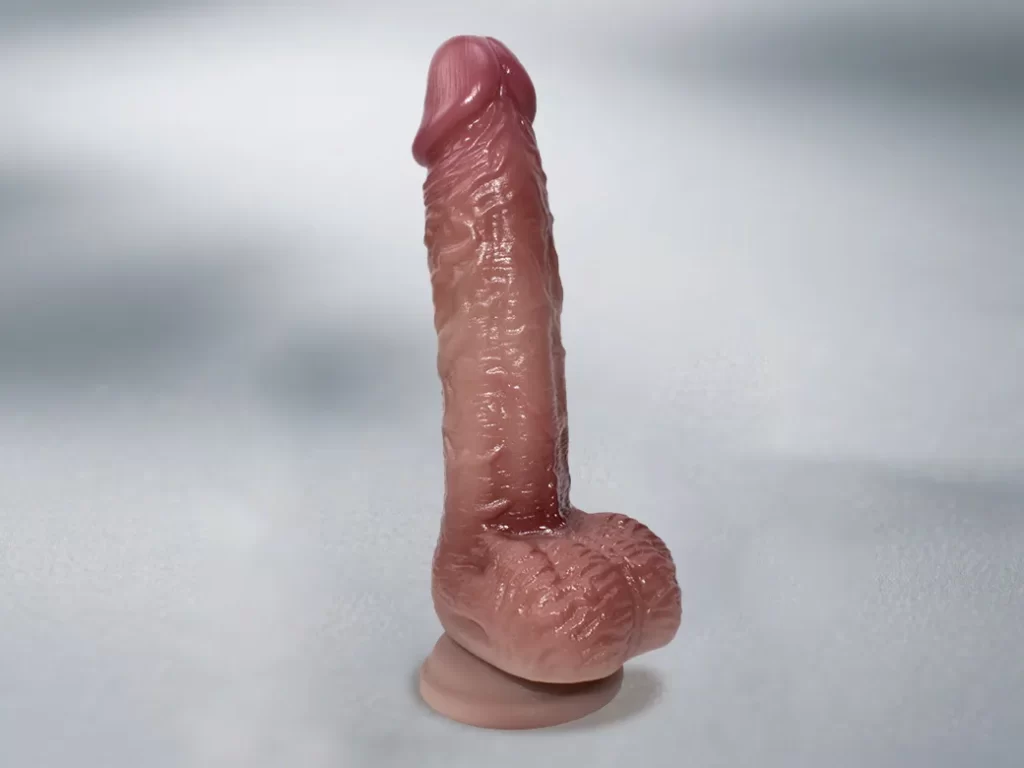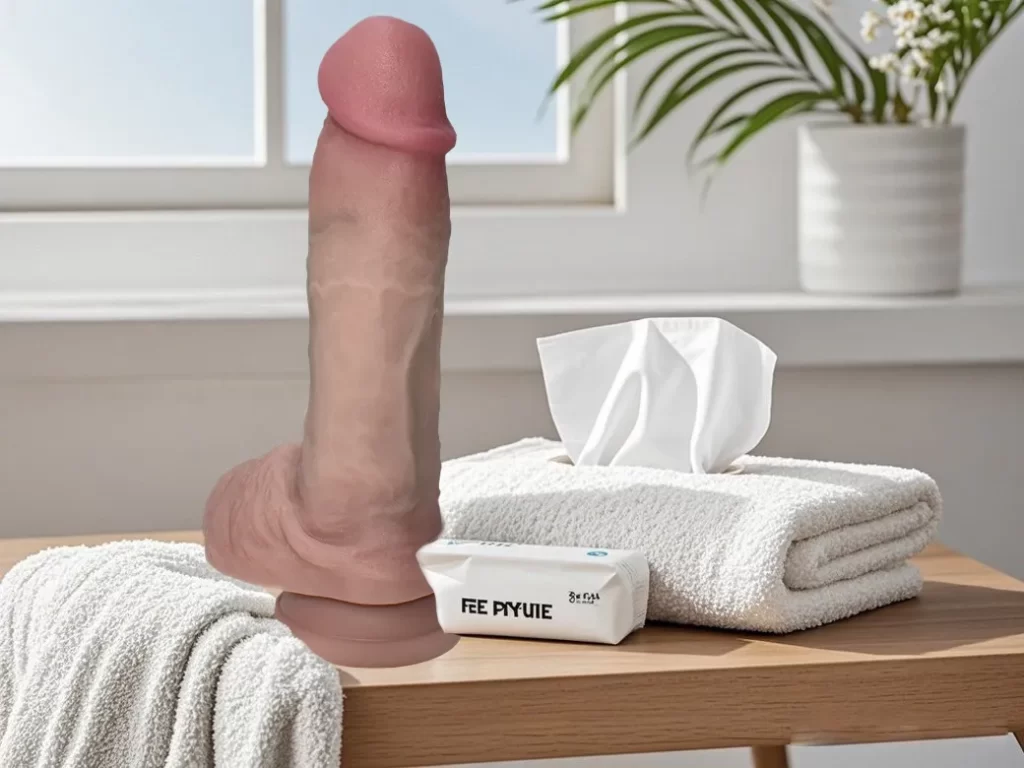


The word “sleeve” can be confusing on a dildo listing. Some sleeves are hollow covers designed to be worn over a penis; others are hollow dildos intended to be held or mounted. A conventional dildo is usually a standalone insertable shape. The right choice depends on what the design is meant to do, how it is supported, and whether its dimensions match your intended use.
Compare the designs at a glance
| Feature | Standalone dildo | Penis sleeve |
|---|---|---|
| Basic structure | Usually a solid or internally supported shaft with a base or handle | Usually a hollow, flexible cover with an opening and a fit system |
| Primary purpose | Designed to be held, mounted, or used with a compatible harness | Designed to be worn over a penis, subject to the maker’s instructions |
| Key fit details | Length, girth, firmness, base shape, and support method | Internal diameter, stretch, usable length, opening, and retention design |
| What not to assume | That every base fits every harness or mount | That every hollow design is wearable or fits every body |
First identify which kind of “sleeve” the listing means
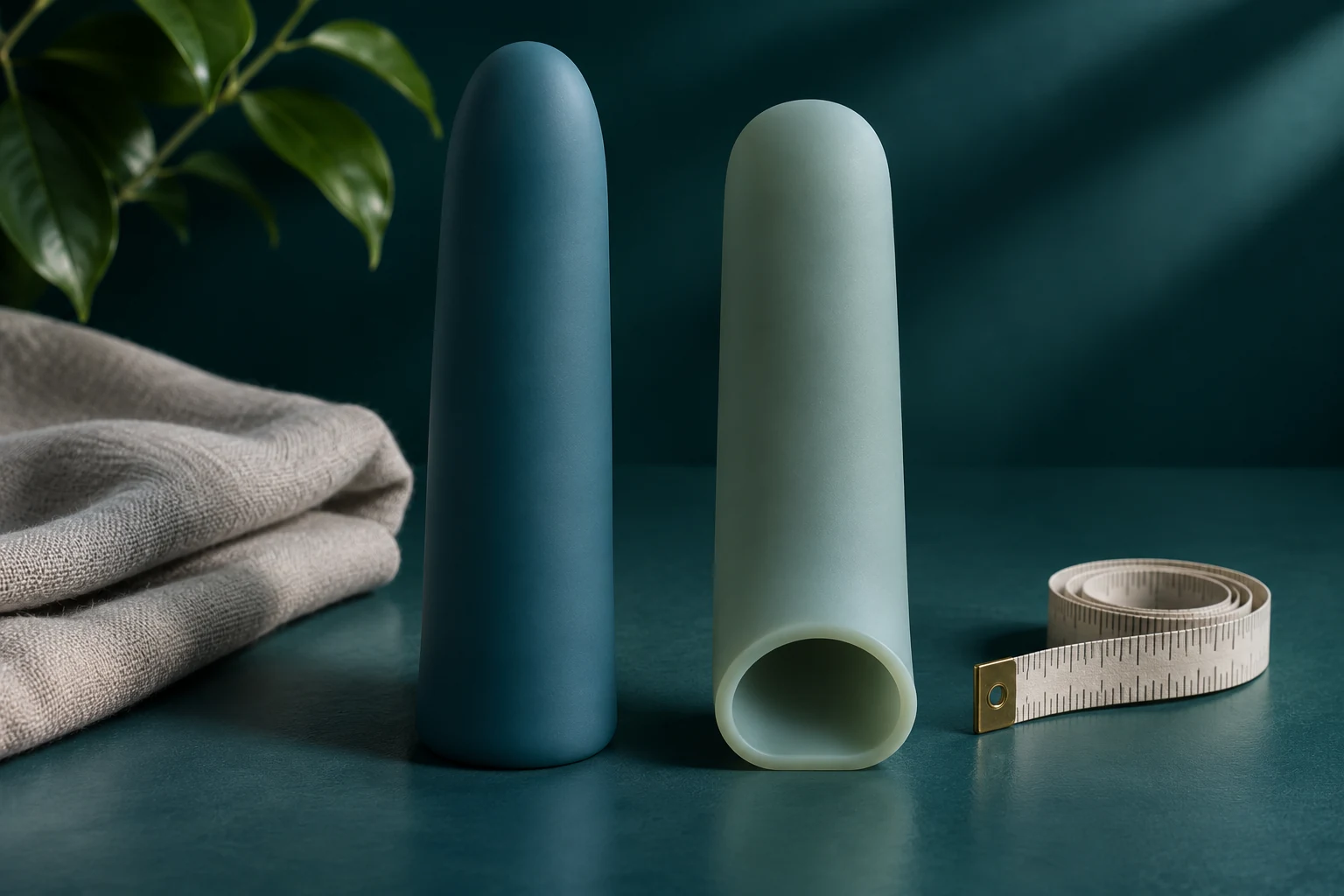
Retailers do not always use “sleeve” consistently. Before comparing dimensions, look for a clear statement of intended use. A wearable penis sleeve typically has a hollow channel and may include a ring or other retention feature. A hollow dildo may instead be designed for a particular mount, harness, or other setup. A sleeve-style label by itself does not tell you how the product should be worn.
Check the product description, diagrams, care directions, and the shape of the opening. If the listing leaves the intended use unclear, ask the seller which body part or support system the design is made for. You can also compare the material and construction notes in our guide to reading dildo labels and packaging.
Choose by the role you want the design to perform
If you want a standalone shape for handheld or mounted use: start with a conventional dildo and compare its base, shaft firmness, and the support method you plan to use.
If you want a cover that fits over a penis: look for a wearable sleeve with clear fit measurements, retention instructions, and cleaning guidance.
If the listing says “hollow dildo” or “dildo sleeve” without explaining the use: pause and confirm whether it is wearable, mountable, or intended for another setup.
How sizing works differently
For a standalone dildo, the most useful measurements are usually insertable length, shaft width or diameter, circumference, and base dimensions. A larger total length does not necessarily mean more usable length because some of the measurement may belong to the base.
For a wearable sleeve, fit is more than the outside diameter. Check the interior dimensions and the amount of stretch specified by the manufacturer. An overly tight sleeve may feel constricting or be difficult to put on; an overly loose fit may shift. Do not select a size from a product photo or assume that a flexible material will fit everyone.
For hollow or mount-compatible designs, identify what supports the sleeve and how the opening is secured. “Universal fit” is not a substitute for measurements or explicit compatibility information. If the sleeve will be used with a harness, compare the usable base and shaft dimensions with the harness opening, rather than focusing on the widest point of the head. Our dildo weight and control guide explains why support and balance also matter.
Material, firmness, and feel are separate choices
Two designs can use similar outer materials while behaving differently because one is solid, one is hollow, or one contains a firmer core. A hollow sleeve may compress and stretch more readily; a standalone dildo may hold its shape differently depending on its construction. These are tendencies, not guarantees. The exact formulation, wall thickness, internal structure, and shape all affect flexibility.
Read the material description and care instructions for the specific model. Do not infer that a surface labeled silicone means every component is silicone, or that silicone lubricant is automatically compatible. Follow both the dildo and lubricant makers’ directions. For a focused comparison of firmness, see soft vs. firm dildos.
Cleaning and drying: hollow interiors need extra attention
A standalone dildo with a smooth, accessible surface is often simpler to inspect and dry than a sleeve with a narrow interior or folds. A hollow sleeve may retain moisture or residue inside its channel, so follow the maker’s directions for washing, rinsing, drying, and storage. Do not put it away while damp, and do not use a cleaning method that is not approved for its material or construction.
If a sleeve is worn over a penis, clean it between users and follow the product’s hygiene instructions. A condom can be a useful barrier in some situations, but it does not replace cleaning. Check barrier and lubricant compatibility together. Our guides to cleaning a dildo and using a condom on a dildo cover those details.
Common buying mistakes
- Assuming every hollow sleeve is designed to be worn.
- Comparing outside diameter without checking a wearable sleeve’s interior fit.
- Assuming one harness opening works with every base or hollow design.
- Choosing by product photos without confirming length, width, and intended use.
- Ignoring how an interior channel will be cleaned and dried.
- Assuming a softer or more stretchable sleeve will automatically fit comfortably.
A five-point checklist before you buy
- Name the use: standalone insertion, wearable cover, harness, or mount.
- Confirm the design: solid, hollow, open-ended, or internally supported.
- Check the right measurements: insertable length and base for a dildo; internal fit and retention for a wearable sleeve.
- Review compatibility: harness openings, mount systems, barriers, and lubricants as relevant.
- Read care directions: especially for hollow areas, seams, motors, or layered construction.
FAQ
Is a penis sleeve the same as a dildo?
No. A wearable penis sleeve is generally a hollow cover designed to fit over a penis, while a conventional dildo is usually a standalone shape. Some listings use “sleeve” for hollow dildos too, so check the intended use.
Can a hollow dildo be worn like a sleeve?
Do not assume so. Use it only in the way the manufacturer specifies. A hollow shape may be intended for a mount or another setup rather than wearable use.
How should I measure for a wearable sleeve?
Use the fit dimensions and measuring method provided by the maker. Check internal width, usable length, stretch, and any retention feature; do not estimate from the outside profile alone.
Does a sleeve always make a dildo feel softer?
No. The material, wall thickness, firmness, shape, and any internal support all affect how it feels. Product construction matters more than the word “sleeve.”
Can I use lubricant with either design?
Choose a lubricant compatible with the specific material and any condom or barrier being used. Follow both manufacturers’ instructions, especially when the dildo or sleeve is silicone.
Choosing between them comes down to fit and function: pick a standalone dildo when you want a separate shaft and support base; consider a wearable sleeve when you specifically want a cover designed to fit over a penis. If a listing does not clearly state which job it is made for, get clarification before ordering.
Browse BestDildo’s dildo styles and compare construction details before choosing.