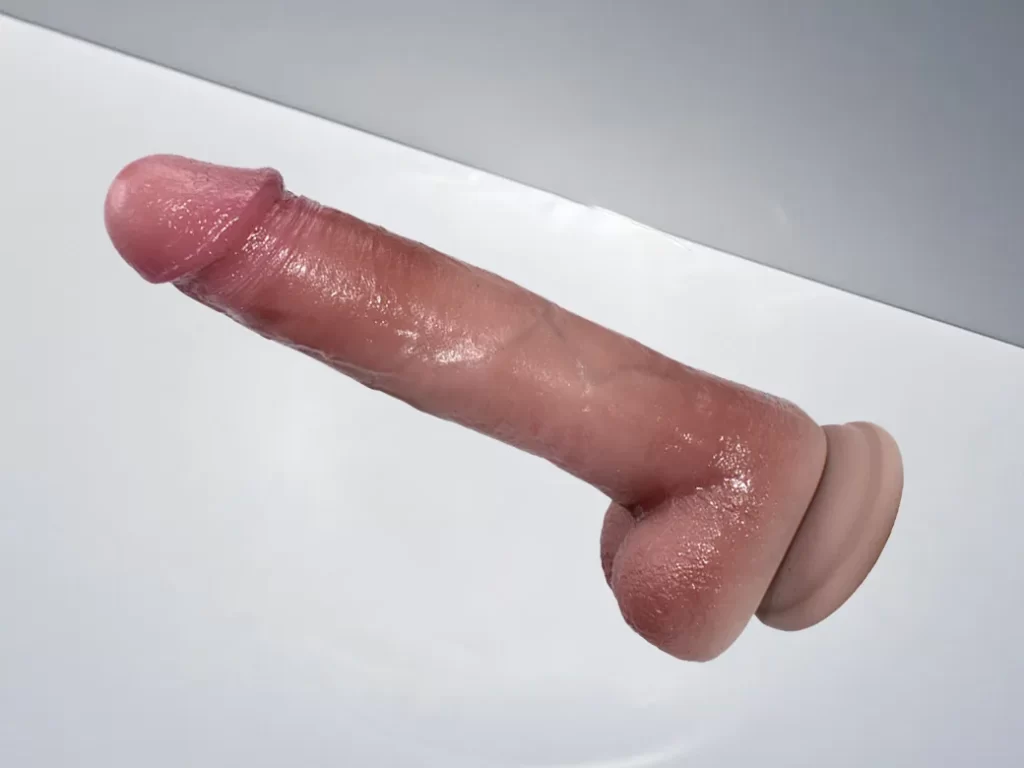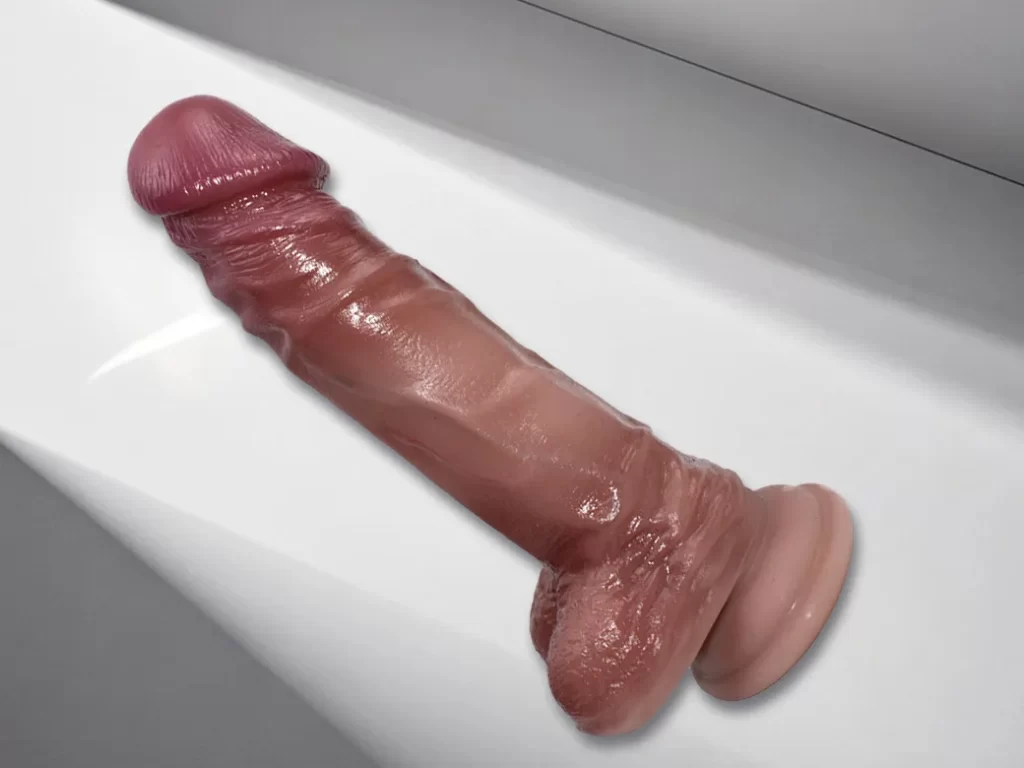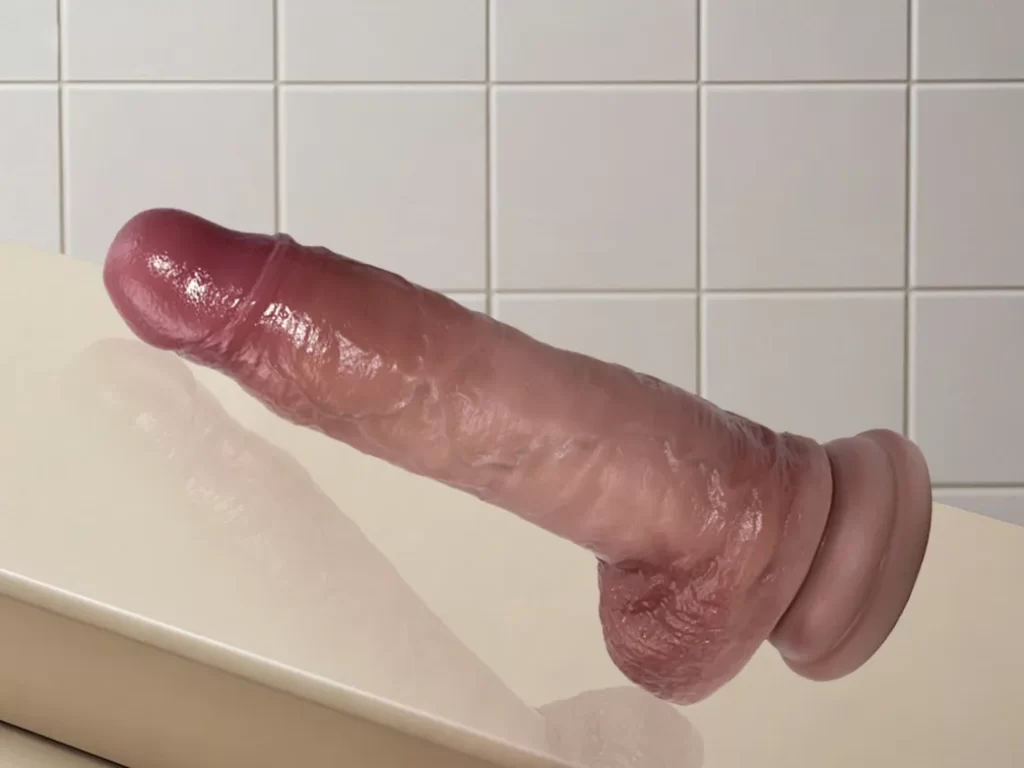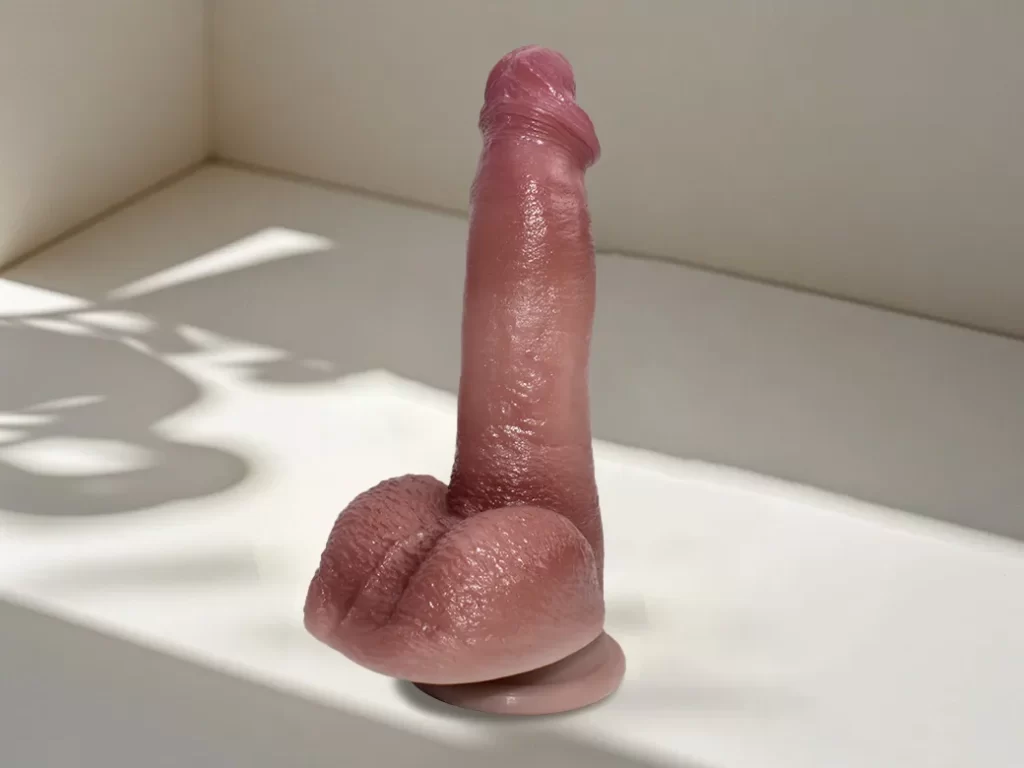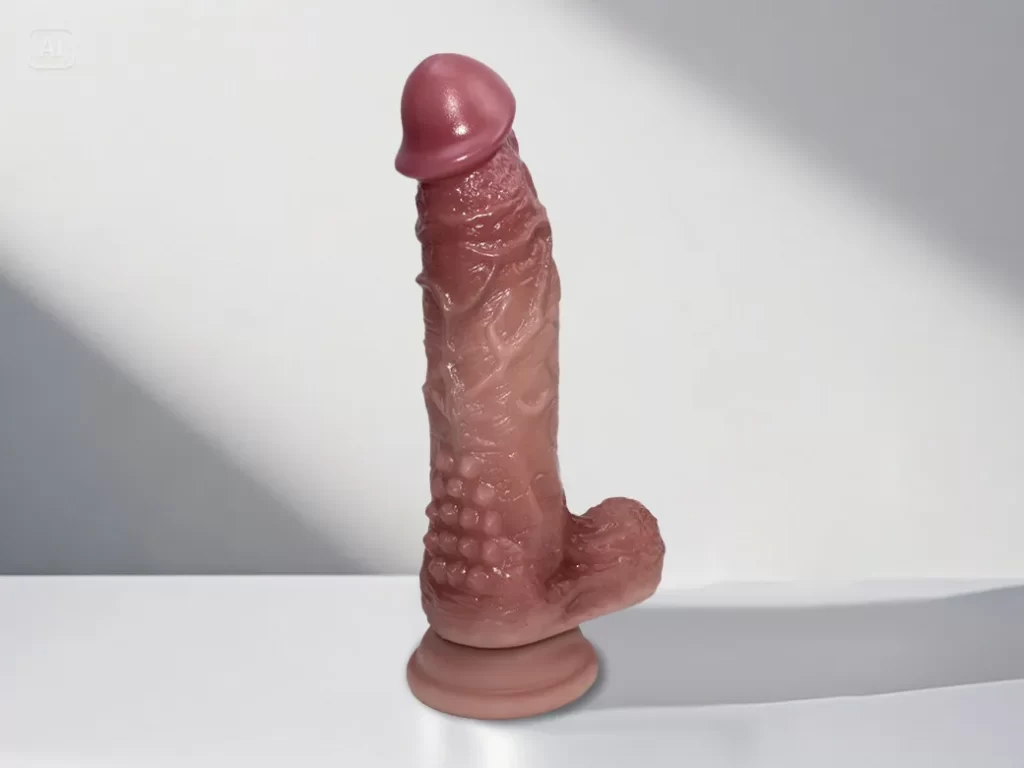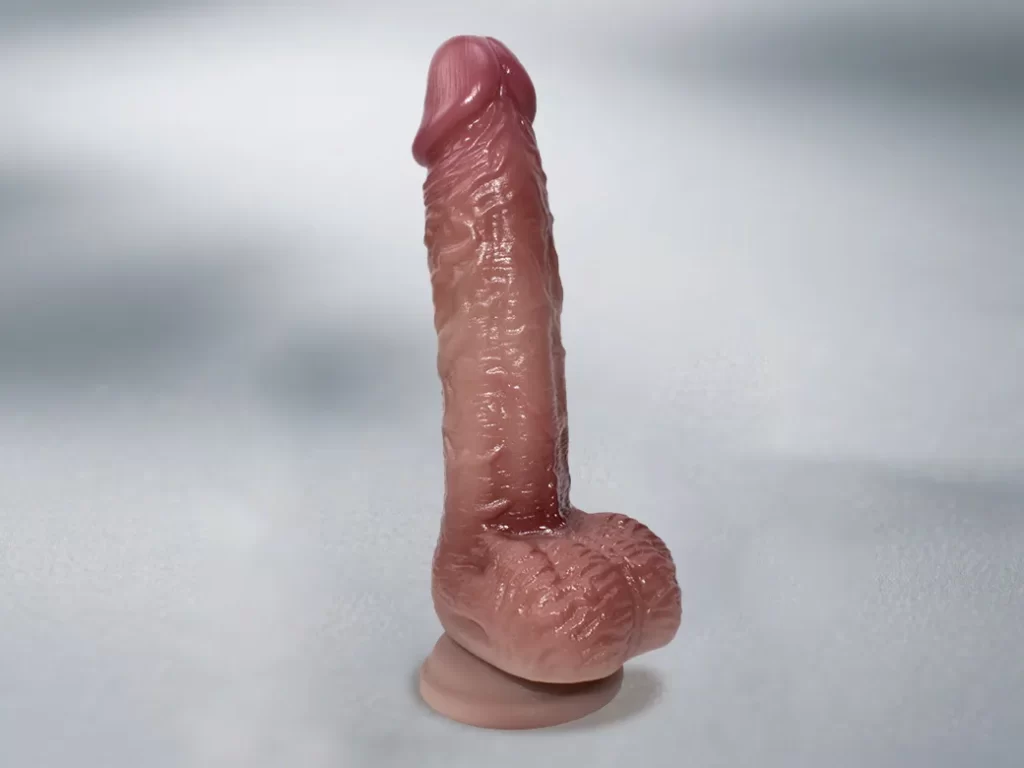

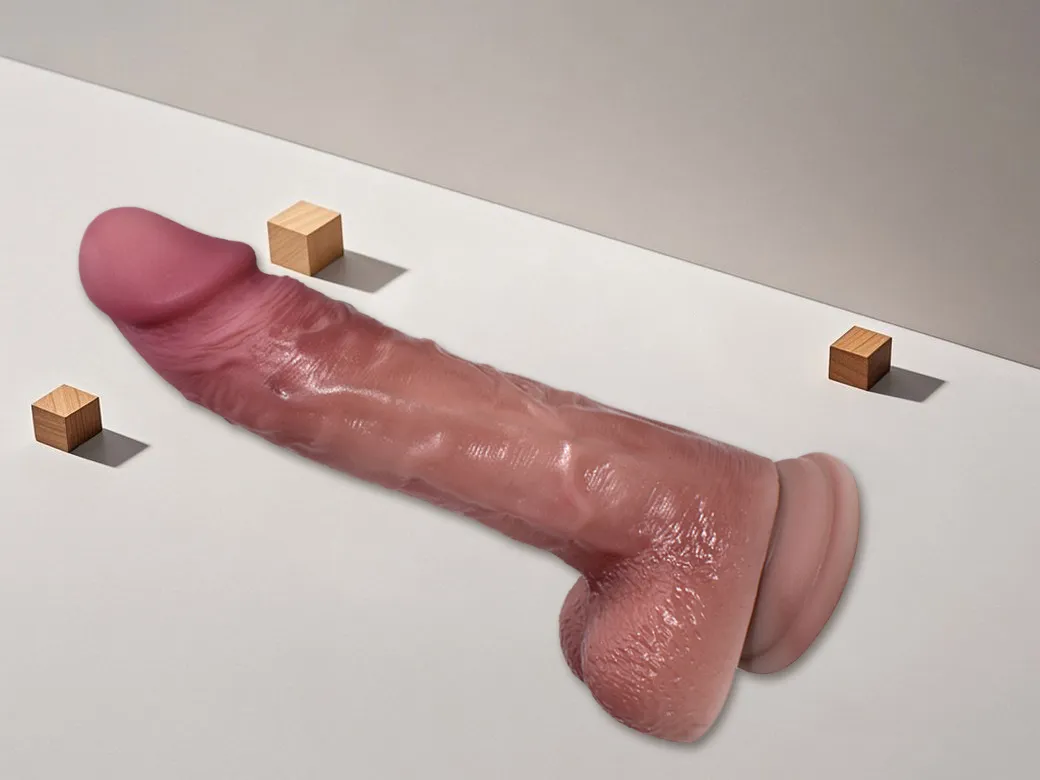
Direct answer: If a dildo feels slippery or oily after storage, the film may come from leftover lubricant, soap, a storage pouch, contact with another dildo, or ingredients migrating toward the surface of some soft materials. Clean and fully dry the dildo using the manufacturer’s approved method. If the film disappears and does not return, ordinary residue is the more likely explanation.
If the oily coating repeatedly returns after proper cleaning and drying—especially together with stickiness, swelling, softening, hardening, odor, discoloration, peeling, cracking or shape change—stop using the dildo and contact the retailer or manufacturer.
An oily surface is an observation, not a diagnosis.
Two dildos can both feel slick after spending several weeks in storage while having completely different causes. One may still have lubricant trapped around its base. Another may have picked up residue from a pouch. A third may be made from a soft formulation in which mobile ingredients are gradually reaching the surface.
The fastest way to narrow the cause is to answer four questions.
| Question | Why It Matters |
|---|---|
| Did the surface feel oily before storage? | This helps separate old residue from a change that developed while stored. |
| Does washing remove the film completely? | Removable residue behaves differently from a coating that repeatedly returns. |
| Does the oiliness return after the dildo is fully dry? | A recurring film deserves closer investigation. |
| Has the material changed too? | Oiliness combined with deformation, tackiness or cracking is more concerning than oiliness alone. |
The Most Common Reasons a Dildo Feels Oily After Storage
Before assuming the dildo is deteriorating, start with the simpler explanations.
| Possible Cause | Typical Clue | What Happens After Proper Cleaning? |
|---|---|---|
| Lubricant residue | Film is strongest around grooves, texture or the base. | Usually reduces or disappears. |
| Soap or cleaner residue | Surface feels slick after washing or smells like the cleaner. | Thorough rinsing often resolves it. |
| Storage pouch contamination | The pouch or container has a similar slick feel or odor. | Film should not return after separate storage if the pouch was responsible. |
| Contact with another dildo | Two soft dildos were stored touching each other. | Residue may disappear, or permanent surface changes may remain. |
| Material or additive migration | Oily film returns after cleaning and complete drying. | The film may repeatedly reappear. |
| Material deterioration | Oiliness appears with stickiness, swelling, cracking, odor or deformation. | The condition remains abnormal and needs product-specific evaluation. |
Cause #1: Lubricant Was Never Fully Removed
Lubricant can remain on a dildo even when the surface looks clean.
This is especially easy to miss on designs with pronounced texture, recessed details, a flexible outer layer, suction-cup rims or deep transitions between the shaft and base.
After several days in storage, a small amount of residue can spread across the surrounding surface and make the entire dildo feel oily.
Clues That Point Toward Lubricant Residue
- The slickness is uneven rather than uniform.
- It is strongest around deep texture or the base.
- The odor resembles the lubricant.
- The dildo returns to its normal feel after cleaning.
- The oily coating does not return while the dildo sits clean and dry.
Useful clue: if the dildo becomes completely normal after cleaning, stays normal outside its storage pouch, and only felt oily after the previous session, leftover lubricant is more plausible than active material deterioration.
Cause #2: Soap or Cleaner Has Left a Slick Film
A dildo can also feel oily when the surface is actually covered in cleaner residue.
Highly fragranced soaps and thicker liquid cleaners may leave a slippery layer when they are not completely rinsed away. This can be especially noticeable on matte surfaces, where the residue creates an unusual shine.
Ask whether the dildo became slippery after cleaning rather than before it.
If the slick surface smells like soap and disappears after careful rinsing, cleaner residue is a much simpler explanation than material breakdown.
Cause #3: The Storage Pouch Is Transferring Residue
The dildo may not be the source of the oil at all.
Some bags, coated fabrics, soft plastic containers or unknown storage materials can have their own surface treatments, manufacturing residue or fragrance.
If the dildo feels oily only after spending time inside one specific pouch, isolate the dildo from the container and compare them separately.
| Test | Observation | What It Suggests |
|---|---|---|
| Clean and dry the dildo, then leave it outside the pouch. | Surface remains normal. | The storage environment becomes more suspicious. |
| Inspect the empty pouch. | Interior feels slick or greasy. | The pouch may be transferring residue. |
| Store the dildo separately in a clean compatible container. | Oiliness does not return. | Storage transfer becomes the likely explanation. |
Separate storage also makes future changes easier to diagnose because you know which surface each dildo has been touching.
Cause #4: Two Soft Dildos Were Stored Touching Each Other
Direct contact between different soft materials can make troubleshooting much harder.
If two unidentified or differently formulated dildos spend weeks pressed together, you may later notice a surface that feels softer, tackier, shinier or oilier than before.
You normally cannot identify the exact chemical interaction from touch alone. The practical response is to separate the dildos and inspect them independently.
Compare These Four Things After Separation
| Check | Stable Condition | More Concerning Change |
|---|---|---|
| Shape | Returns to normal position | Swollen, flattened or permanently distorted |
| Surface | Normal after washing | Sticky or oily film keeps returning |
| Color | Unchanged | Color transfer or unusual staining |
| Texture | Same firmness as before | Gummy, unusually soft, brittle or peeling |
Cause #5: Some Soft Materials Can Develop Surface Migration
Some flexible polymer formulations contain ingredients that are more mobile than the main polymer structure. Over time, formulation, temperature and storage conditions can influence whether some of those ingredients move toward the surface.
To the user, that may look or feel like:
- A glossy film
- An oily coating
- Small slick droplets
- A surface described as “sweating”
- Tackiness
- Residue that reappears after cleaning
This type of behavior is more relevant to some soft thermoplastic materials than to rigid materials such as glass or stainless steel.
However, broad labels such as TPE, TPR and PVC cover many possible formulations. Two dildos sold under the same general material category do not necessarily contain identical ingredients or age in the same way.
Does an Oily TPE Dildo Mean It Is Failing?
Not automatically. But new or recurring oiliness deserves attention.
A TPE or TPR dildo may naturally feel different from silicone, and some products have manufacturer-specific maintenance requirements. The useful comparison is not simply “Does it feel oily?” but rather:
“Does it feel different from when it was new?”
| Observation | Lower Concern | Higher Concern |
|---|---|---|
| Surface feel | Always felt similar and matches the maker’s description | New oily or gummy coating |
| After cleaning | Returns to normal | Oil quickly reappears |
| Shape | Stable | Shrinking, swelling or distortion |
| Firmness | Consistent | Hardening or excessive softening |
What About an Oily Silicone Dildo?
A dildo sold as silicone requires a slightly different approach.
Do not immediately assume that a slick silicone surface means the silicone itself is releasing oil. First eliminate more ordinary causes:
- Lubricant residue
- Soap or dildo cleaner
- Packaging residue
- Storage-pouch transfer
- Contact with another dildo
Clean the dildo according to the manufacturer’s instructions, rinse thoroughly when appropriate, let it dry completely and inspect it without applying powder or lubricant.
If a slick coating repeatedly returns on a dildo sold as silicone—particularly together with gummy areas, peeling, cracking, deformation, strong odor or material transfer—contact the manufacturer or retailer.
Do not automatically diagnose the dildo as “uncured silicone.” Our separate guide Is My Silicone Dildo Fully Cured? explains why consumer inspection cannot verify the chemistry of a manufacturing cure process.
How Material Changes the Meaning of an Oily Surface
| Material | Check First | If Oiliness Keeps Returning |
|---|---|---|
| Silicone | Lubricant, cleaner, packaging and storage transfer | Ask the maker if the coating repeatedly returns after proper care. |
| TPE / TPR | Product-specific care, storage, residue and material changes | May reflect migration or deterioration, especially with shape or texture changes. |
| PVC / jelly-type material | Residue, storage temperature and material condition | Recurring film plus hardening, cracking or deformation deserves replacement consideration. |
| Glass | Lubricant, cleaner and storage contamination | External residue is more likely when the glass remains intact. |
| Stainless steel | External residue and storage environment | Investigate contamination or finish damage rather than polymer migration. |
A Controlled 24-Hour Check
If the dildo has no obvious crack, open hole, peeling or severe deformation, a controlled observation can help identify whether the film comes from the environment or returns from the surface itself.
| Stage | What to Do | What You Learn |
|---|---|---|
| 1. Photograph | Record shiny or oily areas before cleaning. | Creates a baseline for comparison. |
| 2. Clean | Use only the approved cleaning method. | Tests whether ordinary residue can be removed. |
| 3. Dry | Allow it to air-dry completely. | Removes water and towel residue as variables. |
| 4. Isolate | Keep it away from the old pouch and other dildos. | Removes storage transfer as a variable. |
| 5. Recheck | Inspect it later the same day and the next day. | Shows whether the oily film returns without external contact. |
Do not “test” the oily surface by adding powder, solvents, alcohol, perfume or another coating. Every added substance creates a new variable and makes the original source harder to identify.
External Residue vs Material Change
This comparison is often more useful than trying to identify the film by touch alone.
| Sign | External Residue More Likely | Material Change More Likely |
|---|---|---|
| After cleaning | Oiliness disappears | Oiliness returns |
| Distribution | Localized around lubricant or contact areas | Develops across the material without new contact |
| Texture | Normal underneath | Sticky, gummy, excessively soft or hard |
| Shape | Unchanged | Swollen, shrunken or distorted |
| Odor | Matches lubricant or cleaner | New persistent odor appears with the change |
| Progression | Resolves when the source is removed | Gradually worsens |
Why Storage Temperature Matters
Temperature is worth checking whenever a dildo changes while it is not being used.
A dildo left in a hot vehicle, beside a radiator, on a sunny windowsill or in another unusually warm location has experienced different storage conditions from one kept in a cool indoor drawer.
Heat can affect flexible materials and may accelerate changes already occurring within certain formulations.
Do not try to reverse oiliness by refrigerating, freezing, heating or boiling the dildo. Extreme-temperature experiments do not identify the original problem and may cause additional damage.
Does “Sweating” Mean a Dildo Is Unsafe?
The word sweating is often used online for a soft dildo that develops droplets or a slick coating while sitting unused.
It describes what the surface looks like. It does not identify the chemistry or automatically establish whether the dildo is safe or unsafe.
A more useful assessment asks:
- Is this behavior expected for the stated material?
- Is the dildo still physically stable?
- Can the coating be removed using approved care?
- Does it return without new external contact?
- Are other forms of deterioration appearing?
Warning Signs That Matter More Than Oiliness Alone
| Persistent tackiness | Swelling or shrinking | Cracking or tearing |
| Peeling or flaking | Unexpected softening | Unexpected hardening |
| Color transfer | Strong new odor | Layer separation |
When Should You Replace an Oily Dildo?
You do not need to replace a dildo simply because you discover removable lubricant after storage.
Replacement becomes more reasonable when the condition cannot be traced to ordinary residue and the material is no longer stable.
| Situation | Recommended Response |
|---|---|
| Oiliness disappears after normal cleaning. | Improve cleaning and storage, then monitor. |
| Oiliness came from the pouch. | Replace or properly clean the storage solution. |
| Film repeatedly returns on a new dildo. | Photograph it and ask the seller before continued use. |
| Film returns and the dildo becomes sticky or deformed. | Stop using it and request manufacturer guidance or replacement. |
| Crack, tear, peeling or an open surface develops. | Stop use rather than attempting a home repair. |
If physical damage is already present, see Can You Repair a Damaged Dildo?.
How to Prevent the Problem During Storage
A good storage routine also makes future troubleshooting easier.
Clean Before Long-Term Storage
Do not put a dildo away with visible lubricant or cleaner residue still on its surface.
Dry It Completely
Check detailed areas and the underside of the base rather than judging dryness from the shaft alone.
Store Dildos Separately
Individual storage reduces direct material contact and makes changes easier to trace.
Avoid Unnecessary Heat
Use a stable indoor storage environment rather than a hot vehicle, windowsill or location beside a heater.
Inspect Before and After Storage
A quick visual check before putting the dildo away gives you a baseline. If it looks different several weeks later, you know the change developed during storage.
What to Tell Customer Support
A precise description will usually get a more useful answer than simply saying, “My dildo is oily.”
| Information | Example |
|---|---|
| When it started | “The coating appeared after approximately one month in storage.” |
| Cleaning result | “It washes off but returns after the dildo is fully dry.” |
| Storage | “It was stored alone in its original pouch.” |
| Other changes | “The surface has also become softer near the base.” |
| Evidence | Attach photographs before and after cleaning. |
Frequently Asked Questions
Why is my dildo oily after sitting in a drawer?
Possible causes include leftover lubricant, cleaner residue, transfer from a storage pouch or another dildo, or changes within some soft material formulations. Clean and fully dry the dildo, isolate it from the original storage environment and check whether the film returns.
Why does my TPE dildo feel oily?
TPE covers many different formulations. Some soft formulations can develop surface residue or change with age and storage. If the oiliness is new, repeatedly returns after cleaning, or accompanies deformation, odor or tackiness, ask the manufacturer whether the dildo should be replaced.
Should silicone feel oily?
A persistent unexplained oily coating should not simply be assumed normal. First rule out lubricant, soap and storage residue. If the film returns on a dildo sold as silicone after approved cleaning and drying, contact the seller or manufacturer.
Is an oily dildo the same as a sticky dildo?
No. Oiliness describes a slick film, while stickiness or tackiness describes increased surface grip. They may occur together, but they are different observations.
Can I wipe the oil off with alcohol?
Do not introduce alcohol or another strong cleaner unless the manufacturer specifically approves it for that dildo. Use the recommended cleaning method first.
Can I use powder to absorb the oil?
Only use powder if the manufacturer recommends it for that specific material. Powder can hide a recurring surface film without explaining its cause.
Can two dildos react in storage?
Different soft materials can transfer residue or change when stored in prolonged direct contact. Separate storage is a simple way to reduce this risk and make future changes easier to identify.
Why does the oil come back after washing?
Repeated return suggests that the source may not simply be old lubricant or soap. Isolate the dildo, keep it completely dry and monitor whether the film develops again without external contact.
Does oiliness mean my dildo is undercured?
No. Oiliness alone cannot verify silicone cure quality. A consumer cannot diagnose a manufacturing cure process from surface appearance.
When should I stop using an oily dildo?
Stop using it when recurring oiliness is accompanied by cracks, tears, peeling, swelling, shrinking, gummy areas, major firmness changes, layer separation or another unexplained structural change.
The Key Test Is Whether the Oil Comes Back
A dildo that feels slippery after storage is not automatically deteriorating.
Start with the ordinary possibilities. Clean it correctly, rinse when appropriate, dry it fully, remove it from the original pouch and keep it separate from other materials.
If the surface stays normal, the cause was probably external.
If the oily coating slowly returns without new lubricant, cleaner or storage contact, the dildo itself deserves closer attention.
If that recurring film is accompanied by stickiness, deformation, cracking, peeling or a strong new odor, stop trying to clean the problem away. Document the condition and ask the manufacturer or retailer whether replacement is appropriate.